
Who Benefits from Calling Edinburgh’s Attacks Simply Islamophobia?
“What happened in Edinburgh was not simply the expression of hostility towards a religion; it was the enactment of a racial imagination shaped by empire, nationalism and exclusion…” by Raman Mundair/Deviji RM Jaan
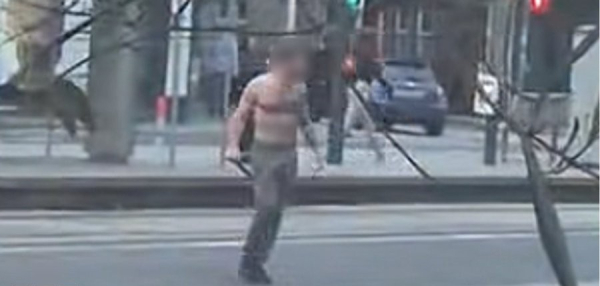
On June 2nd Nigel Farage called for white Britons to respond to the tragic murder of Henry Novak with “pure cold rage,” by June 9th Glasgow’s streets were filled with racists and fascists in balaclavas. On the evening of Friday 19th June 2026, a 36-year-old white Scottish man removed his shirt, picked up a machete, and moved through Edinburgh — through Sighthill, through Telford Road, through Leith Walk — attacking people of colour. Witnesses describe the man as shouting that he was “protecting the country.” His choice of language made clear the evident connection between race, racism and nationalism.
Five men were injured. Two had been leaving prayers at Broomhouse mosque. A third was attacked outside a takeaway restaurant. In sharp contrast to the events that unfolded in Glasgow, political and institutional responses have been swift. Counter-terrorism police are investigating the incident as a faith-based attack and Scotland’s First Minister described what had happened as racism and intolerance. He was right. He was also, without meaning to be, incomplete.
The attacks have been widely characterised as Islamophobic. This characterisation is not wrong. It is, however, insufficient — and the insufficiency is not accidental. It is, in fact, doing political work on behalf of people and structures that have no interest in the fuller analysis.
What the Islamophobia frame does not capture is the fact that this man’s violence was not fundamentally about Islam. It was about a racialised body that his radicalisation had taught him to read as foreign, alien, other and ultimately, less human. Had the injured men been Hindu, Sikh, or Christian, they would have been read the same way. The machete does not check nor distinguish their religious providence. The skin does – as read by the ill-informed, radicalised gaze of the perpetrator. To name only Islamophobia is to be reductive and creates a narrow frame of reference. It is to criminalise the act while leaving entirely untouched the political and social machinery that produces the actor.
In April this year John Ashby, 32, admitted raping a Sikh woman in her Walsall home in October 2025 after initially denying the charges. He followed the victim from a bus, entered her home armed with a stick, assaulted, strangled and raped her while subjecting her to religiously aggravated abuse, repeatedly targeting her because he wrongly believed she was Muslim. During the attack he made Islamophobic remarks, demanded she call him “the master”, forced her into a bathtub while pouring hot water over her and telling her to say “hallelujah”, and later referred to his genitals as being “white British”. After his arrest, he reportedly questioned why the victim was not wearing a hijab and complained that “you never see any Englishmen in Perry Barr any more.”
The man carrying a machete through Edinburgh was not conducting theological interviews before selecting his victims. He was not asking whether those he encountered were Muslim, Sikh, Hindu, Christian, Jain, atheist, or secular. Like Ashby, he was responding to something more immediate. Something visible.
Racialisation in this context is always working through a perceived recognition that takes precedence over knowledge: The body is read before the biography. The skin before the story. The visible before the known. This process is deliberately flattening, reductive, lazy, inaccurate and dehumanising.
When Sikhs are attacked by people seeking Muslims, when Hindus are abused because they are perceived to be Muslim, when Arab Christians become targets of anti-Muslim violence, the problem is not that the perpetrator has failed to identify the victim correctly. The problem is that the perpetrator was never interested in accuracy in the first place. The target is always the racialised brown and Black body: religion enters the story only after the target has been met.
Following 9/11, Sikhs across Britain and North America experienced a dramatic rise in hate crimes because turbans and beards were interpreted through anti-Muslim stereotypes. Balbir Singh Sodhi, a Sikh-American man murdered days after the attacks, became one of the first victims of post-9/11 retaliatory violence. More recently, the UK Government has acknowledged that people perceived to be Muslim, including Sikhs, Hindus and others, are routinely targeted in anti-Muslim hate incidents. This should force us to ask the question. Why are we so invested in the distinction?
On the street, in the pub or cafe, on social media, or during moments of political panic, prejudice frequently operates through a far cruder logic. What the racist sees is not a carefully differentiated map of religious identities. What the racist sees is a category. A face. A colour. A body imagined as stranger, foreign.
This is not to say that there are not visible religious signifiers such as hijabs, niqabs, burkas and beards that make the muslim community identifiable and vulnerable, but to widen our understanding to include the fact that many non-Muslim brown and Black women choose to veil or wrap their hair. Some Sikhs choose to wear turbans and beards. What Frantz Fanon understood about colonialism and it’s legacies is as true now as ever: colonial power did not maintain itself through a sophisticated understanding of brown and Black peoples. It maintained itself by collapsing difference into sameness. Vast populations with distinct languages, religions, cultures and histories became interchangeable under the gaze of empire. In short, brown and Black people in this country are still foreign, alien, other and ultimately, less human. regardless of whether we were born here, fought for this country, played for this country, excelled for this country, built this country, provide care for this country, pay taxes in this country and have every legal right to be here.
This is why the Edinburgh attacks deserve a more sophisticated and wider analysis than the one currently on offer. The dominant narrative asks whether these attacks were motivated by Islamophobia. A more revealing question might be: what social, cultural and political conditions makes being not white itself a target? That question immediately widens the frame. It directs our attention away from individual prejudice and toward the deeper structures, systems and poltics through which belonging is organised in Britain.
Stuart Hall argued that racism works not only through exclusion but through classification. It creates populations that are imagined as problems to be managed, monitored and explained. Ambalavaner Sivanandan observed that racism mutates with political circumstances while preserving its underlying function. The language changes. The targets shift. The broader racialised systems and structures slip from view whilst their machinery remains. What entirely disappears is the fact that all these incidents emerge from the same political imagination, one that identifies certain bodies as permanently suspect.
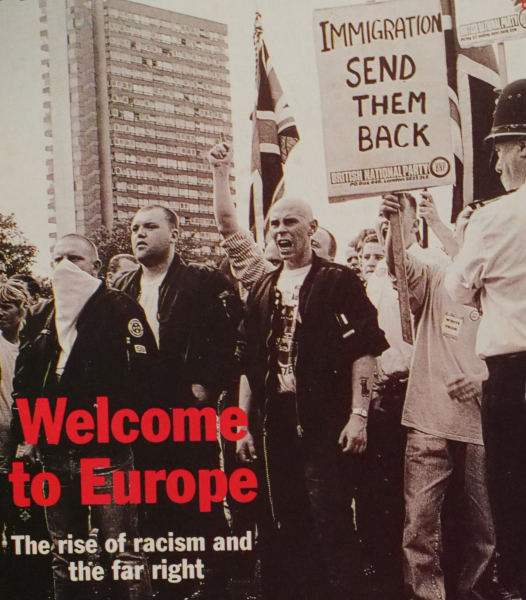
from Thoughts, writings and speeches of A.SIVANANDAN, 1923−2018
Kimberly Crenshaw’s work on intersectionality reminds us that systems of power rarely operate in isolation. Race intersects with religion, gender, migration status, class and nationality. The Edinburgh and Glasgow attacks cannot be reduced to a single category because the violence itself emerges from overlapping structures.
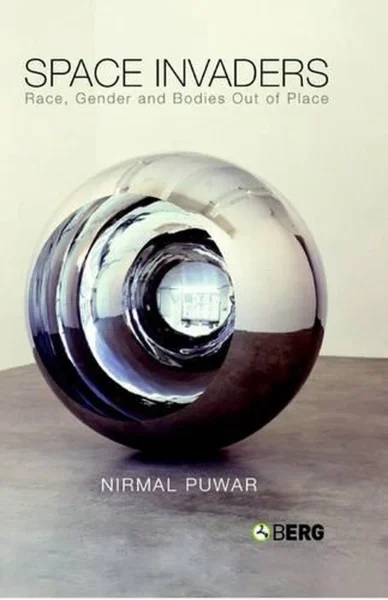
Nirmal Puwar describes how racialised bodies are frequently treated as “space invaders,” perceived as being out of place regardless of citizenship or history. This insight feels particularly relevant here. The victims in Edinburgh were not attacked because somebody knew them. They were attacked because somebody believed they already knew what they represented. The attacks reveal less about Islam or Islamophobia than they do about national fantasies of belonging. Who belongs. Who threatens. Who is imagined as “us”. Who is imagined as “them”. And perhaps this is where the exclusive focus on Islamophobia becomes politically limiting. Not because it is wrong. But because it can function as a container into which broader racial anxieties are deposited, managed and siloed.
The conversation becomes reductive and stays focused on one community, one form of prejudice, one policy response. Meanwhile, the deeper questions remain largely untouched: the afterlives of empire, the racialisation of migration, the production of national identity through exclusion, and the enduring association between whiteness and belonging.
The Edinburgh attacks should absolutely provoke a reckoning with anti-Muslim hatred. But they should also provoke a reckoning with something larger. The racist terrorist did not see a collection of distinct religious communities. He saw brown and Black bodies. He saw difference. He saw people he believed did not belong and were a threat to his country. Until we confront that wider structure, we will continue debating the precise identities of victims while leaving unchallenged the racial imagination that made them targets in the first place. Why does the dominant public and media framing so reliably reduce these incidents to Islamophobia alone? The answer requires us to ask who the Islamophobia framing conveniently excludes from responsibility.
To clarify, this is not a criticism of Muslim communities or of Muslim-led organisations responding to real and targeted violence against their communities. It is a criticism of the political and media infrastructure that adopts Islamophobia as its primary — and often terminal — frame, because that framing requires the least structural reckoning. Islamophobia names a prejudice against a religion. It locates the problem in the attacker’s theology, or his theology about other people’s theology. It is, at its political limit, a problem of interfaith relations, of community tensions, of the kind of hatred that Counter Extremism Units are designed to monitor and manage. At the same time as focusing in on a problem it divides communities – the Muslim community is framed as both problematic and victim within this system. This emphasis ensures a sleight of hand where the struggles and the violence faced by brown and Black people outwith this imposed framework are rendered invisible and are at the same time placed in opposition to the Muslim community.
What the Islamophobia framing does not fully name in regard to these attacks — structurally, systemically, politically — is the broader racial syntax that makes brown and Black bodies targets regardless of their faith. That this predates the specific targeting of Muslims in post-9/11 discourse and was in fact in operation when brown and Black communities were policed under Sus laws in the 1980s and 1990s. So when a shirtless man in Edinburgh reads a non-white face and violently attacks and acts on what he believes it represents, it is indeed this invisible racial syntax that underpins his actions and the structural, systemic and political response to his actions. Thus the category “Islamophobia,” applied exclusively, does three things simultaneously: it names a real harm, it disciplines that harm into a manageable container, and it permits the broader racial structure to remain not only intact but unexamined.
The insistence on naming Edinburgh solely through the language of Islamophobia ultimately tells us as much about Britain’s preferred explanations of racism as it does about the attack itself. Islamophobia is real, deadly and deserving of serious scrutiny, but when it becomes the final frame rather than the starting point, it obscures the wider racial logic through which brown and Black bodies are rendered visible as threats, foreigners and intruders regardless of their actual faith, citizenship or history.
What happened in Edinburgh was not simply the expression of hostility towards a religion; it was the enactment of a racial imagination shaped by empire, nationalism and exclusion, one that collapses difference into sameness and reads certain bodies as permanently out of place. The question, then, is not only why Muslims continue to be targeted, but why brown and Black bodies are sought out as targets in the first place. Until our analysis moves beyond the management of individual prejudices and confronts the deeper structures that organise belonging and exclusion, we risk mistaking the symptom for the system—debating the identity of the victims while leaving untouched the insidious, deadly, racial grammar and the systems, structures and politics that continue to produce them.

We are supported only by our readers. We don't have corporate backers and we don't take advertising, so we rely entirely on your support.
Help to support independent Scottish journalism