
The SNP want to increase childcare hours – first, they need to improve the existing policies
In my role as Director at the Scottish Women’s Budget Group, I hear time and time again, from women across the country, that access to affordable childcare, as well as wider care services for adults and older people, is critical to managing unpaid care work– the majority of which is undertaken by women.
Care is not just a women’s issue, but it’s predominantly carried out by women due to existing gendered structures, and therefore women are directly impacted by the economic effects of care work. The impact on women is clear. In our women’s survey, one woman shared: “Childcare is the biggest obstacle for me to return to full-time work, directly affecting my economic independence” and this view is in line with wider research on the cost of childcare.

Pregnant then Screwed found that 4 in 5 parents say their childcare costs are the same or more than their income, with 71% of mothers saying it didn’t make financial sense for them to work.
So how do we address this? The SNP’s 2026 manifesto offered a glimmer of hope for improving investment in some forms of care. They outlined an expansion of the 1,140 funded hours of childcare, equivalent to 30 hours per week during term time, to children from nine months of age. It’s currently available for three and four-year-olds, and some two-year-olds. The SNP’s manifesto said this will be achieved by the end of the new Parliament, so changes are potentially years away, depending on the prioritisation given to childcare. For families impacted every month, never mind years, this potential delay matters.
All major parties, except Reform UK, had set out changes in childcare that could improve choice, accessibility, affordability and flexibility to support families, in their manifestos. However, parents have concerns that the existing delivery of funded hours is not meeting their needs. These include some areas only delivering term time provision, limited flexibility of funded hours and there being a difficulty aligning childcare with working hours. It is these issues that will need to be addressed to ensure investment in childcare can genuinely work to tackle women’s inequality, and deliver transformative change as access to funded childcare expands.
As part of our work at the SWBG we recently undertook our annual women’s survey and there was a clear call from respondents who ranked affordable childcare as a top priority for tackling women’s inequality. We know that they’re right. Research shows that strong care services provide social infrastructure to keep our economy and society moving. They bring carers, the majority of whom are women, back to the labour market, support employers to have a more diverse workforce to draw from, provide choice about provision of care and provide developmental support for children. The Scottish Government’s own evidence highlights the important role childcare can play in improving families’ socioeconomic circumstances and supporting their return to work, subsequently improving women’s wellbeing.
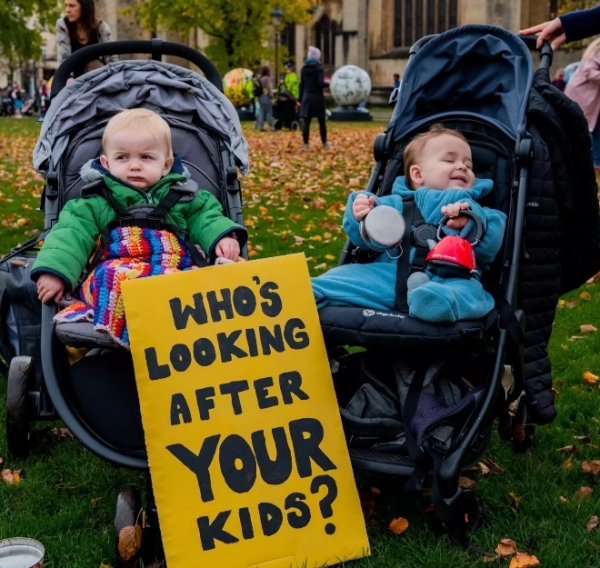
Evidence from other parts of the world also tells us that investment in childcare brings returns to the economy. For example, studies in Quebec have found returns on investment of more than $3.50 for every $1 spent on childcare. In the past, our research has shown the multiplier effects of increased employment within the social care sector. With a majority female workforce in both social care and childcare, women are more likely to spend their wages in local businesses. Therefore, investment in these workforces brings returns to local economies.
To fully achieve the socio-economic benefits of this investment, however, policies must recognise the need for targeted support to best meet the needs of certain families. Without this, the gains to families from expanded childcare will not be felt equally, particularly for those on low incomes or marginalised from the current system. Research from the Institute of Fiscal Studies, amongst others, shows that low-income families are more likely to work irregular hours or non-standard contracts and may face additional challenges accessing childcare that is built around a 9-5 model of work. Any debates on improving the current offer or expanding it must consider how childcare can be made more flexible or responsive to the realities of low-income families’ working lives.
Yet, the Government must also understand that the need to recognise and value care isn’t just about childcare. We need to start considering care work more holistically and this is where the challenge lies. With the SNP saying little about its plans to improve social care ahead of the election there’s a lack of understanding about how each facet of the care system links with the other and are all vital to tackling women’s inequality. Improving workforce conditions illustrates this clearly: because women make up the majority of the care workforce, better pay and conditions would not only improve women’s economic security but also strengthen the sustainability and quality of the wider care system.
To build a caring economy, one that works better for everyone but particularly tackles the long-term structural inequalities women face, all forms of care need to be better recognised, valued, and invested in. We’ll be watching closely over Government’s first 100 days to see whether it delivers the action needed to make this a reality.
As MSPs get into the business of the new parliament we urge all parties to work together to plan a comprehensive expansion of childcare based on flexibility, accessibility, affordability and meeting the needs of every child and expanding the ambition for care to be fully valued across the board.
GO HERE TO SUPPORT US


We are supported only by our readers. We don't have corporate backers and we don't take advertising, so we rely entirely on your support.
Help to support independent Scottish journalism
The fertility rate in Scotland currently stands at 1.25 children per woman and 32% of Scottish women don’t have any children.
Unless we want Scottish people to literally die out over the coming 2 to 3 generations action needs to be taken and addressing childcare costs is but one of the issues that need to be addressed.
The financial gain for the economy by increasing spending on child care reflects the findings of research which has shown similar benefits from additional spending on the NHS. There seems no logical reason not to start increasing spending on both soon, not waiting several years.
Sara has described the problem . The solution, however, is much more complex. Firstly there is the fact that Scotland does not have its own central bank therefore funding care depends on funding from other sources such as taxation or bond sales. The Scottish government has very limited ability to sell bonds and the raising of taxes by even the smallest amount results in outrage from opposition parties and the almost wholly hostile media. Constant cries of “highest taxed part of the UK”. There is also the problem of staffing care. The Scottish government has made much more progress on training of staff than down here in England but the ability to recruit new staff for expanded care services is a huge challenge. At only 3.7% Scottish unemployment is the lowest in the U.K. Immigrants could help greatly to fill the gap but immigration policies is reserved to Westminster. Perhaps Scotland could solve this and other problems with independence.