
The Suicidal Nostalgia of the Anti–Net Zero Coalition
It should be uncontroversial to state that ‘net zero’ names a limited, corporate, technocratic horizon of decarbonisation. Numerous climate scientists have said as much themselves, calling net zero targets a ‘dangerous trap’ that slows necessary decarbonisation efforts by banking on the meso-scale deployment of future carbon removal technologies. The road to net zero is paved not by good intentions, but by integrated assessment models (IAMS), machine maps which stitch together economic and social variables with likely climate scenarios, projecting a number of climate futures that are politically palatable (to the imperial core), not physically viable. To deliver a net zero palatable to capital, everything from coastal communities, coral reefs, mass extinction of species across the tropics and the equator, are thrown into the “loss soup” – ‘necessary’ or ‘acceptable’ sacrifices to continue a Western way of life – for Westerners.
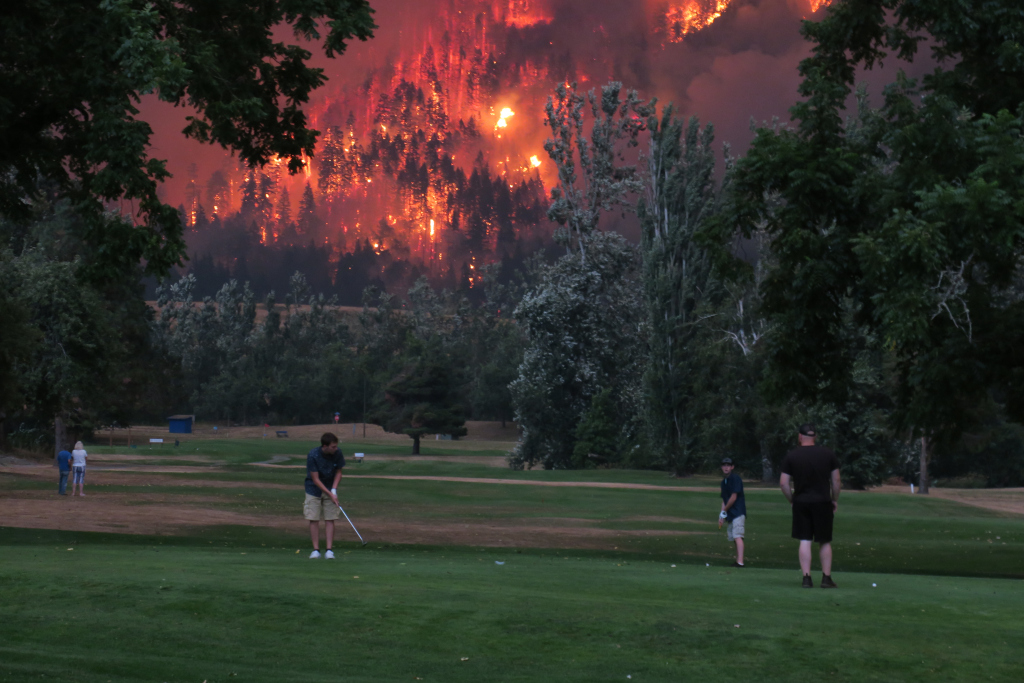
These models, driven by neoliberal cost-benefit logic, tell us it’s always better to postpone action which will later become cheaper. IAMS forget that they are the (flawed, incomplete) map and not the territory, pumping out net-zero scenarios for international climate governance that allows for business-as-usual fossil capitalism today, and breakneck ‘draw-down’ later, once we have already overshot 2 or even 3 degrees warming. In this sense, net zero names a world-historical betrayal: no sooner than the idea of “limits” was posited in carbon governance – carbon budgets, tipping points, hard ecological barriers – was it ripped apart in front of our eyes at the altar of speculative technologies and future innovations.
We are now told by no less a sage than Tony Blair that “net zero was doomed to fail” – so we should stop worrying about all that inevitable carbon we’re belching with increasing quantities into the atmosphere. His think tank now proposes that carbon capture—not cutting fossil fuel production—should sit “at the centre of the battle.” Aiming to stop and delimit fossil fuel production is now deemed “a purist solution,” an ideological agenda. Forgive me for laughing at Tony Blair’s audacious grifting, peddling a cautionary tale as if it were guidance, as if the politics that gave us Iraq and PFI schemes might also gift us a liveable ecological future. But what we can detect in this redrawing of the Centrist playing field is that the post-Paris heyday of climate consensus is done and dusted. Net zero has within a decade of its life been branded and dragged through the streets. What is concerning is the eclectic legion of people coming out to celebrate it.
It should be uncontroversial to state that net zero is a false flag, a hollow stage of political theatre. But this empty signifier now galvanises a storm of reaction across the social spectrum. Net zero has become a “useful enemy” writes the Guardian. In the UK, “net zero has replaced the EU as the thing on which all our ills can be blamed” writes Shaun Spiers of the Green Alliance. Reform has rebounded from Farage promoting tree-planting (his pockets filled by an offsetting company) to Richard Tice repeating climate denialist conspiracies. The Conservatives, courting the same audience, are only marginally less psychotic. Andrew Bowie, the acting shadow energy secretary, who once declared he wanted Scotland to be “one of the lead nations worldwide in achieving net zero,” now states that the IPCC (the Intergovernmental Panel on Climate Change) was “biased” and “ideological” and that the 2050 net zero target was “arbitrary and not based on science.” Such is the schizoid character of contemporary climate governance, with the world hanging in the balance.
The anti-net zero coalition makes for a strange constellation of forces. A suicidal alliance of agrarian revanchists, fossil billionaires, cultural reactionaries, suburban conspiracy theorists and disillusioned voters who, in yet another historical repetition, turn their rage not against capital but toward the climate movement.
Everything from wind farms, train lines, heat pumps, veganism, climate science and ULEZ zones are targeted. For a stint in November 2024, thousands of UK farmers blocked London with tractors, objecting to Labour’s inheritance‑tax changes on farms (the so-called “tractor tax”). Arch-gammonite Jeremy Clarkson described it as “a hammer blow to the back of the head” to British agriculture. Meanwhile, the campaign “No Farmers, No Food” is backed by GB News consultant James Melville, blending anti‑green resentment with conspiracies about migration, wind farms, and the Great Reset. This is anti‑Net Zero writ large—fuelled less by policy nuance than by aggrieved identity politics.
France, Germany, Belgium, Italy: farmer protests in multiple EU countries forced Brussels to drop meatier methane and nitrogen targets. In Ireland and the UK, the “cow cull” stoked far‑right froth and seeded a new Farmers’ Alliance party. What shall we call this wave of revanchist reactionary activity – a widespread ‘greenlash’? And contesting it on the green team we have such esteemed figures as Ed Miliband who continue to fly the net zero flag? With friends like these…
The right are courting this formation of reaction and filling their cup ever fuller with promises of fascist futures. This wave of greenlash is animated not just by economic interests, but by wounded pride, nostalgic fantasy, and a deep-seated refusal to accept that the fossil-fuelled bonanza of the 20th Century is over and done. This revanchist politics is the endgame of climate denial. It does not take on the same denialist character of smug detachedness or ‘sleepwalking’ that Naomi Klein documented in On Fire, but something more like the first stage of grief: an angry and bitter refusal to detach from fossil modernity, an undead attachment to a world that cannot, and should not, be brought back. It smacks of the same entitlement as the guys that have overstayed their welcome in the afters, desperate for one last bump – mate, the party is over. And we’ve got a world-historical clean-up on our hands.
You can glimpse this kind of nostalgic reaction in such media as the Paramount+ show Landman, a love letter to Texan oil, where nostalgic cowboyism, Southern brawn and petromasculinity decide that the rest of the world is “ungrateful” for the essential service they provide – the hard industrial labour of oil provision. Even the late great Jameson (2015) noted that in the 20th Century, the industrial working classes at least operated with the notion of developing the productive capacities for a future socialism – a future assured based on Marx’s formula of historical materialism. With the realisation of global warming, however, all that industrial productivity, all that sacrifice in the coal mines and furnaces, the belching out of smoke and pollution, the creation of automobiles and the mining of minerals, the laying of roads and the risking of life and limb in all manner of hazardous extractive activity, has all in fact contributed to the potential extinction of everything. What once meant progress now means apocalypse. For many, this sort of Uno-reversal has happened within one generation: speaking to crofters in Lewis, the very same crofters who were paid money to drain ‘unproductive’ peatland and convert it into farmland were then offered public money to do the opposite – make the peatlands wet again. Climate governance can feel like collective whiplash.
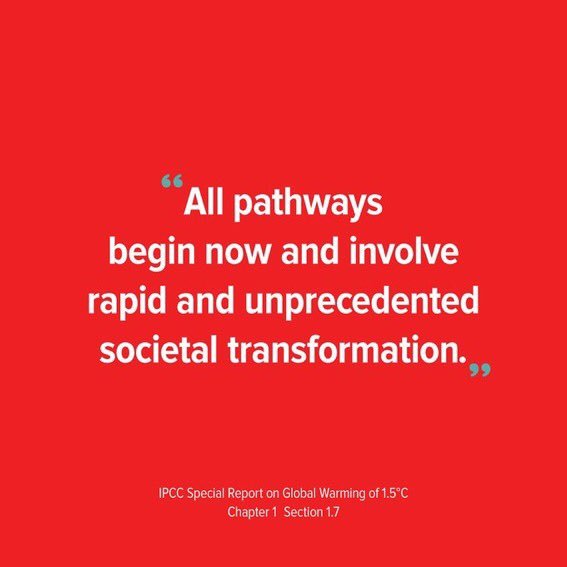
But it is precisely this rapid about-face which is necessary if the world is to survive climate change. Forget tradition, embrace the decarbonised future! Let’s today build the habits which will save tomorrow! Since Walter Benjamin wrote his Theses on the Philosophy of History, the revolutionary aim has been to pull the emergency brakes. The anti-net zero coalition is less about specific policies than a reaction against this very notion – that the future could, or should, be different from the past. The ‘different,’ the ‘slowing down,’ is immediately construed as worse. Eco-modernists reframe degrowth narratives as top-down enforcement of needless austerity – as if the ‘free’ market didn’t already deliver that in spades globally. Sacrifices are always deferred to the next generation. Just as Gen Z shouldn’t expect to be able to afford a home, the earthly home future generations are left with is on track to resemble a hellscape. A brief itemisation of the anti-net zero or ‘nostalgia coalition’:
- Dispossessed rural landowners whose grievances are redirected away from agribusiness and toward the climate movement.
- Culture warriors whose rage at “wokeness” has become indistinguishable from a rage at environmental responsibility.
- Tech libertarians who see Net Zero as state overreach into the sacred market.
- Far-right movements who encode climate denial within broader campaigns of xenophobia and militarised nationalism. Combined with a fossil-fascist fetish for extracting oil and gas, a potent cocktail of petro-masculinity, nostalgia and denialism overrides attention to the dire health impacts of fossil extraction – for workers and local communities.
- Disillusioned working-class communities told once again to sacrifice, with little in the way of vision offered in return.
The nostalgia coalition may say: this is about protecting jobs, autonomy, the countryside. But we must ask: what kind of countryside? Whose autonomy? Whose jobs? Because the carbon-intensive systems of the 20th century, roided up on public subsidies, were never sustainable, and they never delivered justice. They delivered a world of dispossession, biodiversity extinction, “a world on fire.” A suicidal nostalgia is more willing to watch the rivers run dry, the crops fail, the homes flood, than allow the possibility that another world is necessary or possible. Solar panels, public transport, bike lanes and smart municipal design are the agents of oppression, rather than necessary social adaptation.
It is for the climate left, those who recognise the necessity of reducing emissions now, whether we call it ‘net zero,’ ‘decarbonisation,’ or the end of fossil fascism (each name different but overlapping political projects), to not lapse into either moral scolding nostalgic reactionaries or embracing an eco-modernism or techno-utopianism. The climate movement has to fight for zero emissions, negative emissions, now and into the future, always-already too late. Struggles at the threshold of 1.5C are underway and differ from the struggles at 0.5C or 1C. There will be not fewer struggles, but more of them, toward 2C and beyond, if the anti-net zero coalition is not contested today.
Ewan Jenkins is affiliated with Climate Camp Scotland who are hosting a mobilisation camp fighting against fossil fascism from 22-29 July in the Scottish Central Belt. Come and join us, contribute a workshop, meet friends and allies, learn skills and experience the joy of democratic collective organisation: Climate Camp Scotland: Fighting for Climate Justice Together | Climate Camp Scotland.

We are supported only by our readers. We don't have corporate backers and we don't take advertising, so we rely entirely on your support.
Help to support independent Scottish journalism
“For nothing is more certain, than that despair has almost the same effect upon us as enjoyment, and that we are no sooner acquainted with the impossibility of satisfying any desire, than the desire itself vanishes. When we see, that we have arrived at the utmost extent of human reason, we sit down contented.” – Hume
So soon as net zero is declared “impossible,” we can sit down contented with our despair. The much vaunted Reason of the Enlightenment declares its own suicide.
That is exactly what we have to fight against, despair, especially we older people, the young can’t just be offered never-ending tales of woe and bleakness, for if that happens, we all end up at risk of becoming nihilists, like those Russian nihilists of the 19th century who didn’t believe in anything…
One way of looking at the historical development which Ewan talks about is to see it as a kind of expanding of human consciousness in an almost Hegelian sense, full of pain, horror, and mass atrocities of course, but ultimately leading us to an unsurpassed understanding of the existence of humans on Earth… That is the only consolation I can take from History…
I was recently in Nantes, and wandered around the impressive memorial to the hundreds of thousands of slaves who were taken away in chains from there for the French colonies. There is both a memorial on ground level, with the names of every single slave ship which set sail from there, and a display and exhibition underneath it – like the Germans made in Berlin to the victims of the Shoah – with quotes from Derek Walcot (“Where are your monuments, your battles, martyrs? Where is your tribal memory? Sirs, in that grey vault. The sea. The sea has locked them up. The sea is History.”) Bob Marley (the wonderful “Redemption Song”) and even Adam Smith!!!
But if you think of the centuries long struggle against slavery, the fight for a sustainable future on earth can only be seen in a historically similar time frame – it will take a long time for the new consciousness to become universal and of course there will be setbacks and defeats… And I know we don’t have time, it fillss me with anguish, but we can’t be defeatist, it’s not an option…
Nantes today is a vibrant multi-ethnic city which received the European Green Capital award some years ago. There are signs everywhere about all the trees they are planting and green projects galore. It just gave me a buzz about what can be done and it made me think of Glasgow, which, as we all know, really needs some serious money spent on it to revitalize it…
It could, like Nantes, make its slave trading connections of the past central to its identity as a new city which has reinvented itself as it moves forward with green projects and sustainable living alternatives into the future
It seems obvious to me that Scotland cannot flourish without a flourishing Glasgow…
What I mean I suppose, Ewan, and without disagreeing with your piece, is that we have to focus on the local level and what we can actually do. If you look at the bigger picture, it just leads to despair.
Unless someone comes up with a new revolutionary doctrine like Marxism or Anarchism which promises a change from late capitalism, we can only focus on the local. Because that gives people hope, and the idea of some kind of agency…
Of course, in Britain – and I am embarrassed and have been for a long time to have a UK passport; it’s the most horrible, depressing country in the world except the USA – something like Nantes’ reinvention of itself as a former industrial powerhouse / slave trading centre to a new chic and cool multiethnic city of sustainable living is probably a lot more difficult to achieve…
But it’s much more possible than trying to change the global dynamicis…
In Scotland, I seriously believe progressive people should kick out the SNP and give the Greens a chance at in 2026. There is no other way. The SNP’s catalogue of sell-outs to coporate Scotland at the expense of Scotland’s environment just keeps growing by the day.
Seriously, let’s kick them out. They’re not going to call a referendum anyway… and we are all thoroughly sick of them by now…
Old pirates, yes, they rob I
Sold I to the merchant ships
Minutes after they took I
From the bottomless pit
But my hand was made strong
By the hand of the Almighty
We forward in this generation
Triumphantly
Won’t you help to sing
These songs of freedom?
‘Cause all I ever have
Redemption songs
Redemption songs
Emancipate yourselves from mental slavery
None but ourselves can free our minds
Have no fear for atomic energy
‘Cause none of them can stop the time
How long shall they kill our prophets
While we stand aside and look?
Ooh, some say it’s just a part of it
We’ve got to fulfill the book
Won’t you help to sing
These songs of freedom?
‘Cause all I ever have
Redemption songs
Redemption songs
Redemption songs
Emancipate yourselves from mental slavery
None but ourselves can free our mind
Woah, have no fear for atomic energy
‘Cause none of them-ah can-ah stop-ah the time
How long shall they kill our prophets
While we stand aside and look?
Yes, some say it’s just a part of it
We’ve got to fulfill the book
Won’t you help to sing
These songs of freedom?
‘Cause all I ever have
Redemption songs
These songs of freedom..
I don’t think I ever truly understood the great moving power of Bob Marley’s song and lyrics (it was just something they played in the pub) until I saw it in Nantes in the slavery memorial…
But seriously, Ewan, we have to learn from the Global South to fight against the Global North… because they never ever give up hope.
The African slaves, till the end, had hope, as Marley’s song testifies – “all I ever have, songs of freedom”; nothing else but songs of hope – the people of Gaza, despite everything show hope when they celebrate a ceasefire…
So, we can’t be the other side of the cynical Tony Blair coin, the ones who say, “if they ditch net zero (brilliant analysis by the way of the term) we just resign ourselves…”
No, we don’ resign ourselves, we keep fighting until the very end… we keep fighting even when all is lost…
The reason the southern countries of Europe as so much more pleasant than the north – food, culture – is because they were invaded by the Arabs centuries ago (Spain, Italy). But they still have the spirit of the South…
Look at Real Madrid. Fckin incredible track record for coming back in the face of defeat to win. Because they never, ever give up, until the last second of any game, Real Madrid will be there… Absolutely incredible!!!
We need to recover that way of thinking in Scotland…