
Ossian, Punk Beer and Greenwash
The Landworkers Alliance and Scottish Histories of Resistance staged a land justice gathering at Brewdog’s “Lost Forest” estate at Kinrara near Aviemore on the 12th July, Col Gordon unpacks some of the issues at play.
In 1760 a book was published that would change how the world saw the Highlands. James Macpherson (1736–1796), a local schoolteacher from just near here in Ruthven, claimed he’d uncovered fragments of ancient Gàidhlig poetry composed by a third-century bard called Ossian, the last of the Fianna. These poems spoke of an ancient Gàidhealtachd in ruins – windswept, desolate, haunted by ghosts of fallen heroes. A place full of melancholy grandeur. Sublime in its emptiness. And the poems became a global sensation. Napoleon carried them into battle. Thomas Jefferson had them on his bedside table. Goethe, Burns – Europe’s great thinkers were obsessed.
But this wilderness Macpherson described wasn’t real. These hills weren’t empty and the Gàidhealtachd wasn’t some post-human ruin. Gàidhealach communities were alive. Traumatised, absolutely. But living. Just fifteen years earlier, Gàidheals had marched all the way to Derby in the last Jacobite rising. This wasn’t ancient history. It was ongoing resistance.
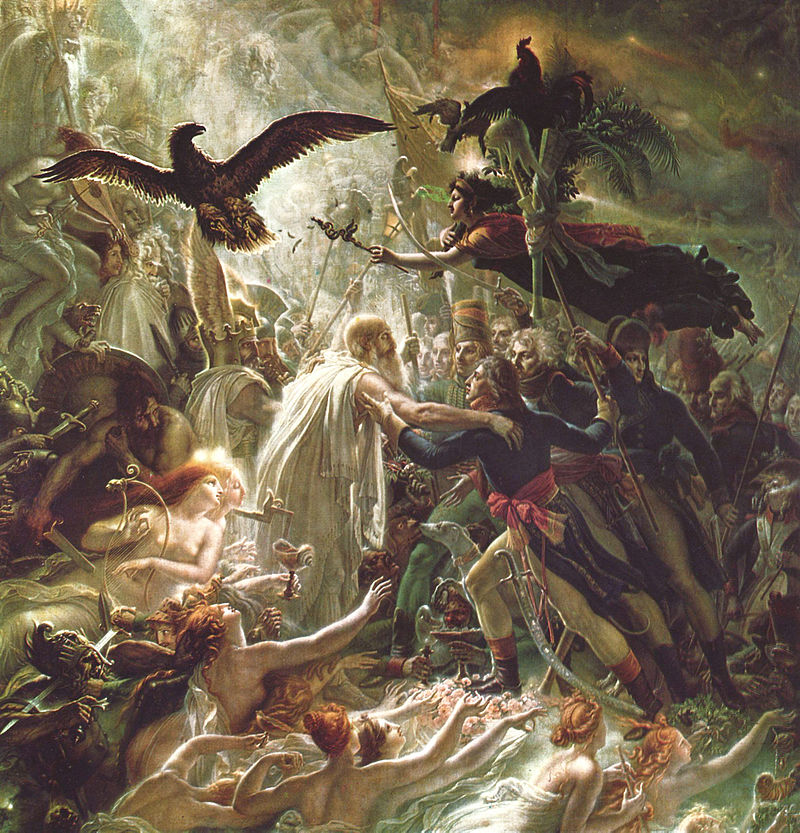
Ossian Receiving the Ghosts of Fallen French Heroes, Anne-Louis Girodet, 1805
So why did this poetry hit such a nerve? Because the Gàidheals were no longer a military threat. The clan system had been violently dismantled. Language suppressed. Culture criminalised. The Clearances were gathering speed. And just as the real Gàidheals were being emptied by force, Macpherson’s poetry offered a Gàidhealtachd already emptied by time. Not conquered but faded. Not displaced but long dead. It made the trauma safe by pushing it into myth.
And so the first great myth of Highland wilderness wasn’t written by an outsider. It was written here. From inside the collapse. But once that myth escaped, it took on a life of its own.
After Ossian came Walter Scott, who turned Macpherson’s ghost-haunted Gàidhealtachd into something even more marketable. Gàidhealtachd became Highland. Gàidheals became Highlanders. Scott’s novels painted these Highlanders not as rebels, but as relics. A loyal servant in tartan. A noble savage on cue. Romantic, archaic, and crucially harmless.
This was cultural transformation through storytelling. Ossian had written the Gàidheals into the distant past. Scott kept them there and sold tickets. He gave us the Highland Games. The tourist trails. The Balmoral fantasy. And Queen Victoria sealed it all with tartan and stag heads. The Highlands were no longer a land of resistance or subsistence. They became a stage – picturesque, melancholy, and empty. A stage empty of people. Empty of context. A backdrop for aristocrats and empire to play out their Highland dreams.
And that dream became the model for wilderness itself. Because this invented landscape of sublime desolation – the windswept glen, the ruined castle, the lonesome deer – didn’t stay here. It travelled. Across the Atlantic, to a new frontier, where American writers like James Fenimore Cooper picked up the Ossianic myth and applied it to Native Americans. Explicitly modelled on Scott’s version of Highlanders, in The Last of the Mohicans, Native Americans became Ossian’s kindred. The final members of a doomed and vanishing race, remembered not as neighbours, but as noble ghosts. And it was here, in this new frontier that wilderness became more than scenery. It became ideology. A beautiful silence built on someone else’s removal.
So, what happens when the myth of the Highlands lands in America? Henry David Thoreau picks it up. He’s enchanted by Macpherson’s “stern and desolate poetry.” He says Ossian speaks a “gigantic and universal language.” For Thoreau, wilderness becomes a spiritual force. A moral tonic. He famously wrote: “In wildness is the preservation of the world.”
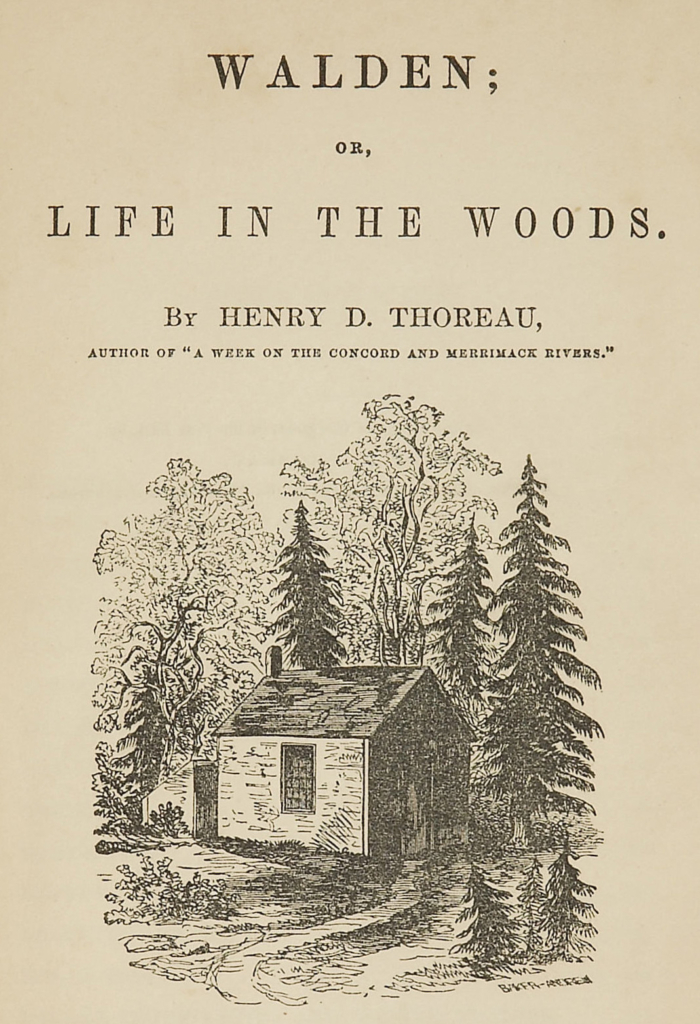
But Thoreau wasn’t talking about national parks. He was talking about a quality of being. A kind of untamed spirit he admired, especially in Indigenous people. He saw them as keepers of wildness. As holders of ancient wisdom that modern life had forgotten. But even Thoreau, for all his admiration, couldn’t imagine Indigenous people as part of the future. Their value, to him, was symbolic—their survival, aesthetic.
And this is where John Muir comes in. Muir inherits Thoreau’s reverence but turns it into landscape. For Muir, wilderness isn’t just a moral idea. It becomes physical – vast, sublime, and untouched. And that “untouched” quality? It had to be manufactured. In Yosemite. Yellowstone. Glacier. National parks were created not in wildness but through removal. Native communities were expelled, their presence denied, their practices, such as controlled burns, ignored and forgotten. As Dispossessing the Wilderness puts it –“Uninhabited wilderness had to be created before it could be preserved.”
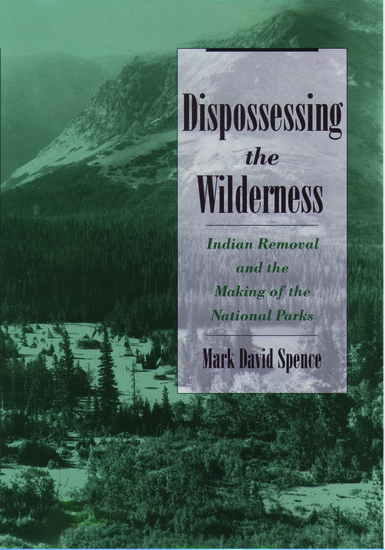
The result? A curated fiction of purity. An illusion of land as sacred only when emptied of people. Just like Macpherson’s Highlands, these new wildernesses were not ancient. They were cleared, rebranded, and sold. And that model became global. Everywhere from Patagonia to Papua, the pattern repeated – Romanticise the landscape. Remove the people. Call it protection.
So here we are – Kinrara. Just a few miles from where James Macpherson was born. Where the myth of the sublime, empty Highlands began. Where Ossian wandered through a haunted, depopulated landscape of sorrow and ruins. That was a fiction. But not an innocent one. Because even as Macpherson wrote his melancholy epic, the real Gàidheals were being emptied. The Clearances were underway. The clan system was dismantled. The Gàidheals criminalised. And the version of the Highlands that took root in the British imagination – Romantic, ruined, noble, and lost helped make all that seem natural.
That same pattern is alive today. Because now folk like BrewDog are telling their own story of wilderness. They call this place the “Lost Forest”. Thousands of acres fenced off. Marketed as restoration. Sold as carbon credits. This is rewilding for shareholders – wilderness as brand asset. And just like before, it only works if the land appears empty. Not just ecologically degraded but culturally erased. We hear this kind of language often invoked. We’re told environments such as these are “blank canvases”. No memories held of shielings. No trace of connections or commons. No mention of the violence that made this land available in the first place.
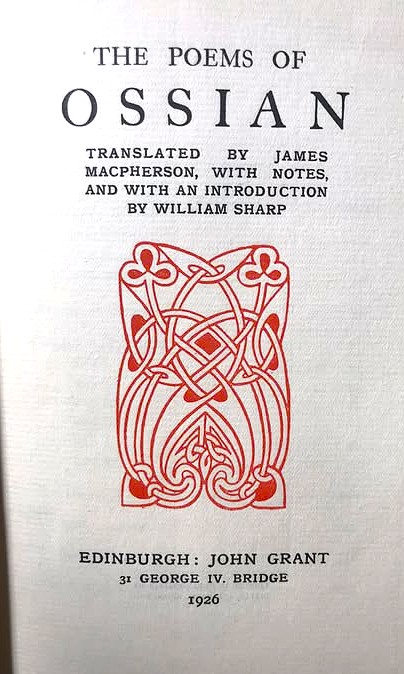
Artwork by Helen Hay, for the title page of the 1896 edition of Ossian, published by Patrick Geddes and Colleagues
What Ossian was to Enlightenment nostalgia, the “Lost Forest” is to climate capitalism, a vision of Highland emptiness that says more about the storyteller than the land itself.
But Macpherson wasn’t a Londoner imagining the distant Highlands. He was a Highlander, writing from inside collapse. Ossian might not be history, but it is grief. It’s an elegy for a world slipping away and it’s told in a mythic and storytelling tradition that is native to Gàidheals. That’s something to wrestle with.
Because what if part of our task now is not just to expose the fictions of the stories we are being sold, but to redeem the lament? To say this land isn’t lost. It’s remembered. It’s refused. It’s fought for.
We’re standing on a threshold. Between stories told about this land and stories told from it.
One says this place is empty, lost, ruined. Ready to be bought, branded, and offset.
The other says this place is alive, remembered, and still resisting. One makes the Highlands a safe sell for tourists, investors, and carbon traders. The other makes the Gàidhealtachd dangerous again. Full of memory, relationship, and unfinished history.
This gathering is not about resisting BrewDog. It’s about refusing the frame. It’s about standing at the source of the wilderness myth and saying – We’re not ghosts. We’re not nostalgic. We’re not leaving. We’re here to remember differently. To remember the people who were cleared. The commons that were broken. The forests that weren’t lost but taken. Land justice isn’t just about restoring land. It’s about restoring the story. Because “wilderness” was never just empty. It was emptied.

We are supported only by our readers. We don't have corporate backers and we don't take advertising, so we rely entirely on your support.
Help to support independent Scottish journalism
Hardly harmless. In the latest Republic UK podcast, Australian and Aborigine Senator Lidia Thorpe mentioned that people in her area still celebrate Angus McMillan, who massacred some of her ancestors. I looked this Angus McMillan up on Wikipedia, which says:
“McMillan was the leader of the ‘Highland Brigade’, a group of Gaelic-speaking men who undertook reprisal raids on the Gunaikurnai.”
https://en.wikipedia.org/wiki/Angus_McMillan#Gippsland_massacres
There’s a lot of unfinished history about.
The highlanders were in australia not by choice, they were forced.
Aboriginals were collateral damage, same as the highlanders before them in scotland
Those who are brutalised and ethnically cleansed may end up being turned into colonists themselves. Many early Australian settlers were transported there as punishments. Many American and Canadian settlers had been ‘persuaded’ to emigrate there. However James Hunter has some interesting examples of Highlanders sympathetic to Native Americans.
I agree with your conclusions completely. But my understanding us that James Macpherson wrote down what was an important Gaelic oral story, that shows the Gael had their own epic heroic literature it just had never been written down and was the antithesis of British selfish capitalism. Before mass entertainment the ceilidh when folk shared songs, tunes, dances and stories, that were committed to memory was important “a bheil dad agadsa mu na Fianna?” Do you know anything about the Fianna- was a common question. Lets get back to learning from those who were here before us= Gaelic speaking Gaels
A brilliant view of the near death of our Highland people and desertification of their land. As noted, this is a continuum, with little or no indication that the dying is understood, of great interest, or worth a deal of rage.
The answers though are out there. But where are the dreamers (planners), where are the orators (the charismatic political leaders)? The 25-40 million Scottish diaspora is held in respect and made welcome in every country in the World, in trading and finance houses, in schools, engineering, designing, building, in politics and every business. Why can’t we do the same for Scotland?
Without a visionary and detailed master plan for our Nation, such as our Highland people will emigrate, schools will empty, disappointment in the present Nation’s governance will not get us our independence. Having been in a dozen independence-seeking countries around the World, and seen the incredible progress that has sprung from freedom, back here today in Scotland it can be easy to give up in despair.
Let’s set out the future, exciting enough to get our young citizens to put down their phones, register and vote next year.
Sadly, the family of James Macpherson, the Macphersons of Belleville, later became active in the process of clearance in Badenoch. Colonel David Edward Brewster Macpherson cleared Glen Banchor in stages, the last evictions taking place in 1876. See David Taylor’s magisterial ‘The People Are Not There: The Transformation of Badenoch 1800 – 1863’, John Donald (2022), and Mary Macknzie & David Taylor, ‘Glen Banchor: A Highland Glen and its People’, Badenoch Heritage (2024).
Very well said. In the 1990s I set up some archaeological excavations at Easter Raitts, Balavil, a cleared settlement close to Newtonmore. It was owned by Macpherson, and his son cleared it in 1803. The Highlands are still being cleared and bought and sold by parcels of rogues.
Just so.
My replies get eaten.
Very fine article & thanks for the link to the book on US national parks. I did wonder (they were never terra nullis). I will get the book. A future Scottish gov needs to undertake large-scale land confiscation (most of it was stolen) with the view to re-population & probably controlled re-forestation.
In his book the Invention of Scotland: Myth and History, Hugh Trevor-Roper provides a fascinating and well researched account of the way in which Ossian was cooked up in James Macpherson’s Ruthven writing laboratory. The creator of a significant part of the Ossian epic was the elderly Jacobite Laird of Strathmashie, Lauchlan Macpherson who was a fluent Gaelic speaker as well as being able to read and write it. James was the frontman who spoke Gaelic but didn’t have either the writing capacities or the bardic knowledge of Strathmashie. So what was being cooked-up at Ruthven was not a story about emptiness and wilderness. It “was a poetical reflection of the prevailing mood among Highlanders following the catastrophic defeat of 1745, and the enforced undoing of the old structures and habits of Highland society in its aftermath.
@Graham Boyd, how do you determine that this literary fraud reflected the ‘prevailing mood’, though? Isn’t that as likely to have been faked? I’m sceptical of this hoary old insistence that poetry is truth cloaked in a lie.
Interestingly, the Ossian question appears not in the Wikipedia page on literary forgery, but only on its talk page:
https://en.wikipedia.org/wiki/Talk:Literary_forgery
Perhaps someone as knowledgeable as yourself could supply that view, quoting your source there?
Perhaps Macpherson was just telling a well known tale (s) from Gaelic oral literature that non Gaels were totally ignorant of. That is the epic heroic tales of Gaeldom’s forebears. It was oral, passed down in the telling, not written down
Exactly so! Well said that man. For those who do not know Eoghan Macphearson was the last Jacobite leader to leave Scotland, spending 9 years on the run and hiding in the caves and countryside of Badenoch (which includes Strathnashie)
Exactly so, well said that man!