
Public Diners Alone Won’t Feed the Future
Public Diners Alone Won’t Feed the Future. We Need a Public Job Guarantee for Agroecological Land Work, by Col Gordon.
Imagine walking into a warm, welcoming space in your town – a place where you can get a hot, nutritious meal regardless of what’s in your bank account. A public diner: not a food bank, not a café, but a space where food is treated like a public good. Just like a library or a park.

This is the vision behind Nourish Scotland’s campaign for public diners that is currently touring the country as exhibitions and pop-up suppers. It’s a bold, timely idea that recognises food as a fundamental human right. Public diners would provide dignified access to good meals, reduce food insecurity, and rebuild community around the simple, vital act of eating together.
[ See Public Diners – Nourish Scotland and the report Nourish_Public_Diners_report.pdf ]
But to realise their full potential and be as transformative a proposal as they could be, public diners must go further than access. They must begin to reshape the foundations of how food is grown, by whom, and under what conditions. Without this, we risk reinforcing the same extractive food system that caused the problem in the first place.
The Missing Link: Who Grows the Food?
Public diners don’t grow food. They rely on supply chains. On people, skills, infrastructure, and land. And at present, the supply chains needed to provide good, ecologically grown local food to a network of public diners simply don’t exist.
This is where agroecology comes in. Agroecology refers to a way of farming that works with, rather than against, natural systems. It draws on both scientific knowledge and traditional land-based practices to regenerate soil, protect biodiversity, reduce emissions, and strengthen communities. Crucially, agroecology is not just a set of techniques. It’s a social and political approach to food production that centres justice, care, and sustainability.
And yet, there is currently no functioning system in place to connect agroecological producers to public procurement in a consistent, affordable, and scaled way. If we want public diners to succeed, not just as stopgaps for hunger, but as engines of systemic change, then we need to fundamentally rethink how we support the people growing the food. That starts with how we treat farm workers and food producers.
But in Scotland, as in much of the UK, the routes into land work are broken. Agroecological farms, often imagined as the means through which ecologically grown food will reach the public, frequently rely on unpaid internships, WWOOFing schemes, and volunteer labour. As a recent report by the union Solidarity Across Land Trades (SALT) makes clear, these models not only exploit idealism but also effectively exclude anyone without independent wealth.
Legal changes introduced in April 2024 have rightly tightened regulations around unpaid labour, especially in care work and small-scale farming. But they have also exposed the structural absence of any real pipeline into agroecological land work. You now can’t legally run a small farm with unpaid interns. But nor can most farms afford to hire and train new workers under existing conditions.
The result? A bottleneck. Young people who want to grow food can’t find viable training routes. Farms that want to train them can’t afford to. The few models that function often do so by relying on free labour, idealism, or generational wealth. This is not sustainable. It’s not just. And it’s certainly not scalable.
If public diners are to succeed, they must be connected to a food system that is fair, functional, and ecologically grounded from the soil up. That means embedding agroecology not just in procurement, but in the economic design of the entire system.
Learning from Belo Horizonte
We don’t need to reinvent the wheel. In Beginning to End Hunger, political ecologist M. Jahi Chappell documents the remarkable story of Belo Horizonte, Brazil. There, in the 1990s, a city government took the radical step of establishing a Municipal Secretariat for Food and Nutritional Security.
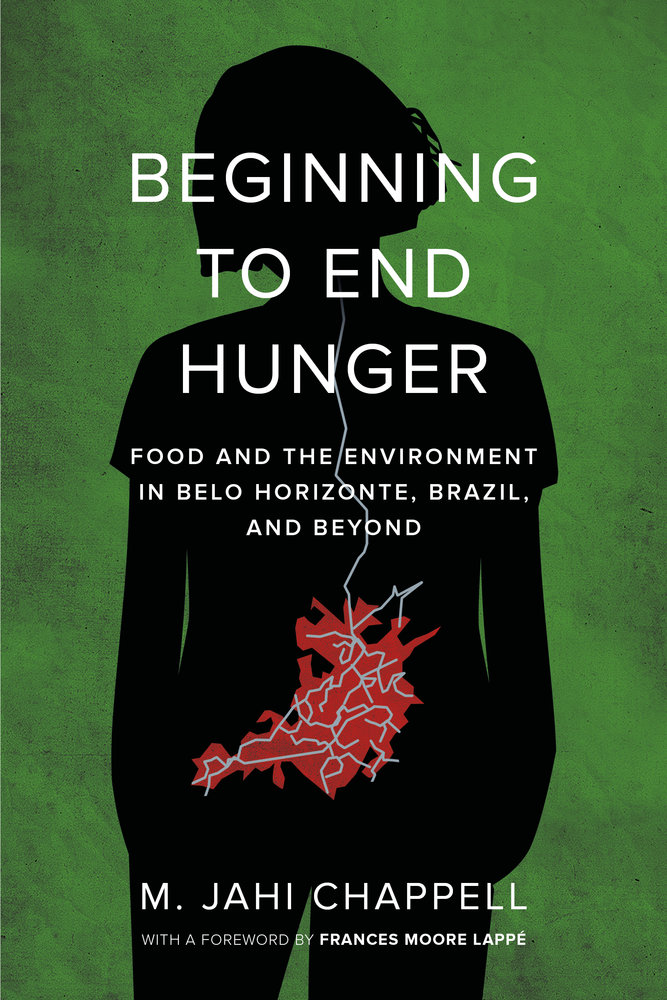
This body didn’t just manage hunger relief. It restructured the city’s entire food economy. By coordinating public purchasing from smallholder farmers, supporting agroecological production, and running subsidised community restaurants and markets, Belo Horizonte effectively eliminated hunger in a city of over two million people.
It did this not by relying on charity or markets, but by treating food as infrastructure, as something to be planned, funded, and delivered publicly. Farmers were supported, cooks were paid, and communities were nourished.
The parallels with Scotland’s public diners are obvious. But the lesson from Belo Horizonte is clear: without a linked-up, publicly supported food economy, interventions like public diners will remain isolated and fragile. We need a system that connects eaters, workers, and land through shared public investment and coordination.
Agroecology is Not Just a Technique
In his follow-up book Agroecology Now!, Chappell expands on what’s at stake. Agroecology, he argues, isn’t just a method of farming. It’s a political project. It challenges who holds power in food systems. It calls for land reform, economic justice, and the protection of traditional and Indigenous knowledge. It demands investment in education, infrastructure, and labour rights, not as side concerns, but as central components of a just transition.
In Scotland, agroecology is increasingly recognised as essential for biodiversity, climate resilience, and rural renewal. But it remains precarious and often practiced on the margins, reliant on the unpaid labour of the idealistic or independently wealthy.
If we want agroecology to move from the margins to the centre, we must treat it as public infrastructure, not as a niche or lifestyle. Public diners are one piece of the puzzle. But unless we address the labour, land, and institutional scaffolding that surrounds food production, we risk these proposals falling short.
Why Basic Income for Farmers Falls Short
Some campaigners have called for a basic income for farmers. While well-intentioned, this idea risks both depoliticising the issue and confusing the public debate. Many large-scale farmers in Scotland already receive substantial subsidies through existing agricultural support schemes. The basic income proposal is primarily aimed at those excluded from these mechanisms, particularly small-scale horticulturalists and agroecological growers. But to the wider public, that distinction isn’t always clear. Without careful framing, the campaign can appear to be simply extending charity to all farmers, rather than recognising small-scale food producers as participants in a vital public service.
More fundamentally, basic income is not a structural solution. It provides a safety net, but it doesn’t train new land workers, expand access to land, build cooperative supply chains, or embed agroecological principles. It doesn’t build the institutions we need. As economics professor Fadhel Kaboub and others have argued, basic income risks reinforcing neoliberal logics rather than challenging them. It assumes the market will remain the primary distributor of goods and services, merely softening its failures with cash. It does nothing to guarantee that people’s material needs – healthy food, dignified work, ecological repair – will actually be met. In some scenarios, it could even pave the way for further privatisation of public goods, by suggesting that individual purchasing power can replace collective provision.
What we need instead is a re-framing: to recognise farming as a form of public work, just like teaching, nursing, or public transport, and to build the same kinds of pathways, protections, and pay structures that those sectors enjoy.
A Public Job Guarantee for Land Work
The proposal is simple: create a Public Job Guarantee for agroecological land work. Anyone who wants to train in food growing, ecological restoration, or cooking for public good should be guaranteed a paid, dignified job.
This is not utopian. It’s how the NHS works. How public education works. Public money, public training, public benefit.
And crucially, this is not about entrepreneurship. Workers under a public job guarantee are not being asked to become producers trying to navigate markets. They are being paid for their labour and not for their produce. Their output belongs to the system. The food they grow enters a publicly coordinated supply chain and flows into public diners, schools, hospitals, and care homes. The sale is already made. The economic relationship is not transactional. It is infrastructural.
They are not salespeople. They are public workers. The system values their effort, not their marketing skills. This shift is fundamental.
This vision is also the only mechanism that makes real sense in light of the Good Food Nation Bill, passed a few years back in Scotland [see Nourish’s comment on the Bill here: Ceci n’est pas un Plan – Nourish Scotland] This legislation commits national and local government to delivering on the right to food, in practice as well as principle. But without the supply chains, training pipelines, and infrastructure to back it up, the Good Food Nation will remain aspirational.
We need to be clear: the market cannot and will not deliver the Good Food Nation. Where I live, in Highland Council, the last round of procurement contracts for food services saw not a single local producer or group of producers submit a bid. The infrastructure to meet local demand with local, sustainable food simply does not exist under current conditions.
Public diners are a piece of the puzzle. But the supporting structures – publicly funded training, job guarantees, land access, and supply chain design – must be built into the system from the beginning. Otherwise, we risk building a house on sand.
Universal Basic Services, Not Market Patches
This approach fits within the broader framework of Universal Basic Services. The idea that essentials like food, housing, care, energy, and transport should be guaranteed for all, regardless of income, not rationed through the market.
Public diners without public agriculture are like NHS hospitals without nurses. We must build both. That means treating agroecological farming and cooking not as private businesses or lifestyle projects, but as collective care work. Work deserving of security, dignity, and public investment.
The logic of Universal Basic Services allows us to join the dots between multiple, urgent crises: food insecurity, rural depopulation, youth unemployment, climate breakdown, and burnout in the care and land sectors. These aren’t isolated issues. They’re symptoms of a system that treats essential work as marginal, underpaid, or invisible.
A Public Job Guarantee for agroecology and food work is a clear, coherent way of addressing all five at once. And this isn’t just theoretical. In sectors where this principle is already applied, like the NHS or public education, people understand the difference between treating something as a commodity and treating it as a right.
From Welfare State to Relational State
Of course, any time public provision is raised, critics argue that the welfare state is already stretched, outdated, or failing. And in many ways, they’re right. Much of our current system was built post-war, in a completely different social and economic context.
But that’s not an argument against public provision. It’s an argument for rethinking how we design it.
This is where the work of thinkers like Hilary Cottam, author of Radical Help, becomes invaluable. Cottam argues that the welfare state needs to evolve from a top-down, transactional model to a relational, participatory one. One that’s rooted in local context, built on mutual trust, and designed alongside the people who use and deliver it.
That’s exactly what a public agroecological food system could look like: designed by and with land workers, cooks, and communities. Delivered through embedded, caring, place-based networks. Supported by clear, dignified employment and training pathways. Measured not just by outputs, but by health, equity, and ecological impact.
We are not talking about recreating a 1945-style system. We are talking about building something new. Something more democratic, more grounded, and more relevant to today’s needs.
Building the Foundations of a Future Economy
The ecological transition that’s coming will reshape every part of the economy. We will need more land workers, more carers, more restorers of the soil, more rebuilders of community fabric. These are not jobs of the past. They are not just necessary. They are the future of meaningful work.
Public diners and agroecological job guarantees are not fringe ideas. They are prototype institutions for the kind of economy we urgently need. An economy built not on extraction and precarity, but on care, repair, and regeneration.
The question is not whether we can afford to do this. The question is whether we can afford not to.
The public diners campaign is already challenging how we think about food. But as the idea gains traction and political buy-in, we begin to face a choice. Do we treat public diners as isolated interventions – nice-to-have, feel-good projects on the edge of a broken system? Or do we treat them as the foundation of a new kind of public infrastructure?

We are supported only by our readers. We don't have corporate backers and we don't take advertising, so we rely entirely on your support.
Help to support independent Scottish journalism
What about a lightweight, responsive agricultural labour conscription scheme? And maybe a few hours a week for old folk who would be happy to do some horticulture as light, healthy exercise?
Cal Gordon’s perspective on public diners being a step in the direction of a broader appreciation of an agroecology-type shift in the way we all relate to food, is really valuable. While the point made by Michelle Mouse about soup kitchens and the Salvation Army is important, there are other traditions of collective diners that also exist – such as workplace and trade-union run canteens in some European countries. I would suggest that a possibly significant aspect of the development of agroecology in Scotland would be more land in cities being devoted to food production – this would make it easier for more people to be directly personally involved in food production. Some of this is already happening, for instance through allotments and community gardens, but it gets very little recognition, and could be expanded.
I guess that Nourish Scotland hasn’t heard of the Salvation Army, or that such places are very far from being prototype institutions. Or that almost everyone calls a ‘public diner’ a soup kitchen. I doubt that people who need such institutions and those who work in them for free care much about the ecological and geographical provinance of the food.
This is brilliant and utterly timely
Back to the future? Public diners, or, in the UK context, civic restaurants (formerly British Restaurants):
https://en.wikipedia.org/wiki/British_Restaurant
While critics of the 1945 Labour government often assume that they themselves could do much better today, it’s important to learn from the strengths as well as the weaknesses of what’s been tried before.