
Jin, Jiyan, Azadî – Woman, Life, Freedom: What Kurdistan taught me
Flatlands, vast expanding flatlands jutting into a distant sun-drenched horizon. Every few hundred yards, punctuated by the Jurassic colossus of old-fashioned oil extractors. Sparsed apart by even rarer, but still consistent, oil fields with flaming towers rising above steel and industry.
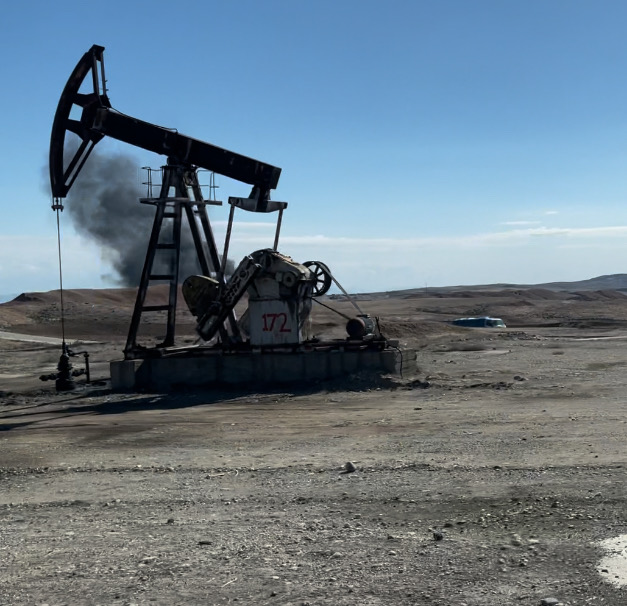
Our driver pets a small toy cat on his windshield. The sun glares, eyes shielded, as dusty, vacuous winds pour in from every open window. So dry, so filled with steel shrapnel and petroleum deposits it turns your snot black, it dries the throat and drums up coughs hidden politely under scarves and collars.
The minivan curtains flutter in the 50-mile-an-hour breeze, our journey is accompanied by traditional Kurdish music played via smartphone through the car radio.
Rojava, Qamishlo, and Amude, then Raqqa, then home. Home, a thought so distant and alien, a dream far and foreign. I have never felt more at home than here.
Here among the resistance. Here, where the children laugh between themselves and point at the foreigners. Here, where expected ignorance is met with an unmasked kindness and understanding. Oh, you, western delegates. Oh you, foreign and ignorant to the struggle, oh you, how did you get here? Where are you going? Where have you been? What will you do with our stories of fight, and mettle, and struggle and desire for freedom and home? Do you understand what it is to miss a home you stand on?
No. I don’t.
Here, among the sand planes and goat herders, the tarpaulin tents and impact craters, bombed out dairy facilities and meteoric holes in our farmland. Oh, you, foreigner, despite your unknown, we welcome you with open arms and set dinner tables. We welcome you, as we know deeply what it is to be barred, to be isolated, to be an unknown in the land your mother gave birth to you, and her mother to her.
You foreigners, bear witness to what we build, bear witness to our creation, like Allah, like God, we build from nothing for it to be torn down time after time by foreign aggressors with British-made bombs. On the first day there was light, on the last there were the Kurds.
I know not of warfare, of drones noising above constantly, of power outages and water shortages, of piggy-backed generators shared by entire neighbourhoods, of starvation, of my school falling down. My childhood home stands tall to this day. Can those hosting me say the same?
No, they can’t.
The Kurds are at the forefront of an oppressed people, of those living within, creating from, building back up after destruction. I look at the woman responsible for my being here, face set in stony concentration, calculating our next moves. In her purse are wads of thousands of notes, just enough for lunch and juice. Syrian pounds, eerily similar insignia mimicking my own home currency. I look out the window and see children chasing each other with sticks through barren farmland interspersed by homes built just big enough to fit every sleeping body of the expansive family, all hands on deck, all work necessary.

Behrouz Boochani said the Kurds have no friend but the mountains. Here in this valley, you see it as fact, concrete. This is the most beautiful place I have ever witnessed. The sun sits high in a sky mimicking an undisturbed sea, pure and blue, unfettered, untouched. It glows over such arid, empty land, but in the distance, just before the horizon steals away what little there is, the mountains tower upon us. They jut into and break the few clouds; trees, bushes and bracken litter their faces like stubble, just visible but only barely breaking through. This land, the black gold bursting from beneath it, is notoriously disputed, but by the giggles and the laughter, the songs and dancing, the smiles and handshakes and the conviction within stories shared, this land is the Kurds’. This land has only ever been the Kurds’. This land will, long after I am buried beneath my own home soil, always be for the Kurds.
The Turkish state is a colonial terrorist. It looms over us, watching from behind corners, shielded by concrete fortresses topped with razor wire. It exerts control through air strikes that indiscriminately martyr and maim the entire population of Kurdistan. Their bombs do not avoid children. Their bombs do not avoid ailing grandparents. Their bombs hone in on schools, hospitals, dairy facilities, farms and dams. These bombs have a Union Jack painted on their sides. These bombs funded my free education. These bombs funded my school dinners and cycle paths. I would not be here if not for the impact of Turkish bombing. Both in my own privilege and in my desire to bear witness. Those bombs built my childhood years while decimating the infancy of a thousand Kurds.
A dairy facility in Raqqa, where a woman was martyred for making cheese. A farming cooperative in Amude where the electricity source is scarred by a cavernous crater.
Raqqa stadium with its bullet marks, with its rusted shackles, with its impact holes from the YPJ forcing entry between each makeshift holding cell. Where children play in gymnasiums one floor above what was a prison for women held by ISIS. There is no other sports facility for children to learn kickboxing. In Kurdistan, things are not flattened to be rebuilt, only repurposed, or reclaimed.
We must let the children play where their mothers were raped, as otherwise we have nothing, otherwise we go without; and we cannot let the children go without.
Shrub greenery that thrusts its way out into the sand and dirt and blazing unshielded sun. Poppies exploding from rock caverns. In every image, every still shot, every memory, I am reminded of a resilience only force could build.
When I am asked now about Kurdistan the still frames are blurry. The feelings and views shrouded by time, distance, and a return to normalcy.
When I am asked about the place within the mountains, I find myself muted by an understanding and belief that where I was transcends human language. You must be there to understand the depth of harm and strength present. You have to have borne witness to these people to believe that such a tenacity, such a belief in the self and the cause could even exist.
Now back in the safety of Scotland, with my takeaway coffees and office job, it is difficult to paint a picture that truly does justice to such a place and a people. It is difficult to express truthfully, and wholeheartedly, that I didn’t leave part of myself there. There is a chunk of my soul that I will never get back, because it was taken, cherished, loved and smoothed in ways I still don’t fully comprehend. I have never felt so welcomed as by the Kurds.
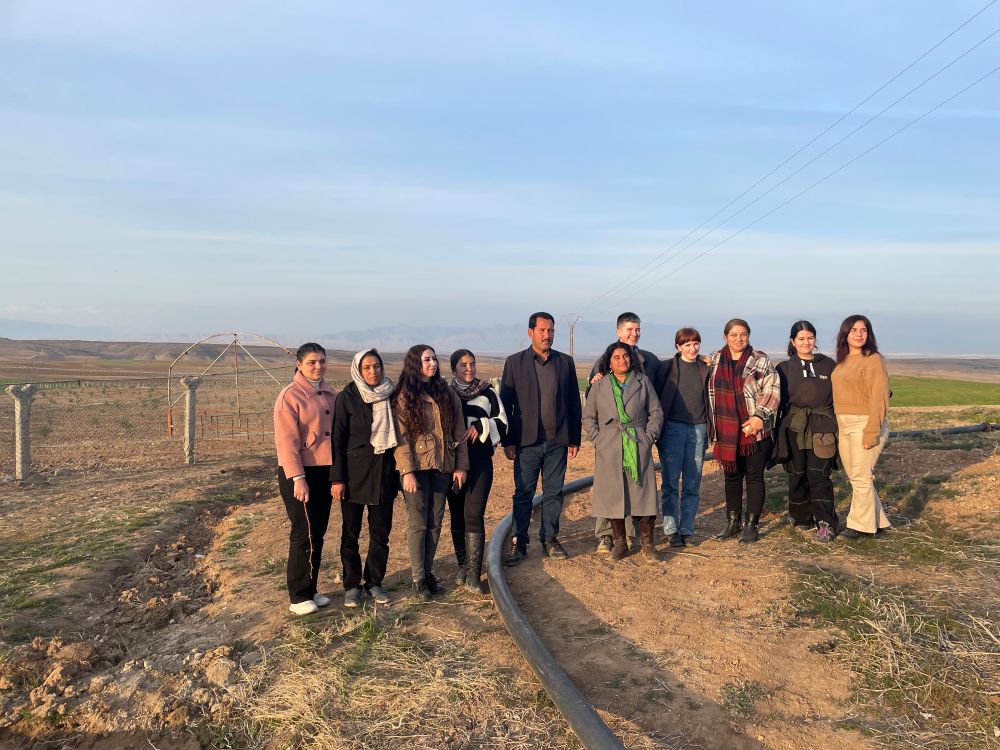
Drinking tea on living room floors with plates of nibbles, plates of lunch or dinner, ashtrays presented with tea kettles or traditional coffee. In every home we enter we become family through sheer chance and willingness. We sit thigh to thigh on floor-level cushions beside gas stoves used as radiators. White net curtains shield us from prying external eyes. Our conversations flow for hours adorned with laughter and celebration.
I show a woman pictures of my mother at her divorce party, wearing a special made sash. She is met with not only raucous laughter but joyous praise. I remember the immense privilege my family possesses compared to this one. What a gift. What a gift to have the choice, the money and the power to not only do that, but celebrate it.
In the cemetery of martyrs, central Qamishlo, the wind is knocked from lungs while counting the headstones marked with age seventeen. Children, babies, fighting for their right to exist, to live, to speak and to sleep. Fighting with their lives for their own existence.
Have you ever had to fight to live?
I think deeply about being seventeen. I think about how at seventeen, I fled deadly domestic violence for the second time in my life. I think about it as our car trundles towards Jinwar – the women’s village.
Here at Jinwar the sun crescendos behind white button mushroom-shaped houses, built by hand with stone and clay. A deep gilded pink envelopes us from beyond. There are lots of children here, at no point is their laughter silenced.
The houses circle inwards towards a central play area, communal space, and cooking facilities. We watch as men, permitted only for the day, paint newer houses towards the outer edges.
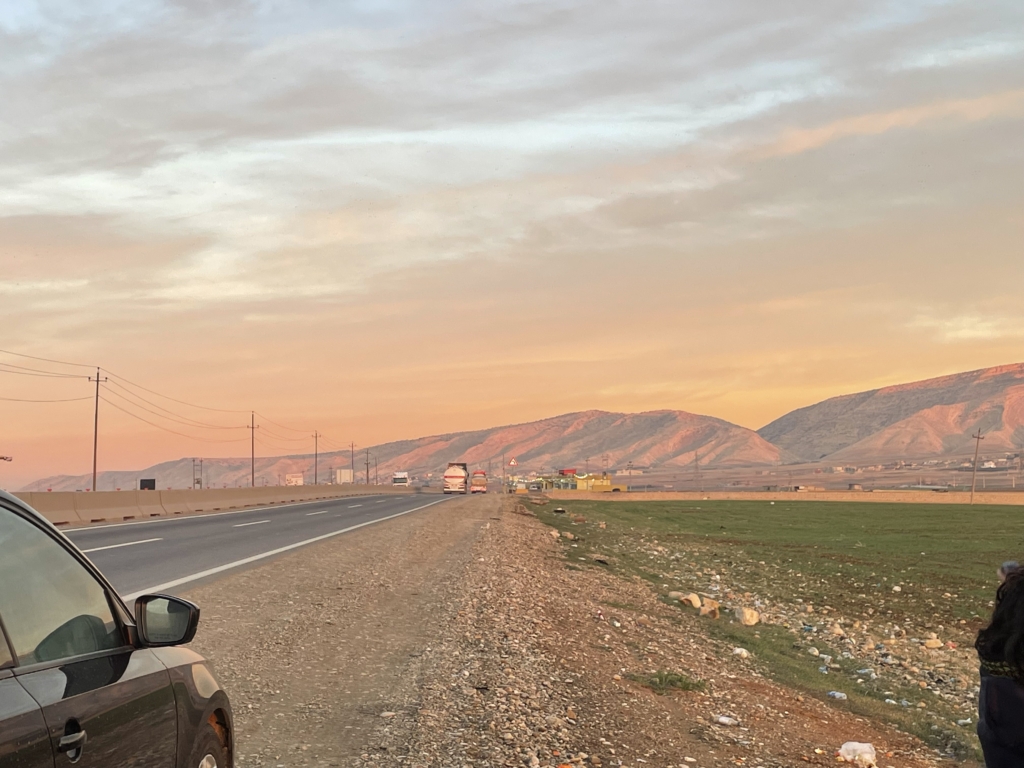
Looking outwards Jinwar is its own medieval fortress, high in the air atop a steep hill, hidden by the angle and height.
A little boy reaches out for my hand without looking up, I wonder if he thinks I am his mother, I let him hold me for a few seconds before he runs back to the others.
These are, by far, the biggest smiles I have ever seen on children, the loudest, longest laughs, the giddiest runs and skips. Despite everything, these children are happy. Despite the threat of death and destruction, these children run towards life with the tenacity of a burning sunrise.
When we get back into our minivan, our goodbyes and handshakes and hugs visibly extended for as long as humanly possible, I receive a text from my mother.
“At work today I got to visit a women’s refuge”
“I keep thinking how different things would have been if we had somewhere like this, then”
My sleeves are quickly wet with tears. Silent sobs forced into the crook of my arm. Three thousand miles apart, being taught the same lesson. The women of Kurdistan have made me want to hold my mother close, tell her everything is okay, and that she did the best she could with what she had. The mothers of Kurdistan have shown me the strength required to simply be a woman, but also to be a woman in a world under siege.
Days later, after Raqqa stadium, we are introduced to women who risked their lives to liberate the prisoners of ISIS. We sit in a conference room and are offered tea, and cakes. I am looking into the eyes of people who have fought and died while governments and state actors simply sat on their hands. Despite the feeling in my bones that what I say will never adequately address the need for and difficulty of what they have done, I say thank you. Thank you for what you do, for women everywhere, women like me. Thank you for defending us with your own lives, as even from my pedestal of privilege and wealth I can understand that aside from you, aside from your forces, no one else is risking quite so much. No one else is risking everything for the plight of women, other than the women themselves.
We sit in silence, gazing at one another and I realise despite our lives being so far apart, so separate and so different, we are united by our womanhood. United by the understanding that we are strength and power, and being so is what leads to our suffering. To show such ability, such willingness, such staunch tenacity, is why we are often relegated to second, to other, to woman.
I look at them in their army fatigues, having welcomed us so warmly, and I once again want to weep.
Immediately after Raqqa we are taken to the bank of the Euphrates. We watch families paddle in the shallows, with children and babies in arms.
Looking out into the sunset reflected by currents carried over jagged rocks, I remember that I am in the place the garden of Eden supposedly was.
The sunset tinging greenery, the freshness of produce, the new knowledge that has permanently altered the way I will eat, sleep, breathe and live.
I think long and hard about Eve, and her sin. My understanding of my birth and its being tinged in immorality. Eve, the first woman, the first to sin, the first to fail and to be scorned. Would she have bathed in these banks?
I wonder now, if all along the plight of women has been drenched in mysticism written by someone other than ourselves. I wonder about the women of Kurdistan and how they feel about the story of Adam, Eve and the Apple.
I ask myself if I could understand the plight of women better knowing they originated, fictitiously or not, here, on this bank, in this valley, in the land between the mountains.
It is here that I come to know that woman is an experience, not a thing, a life over a body, feelings more than parts.
I understand now that beyond everything, past all that I know, women will always rebuild, will always fight, will always nurture and grow life. In Kurdistan, it is understood that women are the keepers of the earth and all it grows us, its bounty.
I thank Eve for biting the apple, for without it I would’ve never known the women of Kurdistan. I understand now that the plight of women here in this region is beyond my understanding and yet familiar in my bones.
Perhaps the greatest knowledge I would ever seek was born from going against the word of man and of God. Perhaps. all I can know from now until I die was gifted to me by the Kurds, their mothers and their daughters, their children, and their fruit.

We are supported only by our readers. We don't have corporate backers and we don't take advertising, so we rely entirely on your support.
Help to support independent Scottish journalism
Beautifully written.
The first man sinned in offering Eve the apple.