
Israel: The Modern Philoctetes
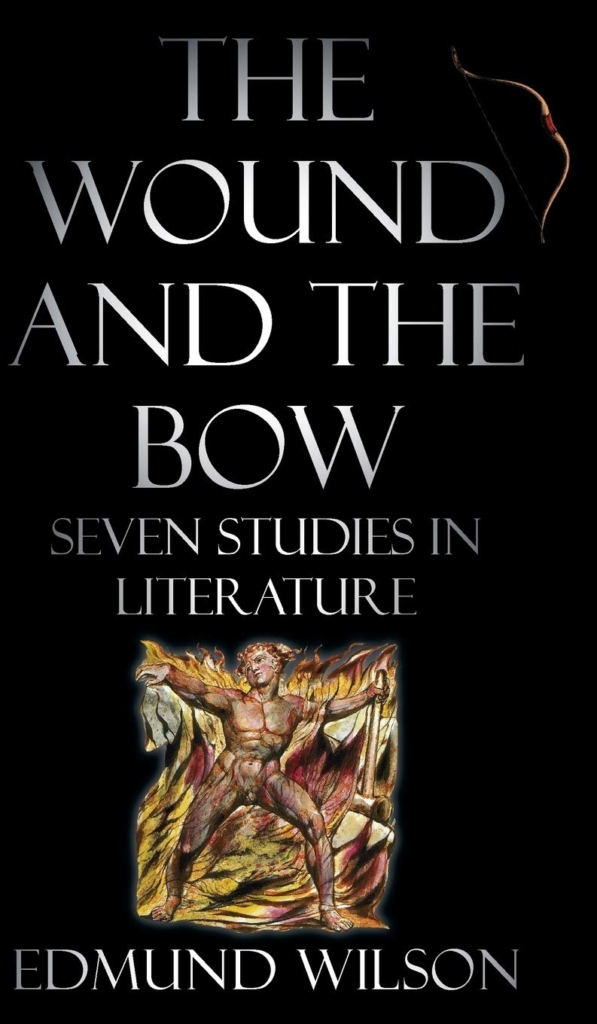
In 1941 Edmund Wilson, the American literary and social critic, published The Wound and the Bow in which he deployed Sophocles’ character Philoctetes, the legendary archer, who had a bow that never missed but who also had an evil-smelling wound that never healed. Wilson used the metaphor of Philoctetes as exemplary of the situation of many writers, the bow representing their art and the wound their neuroses. Within this metaphor Wilson dealt productively with the writings of Casanova, Dickens, Kipling, Wharton, Hemingway and Joyce.
Wilson was preoccupied with the influence of psychic trauma on the work of individual artists. Suppose we deploy the Philoctetes metaphor not on the individual psyche but on that of the nation, specifically Israel. If the bow represents Israel’s overweening military power, what then is the evil-smelling wound that, as befell Philoctetes, is causing Israel to be shunned, to be banished or more accurately, confined, within its own redoubt, to become indeed a pariah?
Unlike Philoctetes, Israel’s wound is not physical, it is psychic. Although early glimpses of Israel’s psychic trauma have been discerned by several commentators post the 1967 war, a firmer indication of its nature is provided by Norman Finkelstein, himself the son of survivors of the Nazi holocaust, in his 2000 book The Holocaust Industry: Reflections on the Exploitation of Jewish Suffering.
Finkelstein insists on making a spelling distinction between the term for the murder of six million Jews (not to mention communists, anti-Nazi Christians, Roma, homosexuals and the disabled) which he renders as ‘the Nazi holocaust’ and the relentless weaponizing of that event by the state of Israel and some diasporic Zionist organisations, which he renders as ‘Holocaust’. The book was traduced by the Israeli state and by most diasporic Jews, even those who think of themselves as ‘liberal Zionists’ (an oxymoronic formulation if ever there was one) such as The Guardian’s Jonathan Freedland when, indeed, they should have welcomed it with open arms as pointing the way towards the healing of Israel’s psychic wound.
Without theorising the process or wholly teasing out its implications, Finkelstein identified Israel’s locating the Nazi holocaust as front and centre in the state’s evolving of the Zionist narrative as a fateful decision condemning Israel and by implication all diasporic Jews to be eternal victims, forever fending off existential threats, real or imaginary. By Israel’s foregrounding the Nazi holocaust such threats were inevitably viewed through its lens, the purported embodiment of the threats, the surrounding Arab states and, of course, the hapless Palestinians, of necessity being viewed, in some sort of perverse apostolic succession, as Nazi clones. The most absurd recent manifestation of this trope was Gilad Erdan, at the time Israel’s permanent representative at the United Nations, brandishing to the General Assembly a wartime photograph of the Arab leader, the Mufti of Jerusalem, meeting Hitler in Berlin. This ‘Arabs as Nazis’ trope has been explored by Mandy Turner in a recent paper entitled ‘The Nazi Analogy and the Trauma of October 7 . . .’.
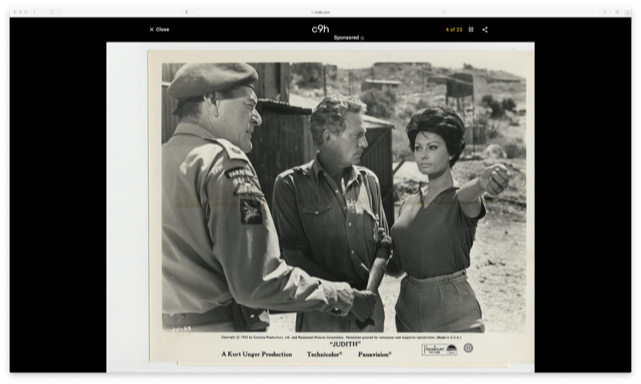
Judith (Sophia Loren), in the 1966 film of that name, displays her ‘Auschwitz tattoo’ – in her case a ‘Dachau tattoo’ – to British Major Lawton (Jack Hawkins) and Haganah officer Stein (Peter Finch).
In spelling out the wholly deleterious effects of Israel’s fashioning of its national identity around the Nazi holocaust, no writer has been more industrious than political scientist Ian Lustick who has indeed coined the term ‘Holocaustia’ for the paradigm which, certainly from the 1970s, has shaped every aspect of Israeli life from political discourse to art production. In this endeavour, Israel has had legions of unwitting allies in those western film-makers, Jew and Gentile alike, who chose to make films about the Nazi holocaust. Wikipedia offers a list of upwards of two hundred fiction films partaking of the phenomenon.
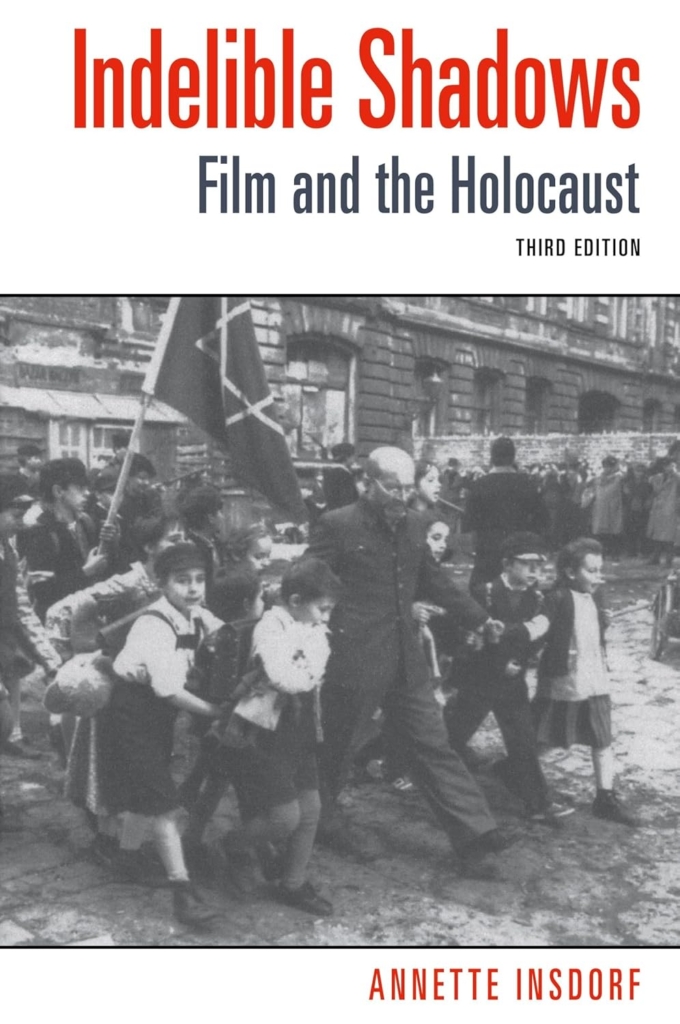
Doubtless some were made for honourable reasons – western guilt and outrage at the events – and some for less honourable ones – addiction to what Susan Sontag has called ‘fascinating Fascism’ and the melodramatic possibilities offered by the subject. There is no shortage of books about cinema and the Nazi holocaust, for example Annette Insdorf’s Indelible Shadows: Film and the Holocaust, though they tend to be strong on thematic analysis, less so on formal, cinematic analysis and the ideological implications of the latter. There is room for a genre-based account of ‘Holocaust films’ which would reveal their particular recurrences and their creation of repeated fetishized moments, central of which might be called ‘the Auschwitz tattoo’, although this should be understood as shorthand for the tattoos applied in all the death camps. Such revelations are often moments of stylistic excess, dramatic music and/or camera movements and a heightened emotional acting style. It comes as no surprise that ‘the Auschwitz tattoo’ is also a trope within Zionist political discourse, as Ian Lustick has discovered, citing a 2015 address by the then President of Israel, Reuven Rivlin, on Holocaust Martyrs and Heroes Remembrance Day:
Today, 70 years after the liberation of the death camps,
we stand before you and we swear on oath and a promise.
‘All of us, each and every one of us, have a number tattooed
on their arm.’
Lustick also reports Israeli high school students, on government-organised visits to the sites of death camps in Poland, having numbers tattooed on their arms.
Diverse writers, including Ilan Pappé, Shlomo Sand, Avi Shlaim and Rashid Khalili, have exposed the outright lies, half-truths and arrant fantasies constituting the Zionist narrative, but these have been for the most part historians, humane and rational figures for whom the political process is primarily a rational enterprise. It has taken psychoanalytically-informed writers such as Jacqueline Rose (The Question of Zion) and Paul Werner (‘On the Psychopathology of Zionism’) to reveal the homicidal, and ultimately suicidal, bind Israel has locked itself into by foregrounding the Nazi holocaust in its fashioning of its national identity. Although Rose and Werner do not put it quite so bluntly, it is not just deranged fanatics like Bezalel Smotrich and Itamar Ben-Gvir who require psychiatric treatment, it is the state of Israel itself. A way of putting it is that, in order to save what remains of the Palestinians, Israel must be cured of it its own self-laceration.
The modern Philoctetes’ evil-smelling wound must be healed.

We are supported only by our readers. We don't have corporate backers and we don't take advertising, so we rely entirely on your support.
Help to support independent Scottish journalism
It was the tracking shot in Pontecorvo’s KAPO in which the camera tracks up to a prisoner dying on the concentration camp fence which led Jean Luc Godard to say that “le travelling est affaire de morale” or “the tracking shot is a moral question”, though if I recall rightly it was Eric Rohmer or Jacques Rivette who first said more or less the same thing in a review of the film, which Godard then lifted, reformulated into a snappy line, and received the credit for…
Jaime Pena’s “EL Cine Despues de Auschwitz” claims Claude Lanzmann’s SHOAH as the foundational film of the Slow Cinema movement if I recall rightly. Not sure if I can agree with that, but anyway… It is an incredibly influential film which most of those who make Holocaust films probably don’t even bother watching…
And then there was the hugely polemical Didi-Huberman – Claude Lanzmann debate which raged in the pages of the French newspapers about 25 years ago in which Lanzmann claimed that the Camps were beyond any cinematic representation other than testimony from the victims, with Didi-Huberman, who published the only two photos from the camps taken by an inmate which were smuggled out, rebutting Lanzmann’s claim (though Lanzmann is right that it has been trivialized to the point that the reality of the horror is diluted beyond any meaning and that in general almost all of those films are objectionable).
Writers like Hanah Arendt, Kehinde Andrews and Sven Lindqvist (“Exterminate All The Brutes”) are all right in my opinion in identifying the Holocaust as the horrors of European colonialism being brought back home and applied to a native European ethnic group, ie, the Jews.
After all, as many as 10 million Congolese died under the mad rule of Belgium’s Leopold II… As Conrad wrote in Heart of Darkness, “all of Europe went into the making of Kurtz…”
Something similar could be said of Franco during the Spanish Civil War, with the brutal Army of Africa treating Republican Spaniards with the same cruelty applied to the colonized subjects of Morocco, where the Army of Africa became inured to the most brutal, unspeakable violence on a daily basis…
Colonialism is absolutely dependent on the brutalization and othering of the native population and the genocide in Gaza has revealed our leaders in Europe as merely a watered down version of the imperialists and brutal colonizers of old.. Nothing but brutal violence and dehumanization can come from it…
The neo-colonial western domination project rolls on, and I’m afraid we are all part of it to some extent or another, leading to that old question Lenin asked: What is to be done?
Thank you for this posting. I’m reeling from the amount of information involved and how, however indirectly, as Europeans, via the EU, we are contributing to holucosts to this very day. I’m Irish, from the north, I can see everywhere in my home town where the EU has transformed life and living conditions. I’ve always supported the EU but since Isreal invaded Palestine I have been more than disappointed, I’m actually very angry at Europes lack luster response to the atrocities being committed on a daily bases in Palestine. Also, it’s beyond embarrassing how many time the President of Ukraine has had to actually beg for more support, that support was never ongoing, it seemed like things had to get really critical before they acted to defend Ukraine.
Thanks, Jean, and yeah, we are contributing to the genocide in some way or other, and I don’t think anyone really knows what to do about it. Maybe we should all get arrested like Paul Laverty and just clog up the whole system?
One thing is for sure, what remained of an international, rules-based order has gone. When not one but both international criminal courts indict Netanyahu and other top Israeli officials for crimes against humanity and western government carry on as before, as if that were a minor issue, I think it’s time to say loud and clear, it’s over, Britain and most other European countries – Spain and Ireland have been a bit better, but not enough – do not believe or belong in an international, rules-based order…
Even Thatcher and Reagan slapped an arms embargo on Israel back in 1982 when the Israel’s proxies were rampaging through Palestinian refugee camps in Lebanon killing and maiming women and children.
But our leaders today simply don’t dare…
Starmer is the most spineless creep British politics ever produced… Farage and the Right are going to eat him alive…
Going back to KAPO and the moral nature of the tracking shot, this is from the Wikipedia page on the film:
“In an article for The Wall Street Journal, philosopher Bernard-Henri Lévy wrote:
Pontecorvo earned “the deepest contempt” of French director Jacques Rivette in an article in Cahiers du cinéma nearly 50 years ago for a scarcely more insistent shot in the 1959 film “Kapo.” The shot was of the raised hand of actress Emmanuelle Riva, her character Terese electrocuted on the barbed wire of the concentration camp from which she was trying to escape. The criticism hung over Pontecorvo until his dying day. He was ostracized, almost cursed, for a shot, just one.[9]
Lévy contrasted this reaction to one shot with what he asserted is the garish exploitation of Nazi history in Inglourious Basterds (2009) and Shutter Island (2010). ”
And Lévy is completely right in his last point. The total moral bankruptcy of highly talented American directors like Tarantino or David Mamet is the filmic equivalent of US foreign policy basically… They are the directors who led to a Trump government… anything goes in their films…
Scorsese and Coppola are hardly blameless either I’d say.. but at least the moral dimension exists in their work, always…
Not so with Tarantino and Mamet. I watched THE KILLER on Netflic the other day.
A really dumb film with a bad script I thought, but. above all, cleary fascistic…
But nobody ever says these things, not in the film industry, or in the press..
I mean Quintin Tarantino, the most talented US director of his generation, has the moral age of a 13 year old school boy….
The only film critic I can think of who has connected the Hollywood cinema to US foreign policy is Jonathan Rosenbaum, who, for example, pointed out the similarity between the mass day-and-date release of INDEPENDENCE DAY on thousands of screens with the “shock and awe” bombing campaign which served as an overture to the war in Iraq…
He also wrote an important book called “How Hollywood and the Media Conspire To Limit What Films We Can See”…
The role of film in war, and its exploitation for political purposes, is the subject of Andre Singer’s powerful film Night Will Fall, about the British Army film unit and the liberation of the Bergen-Belsen concentration camp.
I believe Sam Mendes just made a 40 minute film about that, Paddy…
The director Sam Fuller, later lauded by Godard and the Nouevelle Vague, was another one who was there to witness to the liberation of a concentration camp…
When Malthausen was freed, the Allies discovered Spanish Republican flags draped over the entrance. These were the Republicans who were exiled in France and who Franco had stripped of their nationality and who the Nazis rounded up and sent to the camps. As many as 10,000 Spanish Republicans died in Nazi concentration camps…
They thought they were going to go with the Allies and free Spain when they arrived to liberate them! Some of them never got over the disappointment of Spain being left to fester under Franco for another four decades…
There were plenty of Spanish Republicans who fought under De Gaulle. The legendary 9th Division, all Spaniards, liberated the centre of Paris, though De Gaulle later tried to airbrush them out of history…
The Sam Mendes film does not deal with the politics around this film, or why the footage was buried for so long. The Andre Singer film Night Will Fall explains that the film was shelved owing to the shifting geopolitics at the dawn of the cold war. The full footage has now been restored and is available from the Imperial War Museum under the snappy title ‘German Concentration Camps Factual Survey’.
No doubt, Paddy, I haven’t seen either of them…
Just so.
Sorry, correction, I meant David Fincher obviously, not David Mamet…
Hmmm. A psychoanalytical (or ‘single author’) view is unhelpfully reductionist in describing a complex social phenomenon like German National Socialism or Jewish Zionism.
For example, some victims of Nazis were other Nazis, from their various purges. As ‘undeserving’ victims they may attract less attention, but the point I want to make here is that the movement was ‘purified’ from a broad church (which accommodated trade unionists, open homosexuals, anti-capitalists etc) to an ideologically-narrower and more sycophantic in-power party of military-imperialist-racist-capital direction capable of a genocide which required a large proportion of the German population to be directly complicit, and a larger proportion to be tolerant of.
And there are some differences. Reading Ronen Bergman’s Rise and Kill First: The Secret History of Israel’s Targeted Assassinations (2018, 2019), the apartheid model of the Zionist Israeli state seems built on a laager mentality reminiscent of apartheid South Africa, their close ally; and on the British imperial model that shaped Israel’s quasi-Constitution, with separate legal systems: one for citizens; and another for intelligence/defence, the latter killing while bypassing parliament and public scrutiny. Bergman says that even Ronald Reagan was prompted to call Ariel Sharon’s massacres of Lebanese people in refugee camps a ‘Holocaust’. And that actual Holocaust survivors may have acted as something of a brake on Israel’s military-security-intelligence complex; the new generations were more aggressive. The settler movement perhaps the most rabid of all, yet the ultra-religious who provide the ideological underpinning for Greater Israel prefer to keep their own hands clean.
I think it is more helpful to see how various voices have been purged within Israel, and how the restraints have lifted outside so that both Biden and Trump administrations have seemed like the client not the superpower in the relation; what Germany’s role has been; what happened when representatives of South Africa’s anti-apartheid movement stepped into power.
After all, the British Empire has any number of festering wounds, and although is stinking like a rotting fish, it cannot shoot for shit, yet has somehow managed to sustain itself for centuries (look on these works, Nazis) without until post-WW2 having to rely on the USA as a sugar daddy (and how long will Israel last when the USA wilts?).
So, by a remarkable coincidence, Philoctetes by Sophocles is a play mentioned in chapter 5 (which I’ve just finished) of Nadia Abu El-Haj’s book Combat Trauma: Imaginaries of War and Citizenship in Post-9/11 America (2022) in context of its performances/readings (along with ‘Ajax’) by the Theater of War (whose bias towards healing the veteran the author reasonably critiques). Not only that, but I’ve just watched their videoed performance/panel/audience-Q&A which was sponsored by Scottish veterans supply-a-therapy-dog charity Bravehound (dogs are great).
https://www.youtube.com/watch?v=GeGYkcjd07Y
If you are going to apply this psychiatric model, the individual model of the veteran is more apt.
Nadia Abu El-Haj supplies this excellent quote from Simone Weil which must be wise because I was already thinking the same thing, about Homer’s work, noting that this:
“extraordinary sense of equity breathes through the Iliad … [such that] one is barely aware that the poet is a Greek and not a Trojan”
So to all the assembled creatives hovering around Bella, my prompt is this:
What if… the BBC reported on the Trojan War?
A review of books written in the last century. Get a gee-on Colin.
Spoiler: This is an article, not a review.
Unless you can up your game, you will never be allocated a bigger bridge to troll under.
I see, everything is Israels fault.
No criticism of the Islamic fundamentalist lunatics throughout the region who given half a chance would kill every Jew in Israel.
‘Peace will only come to the region when the Arabs love their children more than they hate us’.
Or if you prefer “if the Arabs laid down their arms there would be peace, if Israel laid down its arms there would be no Israel.
But hey to a certain western mindset it’s all Israels fault, those pesky Jews going on about the holocaust, why can’t they just get over the 6 million dead.
Can you explain how pepetrating their own genocide will help them get over it?
So kind of you to mention what was, after all, the stump of a projected pamphlet! [ https://www.academia.edu/116716242/On_the_Psychopathology_of_Zionism ]
2 points in constructive response to your excellent summary:
1] In regards to the linguistic conundrum raised in your first paragraph: many Jews use the term “Churbn” or “Churban” (transliterated from the Hebrew] instead of “Holocaust” or “holocaust,”, let alone “Shoah.” It refers to the 1st and 2nd destruction of the Temple in Jerusalem, and was the term used by survivors in the camps immediately after WWII. “Churban” places the event in History, rather than outside it: not as some type of metaphysical cataclysm but a very real and despicable instance of human suffering, redeemed by nothing at all.
2] As Freud points out in “Civilization and its Discontents,” if you’re going to psychoanalyse a whole society you’re going to need an awfully big couch. Which is to say you can’t simply transpose from individual psychoses to state psychoses, let alone psychoses that are actively promoted by a state and we all know who I mean–I meant what I mean. More anon.
Cordially, and in struggle,
Paul Werner, NYC