

The Trauma Industrial Complex
Bella readers will be familiar with Darren McGarvey’s work, as a musician, public speaker, and award-winning author. You can read his writing for Bella here.
His previous writing includes Poverty Safari (Luath), which won the 2018 Orwell Prize, and The Social Distance Between Us. His latest book is the Trauma Industrial Complex: How Oversharing Became a Product in a Digital World (Penguin Books).
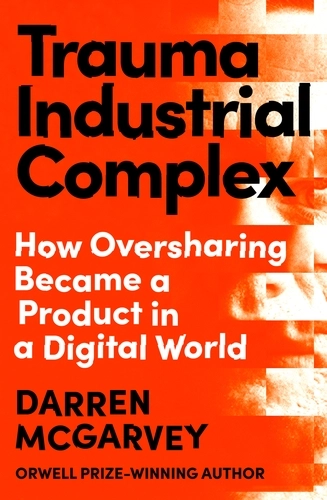
Darren writes:
“Today, trauma permeates media, from music and television to films and books – my own included. While the increasing openness is welcome, I’ve observed that this rise has been accompanied by a parallel explosion of disinformation and sometimes harmful guidance about how to deal with personal trauma.”
“In Trauma Industrial Complex, I ask the question: How did we get here? And are the stories we’re telling ourselves liberating us or keeping us trapped? In this revealing and deeply personal book, I’ll pull back the curtain, sharing the hard-won wisdom I’ve gained from the events brought on by telling my own story.”
I think this is insightful, and the thing that interests me most, because it has extensions and relevance everywhere, is the idea of the ‘commodification of everything.’
Buy the book here: Trauma Industrial Complex
More at: Darren McGarvey | Official Website |
Follow here: (4) Darren McGarvey (@lokiscottishrap) / X
Here: Stream Mista Loki music | Listen to songs, albums, playlists for free on SoundCloud
Here: Darren McGarvey (@darren_mcgarvey) • Instagram photos and videos
A very interesting conversation, thanks for posting. I like Garvey. He has his detractors but I think him pretty sound overall. The commodification of everything – indeed and I liked the angle discussed about how social media has encouraged a commodification of the self. I think this has had so many negative consequences.
I am not sure that just by having a language to describe experiences is necessarily healthy: see for example the psychoanalytical jargon that became popularised in the USA, based on flawed theory and (sometimes extremely) narrow subject pools. And before that, religious language has been notably wonky and sometimes downright evil (a diagnosis of possession by demons for whistleblowers exposing the crimes of the clergy, perhaps).
I’ve probably talked enough recently about self-traumatised military perpetrators (see Nadia Abu El-Haj’s book Combat Trauma) and how some of them have ridden the wave, helped by (often state-funded religious groups’) therapists more interested in ‘healing’ them (and possibly returning them to active duty) than making them confront their real guilt, and appropriating the victimhood and PTSD diagnostic model of civilian survivors of sexual assault.
And I’ve previously criticised McGarvey for not presenting much of an international or colonial dimension beyond contemporary USAmerican influences (perhaps his books have more range), or perhaps enough of a historical perspective.
So, I’ve begun reading Mary Annette Pember’s Medicine River: a story of survival and the legacy of Indian boarding schools (2025), where the author starts by describing the intergenerational trauma stemming from her mother’s experiences in a Catholic-run USAmerican Indian residential school. The author then goes on to describe how, in a long journalistic career, she fact-checked her mother’s stories. So, although this seems to me a world away from what McGarvey is describing, perhaps the online focus on personal trauma he describes serves a neoliberal agenda of helping obscure systemic and historical trauma. Pember writes, p11
“Quite simply: boarding schools were intended to destroy Indian families in order to destroy tribes to free up land for white settlement and exploitation.”
We have our own boarding school horror stories in Scotland, UK and British Empire, of course (mostly with fewer tiny unmarked graves, but then there’s Ireland), and sometimes survivors have got together to (often too late) hold perpetrators accountable in law courts. Yet just bearing witness must have value if society is to address its own evils. Something McGarvey doesn’t quite get onto by the end of this short interview.
On a day when USAmerican President Donald Trump is reported to have claimed:
“The United States and the United Kingdom have done more good on this planet than any two nations in human history.”
https://www.theguardian.com/politics/live/2025/sep/18/donald-trump-state-visit-uk-keir-starmer-labour-politics-latest-news?CMP=share_btn_url&page=with%3Ablock-68cc143d8f08e4203c9a6f9c#block-68cc143d8f08e4203c9a6f9c
I think we need to have a major reality check.
So, in patterns of intergenerational trauma that Mary Annette Pember writes about in Medicine River, we see possible evidence of epigenetics (just as today’s generations of Bengalis might have inherited responses to traumas from past famines). Pember writes of neurophysiological effects from childhood as well. The trauma model is essentially a flowchart of basic human reactions to threats/danger that goes like this:
The first response to danger is to flock to safe people. (I think this is well evidenced from developmental psychology).
If no safe people are around, the fight-or-flight response kicks in. (also well evidenced)
If neither fight nor flight look like viable options, the freeze response activates, which has typical psychological effects (like disassociation) seemingly evolved to anticipate trauma. (I didn’t cover this as such, but it seems pretty soundly grounded from animal psychology)
If none of the above remove the threat/danger/ongoing trauma, Pember writes that the next stage involves being drawn to most powerful (or violent) person in room/local environment, who may be the abuser or aggressive and either way unsafe. (I didn’t cover this in psychology but it would explain a lot, and seems to come from recent research into Adverse Childhood Experiences)
A BBC Timeshift from 2011 tells the Story of Corporal Punishment (basically just in the UK and not even its colonies or military).
https://www.bbc.co.uk/iplayer/episode/b0103pnb/timeshift-series-10-8-crime-and-punishment-the-story-of-corporal-punishment
It is very interesting though, as the successful arguments leading to its abolishment in schools (and then potentially homes) were:
1) the evidence from psychologists of ongoing trauma from being beaten/tortured as a child, and lasting dysfunctional effects
2) the well-known (French philosopher Jean-Jacques Rousseau wrote about it during the Enlightenment) sexual deviancy associated with beating children often on their bare buttocks (as a motive for the perpetrators, possibly unconsciously, and as a perverting effect on the victims, which essentially what Rousseau confesses).
In political-psychological terms, this might be known as trauma-bond politics, and fairly accurately maps on to a lot of biographies of far-right supporters, who seem to identify with and are attracted to ‘strong’ leaders who may remind them of their own childhood abusers or own subsequent perpetrations. ACEs are also expected to degrade cognition and affect empathy. Obviously this leads to highly dysfunctional politics, but it seems a plausible psychological model.
I don’t know if McGarvey covers any of this. He seems less interested in the systematic aspects of trauma (indeed the use of trauma to condition a certain kind of obedience in children, and in the officers and agents of Empire, as Timeshift observes) than in the individualist aspects here. Indeed it is described as a ‘deeply personal book’.