

Scottish Film: an informed and irreverent guide for movie-lovers
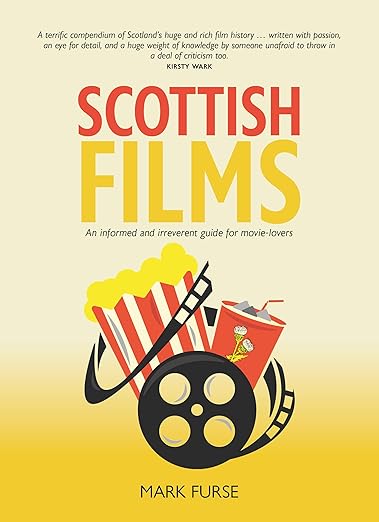
Scottish Films, Mark Furse, Luath Press, £16.99.
Reviewed by Andrew Martin
There was a time of course when home and library shelves were lined with useful and heavy reference books filled with painstakingly researched lists of films which provided the only real access we had to details of cinema in general. Within those, we hoped to find Scottish films. Times have changed.
Now we live in a world where the phone is in the pocket or on the table at all times – facts can be verified in the midst of conversations with smarty-pants friends, and there’s no need to visit an old-fashioned guardian of knowledge like a librarian. The databases are out there ready to be raided.
So, it is a bold move of Mark Furse to devote a considerable amount of time and energy to this sort of venture. As it turns out there’s still life left in the old pictures book. And – impressively – he actually seems to have watched the films!
Mark Furse’s Scottish Films is unquestionably a very good read – “informed and irreverent” it says in the subtitle, and it certainly is. It is in a reassuringly comfortable format, not too big, not too small, with a decent array of black and white photographs, and a thistle on the cover along with the popcorn and the cola.
What is a Scottish film?
We get a chronological listing of Scottish films, each rated for their “Scottishness”, a top 100 listing – plus a worst 10. The author makes his rules for inclusion clear – simply explained, a film set almost entirely in Scotland, and more than 70 minutes long. Feature length documentaries are included too – that’s why Since Yesterday: The Untold Story of Scotland’s Girl Bands is a surprise no. 23 in the best list.
The author’s definition of what is Scottish means some surprises too. The Scottish accented juvenile stars of The Kidnappers – one of my childhood favourites from 1953 – actually won Oscars. This film has Scottish actors playing Scottish characters and is filmed on location in Scotland – but oh yes set in Nova Scotia! That’s why it is out.
The 427 films are presented in date order, so the first entry is the 1917 version of Kidnapped, followed by the other versions, right up to the 1970s, then we are back to the silent era.
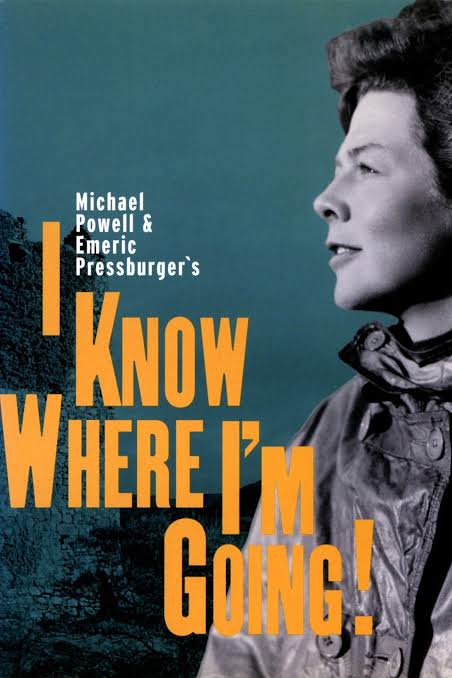
This is the approach throughout. It takes us down some long cinematic paths, so for example, all the Loch Ness monster or Mary Stuart pictures come together like a short but interesting specialist essay. I Know Where I’m Going! therefore appears not chronologically in 1945 but before the 1937 entries, following two other Michael Powell pictures. Got it? The index will take you directly to the page you want.
Perhaps I should declare my own interests now. At the end of the 1990s I attempted what I called a “selected” Scottish filmography and an account of Scottishness on the big screen for inclusion in my book Going to the Pictures: Scottish Memories of Cinema. I was less rigorous than Mark Furse I am sure and relied on those who had gone before on the printed page rather than the internet.
My own enthusiasm is for early cinema and the so-called Golden Age of Hollywood, and I have researched early depictions of Scotland and the careers of the actors and directors with a real or imagined connection to this country.
To put in my ticket’s worth, I admire Mark Furse’s epic scale achievement, but it does seem to me that the older early Scottish films are a bit neglected, but then I would say that, I am a fan of the old films.
Starting in 1917 with Kidnapped is misleading. Cinema was nearly twenty years old by then and films with a Scottish dramatic content had been around for a decade or so. There are no entries for the home-grown historically important Scottish pictures like the 1911 Rob Roy, or The Harp King or Football Daft. Admittedly like most of silent cinema, these are long-lost films but well-covered by the press and the trade at the time.
There could be more Macbeth, Scott titles, more Barrie, more kailyard, all filmed with Scottish trappings and major actors and widely seen around the world.
I was however very interested to read an extended account of a 1919 Sessue Hayakawa vehicle that was new to me – The Man Beneath, set in Edinburgh. Across the page is Mary Pickford in The Pride of the Clan. The most famous woman in the world in 1917 appears in a film bursting with tartan and dancing and ancient standing stones and a supposed Scottish atmosphere. Just think how many audiences all around the world saw this version of Scotland.
The missing silent films are significant for me as they give an idea of how widely Scotland was presented to the world, but I accept that the intended readership for this ambitious and lively book may be more interested in reminders of the films they actually saw in cinemas over the last forty years, rather than the films their great grandparents may or may not have enjoyed at their local Regal.
A valuable and brave book in the age of the internet
My quibbles on listings aside, this is a great read, a pleasure to dip into, a very accessible and entertaining account of a large and complicated subject.
Mark Furse has done a fine job in describing the essence of Scottish cinema – mostly familiar titles, the ones we really made an effort to go and see in a real picture house, before the sofa days of streaming. It is good to read his informed and entertaining views on old pals or foes like Gregory’s Girl (“some elements may be uncomfortable”), Braveheart (“simply obnoxious”) and Trainspotting (“pace, humour, and horror”)
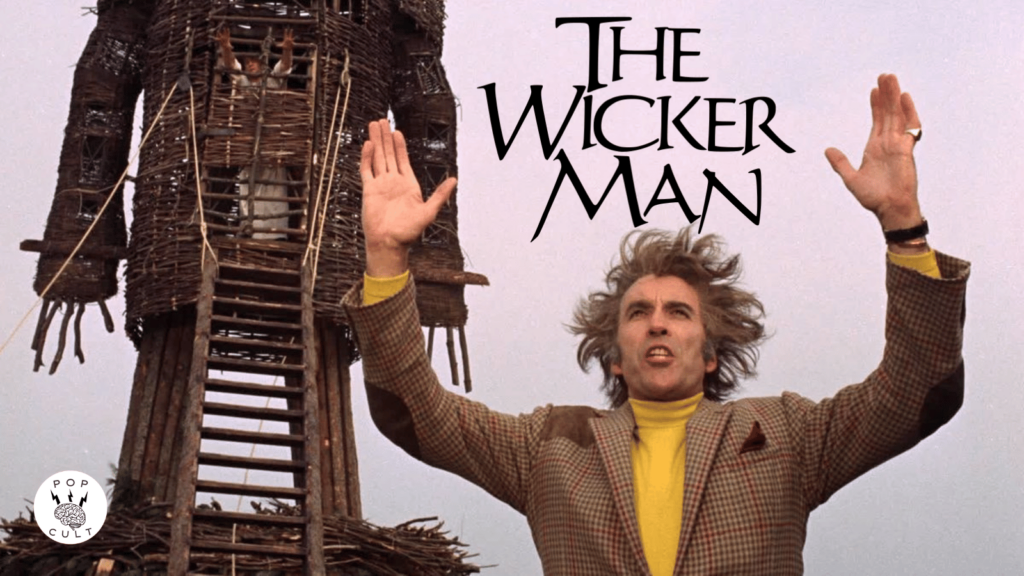
I liked his spot-on account of the “weird trip” which is The Ballad of Tam Lin, for example, filmed in part up Moffat Water in 1969. I know. I was there, hoping to spot Ava Gardner. As he rightly says it deserves to be on a double bill with The Wicker Man.
He has also spent some significant time bringing together little-known films that definitely deserve to be included. Many are from Europe and are new to me – who knew there was a version of Hogg’s Justified Sinner for example? This student of Scottish literature on screen certainly missed that. He is to be applauded for searching out so many recent titles.
I think his entries work remarkably well, long enough to provide useful and interesting information in a canny blend of quotes and personal remarks.
Fans are all experts – or think we are, so it takes some nerve and bravery to name a top 100 of Scottish films. I happen to heartily agree with his no. 1 – the great Powell and Pressburger romance I Know Where I’m Going! – how pleased those original talents would have been – but inevitably, some rankings may jar or spark lively debate. Furse knows this and welcomes it.
And as for the worst list – I am a little sad that The Brothers, that location filmed Skye melodrama earns eighth place there – is it so much worse than Devil Girl from Mars? Once seen neither will be forgotten, and admittedly Furse concedes that The Brothers may be so bad it is good …
Brigadoon is absent from the top 100. Is the lurex-threaded tartan all too much? Yet Furse says “I have sat in the GFT on a dreich Sunday afternoon … enjoying almost every minute.” I think I may have been in that audience too, and as I say if ever asked, I will settle for Kelly and Charisse dancing in that very fake but exquisite setting over many another “serious” Scottish picture.
Och, here is my very last wee grouse. I am not sure why Katharine Hepburn who has the lead in two major Scottish roles in the 1930s should have her name spelled incorrectly (though consistently) throughout. That’s the sort of thing that irritates online but surely is avoidable in print, and in a second edition?
I enjoyed revisiting some favourites, some half-familiar films, enjoyed learning about others, and relished especially the author’s comments based on obvious knowledge and enthusiasm. At times I wished he had written a personal cinema-going memoir. Perhaps that is for another day.
Scottish Films is a valuable and up to date reference book – but more than that it is an entertaining and informative read too. I can imagine many film fans will pass many a pleasant evening with these pages, revisiting the cinema-going of their distant and recent past and perhaps planning a series of encore screenings.
How many of those movie ‘romances’ feature coercive and controlling behaviour, gaslighting, negging among other uncomfortable aspects? It didn’t take me more than a few seconds to find opinions about this on the Internet. I watched I Know Where I’m Going! recently (Talking Pictures TV is a great resource for older movies, which has begun to show viewer notices about potentially offensive tropes from recent-past eras) and I was quite uncomfortable, although I can’t remember exactly what I thought when I first saw it decades ago. My understanding is that most children quickly pick up that ‘movie culture’ is not the same as real life, especially from different times and places. But that isn’t a hard and fast distinction and reality may bleed.
Anyway, something on ‘love bombing’ in rom-coms:
https://www.respondinc.org/blog/love-bombing/
You didn’t say whether animated features were included. Brave (2012) from Pixar, say.
I am not sure what your main point is about film …
Let’s just take I Know Where I’m Going – the Powell-Pressburger classic from 1945 and open love letter to the Highlands and Gaelic culture.
I recently programmed this film as part of Kirkcudbright Fringe Festival and we had a presentation on the film’s making, plot and stories within it, the main actors and the characters they played.
IKWIG is a magnificent film: one that has grown more stunning and moving with the passing of decades.
Yes we can see lots of complexities it raises about power, money and status, about absentee landlords, incomers and generational memories in the Highlands. But I don’t think the film or its nuances can just be brusquely dismissed.
@Gerry Hassan, what makes you think I want it to be the case that this or any “film or its nuances can just be brusquely dismissed”? I am all for critical study of cultural artefacts. Indeed, I’ve been studying a little in the area of movies quite recently. As audiences, we should be aware we are swimming in propaganda, something not lost on the cinema-going British public of the era around WW2.
Just because a movie makes you feel good doesn’t mean it is ‘brilliant’. Those are exactly the kinds of products we should be particularly critical of. Jingoism is built on such foundations.
You raise some relevant points, but omit the most significant: what *isn’t* featured in any given cultural artefact. As time passes, more people have the opportunity to point out these silences (as well as other distortions, flaws and sometimes outright lies), add important viewpoints and address taboos, which is why many movies lose their public lustre over time. Maybe you’re still a big Gone With the Wind fan too, I don’t know.
https://en.wikipedia.org/wiki/Gone_with_the_Wind_(film)
The Scots tend to cling to anything shot in Scotland, Sleeping D, there’s a kind of desperation about harping on about IKWIG, which is a quaint and enjoyable romance, but from a totally different era, an era when people needed heart-warming stories after the horrors of WWII…
But film really takes off as an art-form from about 1960 when the French Nouvelle Vague appear on the scene. Most of them are critics who become film-makers, but their movement, like a piston, goes both forward into the future with the new kind of films they make, and backward as critics to reapparise the film canon which they feel has been unkind to a whole series of directors who they advocate, most notably, Alfred Hithcock, who left England because he was fed up being treated as an inferior by the then popes of English culture, and who is refashioned by Francois Truffaut in his famous book, Hitchcock-Truffaut, as what they called an “auteur”…
The idea of the auteur which Truffaut and Godard and Rohmer expounded was that, even when making films written by others and produced by the US studios, the imprint of an artist would always show through…
They also of course, lauded Italian neo-realism, and especially the figure of Roberto Roselini, who left behind the studio and went out into the world to shoot in natural locations and changed everything with Paisá, though it is the earth-shattering moment when the character played by Anna Magnani is gunned down by the Nazis in Rome, Open City, which is for me one of the most moving and arresting moments in the history of cinema…
Truffaur, Godard, Rohmer, Jacques Rivette and of course the great Agnes Varda, who arguably shot the first Nouvelle Vague film with La Pointe-Courte, completely changed everything. I don’t think it’s an exaggeration to say they ushered in our age, along with Elvis and the Beatles, and changed everything…
They were imitated all over Europe, and their influence is still felt to this day…
How can you expect to be a cool, hip, country without a vibrant film scene? Scotland has long since started to look a bit square to me…
It sounds like an enjoyable enough and light-hearted book, but the lack of film-making in Scotland is no laughing matter. It’s a national tragedy.
Not one Scottish film-maker, over the 125 years since film was invented, with a sustained body of work shot in Scotland. Probably Bill Forsyth is the nearest thing to that, and he only shot five or six features films.
Not one big name, not one indisputable figure – not even Bill Douglas arguably – who is an international reference for Scotland on film, unless of course we count actors, but that isn’t the point I’m making, though probably John Grierson was that back in his day, though devoted to documentary, the last thing a country under the tumb of dour Calvinism needed..
No charismatic intellectual figure like Godard or Truffaut or Rohmer, no poet of realism like Rossellini, no great stylist like Fellini, no born rebels like Fassbinder or Pasolini or Eloy de la Iglesia, and no women pathfinders like Chantal Akerman or Agnes Varda… I wonder what Lynne Ramsay’s career would have been like if it had been an option to spend her career making films in Scotland…???
No remarkable nature films even, you might have expected someone to have set about shooting the Highlands of Scotland in a poetic, cineamtic way…. and a well nigh complete severance between Scottish intellectual traditions and the cinema, or better said, the pictures, because that’s the idea, we don’t take cinema seriously as an art form and never did, we go to the pictures…
It’s a really bitty, scrappy, incoherent body of work you are describing, and that films being shot in Scotland serve as a criteria tell us how disjointed it all is…
We have already lost out in terms of film-making for more than a century, it’s high time this SNP government raised the white flag and instead invited an international panel of experts to help draw up a sustainable Scottish film policy in line with almost every single other country in Europe…
As for “I Know Where I’m Going”, it is a kind of English fantasy about Scotland…
I personally want to see films about real life in Scotland, past or present, not the kind of whimsical romance P&P made…
How come so few Scottish film-makers have broken through since the SNP came to power?
I mean, what are they teaching people at film school in Scotland?
I really don’t know, but it seems to me totally extraordinary that, 20 years since the advent of digital, there aren’t more Scottish film-makers on the international scene…
The film-school in Edinburgh, and other institutions, don’t seem to be plugged into the European scene, and so with the sole exception of Luke Fowler, whose body of work (which I haven’t seen, cause I don’t where I can find it) would fit into that category of small European art film which are about half the films they make in Europe…
We don’t seem to make those films or think they are important…
The people at Screen Scotland are geared to making market driven films instead of small arthouse pictures which is where all the prestige lies…
If you want an example of how to make a film with no money, look no further than Chantal Akerman’s NEWS FROM HOME, a film which consists of the voice of a character reading letters to her mother off screen and shots of New York….
Or the work of Jonas Mekas, the Lithuanian flaneur film-maker with no money who bummed around New York back in the 60s and inspired a whole new way of thinking about film-making…
Something is deeply wrong with government’s approach to native film-making in Scotland…
I mean, just taking a quick look at the Scottish Screen Academy courses in Edinburgh, well, it’s just so dry…
You go there, you pay quite a lot of money, and you learn a technique…
Well, these days, that’s not a film-school, that’s like a tecchie college….
If you want to have a European film industry, you need a film-school which would include something about painting, something about film history, something about the Scottish Enlightenment and Scottish Romanticism, something about the Scottish Renaissance…
In short, you need to ground young people in Scottish and European culture and ways of looking at the world, and obviously you can only do so much….
These students are coming out into a feriociously competitive market, the English speaking film and TV market, and most of them probably won’t succeed profesionally, and so what are they left with?
I mean, teaching young people about the relationship between painting and film, or philosophy and film, and film history and film, that’s the kind of film-school we need…
The famous Spanish film director, Carlos Saura, when he was prepping a film, would go to the Prado Museum in Madrid and sit looking at paintings all day…
It’s the image, it’s all about the image… that’s what film-making is all about, the moving image…
It’s not about technique. And if that’s all you’re getting at film-school, and besides, these days, with all the technology, about half of what they used to teach at film-school is now done automatically, well, that won’t get you very far…
And then, what about the archive? How come no one is going into the national archive and making even a small film about the history of film in Scotland?
In David Bruce’s Scotland The Movie, which is a kind of compendium of all things filmed in Scotland, there is a still frame from a short piece of amateur footage called Great Western Road: a Sunday in 1914…
…it shows Glaswegians who have just come out of church walking along the G Western Road in their Sunday best…
It was shot by James Hart, the then manager of the Grosvenor cinema…
Some of these ghosts are looking at the camera… the beguling still makes me want to find that piece of footage… I guess it must be in the NLS?
Delving into the arvhive and reflecting on time past, thinking about film as a kind of painting, playfully interrogating our intellectual traditions – or even just exploring our Enlightenment – these are some of the things you would expect film-makers to be shooting in Scotland…
Small, prestigious films which would put us on the international festival map…