
Since Yesterday: Nothing Has Changed
One year after the premiere of Since Yesterday: The Untold Story of Scotland’s Girl Bands, girl bands aren’t the problem – the system is.
Making The Film
I remember, quite clearly, the first time I saw a girl band on stage. It was the denim-clad B*Witched at the SECC in Glasgow in 1999, supported by Daphne + Celeste. I was there with my best friend, Debs. At the time, it was a guilty pleasure to be fans of both bands – B*Witched weren’t as cool as the Spice Girls or All Saints, and Daphne + Celeste – well, what can you say. Let’s not forget their relentless bottling at Reading Festival in 2000, in hindsight, two young girls subjected to predominantly male anger and violence. They never waivered, soldiered on, smiling sweetly, and I (imagine) directed U.G.L.Y at every deserving man in that audience. Post-punk-pure-pop. Years later, in our twenties, me and Debs would form TeenCanteen.
During the interim years, my already bursting-to-full record collection had become overwhelmed with The Marvelettes, The Supremes, The Cookies, The Bobbettes, The Ronettes, The Crystals, The Shangri-Las, and countless compilations. The predecessors, the pioneers, gangs of girls with thick harmonies, finger clicks like bubblegum pops, carefully choreographed routines, go-go boots, and magic marker eyeliner. I was obsessed.
One night, DJing at an art school party in someone’s flat in Edinburgh, my friend Jenna stuck Since Yesterday from Strawberry Switchblade on the turntable, punched me in the shoulder, and said you will love this, they’re from Glasgow and my life changed. Truly. In ways I would never imagine. A girl band, like the ones I loved, but from right here in Scotland. Dark lyrics wrapped up in sugar-coated synths. Years later, as I type this, I still get shivers running down my spine when the la la-la laaaas kick in on the first chorus.
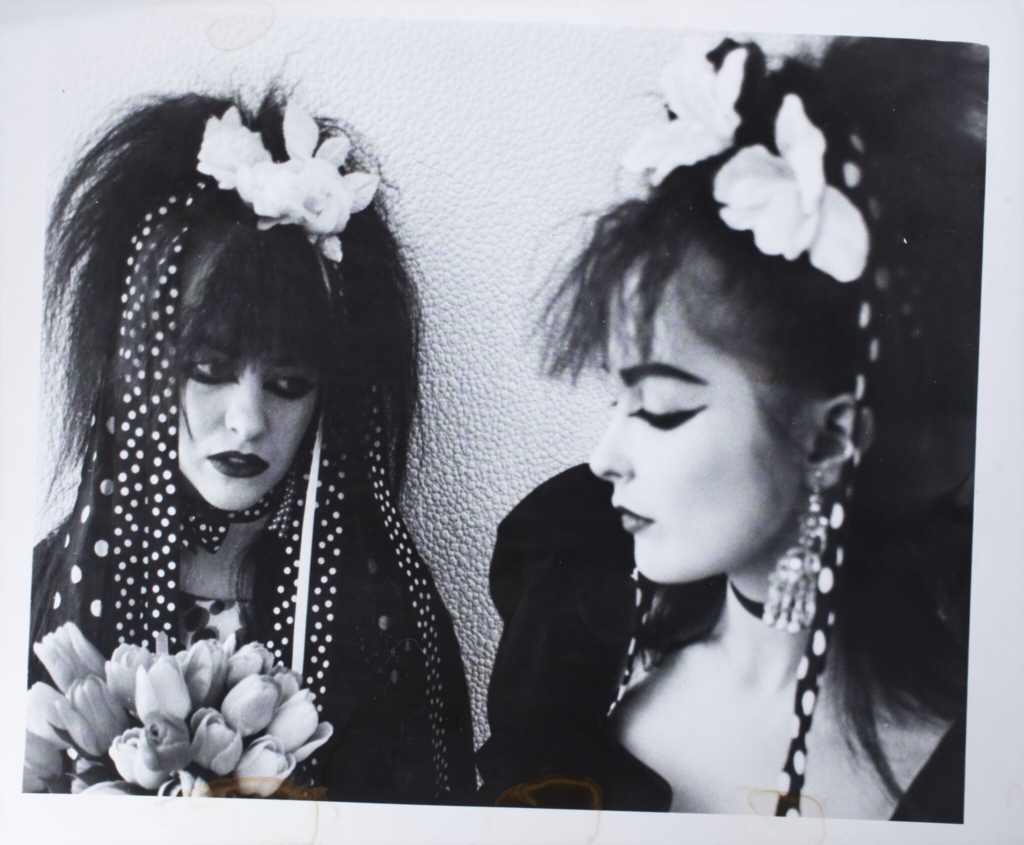
Strawberry Switchblade, photo credit Peter McArthur
Strawberry Switchblade initiated a search to uncover other girl bands from Scotland. I not only found their records – The McKinleys, Ettes, Twinsets, Sophisticated Boom Boom, Sunset Gun, His Latest Flame, Hello Skinny, Lung Leg, Sally Skull and The Hedrons – I tracked them down and met them, spoke to them, heard their stories, listened intently. I interviewed them in rooms across Scotland, not venues or recording studios, living rooms borrowed from pals, front rooms. Homes. I spent eight years of my life doing this to create and complete the feature-length documentary ‘Since Yesterday: The Untold Story of Scotland’s Girl Bands’. The film takes us on a decade-by-decade ‘audio-visual mixtape’ guided tour of all the bands and takes a critical look at the barriers women have faced making music in the past, and still face today. It asks how we can inspire young women to make music if those who do so are continuously erased from our cultural history.
Everything these women said, I could relate to; I had experienced, I had felt. The excitement of first rehearsals and gigs. Shoddy tour accommodation and being skint on the road. The elation of discovering songs you could make with friends. Being told how to dress. Being told how to sound. Being told how to change to fit into a mould that the record industry could pump out again, and again, and again. Being asked to be what men thought a girl band should be, not what we knew we could, and would, be and become.
I spent eight years of my life speaking to these women, tracking down forgotten archives in shoeboxes under beds, stuffed at the back of wardrobes, and gathering dust under sheets in attics. I was fuelled by a deep desire to be seen and heard, to justify my right to be on stage with my own girl band. To ‘normalise’ my music making. Those eight years equate to a quarter of my life. Dedication takes time.
The film received its world premiere at the 77th edition of the Edinburgh International Film Festival 2024. We were the closing film. When tickets went on sale, we were still in the edit suite, making finishing touches. My phone pinged relentlessly as people scrambled to get tickets. In the space of 15 minutes, we’d crashed the EIFF website due to demand and sold out of all our screenings. Our editor, Lindsay Watson, texted me saying, ‘OMG this is like the Glastonbury effect!’ Looks like I wasn’t the only girl band obsessive out there.
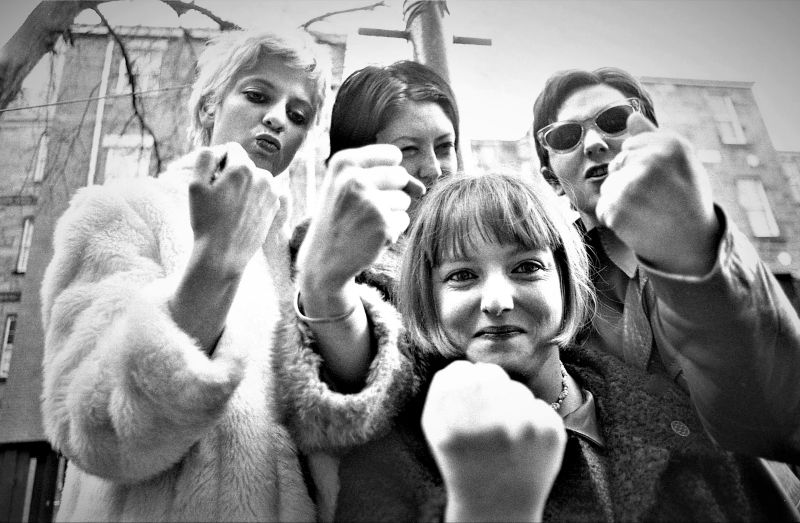
Lung Leg, photo credit Graham Gavin
We took the film to America for the Sound Unseen Music Documentary Festival and down to London for Doc’n’Roll before a short UK cinema run, which saw us break into the box office at GFT. On our opening night in Glasgow, we’d organised a gig at Mono for the after party, which saw Sophisticated Boom Boom take to the stage for the first time in 40+ years. I was so overwhelmed that I had to go and throw up in the bathroom. Press reviews were flying in left, right and centre from The Guardian, The Hollywood Reporter, the NME, spots on Women’s Hour, and a review on Mark Kermode’s podcast. My proudest moment was seeing Jeanette McKinley grace the cover of a magazine with a five-page spread on her glittering career. It was long overdue.
Glasgow Women’s Library: One Year On
After the cinema run, the film was broadcast on BBC Scotland and has been on iPlayer ever since. All these bands, their stories and songs have been beaming into homes across the UK for just under 1 year. Once you broadcast on TV, no one really wants to screen your film in cinemas or at events anymore. But one year on since our premiere, Glasgow Women’s Library did. I wasn’t sure anyone would attend (it’s still on iPlayer after all), and tickets were moving slowly. So I logged into the Since Yesterday Instagram to make a few posts to promote it. Unexpectedly, one post went viral, and we immediately sold out. Our followers increased overnight, as more shares and likes accumulated. I’d unknowingly sparked a conversation.
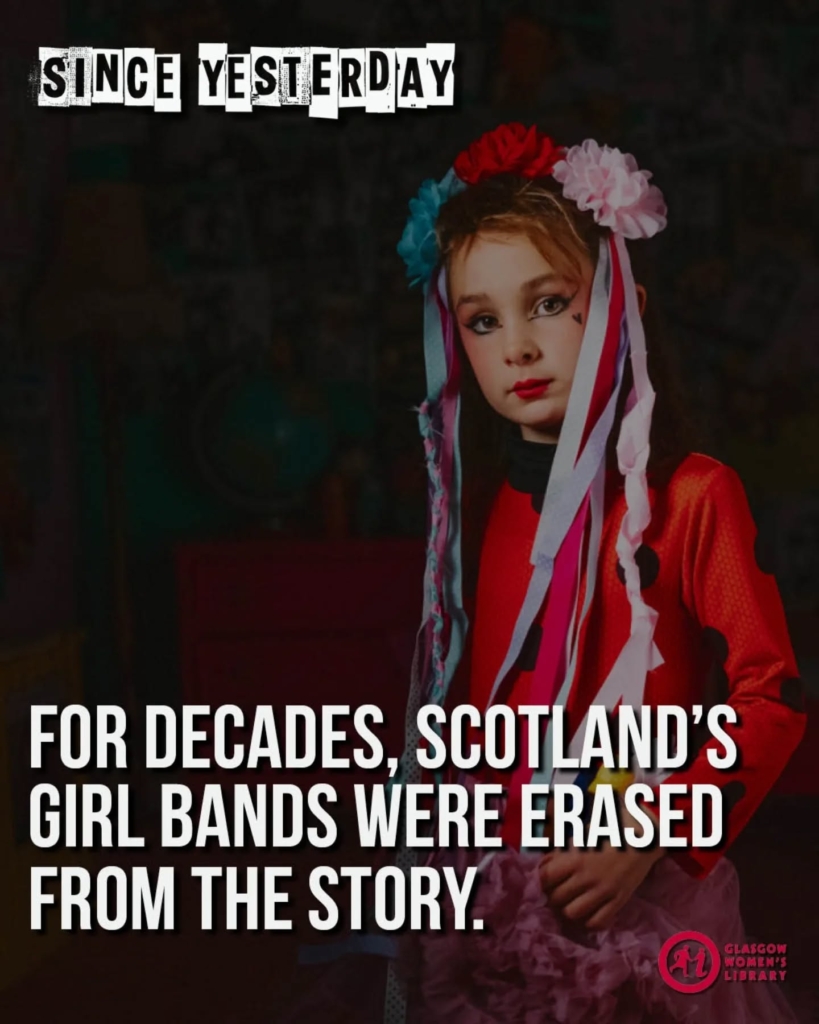
The post said ‘What if girls grew up with a different wall of heroes? For decades, Scotland’s girl bands were ignored, overlooked, or erased from the story. So we built a bedroom set and covered every wall with the bands’ history forgot, a visual mixtape of the women who were always there, even when the industry wasn’t looking. Because if she can see it, she can be it.’
After the screening, I hosted a panel discussion to discuss what had changed since the film’s release – and what still needs to change for women making music in Scotland, for the women in the film, for me, for the young women watching in the crowd.
The panellists represented the past, the present, the future, and the reinspired. Annie Spandex and Jane Egypt from Lung Leg, newly reformed and planning to record their long overdue second album (fun fact: did you know the first ever girl band from Scotland to manage to get to the step of releasing a second album was Honeyblood in 2016?!), Tamara Schlesinger AKA MALKA – CEO of Hen Hoose, an incredible collective of women and non-binary musicians pushing for change in a patriarchal system, Beth Black – a passionate activist who founded new-girl-band-on-the-block flinch. and ensures the bands of the future start in a safe, supported environment via Girls Rock Glasgow, and Radhika Dade- one of the next generation of young teenage women picking up and playing music in Scotland on their own terms, making dreamy indie-pop that floors me. Members of Bratakus (two young sisters from the Highlands who specialise in politically charged punk rock’n’roll) and Angelface (the best new girl band in Scotland that you haven’t heard of yet. Think The Sundays meets Big Thief with a massive dose of harmonies a la The Roches) were in the crowd.
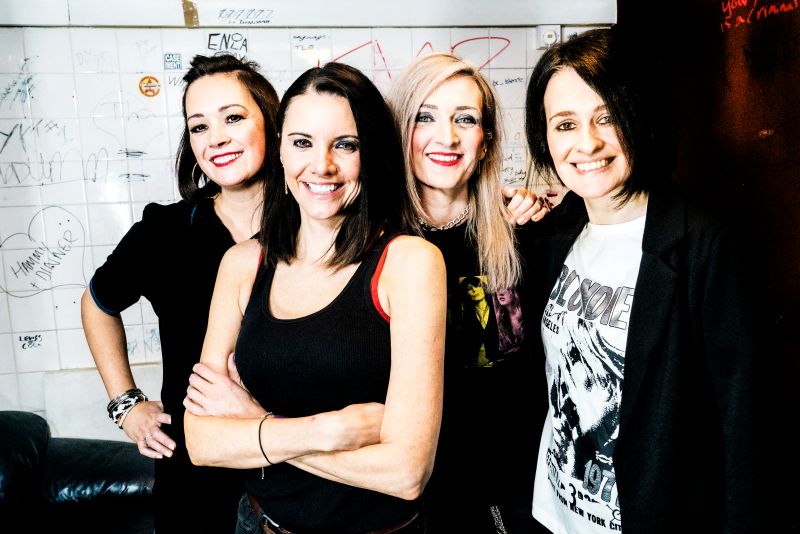
The Hedrons, photo credit Chris Hogge
Since interviewing Annie Spandex and Jane Egypt for the film, Lung Leg have reformed, so I wanted to know what had changed in the music industry since first starting out in the 90s. What progress had been made now that they were performing and making music in 2025, compared to 1995.
You see, there’s a bit in my film that quotes Vick Bain’s ‘Counting The Industry’, a gender gap analysis of over 300 music publishers and record labels in the UK, that says female artists make up just 20% of artists signed to major record labels and that only 14% of songwriters represented by UK publishers are women.
There’s another bit in my film that quotes a YouGov poll that says 43% of female festival goers under 40 say they have experienced unwanted sexual behaviour at a music festival.
There’s a final bit in my film where we show a stat from the UK Government Misogyny in Music inquiry that declared women working in the music industry face ‘endemic’ misogyny and discrimination, where sexual harassment and abuse is common.
Annie and Jane said nothing had changed.
Nothing had changed in 30 years.
If she can’t see it, then she can’t be it.
In an unused interview for my film with musician KT Tunstall, she said it starts at a young age and that ‘you need a constant wall of examples… The record industry knows what sells, and 4 or 5 white guys sell, so that’s what they keep pumping out’. Music journalist Lisa Marie Ferle also told us, ‘I think there’s definitely something to be said for seeing people who look like you picking up instruments, that’s very inspiring’.
DF Concerts’ annual music festival, TRNSMT, in Glasgow City Centre, announced its 2025 lineup days before our screening at Glasgow Women’s Library. This year, the festival would be headlined by Richard Ashcroft, Kasabian, and Lewis Capaldi, mirroring their preference for cis-white men in 2024 (Liam Gallagher, Gerry Cinnamon, and Calvin Harris). In fact, the only woman to step on the main stage in a headline appearance at TRNSMT is Candida Doyle, keyboard player for Pulp, in 2023. Put more simply, in 9 years of headliners at TRNSMT, there hasn’t been one woman or woman-fronted band to headline. That’s 0%.
Much criticism took place on social media, including a viral post on Hen Hoose’s Instagram page, calling on DF Concerts to sign the Keychange pledge, whereby they commit to 50/50 gender representation on their bills. Both Hen Hoose and Girls Rock Glasgow gave statements to the BBC for an article titled ‘Why are there never female headliners at TRNSMT festival?’, which, unusually, DF Concerts declined to respond to.
Defensive responses in the comments said ‘but there are loads more women playing on the bill, why are you complaining?!’ and yes, there are (journalist Anne Francis published in her blog KeepItWheesht that the current lineup announcement equates to around 50%), and I welcome that, I really do, but we have to remember: almost equal isn’t equal, and that no women in headlining positions suggests that women are only good for support, women don’t headline, headlining presents a shatterproof glass ceiling. A clear message emerges: headline slots are unachievable for women making music.
Annie and Jane said nothing had changed.
Nothing had changed in 30 years.
Girl Bands Forever
If we zoom out of Scotland, a wider picture emerges.
On the 30th October, BBC 2 broadcast a special Girl Bands edition of TOTP2, followed by a new three-part documentary called Girl Bands Forever. I watched with my partner, rattling off facts about every band on screen and listing the number of sisters on stage, a common thread of Girl Bands, as well as obscure facts I’d learnt over the years. By the time Girl Bands Forever started, I was absolutely ready to grab my hairbrush microphone and sing-along.
What followed was the stories of some of the UK’s biggest and best-selling Girl Bands, from the nineties to the present day – Eternal, All Saints, The Spice Girls, Atomic Kitten, Mis-teeq- celebrating glorious music as well as careers marked by the usual cis-white-men music moguls, lack of pay, and careers halting due to pregnancy. It was like watching an amplified version of Since Yesterday, demonstrating that ‘‘the problem with girl bands’ isn’t isolated to Scotland, but is systemic across the UK. It affects girl bands at all echelons of the music industry, from the bottom, right to the top.
One line in a recent Guardian review of Girl Bands Forever has lingered with me:
‘The coda acknowledges the recent All Saints and Sugababes reunions, while interviewees express misguided optimism about the future of the British girlband – totally ignoring the fact it is extinct.’
Girl Bands are not extinct. If we only look where the industry points the spotlight, then, of course, you’d think girl bands don’t exist anymore. The truth is much simpler: girl bands are still here, and always have been; the gatekeepers aren’t looking. I’ve seen them in Scotland, emerging since TeenCanteen started in 2011. I’ve seen the fight to be on stage and taken seriously happening right now, in basement venues across Scotland’s cities. The music industry refuses to support them. What looks like extinction from the top is really exclusion. And it’s reflected in those main stage festival slots.
When I was making Since Yesterday, I analysed a decade of main stage line-ups across T in The Park/TRNSMT (2013-2023). Out of 250 acts, only 2 were girl bands. That’s less than 1%.
Annie and Jane said nothing had changed.
Nothing had changed in 30 years.
For the bands of yesterday, the bands of today, and the bands of tomorrow
At the GWL screening, I asked everyone on the panel what needed to change to avoid us having this same conversation in another 30 years, this same discussion on how to move forward and progress. Unanimously, the answer from artists representing the past, the present, and the future was headline slots.
Initiatives such as Hen Hoose and Girls Rock Glasgow work hard to create safe spaces to platform and support emerging women and non-binary musicians, but the ‘top down’, those with the financial resources, need to start doing this too. All too often, I see the responsibility landing on the shoulders of already struggling artists.
Across decades, the women in my film demand, not ask, for change. For genuine commitment to equity, not ‘tokenistic’ gestures.
The viral Instagram posts, the new BBC documentary, the criticism of the 2025 TRNSMT lineup, our sold-out screening at GWL, and the response to all of these demonstrate a community ready to show up, ready to support real progression, and ready to support girl bands and women making music. We want that conversation. We don’t want a seat at the patriarchal table, but we’ll extend an invitation to ours – the one we’ve built from the ground up with our peers. Join us.
Like Daphne + Celeste in 2000, we’re unwavering, soldiering on, with smiles on our faces. Underestimated because we’re women, overlooked because we’re not the ones in charge, yet still doing what the gatekeepers won’t: showing up, organising, and making space for each other.
Since Yesterday: The Untold Story Of Scotland’s Girl Bands is available to watch on BBC iPlayer until 17th December, 2025.

We are supported only by our readers. We don't have corporate backers and we don't take advertising, so we rely entirely on your support.
Help to support independent Scottish journalism
Truly inspirational as ever Carla ❤️
Since this morning, reading this, I’ve discovered this thanks to Leo Condie – https://podcasts.apple.com/gb/podcast/vinyl-relics/id1724200830?i=1000703818240
If the link doesn’t work, go to Vinyl Relics podcast for 17 April or just check out her albums, especially I Am What I Am.
Nothing has changed in 50 years and yet another great female musical artist can be discovered to have gone through all the same old shit but still so so produced the goods.
As Ruth wrote and sang…Crying Has Made Me Stronger
Thanks Tam x
Didn’t realise you were talking a about Ruth Copeland! Had the record for years. ‘Music Box’ is one of my ALL TIME FAVOURITE songs. It’s glorious! xxx