
Axing Scottish Music Programming
Stephen McAll, Constant Follower on the catastrophic cuts to BBC Radio Scotland’s Music Programme content.
This is a long but important read if you value Scottish music and don’t want to see it being gutted in real time, on our own national station.
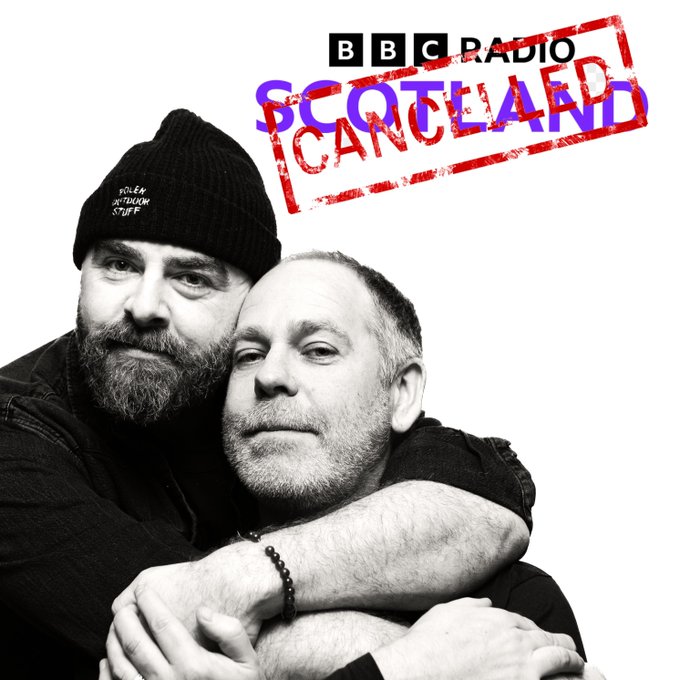
Since Victoria Easton-Riley took over as Head of Audio and Events at BBC Radio Scotland, she is scrapping most of its most important music shows and curtailing the remainder. The Iain Anderson Show, The Roddy Hart Show, Billy Sloan Show and more will all disappear this month, replaced by an easy-listening format designed for “broad mainstream appeal”, the kind of thing you hear on commercial ‘hits’ stations everywhere. Passive listening.
Victoria has come straight from Bauer, where she was in charge of content for stations like the Hits/Greatest Hits networks. Nothing against Victoria’s impressive work at those stations, but this is not what BBC Radio Scotland is for.
We don’t need another passive background ‘hits’ station. We need a national station that champions new and emerging Scottish artists and plays the carefully chosen, sometimes difficult records that will never test well in a focus group, but change someone’s life when they hear them at midnight.
These shows are not just ‘programmes’. They are part of the living infrastructure of Scottish music. They are often where artists get their first play and their first quote from a trusted DJ. That is exactly how Constant Follower began. A late-night Radio Scotland play. A presenter who connected. A listener who was really listening.
For new artists, this is devastating.
Streaming isn’t a substitute. Across the main platforms like blood-sucking Spotify, well over 100,000-250,000 (!!!) new tracks are uploaded every single day, and the vast majority of those never reach even 1,000 plays in a year.
Dropping your song into that vast ocean of noise and being told “you have lots of ways to get heard now” is nonsensical. A single play or quote from BBC Radio Scotland instantly lifts an artist out of that morass. It says to promoters, festivals, funders and fans: this music matters.
For listeners, these shows are the opposite of passive listening.
They are where you sit down, because you trust the person on air to bring you something of quality you didn’t know you needed to hear. Iain, Roddy, Billy and Natasha (and their producers) are music lovers first. They join the dots between old and new music, Scotland and the world. They build context. Take them away and you lose one of the last shared spaces where Scottish music is treated with care.
“Radio is in decline so things need to change”.
Yes, casual radio listening is drifting to playlists and algorithms. That is exactly why curated, specialist shows matter more than ever, not less. When everything else is algorithmic shuffle, these programmes are where people actively tune in and find new music.
I’ve read many times that BBC Introducing will be the replacement for these losses. That is not the case because BBC Introducing Scotland treats the whole country as a single ‘region’. All of Scotland funnelled into one slot. In England, BBC Introducing has many local shows, each with their own space. Here, every new Scottish artist is competing for the same tiny window of airtime. It rarely leads to the kind of sustained, UK-wide support that people imagine when they say “but you still have Introducing”.
Most importantly, BBC Introducing is not a long, late-night, presenter-led show. It is a talent-scouting strand. You might get a single track play, maybe once. You do not get the deep, repeat support, live sessions, interviews and context that Iain Anderson, Roddy Hart, Billy Sloan and others have offered for years. Those late-night programmes build careers over time. BBC Introducing, as valuable as it is, simply cannot replace that.
The Scottish Music Industry Association, which represents more than 6,000 members across the sector, has already written to BBC Radio Scotland to call this out and to ask for a pause, proper consultation, and a clear strategy for how the BBC will continue to meet its public service duties to Scottish music. I am posting their letter in full in the comments because it sets out the wider impact better than I can.
I hope I’m coming across very clear on this.
This decision, driven by Victoria Easton-Riley’s commercial radio mindset, is short-sighted and culturally damaging. It rips out nationally recognised spaces that have supported generations of Scottish artists, in order to chase the same ‘mainstream appeal’ you can hear on any number of stations already.
If you are a musician:
– Please sign the petition to save The Iain Anderson Show (and the others) and reverse this decision. Link below.
– Share your own story when you sign. Say which shows supported you, what that first play meant, what opportunities followed.
– Write directly to BBC Radio Scotland and to Angus Robertson for Edinburgh Central MSP, Cabinet Secretary for Culture, whose brief includes Scotland’s creative economy.
– If you can, also write to your own MSP using https://www.writetothem.com, and copy the SMIA letter or link to it.
If you are a listener:
– Please sign the petition as well.
– In the comments there, you can say which artists you discovered through these shows and how they shaped your listening.
– Email BBC Radio Scotland and Angus Robertson. Tell them you do not want yet another wallpaper ‘hits’ station. You want space for discovery, for risk, for Scottish voices that do not fit the algorithm.
This is not about protecting a bit of nostalgia. It is about whether Scotland keeps a national, public service space where its own musicians can still be heard, nurtured and taken seriously.
Petition link and Scottish Music Industry Association letter link below. Please read, sign, and share if you can. And feel free to lift from these words if it’s useful.
Thanks for reading. Let me know your thoughts.
Stephen McAll, Constant Follower
SMIA Open Letter: https://www.smia.org.uk/wp-content/uploads/2025/11/27_11_25_SMIA-Open-Letter-to-BBC-Radio-Scotland.pdf
Petition to reinstate the shows: https://www.change.org/p/save-the-iain-anderson-show-reverse-the-bbc-radio-scotland-decision/actions?source_location=petition_page

We are supported only by our readers. We don't have corporate backers and we don't take advertising, so we rely entirely on your support.
Help to support independent Scottish journalism
The BBC is and always was a treacherous organisation designed to maintain our colonial status. Are you surprised this ogre has been hired?
Victoria ER is doing the job she was hired to do. By all accounts she’s extremely good at what she does. It’s just that what she’s doing is completely unsuitable for our national broadcaster and will be devastating for the Scottish Music community and listeners alike.
It has just been announced that Roddy Hart will now present the Saturday night 10-12 show and the Sunday night 9-11 show replacing Billy Sloan and Iain Anderson.It’s good that there will still be some airtime for Scottish singer-songwriters and newcomers in this show (the weekday late show Mondays to Thursdays is supposed to be featuring familiar music from the 70’s to today including Scottish artists but I really wish they had retained at least one slot for Iain Anderson as his show is so popular around the world as well as in Scotland.I note they have kept the Friday late show with comedian Ashley Storrie which is a show I would have preferred to have been one to go.
It is disgraceful removing these music programmes, but I feel the increase in sports , particularly football reporting, is as bad. Radio Scotland’s morning programme now has 2 presenters, one of whom is a sports reporter and he is omnipresent. I have suggested to them that they call it Radio Football.
…or mebbe ‘Breakast Fitba”?
There was a piece a few weeks ago condemning the use of the word “colonial” to describe Scotland’s position in the uk.
If the cap fits!?
We should take a leaf out of Trumps book and stand up for ourselves, or, who else will?
If an artist needs needs a national station that champions new and emerging artists based on where they were born that just means they aren’t good enough to be featured by stations that don’t feature emerging artists based on where they were born. It’s a licence to broadcast dross based on nationalism. Even Tak The Fleer doesn’t feature that ethos, Iain Bloody Anderson must be 130, BBC Radio Fitba is the embodyment of entitlement, and no, I’m not interested in an in-depth analysis of the management structure of Raith Rovers or music programs based on the last century. Cheerio!
Using football as a route to understanding the issue: would it be normal for a young player on a primary school football team to go from that straight to playing first team Champions League games? No. There’s a progression through the levels until you hit top tier. The same is true for music. Local stations, regional stations, national stations, international… and also tiers with the amount of plays you get. Most, if not all of the music you like (if you like music), has followed this progression. Removing one of the key stepping stones will damage the prospects for future artists.
Ester and abi o’fareen 1970 euro song winners great song,know Billy a bit
A wave of passion in your ‘constant’ posts about this subject and ultimately mis-guided. I found the below bullet points an interesting side note in the press release. In a landscape where we all demand ‘value for money’ from our license fee. It would have been a scandal for the BBC not to react and for these shows to remain with listenership as low as that. It sounds like the production company decided to pull the pin. Some shows have been around for decades so possibly retirement?
• The existing programmes are ending following a procurement process in which the current independent production companies making those shows did not bid for the work.
• These changes have been made against a backdrop of the fiercely competitive audio market within which some of the current programmes in the late-night slot achieve less than 2.5% of the market share.
I have enjoyed these programmes over the years. But with listenership as low as that, all good things must come to an end. Surely, any reasoned person can see that, including the presenters? So probably time to stop the personal attacks and focus on your own bright future.
Clarity is being sought on where the numbers were gathered from, which market it refers to, which show (s) it refers to etc. without that it is meaningless and only being used to foment misinformed opposition. The other information is misleading and being challenged – the teams fought to keep their shows on air.
Even if the numbers were accurate and applicable to one or all of these shows, cultural value should come first.
If you want easy listening, passive radio, then supporting the cuts is the way to keep going.
The second bullet from the press release is a masterpiece of vacuous, corporate soapy water. Hasn’t the audio market always been ‘fiercely competitive’. Aren’t markets supposed to be competitive? As a public service broadcaster, what market does BBC Radio Scotland imagine it is competing in? Does it want to rival Radio 1? What is missing is any hint of an ambition to offer distinctive, quality cultural programming of national and international appeal. Indeed, there appears to be a lack of any sense of direction at all.
I object to the BBC continually dumbing down their programming to copy the commercial stations output and strongly object to paying a licence fee is this is allowed to continue.Without programmes provided to an audience who can’t get the content they want and enjoy elsewhere what is the point of the BBC.-they might as well take advertisising like all the rest in my view.We don’t need any more stations with pop and prattle all day.I believe Iain Anderson’s show has many thousands of listeners around the world as well as in Scotland.
Sadly for me this will be the end of my love affair with Radio Scotland.
These shows have been a constant companion for me, my retreat, my musical education, my love of radio.
I can find the alternative in any number of DAB radio stations in my car or mobile phone, which incidentally, I scan by in less than a second.
If this is where Radio Scotland is going then the station will lose countless listeners.
These shows bring something that no other radio station can.
I’ve listened to Natasha since her first show in 2017.
Natasha, Iain, Roddy and Billy are my go to on BBC Sounds, but sadly that app will be getting uninstalled in protest.
Roddy is staying.From Saturday January 10th he will be on Saturdays at 10 and Sundays at 9.
He was invited back as a presenter only (hurriedly after the public outcry). The team and independent production company behind The Roddy Hart Show are still axed. The weekend show is an in-house BBC-produced show; not the freeform, curator-led show that has been axed. More of Roddy’s voice on the radio is always a good thing, he’s excellent, but it needs to be clear what Scotland has actually lost, and what it is not getting back. The BBC has cut 4 of Scotland’s most popular freeform, curator-led culture shows, and replaced them with playlist-led, commercial-style passive listening.
I am very disappointed at the axing of shows such as Roddy Hart, Billy Sloan, Natasha Raskin-Sharp and Ian Anderson.
These broadcasters are legendary and play all sorts of music and has expanded my music tastes over the years from Jazz to modern Scottish bands and everything in between.
I feel these broadcasters are like part of a family. Who wants to listen to mainstream music when you can listen to this on any station.
BBC Scotland, to me, stands as a cultural backdrop to what’s going on musically.
I don’t know what feedback Victoria Easton Riley is depending on to make her informed choices but I find the sweeping changes a loss ro the Scottish culture.
Like the majority, I’ve never listened to the axed shows but still disagree with the cull.