
When Myths Travel Without Their Names
We keep encountering the same myths.
They surface in games and television, familiar figures, half-remembered creatures, names that feel ancient even when they are introduced as something new. They rarely arrive intact. More often, they have been reshaped, merged, or repurposed, made to fit worlds that pull from many traditions at once.
What is striking isn’t just their persistence, but how easily they move. Certain myths survive because they adapt, slipping across genres and formats until they become part of a shared cultural vocabulary. We recognise them on sight, even when we cannot place their origin, or say how long they’ve been in motion.
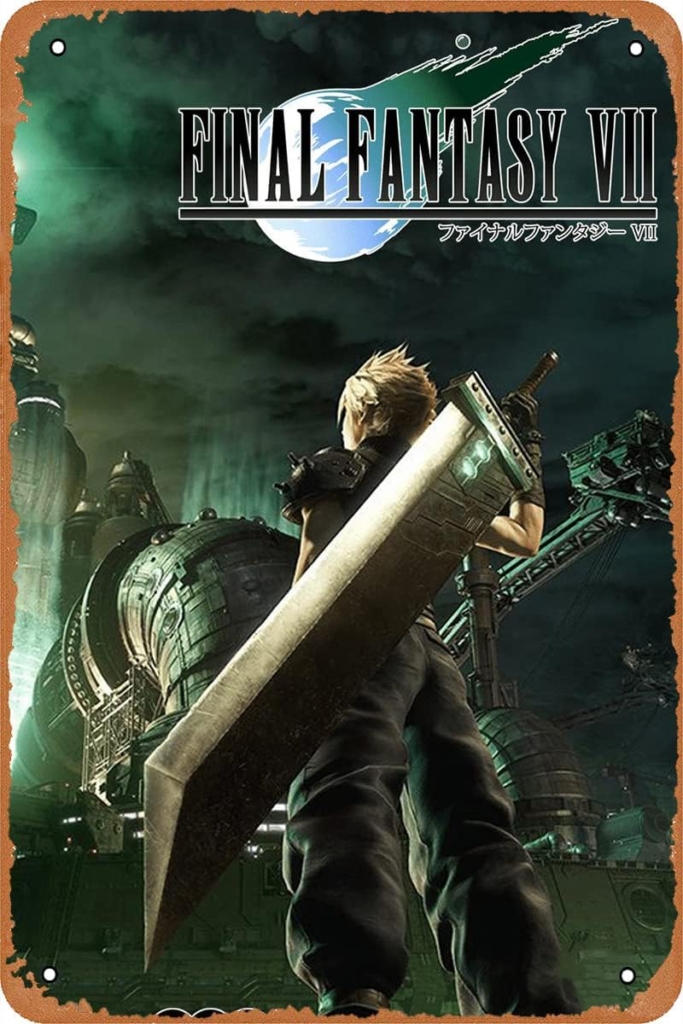
One of the clearest examples appears in a place many people would never think to question. In Final Fantasy VII, a character named Cait Sith enters the story as a strange, playful presence, part mascot, part trickster, instantly memorable. For most players, he registers simply as another piece of imaginative world-building, comfortably at home in a universe already shaped by borrowed myth and fantasy.
What is less widely recognised is that Cait Sith isn’t an invention of the game at all. The name comes from the Cat Sìth of Scottish folklore: a spectral black cat, often described as walking upright, sometimes benevolent, sometimes dangerous, and always occupying the margins. In traditional stories, it exists at thresholds, between the living and the dead, the domestic and the wild, a creature that resists clear classification.
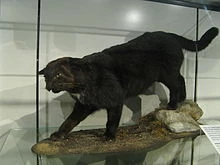
The cat-sìth (Scottish Gaelic: [kʰaʰt̪ ˈʃiː], plural cait-shìth), is a fairy creature from Celtic mythology, said to resemble a large black cat with a white spot on its chest that walks on its hind legs. Legend has it that the spectral cat haunts the Scottish Highlands.
This is not loss in any simple sense. The character still functions. The story still holds. What disappears instead is the visible connection to where the figure came from, and with it, the expectation that such a connection should matter at all.
Cait Sith is not an isolated case. Once the pattern becomes visible, it appears repeatedly across contemporary storytelling. Figures drawn from folklore surface in films, television, and games carrying recognisable shapes and behaviours, but detached from any clear sense of origin. Over time, they begin to collapse into one another, less as distinct traditions and more as a generalised mythic atmosphere.
The same process plays out across familiar archetypes. The wailing spirit that foretells death. The elusive beings tied to liminal places. Creatures bound to land, water, or threshold. They return repeatedly, but rarely with their histories intact. Instead, they are gathered under broad, flexible labels, fantasy, folklore, Celtic, terms that signal mood rather than meaning.
As a result, difference becomes aesthetic rather than structural. Traditions once shaped by specific places, languages, and histories are folded together until they feel interchangeable. What matters is no longer where these figures come from, but how easily they can be made to fit within an existing genre framework. Their survival depends on flexibility, and that flexibility often trades precision for familiarity.
What emerges is not a single act of forgetting, but an accumulative effect. The myths remain visible and widely recognised, yet increasingly unmoored, circulating freely, understood everywhere, and rooted almost nowhere.
This kind of disappearance does not happen through removal. Nothing is taken away outright. Instead, it happens through drift. As myths circulate, the labels used to describe them grow broader and more pliable, easier to apply without explanation. What was once tied to a specific place and tradition is gradually absorbed into a larger, looser category.
“Celtic” is often where this absorption takes place. The term functions as cultural shorthand, gathering stories from different regions, histories, and languages under a single heading. It prioritises cohesion over distinction. What it offers is familiarity, a signal that a story belongs to a recognisable mythic register, but what it sacrifices is precision.
A similar flattening occurs when myths are framed simply as folklore or fantasy, stripped of geography altogether. These labels are not wrong, but they are incomplete. They describe the nature of the stories without acknowledging their origin. The name continues to travel; the context does not.
Over time, this reshapes how the myths are understood. They become portable, endlessly reusable, yet increasingly detached from the conditions that produced them. The figures endure. The imagery survives. What recedes is the sense of origin, the knowledge that these stories were formed in particular landscapes, spoken in particular tongues, and shaped by specific histories.
By the time Scotland is named, if it is named at all, it often feels incidental. The myth has already been folded into something broader; its specificity dissolved into a generalised sense of the ancient or the magical. What is missing isn’t the story itself, but the grounding that once gave it weight.
None of this is neutral. The way stories are named, framed, and circulated shapes how meaning is produced. When myths travel without their context, what is lost isn’t only detail, but authority, the authority that comes from being recognised as the source of one’s own stories.
Cultural power rarely announces itself outright. More often, it operates through familiarity. The versions of stories that circulate most widely become the default, quietly setting the terms through which all others are interpreted. In that environment, meaning is defined less at the point of origin than at the point of greatest reach.
This has consequences for cultural confidence. When myths repeatedly appear detached from their roots, the places they come from begin to feel secondary to the versions that travel furthest. Over time, it becomes normal to treat these stories as belonging everywhere, and therefore nowhere in particular. The effect is not dramatic, but it accumulates.
Scotland offers a clear example of this dynamic. Its mythology remains visible and popular, yet it is rarely centred on its own terms. The stories endure, but the authority to define what they are, what they mean, and where they come from often sits elsewhere. This is not the result of any single decision or act of intent. It is an outcome of how modern culture circulates stories, favouring reach over rootedness, recognition over specificity.
What is at stake, then, isn’t ownership in any narrow or legal sense, but meaning itself. Who gets to shape the stories that persist, and who is reduced to a footnote in their afterlife, is not a neutral question, even when it unfolds without spectacle.
None of this means the stories are gone. If anything, there are signs of movement in the opposite direction. Across different spaces, people are beginning to speak about myth with renewed specificity, less as inherited atmosphere and more as something shaped by place, language, and lived experience.
This is not a return to an imagined past, nor does it require preservation in amber. Myth has always evolved, carried forward by those who tell it. What feels different now is a growing confidence in naming origins, in allowing stories to remain grounded rather than abstracted. The focus shifts away from recovering what was lost and toward recognising what is still alive.
Seen this way, reclaiming mythology is not an act of nostalgia. It is an assertion of presence. It is the recognition that these stories come from somewhere, and that understanding where they are rooted deepens their meaning rather than constraining it. There is room here for new interpretations, new voices, and new ways of telling, grounded but not fixed.
The change does not announce itself, and it doesn’t need to. It is enough that the conversation has begun to move.
The question is not whether these myths survive. They clearly do. They continue to appear, adapt, and find new audiences in new forms. The question is narrower than that.
When stories travel this far, this freely, and this often, what do we ask of them in return? Is endurance enough if it comes at the cost of connection, or does something essential shift when origins are treated as optional?
In a culture fluent in myth but vague about where it comes from, the task may not be to reclaim old stories, but to decide how carefully we listen to them, and whether we still recognise the voices in which they were first spoken.

We are supported only by our readers. We don't have corporate backers and we don't take advertising, so we rely entirely on your support.
Help to support independent Scottish journalism
Amazing piece of work.
This is a true observation, I think. There are audiences unaware of even well-known connections between USAmerican Westerns and Japanese Samurai movies, for example, which causes much cultural confusion, and the picture is vastly more complex than that across continents, centuries, languages and media. Disney has rightly been criticised for its ruthless raiding of world culture, though it is hardly the worst offender (Doctor Who’s recent reduction of Sutekh to a stupid scary monster was particularly abominable).
Incidentally, an AI virtual cat called Cait appears (with a Scottish accent in the English-language version) in the 2023 videogame Viewfinder, not quite a Cheshire cat either:
https://en.wikipedia.org/wiki/Viewfinder_(video_game)
Videogames with, say, 40 hours of basic play plus expansions (and often built-in hyperlinked databases) are better equipped than movies to provide depth to their source material, from Tir Na Nog (1984) to today’s God of War series, for example. But these are still fictional treatments which often modify or contradict source material. And again, it can be very difficult to judge, for example how authentic are the various portrayals of culture and mythos in Bard’s Tale IV (especially if you don’t speak Gaelic) or Tchia (2023).
Whether some gamers have the patience or inclination to follow such roots is another question. I am currently fascinated by the illuminated medieval references in Pentiment (2022), but it may prove too text-heavy for many players.
Colonisation, cultural imperialism and ancient forms of dissemination further cloud provenance. I’m sure Niemand could tell us something about music. AFAIK, folklore categorisation has been unable to prove any phylogenetic inheritance. Animated series Curses! deals with the wrongs of plundering artefacts whilst arguably plundering cultural IP. What is the line to tread? Is everything destined to get smushed together with nothing apart from the occasional, skippable scholarly footnote (fun fact) to trace origins?
What about omissions and vetoes? Something that was considered by the Civilization VI team, for example. Who gets to decide what cultures make the grade? Who gets to decisively object about the inclusion (borrowing) of a folklore entity and/or its portrayal? Until recently, perhaps, indigenous Pacific and American cultures were seen as battlegrounds where the colonial powers held all the cards.
I think this article asks very pertinent ethical questions.
I’m at a loss to understand what the point of this is. What is this guy trying to say? It’s nicely written but he’s away wi’ the fairies.
@Patrick Farnon, perhaps it would help to consider that Christianity has already succeeded to an extent in transforming and flattening pagan/indigenous cultures in this way. Gods were shrunk into elves and indeed fairies, or demons (the God of Death from a complex culture becomes a generic scary monster). Traditions are absorbed and repurposed. Associations are deliberately forgotten. Even Wikipedia’s page seems to have suffered a similar fate.
https://en.wikipedia.org/wiki/Christianity_and_paganism
Happy Yule.