
Arts Crisis in the Hebrides
An Lanntair, the largest arts centre in the Outer Hebrides, has warned of an “immediate and profound” impact if plans to axe its local authority funding are followed through. Many other projects will be affected throughout the islands.
‘Arts and culture in the Western Isles at risk!’ When your local arts centre shares something like this on its website instead of the usual events listings, you know that things have got bad. And they have.
It emerged at the weekend that Comhairle nan Eilean Siar, the local authority for the Outer Hebrides, intends to stop all funding for arts and cultural organisations in the islands from April this year. In response, An Lanntair has urged islanders to make their feelings known by completing a council budget survey before the Friday 23 January deadline. At time of writing this appeal has already been shared by hundreds of people online, as has a song about the cuts by Keith Morrison of Hebridean record label Wee Studio.
I’m old enough to feel a horrible sense of deja vu about all this. As an arts journalist back in 2013 I found myself writing for the Scotsman about how Moray Council had just become the first local authority in Scotland to cut 100% of its arts funding, following similar moves in England. “A disgrace,” Trainspotting star Kevin McKidd wrote of the decision on Twitter. “Outrageous,” said painter and playwright John Byrne. “An act of staggering cultural incompetence,” said writer Stuart MacBride. These were the more politely worded responses. Comhairle nan Eilean Siar is currently receiving similar feedback.
Whenever this happens, look at the numbers. Moray Council cut £94,000 in arts support as part of a plan to save £30 million – a saving of just 0.3 per cent of the target. When Somerset County Council axed £160,000 of arts grants in 2010 it was part of a plan to save £43 million, again saving just 0.3 per cent of its target. For every £10 that’s a saving of just 3p.
Let’s leave aside for a moment the fact that culture generates more money for the economy than the modest amounts it ever costs to fund. Or that it currently generates £5.7 billion a year for Scotland, according to the government, which has just increased national arts funding. Or that UK-wide the creative industries reportedly generate more revenue than cars, oil and gas. Instead, compare these tiny savings to the damage done.
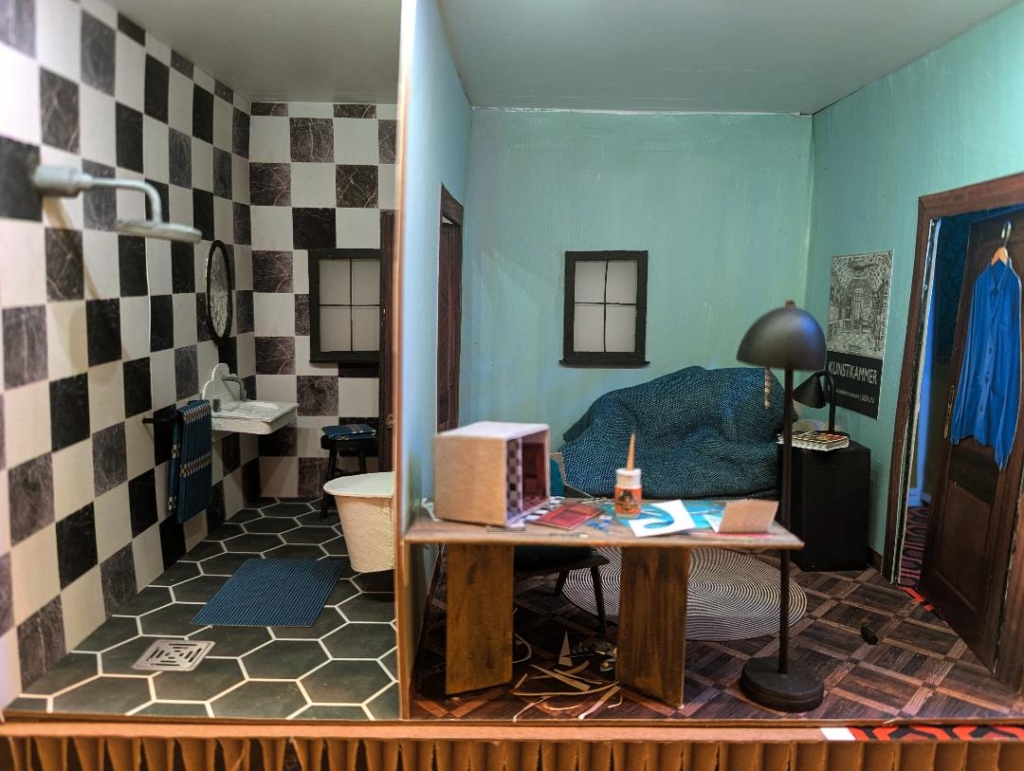
Here’s an example. As well as its year-round events programme, An Lanntair has the best education and outreach team I’ve met in over 20 years of working in the arts. They change the lives of young people in the Hebrides, every day, not just with obvious things like drama or art classes or school workshops but with ingenious ideas like Mystery Hotel, a community art project on show this month in which 80 people from across Lewis and Harris were provided with materials to make miniature hotel rooms that were then combined into a giant communal sculpture in An Lanntair’s gallery. Mystery Hotel is currently one of the most popular things in the venue and is reaching thousands more people on An Lanntair’s social media, where a different room is being featured each day.
Louise Scullion
The contributors to Mystery Hotel range from professional artists to children. All were given equal space. One of my children spent days making a room and is now able to say they have exhibited alongside Louise Scullion, one of Scotland’s most acclaimed artists, at the age of just 13. This is the kind of experience that, in the long term, can make the difference between someone having the confidence to pursue a creative career or not. And the cost of Mystery Hotel was essentially the cost of some cardboard, some LED lights, and people’s time.
Something often left out of conversations about arts funding – because it doesn’t obviously make the case for more money – is the paradox that the arts are so valuable because 1. the people doing the work almost never do it principally for money and 2. the money that is made from their efforts is distributed so widely. An Lanntair’s E&O team didn’t get paid a bonus for making Mystery Hotel happen. It wasn’t even on a list of essential things they had to do to keep their jobs. But they invested time, talent and effort in it because they thought it was a worthwhile thing to do for their community, in terms of how many islanders it might support to find their creative voice. And we know this kind of thing is a worthwhile investment because of the sheer number of times that very successful people (or even just happy and well adjusted people) talk about a formative experience that set them on that path – a youth theatre group, an inspiring art teacher, a first gig, an exhibition, or just someone who believed in their creativity, supported them to make something, and told them it was good.
Would anyone dispute this? Comhairle nan Eilean Siar just has, even if it wasn’t the intention. By cutting its arts budget entirely – including, crucially, its support for An Lanntair – the council is sending the message to islanders that their creativity, their creative ambitions, their imaginations even, are not valuable, important or worth supporting. It also sends a message to the rest of Scotland and the wider world that arts and culture are not valued in the Outer Hebrides. Where, in this picture, is the incentive for an artist to live and work here who might inspire and empower the next generation?
Why would any council do this? Because culture is a relatively easy target when the money is running out. Every time a council decides to stop arts funding, the same argument is offered. “The party’s over and it’s up to all of us to get together and clear up the mess,” said Ken Maddock of Somerset County Council in 2010, as if creativity was somehow absurdly decadent rather than one of the things that makes us human. “We have to live within our means at this difficult time,” said Allan Wright, leader of Moray Council, as if a 0.3 per cent saving represented a significant difference to the council’s finances rather than a token gesture, less than the annual wages of its chief executive.
These statements are meant to sound like pragmatic common sense. But they pander to our prejudice, pushing an ideological view that access to culture is an indulgence – a “party” even – rather than a necessity and a right, something that, as John Maynard Keynes put it, helps create “civic pride and a sense of social unity”. Thatcherite values now dominate our thinking so much that artists themselves frequently speak up for what they do in terms of purely economic value. Look at me doing it now.
Instead of talking about money, then, let’s talk about morale, an important factor to consider in relatively small, geographically self-contained island communities. The Outer Hebrides is packed with creative, talented people who are making a huge contribution to that community (as well as the economy. There, I did it again). In addition to the staff at An Lanntair – a vital community hub where pretty much every creative person in Lewis has done an event at some point – there’s the team behind HebCelt, a homegrown music festival in Stornoway that is arguably the best in Scotland. There’s Keith Morrison at Wee Studio, who took a start-up grant of just £1000 and turned it into a world-class recording studio and internationally renowned record label, home to the phenomenon that is Peat & Diesel among many others. There’s Island Darkroom, an innovative contemporary exhibition and residency space with networks all over Scotland, which founder Mhairi Law has now expanded into a textile business. There’s Black Bay Studio – yes, Lewis has not one but two world-class recording studios – where Kathryn Joseph and Hen Hoose recorded their latest albums. There’s Grinneabhat, Lewis’s other year-round arts centre which also hosts gigs and exhibitions. There’s Open Studios Hebrides, a support network for island-based visual artists. I could go on.
One thing all these people have in common is that their work ethic is driven by creativity and a sense of community more than the pursuit of money. Another is that their morale – a big part of what drives that creativity – has just taken a massive hit thanks to Comhairle nan Eilean Siar. Where is the incentive to continue doing this work?
A lot of these people, it should be said, do not receive money directly from the council, but we all know each other and the work we do is interconnected and interdependent on a deep level. It is common practice for a piece of creative work funded by the council to subsidise a piece of work that is not (or vice versa), or for people to combine paid work with working for free, for themselves and each other, so that every pound of public funding goes substantially further than most people might think. If the council cuts funding to some of us then it affects all of us, in ways that are often invisible to the outside world.
Precious Cargo – Image Credit: Ralph Tonge
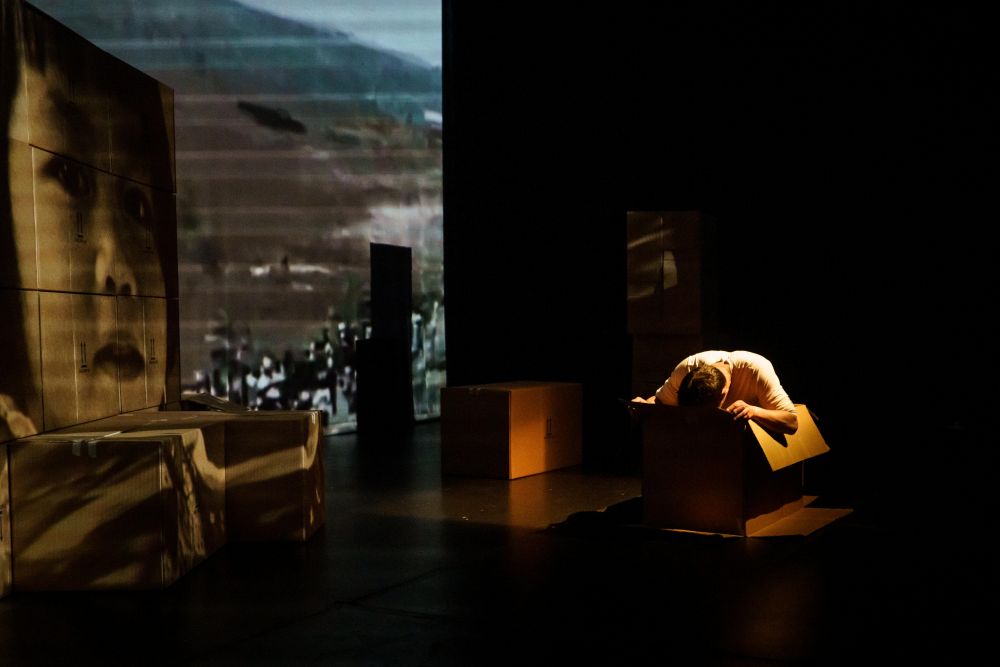
Here’s one example from my own work. I am, among other things, currently the only theatre producer in the Isle of Lewis. In 2024 I managed to get Creative Scotland funding to make an original show, Precious Cargo, with a mostly Lewis-based team. Thanks to this money I was able to pay thousands of pounds in fees to a director, production designer and composer who all live and work in the island (ie: contributing to their ability to live and work here, and therefore to the local economy). The show sold out its debut at An Lanntair before going on to the Edinburgh Fringe, where it was shortlisted for an international award and where loads of people told us how much they were moved by the story we were telling. On the back of this success I am now producing another theatre show – this time with an entirely Lewis-based team – which will again go to the Fringe after premiering at An Lanntair. In Edinburgh it will be part of the prestigious Made in Scotland showcase, a proud achievement for a small Hebridean arts company. I got paid very little for any of this work by the way, and did much of it for free.
On the face of it this has nothing to do with whether or not the council funds the arts, except that I was only able to spend years of unpaid time developing these projects because I had a modestly paid part-time job at An Lanntair – which is funded by the council – that gave me a small degree of financial security. The production designer on both projects also works part-time for An Lanntair, running a brilliant programme called Clar that teaches young people how to be lighting designers and sound technicians among other useful skills; without this job he probably wouldn’t be able to spend time in the island working with me. The director of both shows has taught youth theatre classes at An Lanntair as well as mentoring writers. An Lanntair itself has given us tech support and venue time for free which was hugely helpful. The musical score for the first show was recorded at Wee Studio, so they also benefited from council funding in that it was partly the council’s support of An Lanntair that enabled me to submit the funding application, which then brought thousands of pounds of Creative Scotland investment to Lewis, some of which was then paid to Wee Studio. And so on. All of the island arts organisations I listed earlier could share similar stories and perhaps they will.
Very little of this shows up on a council budget sheet, but I did some sums over the past couple of days, trying to work out how much money the projects I’ve initiated or been involved with since I moved here in 2018 have generated for the Isle of Lewis’s economy. And here I am reducing it to money again, when it’s so much more important than that, but between programming and fundraising for a festival for six years, developing five theatre projects, running an artist support programme, and working on a nationally funded music project with islanders living with dementia, I realised it added up to hundreds of thousands of pounds.
I’m not trying to big myself up here. There are loads of people doing professional creative work in Lewis who could make a bigger claim. The point is: that’s the largely invisible contribution of one person working in the arts in the Outer Hebrides.
And right now that person, me, is thinking I shouldn’t bother anymore if the council is going to make a philistine, self-sabotaging decision like this. Fuck them. Fuck their local economy.
This is not constructive, obviously, but it’s honest and I guarantee I’m not alone in thinking it. As I write this I’ve just had a WhatsApp message from a Lewis-based musician who told me the council’s decision has made them want to move away from the island.
I’m not unsympathetic to Comhairle nan Eilean Siar. I assume morale is not high there either, given that it’s been facing down a £4 million deficit. There are no easy answers in that scenario. The budget survey we’ve been asked to fill in invites you to rank which services you think are most important from a list that includes health and social care, winter roads maintenance, early years, waste management etc, which feels a bit like being asked whether you think food or water are more important to human survival. The list doesn’t include culture, but whatever. At least there’s an ‘additional comments’ section where you can talk about that.
Here’s my survey response, then. Yes, we know things are ba,d but please, please don’t do this. Find another way. Those of us working in the arts are used to not getting much money. Some of us have been managing to make miracles happen with not enough money for our entire professional lives. But cutting us off entirely is a whole other thing. It won’t even save you that much, while the damage it causes will be profound and multi-faceted, psychological and reputational as well as financial. We’ll feel it for years – you, us, the community where we all live – in ways we can’t even imagine yet.
Survey closes: Friday 23 January 2026
👇 Have your say here:

We are supported only by our readers. We don't have corporate backers and we don't take advertising, so we rely entirely on your support.
Help to support independent Scottish journalism
Arts funding is not only an easy target – it’s also a popular target in some quarters, and even a populist target. There are some voters who reach for their guns when they hear the word ‘culture’ (and unfortunately that’s not always a metaphor). This is one aspect of the ongoing culture wars that are actively promoted in parts of the media, both social media and mainstream, where ‘the people’ are routinely contrasted with ‘the elite’. Artistic practice can be embedded in popular culture (as it seems to be in the Western Isles): there is no contradiction between this and aiming at artistic excellence. But it’s not easy to get this message across when so much political and media discourse thrives on polarisation.
What can we on the mainland do to help? Your article points out the fundamental attitude of all councils has to change. Every cut to the Arts in each and every region affects us all as it destroys the national arts ecosystem bit by bit.
You cannot seriously leave it there. What happened in Moray and Somerset after their councils cut arts funding? And removed the Council as gatekeepers, political censors and arbiters of good taste? Are these now arts wastelands, or have a hundred new flowers bloomed there?
Sometimes is seems that those successful in getting patronage funding are among those who least need it.
I’ve been watching online video of USAmerican free Shakespeare in the Park performances, where the role of the council is to provide park spaces and services, while funding seems largely to come from public donations, primarily solicited from attendees (after the performance). That seems more reasonable and fairer a model to me, that actively promotes goodwill and cooperation, and those that can pay (more), may do so. If councils provided free public transport in addition, that would cut the expenses of travelling troupes too.
Hm, surely there is a balance to be struck regarding direct public funding rather than just removing it? I think this applies especially to community-type projects that have potentially great benefit to that community.
Where I would agree is that funding does often go to those who are good at applying for funding, and indeed, have the resources to get expert help with the application. There is a whole industry (racket?) that surrounds this. In academia it has reached ludicrous proportions where there is a whole edifice of people employed simply to help people apply for grants (not all publically funded ones mind). And those helpers are not idiots – their advice and help works. But what you end up with is people developing projects based more on the likelihood of getting a grant than what people really want to do and think actually matters.
But whether any of that applies to the Outer Hebrides I could not say and suspect much less so than in other places.
@Niemand, I think my alternative Shakespeare-in-the-Park example *was* of direct public funding, whereas the Scottish Council model is of *indirect* public funding of arts. As I wrote, the Council can provide services that artists (like anyone else) can use to support their activities, which by statute should be ecologically sustainable, non-discriminatory etc. As for carting stage scenery around, it’s amazing what you can carry on a bus if your cargo is flat-packed and the bus has an easy-access low-loader door 😉
It’s really useful to have this level of detail about the practical consequences for communities of cuts in arts funding. And I hope that local authority funding – and council tax reform – gets the prominence it deserves in the forthcoming elections.