
The Roma – a Travelling History
THE ROMA – A TRAVELLING HISTORY
by Madeline Potter
Bodley Head, 272 pp., £22, May 2025, 978-1847927675
Paperback due May 2026
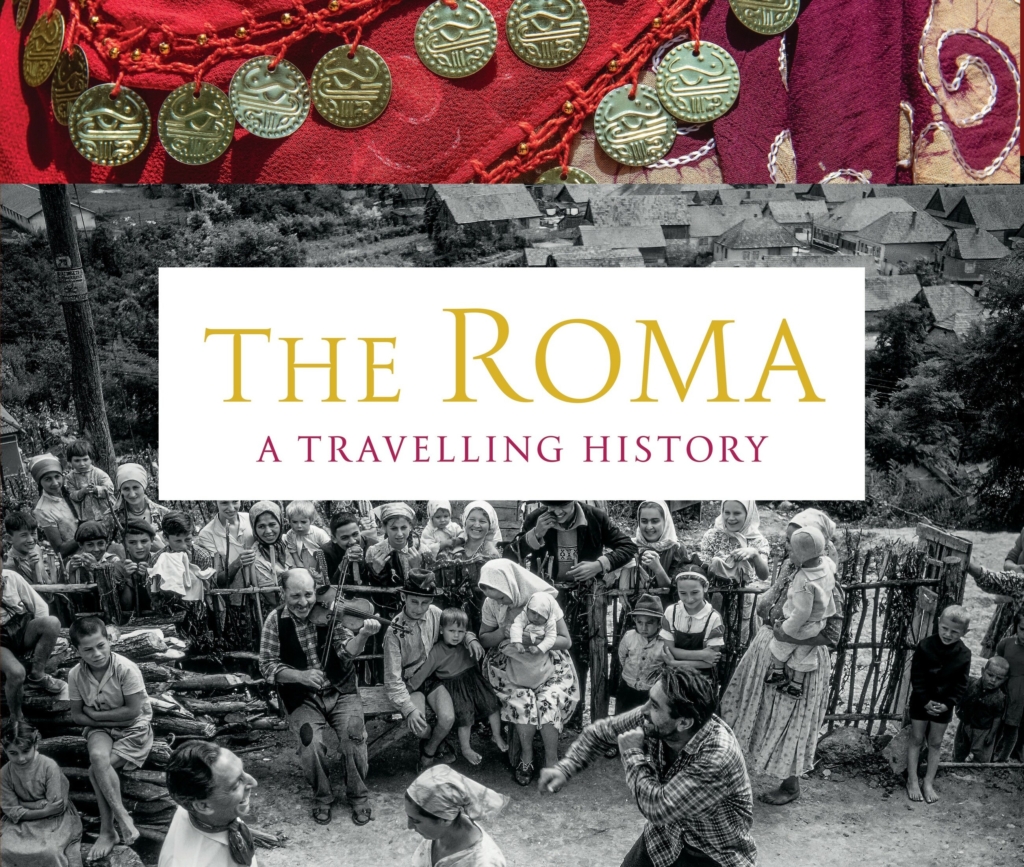
Despite its title, this is so much more than a history book; the narrative deftly interweaves elements of memoir, folklore, travelogue and ethnology into a rich and captivating tapestry.
Born in Romania to Romani parents, Madeline Potter is now an academic, a writer and a teaching and research fellow at the University of Edinburgh. In shameless displays of casual racism, her credentials are often greeted with disbelief when her origins are known (or assumed). After seeing a traveller camp in York as a student, Potter realised she would never experience that way of life herself. ‘I’m not sure you can mourn something you’ve never had, but, in that moment, I mourned the history that had been ripped away from me.’ Even further removed from my half-Romani roots, I have felt this loss too, and as such, I was drawn to this book with more than mere curiosity. My father was from a Romani family, his eldest sister born in a vardo or bow-top caravan. By the time he came into the world in 1933, the fifth of eight children, the family had settled in a disused railway carriage and subsequently moved into a council house. Over the years, they lost all traces of their culture.
Starting in Britain, the author takes the reader on a journey through Europe and to the USA, including anecdotes and moving accounts of significant Romani individuals, past and present. In each chapter, Potter travels to and examines Romani experience in a different country. There are many sub-groups of the Roma, including the Romanichal in Britain, Sinti in Germany, Calé in Spain, Kalderash in Romania and Manouche in France. Descriptions of the traditional music, clothing, folk tales and some surviving current-day rituals bring this vibrant culture to life. In an effort to dispel myths and right wrong beliefs, Potter challenges the romantic view of the ‘gypsy’ lifestyle, which ignores the realities of prejudice and persecution that have plagued the Roma for centuries. Furthermore, strict Romani customs and traditions ‘are at odds with the happy-go-lucky culture that non-Roma travellers often admire’. Thus, she does not shy away from the historically patriarchal elements of the traditional society and its strict gender roles, but counters them by acknowledging the growing Romani feminist movement, illustrated by Mihaela Kali, founder of the first Romani theatre company in Romania, Giuvlipen: ‘feminism’ in Romanes. It is contemporary theatre by the Roma, for the Roma, but also attended by many gadje (non-Roma).
Most historians now agree that the Roma left Rajasthan in northwestern India around 1500 years ago, gradually making their way west and arriving in the Balkans a few hundred years later. There are many theories as to why they left their homeland, but none can be verified. Initially welcomed in Europe for their music and craft skills, the Roma soon became scapegoats for societies envious of their freedom as travelling folk. Rulers resented their untamed, untaxable wanderings, and locals blamed them for problems in their communities (often the fault of their rulers). There followed a ‘long and difficult history of being expelled, demonised, enslaved and killed’.
As a culture with an oral tradition, most written records of the Roma consist of white—and mostly hostile—viewpoints. In recent years, more people have heard about the Samudaripen, or ‘Romani Holocaust’, in which it is estimated 200,000 to 500,000 Roma were murdered in Nazi death camps. Other elements of their story are little known, overlooked, forgotten, misrepresented or mistrusted. Over the centuries, the Roma were subject to summary executions and policies of integration or eradication.
In Eastern Europe, the Roma were enslaved for five centuries; some were subjected to enforced sterilisation, conscription and/or compulsory settlement, and children were kidnapped and fostered for integration into mainstream society. In the 18th-century Austrian Empire, the Roma were banned ‘from owning horses and carriages, on which both their nomadic lifestyle and their livelihood depended’. Attempts at assimilation were resisted by both the local populations and the Roma, resulting in ghettoisation.

Madeline Potter
Across Europe, the nomadic way of life has been gradually criminalised – a process that continues to this day. Indeed, in the UK, the Police, Crime, Sentencing and Courts Act of 2022, makes ‘unauthorised encampments’ illegal. Many, such as my father’s family, lost all connection to their customs and traditions over the years, but the Roma are racially, not lifestyle-defined, and many of those who settled retain elements of their culture.
On her journey, Potter attempts to come to terms with her personal identity and how it relates to the culture and history of her people.
Enriched by legends and folklore, sprinkled with anecdotes and historical stories of abuse, resistance and activism, this account attempts to break down the prejudices and stereotypes that can only be countered by understanding.
It’s not all about the struggles. Indeed, many figures of historical and cultural significance are celebrated, including the one most of us would have heard of, the internationally renowned and influential musician, Django Reinhardt. Born in Belgium, he began playing as a child, and his virtuosity was already admired as a young man, but after being burned when his vardo accidentally caught fire, his hands were mutilated, and two fingers paralysed. Despite this, he developed ‘a new technique, which would not only allow him to play again, but to stun and mesmerise audiences worldwide.’
In Spain, the origins of flamenco are unclear, but it is widely accepted that the Roma developed the dance and music into the recognisable style that has become globally recognised. As far back as the fifteenth century, Maria Cabrera, the first Romni (female Roma) name recorded in Spanish history, is said to have dazzled audiences with her dancing. She caught the eye of the heir to the dukedom and bore his son.
In times that seem to be defined by division and intolerance, this important book dispels many of the myths surrounding these stigmatised and misrepresented people. It is both a celebration of living traditions and a harrowing exposé of a race who have suffered centuries of intolerance, abuse, slavery and murder. In this fascinating and evocative insight into the Romani spirit of pride, endurance, survival, and healing, Potter avoids portraying a history of victimhood and sets the record straight about a resilient people with enduring cultural and linguistic traditions.
The accessible writing style includes a pleasing balance of literary elements peppered with vivid imagery, appropriate for a race with colourful traditional costumes, such as ‘I watched the sun go down like marmalade dripping lazily into the water.’
Potter concludes in a spirit of hope, reassured after a visit to the Appleby Horse Fair, an annual gathering of Romani people and travellers in Cumbria: ‘My hope is for a world where we can be visibly and unabashedly, Roma without fear, as we are at Appleby.’ Throughout her journey, she chanced upon extraordinary stories of those who resisted marginalisation, who would not keep quiet and showed resilience, some achieving great things in the face of adversity. Their stories continue to encourage the Roma today to preserve and continue celebrating their living traditions. ‘The book is an ode to the Romani spirit of finding happiness in the darkest of times.’ Shared with a wider audience, it will promote further understanding and hopefully acceptance of these people, which should be welcomed as part of the diversity we need to enrich our wider communities.

We are supported only by our readers. We don't have corporate backers and we don't take advertising, so we rely entirely on your support.
Help to support independent Scottish journalism
Fascinating! My paternal grandmother was from a Romani family, probably one of the families associated with Kirk Yetholm. During WW2, the Polish soldiers based in Galashiels called my aunt, then in her teens, ‘the gypsy girl’.
I have just been reading Colin Ward’s Anarchism: A Very Short Introduction, Chapter 9 on the Federalist Agenda, where Proudhon, Bakunin and Kropotkin’s views on decentralised, regional politics are summarised. Bakunin even admired bourgeois Switzerland (though that nation expelled Kropotkin). But how in a politics of regionalism can groups like travelling Roma be accommodated as political equals? Ward is sympathetic to European subsidiarity, also non-coercive and collaborative travel arrangements across borders, but how is the Roma voice to be heard in anarchist councils? Should we be looking at the Roma experience in Switzerland as a starting point?
https://en.wikipedia.org/wiki/Romani_people_in_Switzerland
What is the Roma relationship to ecology? After all, a river runs through many countries and many species naturally migrate.