
The Ratcliffe Controversy and the Online Right
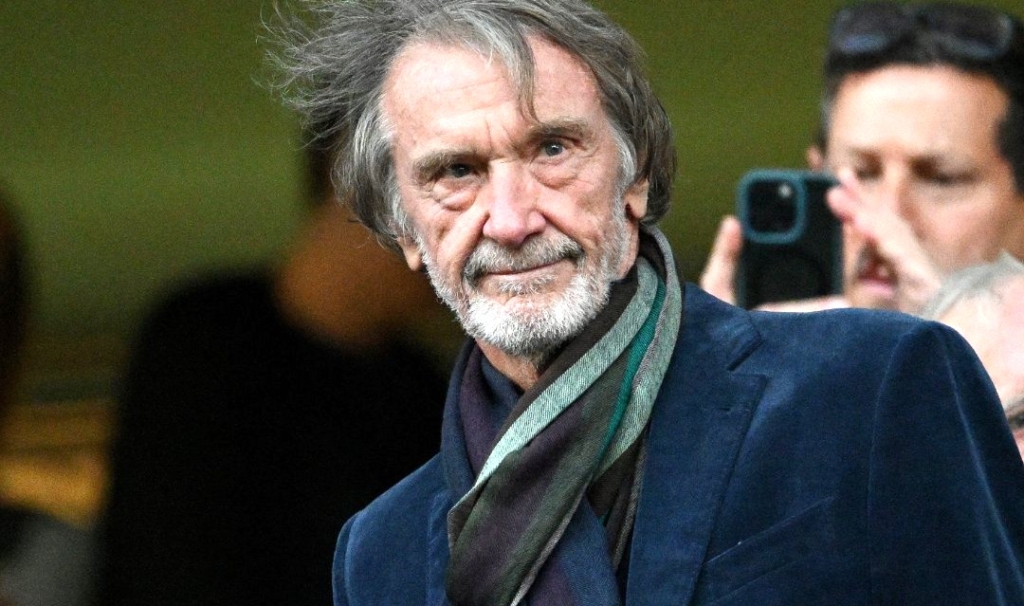
Recent attention has rightly focused on Sir Jim Ratcliffe’s controversial comments regarding his view that the United Kingdom is being “colonised” by immigrants. During a Sky News interview, Ratcliffe explicitly stated: “I mean the UK is being colonised… it’s been colonised… yeah, the UK’s being colonised by immigrants, really.” The remarks, and the ideas underpinning them, were swiftly condemned by numerous politicians and commentators. Keir Starmer responded almost immediately, calling the comments “offensive and wrong.” Similarly, Liberal Democrat leader Ed Davey described the comments as “totally wrong” and “out of step with British values,” echoing the call for an apology.
To many, Ratcliffe’s comments were beyond the pale and risked further polarising British society. However, it is necessary to examine the cultural context from which such rhetoric emerges. While these views remain unusual in the ‘legacy media’, they are increasingly central to a substantial and growing section of the media landscape: the “online right.” What this controversy reveals is not merely one individual’s extreme views, but rather the blurring boundaries between mainstream discourse and a radical-right digital sphere where such ideas have become normalised.
The Digital Right Ecosystem
As someone with an academic interest in the radical right, I have noted how material that thirty years ago would have been confined to expressly fascist pamphlets or obscure online forums now reaches significant audiences through algorithmic feeds. Within this digital sphere, Ratcliffe’s comments are considered mainstream – and the condemnatory response an illustration of the gulf between the beliefs of ‘the people’ and ‘the elites’. This landscape is dominated by figures who have, for various reasons, broken away from traditional media—often after being “cancelled” or dismissed for making what were deemed extreme comments—to establish independent platforms.
Dan Wootton serves as a primary example of this trend: a figure who once worked within the mainstream but has shifted steadily rightward to a point where there is now very little further to his right. In this he is following figures such as Tucker Carlson in the US. Carlson was eventually deemed too extreme for Fox News: Wooton became too much for GB News. Wootton, unsurprisingly saw the condemnation of Ratcliffe’s comments as a ‘deranged pile on’ by ‘the political class’. The views expressed by Ratcliffe were simply those of ‘someone deeply concerned about the destruction of our culture’. This shift is driven, in part, by a sense of being an “independent-minded” rebel battling a perceived consensus—a persona that appears to be addictive for such creators.
Furthermore, there is the phenomenon of “audience capture,” wherein creators become increasingly dependent on their audience’s demands for more extreme content. The online right is a highly competitive market; to maintain the audience figures necessary for advertising income, creators often follow their viewers’ demands for more radical material. The increasing extremity of figures such as Wootton raises the question of to what extent they truly believe what they are saying, or they are ‘grifters’, doing it to attract attention and money. This dynamic may explain the trajectory of podcasts such as Triggernometry and the work of Andrew Gold, both of which have increasingly featured radical-right and conspiracist guests and themes. As I previously noted, such discourse is evident in the Scottish public sphere, including discussions of Scottish urban places.
While it is easy to dismiss this online sphere as ludicrously extreme, the truth is it plays quite a significant role in our politics. They are helping to create the space in which figures such as Farage are normalised; for much of the online right he is deemed a centrist figure, still prepared to accept the need to be ‘respectable’. Many in the online right would much rather that Rupert Lowe would be a much better figurehead for the right, more willing to call for the “mass deportation” of “every last illegal migrant”. Those opposed to such ideas need to keep themselves aware of what is going on. While some might feel that drawing attention to the online right gives them undeserved attention, the truth is they can’t simply be dismissed. This is the deeper story behind Jim Ratcliffe’s comments.
The Rightward Shift and Americanisation
There is also a clear effort among these figures to tap into the American market, where radical-right thought is more deeply embedded. A strong argument can be made that we are witnessing a distinct “Americanisation” of the British right. Most commentators on conservatism agree that there has been a definite shift to the right within the movement—a shift that some on the right acknowledge and even celebrate as the emergence of a “genuine” conservatism, as opposed to something “conservative in name only.” Many now feel “unshackled,” empowered to voice long-held beliefs that were previously considered beyond acceptable political discourse.
What we appear to be witnessing is a significant rightward movement within conservatism in the US, UK, and elsewhere. Ideas and narratives previously considered marginal have gone mainstream, endorsed and articulated by a range of actors and media organisations. Roger Scruton’s trajectory is illustrative of this shift. From the 1970s to the 2000s, Scruton was a noted but somewhat marginal figure within the British conservative movement. Though broadly sympathetic to the Thatcherite attempt to move away from collectivist ideas, he was sceptical about their liberal focus on individual liberty. His rise to lodestar status highlights a shift in conservatism toward cultural themes, as opposed to the earlier neoliberal focus on matters of political economy represented by figures like Hayek and the Institute of Economic Affairs.
This “New Right” refers not to the free-market neoliberalism of the late twentieth century, but to a new iteration of radical-right politics with a stronger cultural dimension that sits far closer to ethno-nationalism. This is an international, well-financed movement with significant capital involved, which explains why several academics and influential figures are prepared to head in this direction. There is a palpable sense, among both proponents and critics, of a rightward shift in the Overton Window—the range of ideas considered politically acceptable.
Redefining Political Acceptability
A recent discussion between the historian David Starkey and the online influencer Carl Benjamin is instructive. Both have experienced being “cancelled,” with Starkey no longer a regular fixture in mainstream media following a series of controversial remarks on race. Starkey admitted he was initially sceptical about Benjamin, having been told he was ‘too extreme’. However, Starkey relented, suggesting that ‘as the political mainstream shifts, Carl Benjamin may eventually be looked back upon as uniquely prescient rather than extreme’.
In their dialogue, Starkey and Benjamin articulate a narrative of impending social breakdown. Benjamin stated that things are going to get “kinetic” in the UK, accepting this as a euphemism for violence. Starkey further suggests that the right needs to embrace radical voices to combat a left that he perceives as clinging to power through its grip on the “blob”—culture, law, and the civil service.
This discussion manifests a growing awareness that political influence has passed from mainstream op-ed columns to the online world. Starkey characterizes this as a “new opportunity” to burst outside the “mental prison” of the mainstream media. Conversely, Benjamin represents a younger generation that has embraced a traditional aesthetic. From a gamer background, he now adopts the attire and academic atmosphere of ages past, playing the role of a modern sage. Benjamin characterises himself as an “autodidact” who studied philosophy at Birkbeck and Buckingham, viewing himself as a voice for “dissident right-wing politics.” He argues that what was once “ignorable” now attracts “gargantuan audiences,” claiming that his views would have been considered moderate and normal only a few decades ago.
What comes across strongly in such forums is the sheer sense of confidence, the feeling that political momentum is with them. Particularly in debates over trans issues (a central focus of the radical right), they believe that the common-sense, mainstream majority is on their side. They argue that in the relatively unregulated online world, they are free to express such views. Crucially, they see these ideas as extreme only in the eyes of the establishment, not in the eyes of the mainstream majority.
Benjamin and others like him lean into a sense of intellectual seriousness, of connecting with the great thinkers of the past. There is a very deliberate attempt to use philosophical language when articulating their ethno-nationalism, a desire to give it intellectual credibility. For them, most contemporary intellectuals are not worth considering, having been captured by liberal progressive groupthink. This tallies with their broader sense that culture was superior in the past. The only relatively recent figures they are prepared to countenance are those such as Roger Scruton, who shared the same view; Scruton was dismissive of the modern academic world. Scruton’s rise to prominence as a lodestar of the radical right is, as noted earlier, one measure of the mainstreaming of such views.
The Narrative of Demographic “Colonisation”
A key to the success of this movement is the use of humour to normalise extreme commentary. In an episode of The Podcast of the Lotus Eaters discussing Ratcliffe’s remarks, the panel supported the case that the UK has indeed been “colonised.” These discussions are characterised by a deep sense of conviction and the dismissal of differing perspectives as being “out of touch” with the realities of British life. For Benjamin, Ratcliffe’s comments are a natural reaction for anyone who remembers the UK as a “demographically stable country.” He argues that this “colonisation” is being carried out by a “legacy imperial state” against the English people, who are essentially “under occupation” by a government inflicting demographic changes against the will of the governed.
This perspective utilizes several specific narratives to support the claim of societal loss. First, Benjamin uses demographic data to argue that entire swaths of English cities have become “ethnic colonies” that are self-segregating. For context, he points to 2021 Census data showing that in cities like Leicester, the “White: British” population now stands at 32.9%, a significant shift from 45.1% in 2011. Second, citing the BBC documentary The Last Whites of the East End, the hosts characterise the displacement of native groups like the Cockneys as a form of “ethnic cleansing” driven by mass immigration. Finally, they lament the perceived loss of the English language, pointing to areas where English is reportedly not the primary tongue and the rise of “Multicultural London English” as a threat to traditional British heritage.
Benjamin’s clear sense of satisfaction regarding Ratcliffe’s comments suggests that these radical-right ideas, once difficult to access, are now just a few clicks away, rapidly moving from the fringes into the mainstream consciousness. For Benjamin and others in the online right, Ratcliffe’s comments are illustrative of their growing influence. They are not wrong.
The Convergence of Fringe and Mainstream
The controversy surrounding Sir Jim Ratcliffe’s comments serves as a potent case study for understanding how ideas migrate from the digital fringes to mainstream discourse. What began as the preserve of niche online forums has, through a combination of audience capture, algorithmic reinforcement, and the perceived failure of traditional institutions, permeated the language of prominent public figures. This shift represents more than a mere change in rhetoric; it signifies a fundamental reorientation of British conservatism away from the economic liberalism of the late twentieth century toward a populist, cultural protectionism.
By framing the “establishment” as an occupying force and demographic change as a form of “colonisation,” these narratives seek to fundamentally redefine the parameters of British identity. The ease with which these ideas now travel from the digital shadows to the national airwaves suggests that the Overton Window has not merely shifted, but has perhaps been entirely dismantled by the new media landscape. Understanding this transformation is essential for grasping the contemporary political moment and the challenges it poses to liberal democratic norms.

We are supported only by our readers. We don't have corporate backers and we don't take advertising, so we rely entirely on your support.
Help to support independent Scottish journalism
The first references I remember to colonisation within the UK came from Welsh Nationalists who were complaining of the influx of English people, often retirees, into a traditional stronghold of the Welsh language. They were afraid of losing their identity.
On the Left we are unwilling to address the impact of migration in other than positive terms, but we in Scotland have our own legacy from Irish immigration in the 19th century and the two-way exclusion, predominantly around religion, that resulted, and which still persists in places today. Some migrant communities in the 19th and early 20th centuries were fairly rapidly absorbed and consciousness of them has almost disappeared. The large German community pre-1914 is invisible today, as are the several French migrations. Some communities are quite low profile; London may be the largest Cypriot city but few would know it. Others get noted for the wrong reasons, Kurds and Albanians come to mind.
We are today very much still in a transition period over 50 years on from the main migrations. Communities are still clinging to the original areas of settlement to an extent that was not true of previous migrations, customs and language are persisting to the third generation, inter-marriage very much depends on religion (Black Britons are more likely to marry White Britons than those of sub-continent ancestry for this reason). One effect is that in cities like London, Birmingham and Bradford migrant communities exist alongside the majority and children may not mix until college. Occasionally the Guardian has comments about the “whiteness” of rural areas being threatening (shades of Darkest Africa). Areas in several cities are dominated by one or more ethnic / religious minority with older people commenting that there is less freedom to roam for youngsters now than in their youth because of territoriality. Shouting at Jim Radcliffe changes nothing, people have their own lived experience, they have seen their towns or neighbourhoods become “foreign”, and often they are divided between the person they call a “mate” and the community to which they belong. Migrants are exploited, always, often by members of their own communities, but for those seeking jobs there is still resentment. People cannot understand why they cannot get a job commensurate with their qualifications and yet we still need 200,000 new migrants each year. The phenomenon of an entire workshift coming from one migrant group still persists (no discrimination, of course).
The particular version of Islam most British Muslims follow is accepting of diversity, but also relatively closed to outside influence. Bradford. 33% Muslim, became a magnet for those wishing to “live a Muslim life”. One positive sign is that half of the scholars in schools and mosques are UK born and at least partly UK trained, but the Quran and Hadith are far less flexible in interpretation than the Talmud and Torah, or the Old and New Testaments.
How people see themselves is also fluid. For a long time parts of our Irish ancestry population still saw Irish as their identity despite being British born of British born parents. Today we have minority ethnic groups in England who are prepared to put British as their identity but not English. Our capital city has an imperial legacy identity that often seems detached from the rest of the UK. We like to think we are different in Scotland, but we have far fewer migrants proportionately. Cultural mixing is one of Britain’s glories, but if people chose not to mix, to cling to a foreign identity, perhaps never bother to learn the language properly (other countries have compulsory language classes as a permanent visa condition) then it presents a challenge. Most Britons imagine that migrants will eventually be absorbed, while adding their contribution to the mix, , as previous migrant groups were, but it may be that like much of the rest of the world we continue divided with all that that means in ethnic and sectarian community stresses, and that is not a one-sided decision.
Ian – I lived in Wales and never heard anyone talk about colonisation by English. I heard complaints about rich people (mainly from England) buying up second homes to the perceived disadvantage of locals. I think Enoch Powell was talking about incomers threatening white society before Welsh nationalists complained about English incomers. Enoch Powell , for all I disagree with him, was well educated in the British Empire and would have realised that for a British person to complain about colonisation would have smelled of rank hypocrisy from a historical perspective.
You fail to mention many salient points in your comment;
1)Polling shows that the sections of society who are most unhappy about level of immigration are those that stay in areas with lower numbers of immigrants. This rather opposes your comment about fear of immigration being rooted in lived experience. While there will undoubtedly be some aspect of lived experience the very high profile given to the ‘problem of immigration’ by politicians and media (including mainstream) is in all probability the most significant factor. I would evidence this by polling that showed immigration ranked about 4th/5th in voter’s priorities until Sunak’s government stated the ‘Stop the Boats’ campaign and it has risen up in public importance since then.
Immigration is being blamed for failing public services and while the additional population undoubtedly puts additional strain on these services so does the aging population.The bottom line is that lack of public investment in these services has failed to match the demand on the services so it is easier for politicians to blame immigrants. The strain on public services has been exacerbated by a flat lining economy partly due to Brexit which ironically was fuelled by fear of immigration. Brexit has swapped EU immigration, which is more fluid, white and Christian for immigration from further afield which is more diverse and permanent in nature. It should also be noted that it is often immigrants employed in public services that is preventing them failing further. It should also be noted that immigration is attractive to employers who struggle to recruit locally as well as those more unscrupulous employers who wish to pay lower wages.
The UK and Scotland is experiencing a long term decline in birthrate and an increasingly elderly population. How we fund public services from a shrinking workforce population without immigration is a question I rarely hear asked and even rarely hear a feasible answer too.
Immigration has historically been shown to be of enormous benefit both economically and culturally to a country. There is also however no doubt that assimilation of large number of people with different cultural backgrounds has been historically difficult at times. These tensions can be eased by an immigration policy that is fair to both immigrants and the population in general. It can also be eased by politicians and powerful people being responsible and avoiding using inflammatory language and incorrect information for cheap headlines or short term political gain.
I would add two final points;
1)The rate of immigration has fallen quite dramatically over last two years.
2)Jim Ratcliffe voted for Brexit(see above), is a tax exile living in Monaco (ie not very patriotic to UK) and owns a football club who employ a large number of immigrants on the playing staff. In short he is a raging hypocrite.
We are not “50 years on from the main migrations”. Very high migration, mostly from Europe, is a 21st century phenomenon. (7m applications for EU settled status). The 21-24 “Boriswave” was a massive jolt for Brexit voters while the failure to deal with “illegals” on boats has been weaponised incredibly effectively. Add in clickbait about grooming gangs and suddenly you have an appetite for ICE style deportations.
Clearly in Scotland we are not immune to this, and many Scottish towns now have more visible minorities than before- potential targets for scapegoating.
Observer- Scotland’s population has only recently risen marginally after decades of decline so Scotland is not experiencing the significant increases in population experienced in some areas of England. Scotland has far fewer (if any) asylum seekers arriving directly in Scotland. Scottish councils are helping with housing asylum seekers arriving elsewhere until their right to stay in UK is assessed.
It therefore follows that immigration should not be such a big issue in most Scottish people’s lives experience in comparison to elsewhere in UK. The fact that it seems to be rising in importance in voter’s priorities in Scotland is more to do with the high profile of immigration in mainstream media and social media. I am old enough to remember people in my small Scottish town picking up tabloid headlines in 1970’s complaining about ‘all the blacks living here’ when in reality there were only about two families of coloured people in our town.
Lastly immigration is a reserved policy and net immigration is actually expected to fall by end of this year mainly due to a fall in student migration. This could reverse the modest rise of recent years in Scotland’s population which when you consider Scotland’s demographics could be bad news economically and for public services. I would also add that UK immigration policy allied to Brexit have been disastrous for Scottish Universities and could derail the Scottish government policy of not charging Scottish students tuition fees.
In short the debate around immigration should be a much wider issue than currently described by media with the pro’s and cons clearly laid out in front of public rather than being hijacked by bad actors for political or personal gain.
@John, in the context of widening the debate, if human migration to places already inhabited by humans is supposedly a bad thing per se, are all Scottish emigrants bad people too? Why do the British reserve a different name for their own migrants? Talk about ‘two tiers’…
https://en.wikipedia.org/wiki/Expatriate
I would suggest we are looking at this from the wrong end. The answer to Scotland’s long history of outmigration and the declining birthrate is not inward migration which historically Scotland has been poor at retaining, but that we look harder at what we need to do to make Scotland a more attractive place and perhaps seriously consider what is a reasonable size population given our resources.
There seems an inherent contradiction in our numbers of unemployed and underemployed people and the perception that we need more. Our public services do need better staffing but the real barrier is paying for it. We have trained the doctors, nurses, teachers, etc but too often they cannot obtain permanent positions and their level of qualifications, meanwhile those in jobs are overstretched and quitting. AI threatens a massive change in the economy with no map ahead for the future of those without capital to benefit from it from delivery drivers to clerical staff and possibly even professionals. An aging population reliant on migrant labour is just continuing exploitation, we need to think of better solutions.
The UK has done quite well in managing the biggest proportional population influx since the Anglo-Saxons without conflict but there does need to be a pause to let it settle. Across Europe around 10% is coming to be regarded as the limit without triggering serious reaction. I want those that are here to commit, no 20 year foreign residents, and not have the sojourner mentality. The current Government approach is entirely the wrong one.
Scotland has never since the Irish migration of the 19th century, had concentrations of groups of particular minorities in their new area in the way that London and other English cities have which make our experience qualitatively different. Migrants choosing to be Scots don’t really have much option, they cannot live within their community alone.
Ian – I don’t disagree that we need to make Scotland a more attractive prospect to reduce emigration. Scotland is a resources rich country and they should be used to benefit everyone in Scotland. That can only be achieved by Scotland having more control of its own resources which is exactly why I, and many others, support independence.
The largest number of people moving to Scotland at present come from elsewhere in UK, in part due to the more supportive social policies Holyrood has implemented.
Your point about forcing unemployed or partly employed people to work full time is a bit of a red herring. There are undoubtedly some people who are able, but unwilling, to work more but there again there always have been. There also are a significant number of people who are either physically or mentally not capable of working especially post Covid. This phenomenon seems to affect UK more than other Western European countries which is more a reflection on economic, employment and health conditions for UK citizens that have led to this situation.
Regardless of this we do have a real demographic problem in Scotland and glibly saying the sick and unemployed can solve this issue, as Malcolm Offord and yourself claim, is at best simplistic and at worst blaming the poorest and sickest in society. The claim that AI will solve this issue doesn’t stand up to scrutiny. There are many jobs that will not be suitable for AI replacement in near to immediate future especially in relation to care and trades.
I am not arguing for cheap immigrant workers, to pay for the pensions, social and healthcare for an increasingly elderly population. I am arguing for a realistic solutions to our demographic problems in Scotland which IMO will almost inevitably require some immigration.
have pointed out that current UK immigration policy is going to have a drastic effect on funding for Scottish universities and consequently for Scottish graduates as well as Scottish industry and employment.
The immigration requirements and demands in Scotland and England are quite different and therefore the solutions required are also different which means that the control of immigration policy should be determined by the Scottish people and devolved to Holyrood.
I did not mention those incapable of work but those wishing to work and unable to find jobs appropriate to their education and skills, although I might add that we do not seem very good at equipping many people with appropriate skills. Why are Polish tradesmen better at their specialities and also competent across other skills. The link between colleges and industry has weakened with too many emulating the US liberal arts model and forgetting their roots.
I fear relying on foreign students to sustain our universities is likely to be a short-term solution. China and India will soon be able to rival at home anything we can offer. Chinese research institutions are already better financed. For Edinburgh the replacement of breweries with student accommodation has been very much a mixed blessing. It hasn’t created much work. It denied inner city housing opportunities to locals, and it brings in no Council Tax.
John, obviously you cannot have varying immigration policies in different parts of a United Kingdom. The Quebec experiment with that was hardly a success even with a francophone qualification.
An independent Scotland in control of it’s own migration policies would only attract more people if it was already proving economically successful.. I’m presuming that you would want the same kind of freedom of movement agreement that we already have with Ireland too.
You want more migrants, I think that largely we have enough and that what has happened in England is not the kind of transformation we want in Scotland. Scotland, like Ireland, has experienced a bit of the “return” phenomenon with the children or grandchildren of migrants to England moving back to Scotland, as well as the English early retires seeking a change of lifestyle. I don’t think it has yet exceeded the continuing migration from Scotland to England.
There is a “normal” rate of migration just as there is of inflation and straying too far from it in either direction is not good economically or socially. I’d rather a slow absorption rate, with a deliberate policy of encouraging migrants to integrate and the discouragement of enclaves in one area. It left us a bad legacy with Irish migrants and it hasn’t really worked anywhere, see Sweden recently, ‘d rather like it if a bus journey did not sound like a visit to the tower of Babel, even without the tourists.
Inward migration as a solution to an aging population is one approach but better social organisation, a greater use of technology, and a workforce with access to a much greater level of capital investment bring up our poor productivity levels might be anothe.
Ian – reading through your comments you appear all over the place. You originally said that Scotland doesn’t have the same level or pressures of immigration as elsewhere in UK and I agree with that. Indeed Scotland has its own immigration dynamics and therefore needs its own more tailored immigration system. I also point out the negative impact of Brexit on Scotland and the demographic challenges that Scotland faces over next decade. You fail to address any of these issues in any meaningful way. I would be interested to know how you think immigration would be best managed in Scotland therefore. Should it be on a UK level by Westminster, devolved to Holyrood or by an independent Scottish government?
Ian – I notice that you haven’t answered my simple question about who should have responsibility for immigration in Scotland.
I have no doubt that Reform will want to make immigration a big topic at Holyrood election but since it is reserved to Westminster the only question of actual relevance to election on immigration should be who should have control of it?
This is even more important as Scotland and England have different levels of immigration which is something we have both identified.
Ian – thank you for your reply. There is no reason that greater flexibility on controlled immigration could be devolved to Holyrood to specifically meet employment needs of Scotland without affecting other nations of UK. If Westminster cannot achieve this it merely only demonstrates how rigid and dysfunctional the UK state is for 21st century.
I read your comments about how you describe Irish immigration and ‘tower of babel’ experience on a bus. I think these comments are far more illuminating of your perspective than anything I can write,
Thank you John, my perspective is perhaps influenced by spending part of my childhood in a country with three different ethnic, linguistic and religious traditions which show no signs of ever getting closer. An more conservative imported version of Islam hasn’t helped. Saudi money again. The history of the Irish in Great Britain, particularly in Scotland cannot be ignored. It is not so long ago that the Scottish Government produced a report on the lingering discrimination. The fact that we still have segregated education is frankly strange but raises the question if Roman Catholic why not Muslim state schools? In many English cities the migrant groups all have their own special areas of settlement. Afro-Caribbean here, Bangladeshi there, Sikhs somewhere else I think a more kaleidoscopic distribution would be healthier in creating a more cohesive community.
Perhaps I travel by bus more often than you do. I hear more languages on my regular journeys than I did on last year’s holiday in the Maastricht region where Dutch, French and German are all locally spoken, with English as the usual extra. Belgium has never solved the division down linguistic lines it bedevils it’s politics. I don’t want people to lose their ancestral tongues but if the world uses English as it’s main common tongue it seems strange so many living here apparently still have it as a second language.
Ian – many thanks for your reply.
My life experience has led me to slightly different conclusions than yourself.
I worked and lived in Wales for a number of years so I became used to people communicating in Welsh (on public transport and elsewhere). In recent years we hosted a Ukrainian family and though they had to communicate with us in English I got used to them communicating with each other in Ukrainian. I also live in Edinburgh and hear people talking different languages to each other in street and bus. This doesn’t bother me at all and I have not experienced any problems communicating personally with anyone.
I have lived abroad in Australia and therefore have at least a little understanding of the insecurity of being an immigrant.
Having lived in Scotland for first 40 years of my life I am aware of sectarianism. I am not of Irish heritage myself but am aware of the discrimination that those with Irish heritage faced in years gone by. Lastly to finish on a point of agreement though I understand why Catholic faith schools originated in Scotland my personal experience leads me to believe that it would be better for social cohesion if all children of every faith and no faith went to the same schools and were taught free from any religious doctrine.
Ian – one last thought on your ‘tower of babel on the bus’ comment. I am genuinely perplexed by this comment.
I fully agree that people living in a country should be able to or learning to communicate in the official language of the country when communicating with the public authorities or when required in the workplace.
When people are having a private conversation either at home or in a public space it is surely entirely up to them what language/ dialect / accent they communicate in. If I wanted to talk to someone in Klingon on a bus it is entirely up to me and the person I am communicating with. What language someone uses in a private conversation should be of no concern to anyone else unless they like eve’s dropping. The only people that piss me off in the public domain are those that speak so loudly you cannot help but hear what they are saying.
Integration is a two way street. Quite a sizeable number of English have absolutely no interest in integrating with non English people, they see themselves as exceptional and distinct. This is exactly why they vote for things that are against their own interests, pre-Brexit freedom of movement in Europe, Europeans fill vacancies, do the work, and then go home. They still voted brexit as they thought it would “get rid of all them”, it didn’t. It only compounded the immigration issues. Hence you now have reform topping the polls. Also class is incredibly important to the English, if you ain’t the right class or don’t speak with their preferred accent you are an outsider to them.
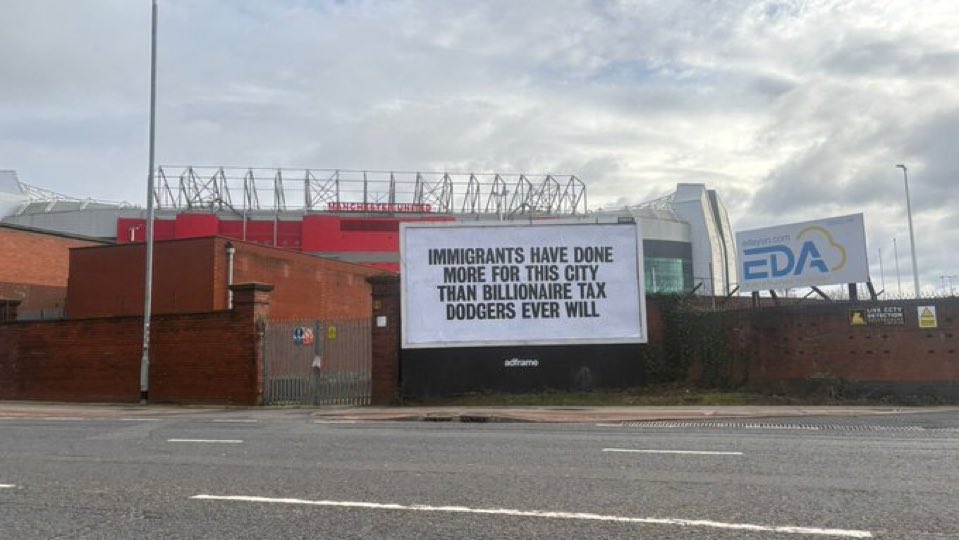
Manchester is one of the greatest cities in the UK thanks to immigration and being different. Jim Ratcliffe is angry because he is a welfare queen, wants the government to fund his new stadium, and his company is in big trouble.
Also are you familiar with what the Talmud says about the goy? Many indigenous Scottish people have reached great heights amongst the Islamic scholars of Britain (such as his esteemed eminence, the late Dr Ian Dallas), no such thing exists in Judaism unless one is born into it, or is accepted by the community to convert after a very long process. Even then they are deemed second class as they do not have the same nefesh as other co-religionists. It’s all there.
All very true, and the English, or rather the ‘British’ who are not identical and include some Scots, picked up that Judaeo-Christian exceptionalism and sense of superiority from the Old Testament and also the legacy of the Roman Empire. That is certainly not to seek to excuse the inexcusable. Muslims have historically been far more tolerant of Christians and Jews than they have experienced from them, but they too do have the sense that the umma is exclusive.
But Scotland has to face up to its own deep-seated problems, in particular the hatred of the Gael, which has been applied to both Irish and Highland Scots, their language and culture. And in Scotland the Gaels have a far better claim to ‘indigenous’ status than anyone else.
The truth is that there is one planet and we are all native to it, whoever we are. Humans and other species have always moved around it – and that is essential in order to maintain healthy diversity an DNA. All this fear of the ‘other’ is largely stirred up by those who wish to use it against us. I celebrate the Roma and other travelling communities, the Norse heritage of the Northern Isles, the Dutchman John de Groot who gave us the name of our northern headland, the 20th c Gaekic speaking Italians and people of Indian heritage, … Scotland has always been a refuge and a hybrid culture.
The concept of the Ummah is simply what encompasses the body of the Muslims. Its not restricted along rigid racial lines, anyone can join. An analogous term would be Christendom, which would include large parts of Southern Africa and South America.
In regards to the indigenous Gaels, i don’t disagree at all.
Of course integration is a two way street but I can remember a very different Britain in my childhood so we have changed in all sorts of ways and at an accelerating rate. In England the current non-White British school population is approaching 50%, mostly born in the UK.
Which school you went to is a standing joke in Edinburgh and not exactly missed in Glasgow. Class consciousness is not just English nor confined to the Middle and Upper Classes. It holds back ambitious Working Class kids.
Judaism probably came up with the first still extant race laws although the intent was the same as the Christian admonition not to marry outside the faith. It’s frowned on in Islam too. Not so long since Roman Catholics had to go through hoops to marry a Protestant. It is a good example of what societies consider significant differences and what is tolerable. Islam, beginning as a message to the Arabs only, was able tolerate God’s separate messages to Jews and the “Romans” of the Roman Empire. They didn’t take the same position on Zoroastrians and those they considerrd “idolators”. Christians believing their faith to be universal prove intolerant of any other faith in their lands. Jews were persecuted for centuries. Pagans, Muslims and unorthodox versions of Christianity were driven out of existence. St Francis was lucky to escape being labelled a heretic, many preaching similar messages went to the stake.
The decline in religious belief is having the effect of drawing different faiths together ironically.
Doesn’t the ‘Americanisation’ (sic) of large sections of the British far right simply indicate their cringey hypocrisy when whining about British culture being under threat from imports? Stupidity, ignorance, bombast and sucking up to power-and-riches may be classic British features, but they are hardly culture-specific.
As an actual gamer who has recently achieved a Cultural Victory in Civilization 6 (Deity level, standard game, Gathering Storm rules, Harald Hardrada Varangian Guard variant), I find it amusing to think how hollow these machinations can be (cultural appropriation, hard corporate power, culture mining, bribery, missionary rock bands, cynical commoditisation and sometimes outright theft feature heavily).
Hollowness generally has a cost, is particularly damaging to the structural integrity of a project, and can simply be a hole for a foreign agent to insert controlling organs into (the USAmerican CIA has used many cultural fronts since WW2, and there are fewer artistic movements more hollow than the ones it promoted most). Something to think of when Bella’s contributors beg for patronage and wish out loud they trusted their artistic gatekeepers.
https://en.wikipedia.org/wiki/Who_Paid_the_Piper%3F
I see these far-right-only clusters as a sign of weakness, not growing strength. For so long, they have had to avoid awkward questions about the true history of the British Empire, its own record of cultural hegemony and much worse forms of illegal migration, and its slavish support of the British (historically much less so than general population and chock-full of immigrants, some who never learnt to speak English well) Royal Family. The Established Church they head has long fought against secularisation. If you wanted indigenous religion, it wouldn’t be Christianity.
I don’t see Ratcliffe’s remarks as unhelpful here, because they reveal something about the nature of the oppressive dread the imperialist far-right seem to be afflicted with:
#karmaphobia
OK – up to a point. But this is actually just mind-games played by billionaires.
” Starkey further suggests that the right needs to embrace radical voices to combat a left that he perceives as clinging to power through its grip on the “blob”—culture, law, and the civil service.”
In other words, it’s Trumpism, and it has as much authenticity as he does, that is, none. The whole supposed culture war between ‘right’ and ‘left’ is manufactured Orwellian nonsense. ‘Right’ and ‘left’ now mean only what the billionaires say they do. It isn’t the ‘left’ that clings to power, it is themselves. Elon Musk and his friends play both sides. Their aim is always totalitarian control of the entire planet and everything and everyone on it. So we are presented with a ‘common enemy’ in the form of the Russians, or ISIS, or climate change, or Covid-19, or -illegal immigrants’ or Jews, or Muslims, or whatever, that we must depend on them to save us from. Because they are the global ‘elite’, who own the science and the truth. Who are far above ideas of democracy or national sovereignty. Then they stir up nationalism and racism to divide and rule us. Elon Musk and others have openly declared that we will all fight each other whether we want to or not. And all their manipulation of ‘reality’ is really just what NATO calls ‘cognitive warfare’.
The only difference between their ‘left’ and ‘right’ is whether it’s globalist techno-fascism or the more traditional kind seen in Trump. We certainly do need radical change but it’s not the kind you’ll see on Facebook, or X, or any other media controlled by billionaires.
I still believe that human nature is not totally destructive or selfish and that a future is possible. Any pronouncements by fascists on social media need to be called out, quietly and firmly.
@John Wood, thinking about those fantasies of dominating the entire planet, and your list of presented threats, I omitted something I should have included. Having watched Sky History’s Life After People S1e5 ‘The Invaders’, the USA has notably been colonised by invasive species (the Burmese pythons abandoned as pets eating alligators in Florida, sharing space with the junglifying Brazilian peppertree brought in as a Christmas decoration). Many microorganisms are invisible to the naked eye, of course.
https://en.wikipedia.org/wiki/Life_After_People#Season_1_(2009)
British nature has been so depleted by its human inhabitants that its weakened ecosystems were primed for invasive species to take hold. Although even the grey versus red squirrel has been cast as another culture war. Some species have more than tokenistic value (the European pines imported by Israelis are inedible to humans, unlike the Palestinian orange and olive tree fruit, and they are planted to cover pre-existing settlements).
One could say similar things about a culture depleted by authoritarian depredations (Christianity’s suppression, demonisation, diminishing and appropriation of indigenous culture, say).
It’s noticeable that perhaps the most iconic paragon of English culture, William Shakespeare, seemed to be quite outwardly-looking, critical of British culture, society, religion and especially political systems, and whose seditious dramas have been ‘judiciously barbered’ (in the words of Germaine Greer) to neutralise their powerful dissent. What does Shakespeare imply about the typical Englishman?
“NERISSA What say you then to Falconbridge, the young
baron of England?
PORTIA You know I say nothing to him, for he understands
not me, nor I him. He hath neither Latin,
French, nor Italian; and you will come into the
court and swear that I have a poor pennyworth in
the English. He is a proper man’s picture, but alas,
who can converse with a dumb show? How oddly
he is suited! I think he bought his doublet in Italy,
his round hose in France, his bonnet in Germany,
and his behavior everywhere.”
Merchant of Venice, Act 1 scene 2
Surely it must be embarrassing to claim that British culture must be saved by importing culture from that USAmerican melting pot? Ach, the kids are playing Japanese games, listening to Korean pop music and watching international collaboration movies with superheroes drawn from every culture. The cat’s out of the bag.
“This dynamic may explain the trajectory of podcasts such as Triggernometry and the work of Andrew Gold, both of which have increasingly featured radical-right and conspiracist guests and themes. As I previously noted, such discourse is evident in the Scottish public sphere, including discussions of Scottish urban places.”
=======
I shall have to accept the author ‘s word on the first of the two statements. I have barely heard of the stuff he references.
But that is nothing compared with the second statement. I haven’t a clue what he’s talking about. Does anyone?
On reading this I am reminded of Raymond Williams’ quote that ‘to be truly radical is to make hope possible rather than despair convincing’. So much of radical/progressive/leftist commentary focuses on the right wing and seems to rest on the principle that presenting a dire prognosis will cause others to ‘wake up’ to the right wing threat that their article present as inevitable. When I read ‘The New World’ I read more about Nigel Farage and Donald Trump than I do of alternative narratives.
The failure of the Starmer Government and particularly the Prime Minister is the lack of any evidence of serious thinking about what ‘Change’ would focus on and a strategy for brining it about. The number of changes of policy exemplifies this lack of a sense of direction.