
For the Good of the People
FOR THE GOOD OF THE PEOPLE: From The Provence Of The Cat by George Gunn
There we were in Bonar Bridge. The beautiful heart of the North Highlands on the north bank of the Kyle of Sutherland, where the four rivers Oykel, Cassley, Shin and Carron all enter the Kyle above the bridge at Bonar. To the South sits Ross and Cromarty, and to the east, the estuary opens into the Dornoch Firth with the Moray Firth and the North Sea beyond. The Sun was shining. Even though it was the middle of February, An Gearran – the wolf time, am madadh-allaidh – there was the hope of Spring in the air, in the snowdrops and the crocuses.
We were in Bonar Bridge to “adopt” Maree Todd as the SNP candidate for Caithness, Sutherland and Ross. A constituency the size of Northern Ireland. I was glad to “adopt” her even though I am not a party member. I was there because I believe in an independent Scotland. It is the best hope we have as a people and I believe in Maree Todd. The raw silage that “British” politics has become needs burying. It is impoverishing us. Maree Todd is decent, honest, hard-working, loyal and she comes from Ullapool. What more can one ask of a politician? That question is a big one. The First Minister, John Swinney, was also present at this event. In person, he is so unlike his TV persona. He is a warm, gregarious, open and generous personality. He had something to say to everyone. Which took some doing because the place was packed. John Swinney talked about his journey to Bonar Bridge. Travelling from Perthshire to the Kyle of Sutherland, he said, you get the measure of how beautiful our country is. The tragedy is that our beautiful country doesn’t belong to us.
In Andy Wightman’s latest “Who Owns Scotland (2025)” the date makes for grim reading. In it he shows that 83% of rural Scotland is owned by private entities (individuals, companies, trusts etc.).
• The ownership of privately-owned rural land has become more concentrated since 2012 as a result of existing owners acquiring more land.
• This trend has continued in the past year since the Who Owns Scotland Report 2024.
• 408 landowners own 50% of the privately-owned rural land compared to 421 in 2024 and 440 in 2012.
• 2413 landowners own 70% of the privately-owned rural land compared to 2588 in 2024 and 3161 in 2012.
• The public sector estate has decreased by 58,650 ha (6,3%) since 2012.
• Community landownership has increased by 44,191 ha from 172,294 ha in 2012 to 216,485 ha in 2025 (a 26% increase in extent)
You can educate yourself by reading the full report here. https://andywightman.scot/docs/WOS_2025.pdf
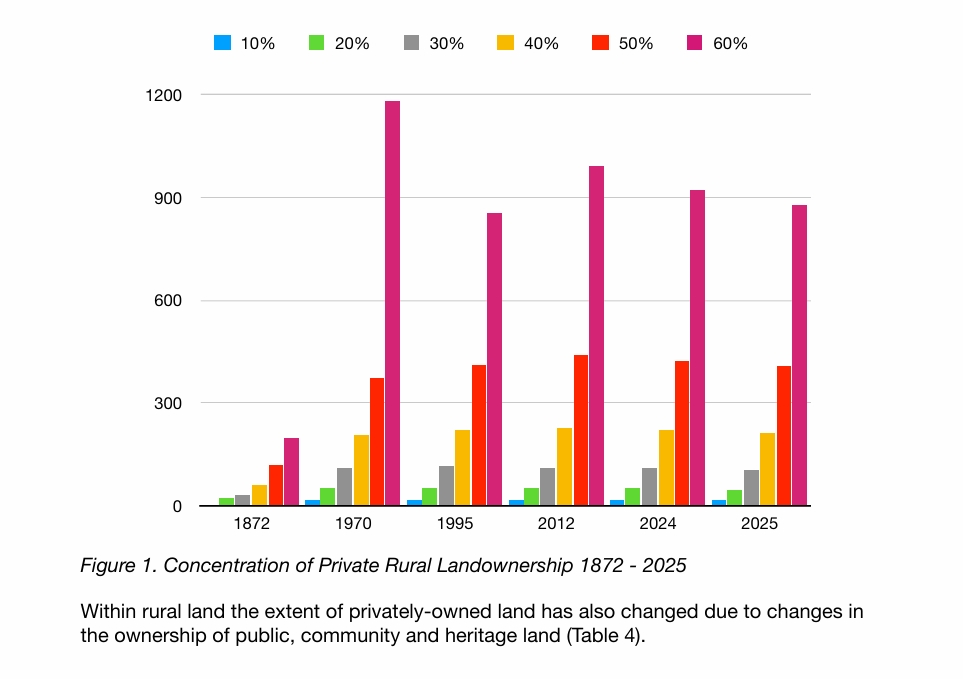
It is probably the most important and depressing sixteen pages you will read. If you care about Scotland, that is. Most politicians don’t give a damn about the place, so it was refreshing to meet two who genuinely do. This was after that surreal moment when Anas Sarwar wrapped himself up in The Saltire and declared that the Prime Minister Sir Keir Starmer should resign. The slogan “Labour are crap. Vote for Labour” has such brilliant comic potential to match that of Mel Brooks in “The Producers” – “Springtime For Hitler” and all. Those who read “Who Owns Scotland 2025” will not be laughing. The chronic inaction on land ownership, especially Highland sporting estates, by successive SNP governments, is one of the main reasons a lot of people, especially young people, in the Highlands are disillusioned with the party. What Andy Wightman has set out is a graph of legal corruption. All I ask of the SNP government, when they get re-elected in May, is to make this legal mess illegal.
Highland estates – and the nature of landownership generally in the Highlands – keep the North of Scotland empty. It keeps us poor. It limits every aspect of our lives. It curtails employment. It encourages youth emigration. It is destroying the environment. Trees cannot grow because they get eaten by sheep and deer. Species such as eagles and wildcats are being driven to extinction. Land ownership keeps the Highlands artificial. It is a form of financialised death. In the words of Frank Fraser Darling it has created “a wet desert”, a term he used to describe the landscape of Dartmoor, such was the lack of biodiversity that he found there. But it applies to the Highlands of Scotland most critically. Fraser Darling contended that
“the Highlands are a devastated countryside, and that is the plain primary reason why there are now few people and why there is a constant economic problem.”
That “economic problem” is the current form of landownership and until it is addressed and land is taxed realistically and brought into the public domain it will continue to be so. A rich man’s play-park is not a country. But in the “British” state, as it is presently constituted, corruption is the currency and the Epstein revelations show that it runs from the top to the bottom. The insane, illegal and apocalyptic violence being waged by the US and Israel against Iran spirals that corruption and degeneracy beyond the zone of humanity. Fraser Darling published his “West Highland Survey: An Essay in Human Ecology” in 1955. 71 years later nothing fundamentally has changed. And yet, everything has changed.
One irritation remains the same: the lack of understanding in the Central Belt of Scotland about the history, culture and politics of a constituency such as Caithness, Sutherland and Ross. For example in the Sunday National of 10.3.26 James Kelly, in his usually admirable “Constituency Profile”, makes some uncharacteristic assumptions and omissions in his assessment of Caithness, Sutherland and Ross. The broad parameters of James’s analysis are sound enough. It is true that the recent Ipsos poll suggested the national swing between the Lib Dems and the SNP is about 7.5%. If this was applied to Maree Todd’s constituency, as James Kelly suggests, then the Lib Dems would gain the seat by a full 8%. However, it is in the local detail where his findings are less than convincing.
In the 2024 General Election the SNP lost the Caithness, Sutherland and Easter Ross seat to the Lib Dems for three main reasons. Firstly, it was no fault of Lucy Beatie, the SNP candidate, that the previous SNP MP had been a disaster. Secondly, the Unionists voted tactically to keep the SNP out and to say that the present MP is “popular” is like saying that a clown in a circus is popular. As far as the “British” state is concerned he is usefully ineffective. Thirdly, in 2024 the SNP vote just did not turn out. If the SNP vote turns out in May and votes for Maree Todd then the SNP will win in Caithness, Sutherland and Ross. In the Highlands and Islands the Liberal Democrats are the party of privilege. The party that promoted the Crofters Holding Act of 1886 are long gone. The Highlands simply cannot afford their bourgeois reincarnation.
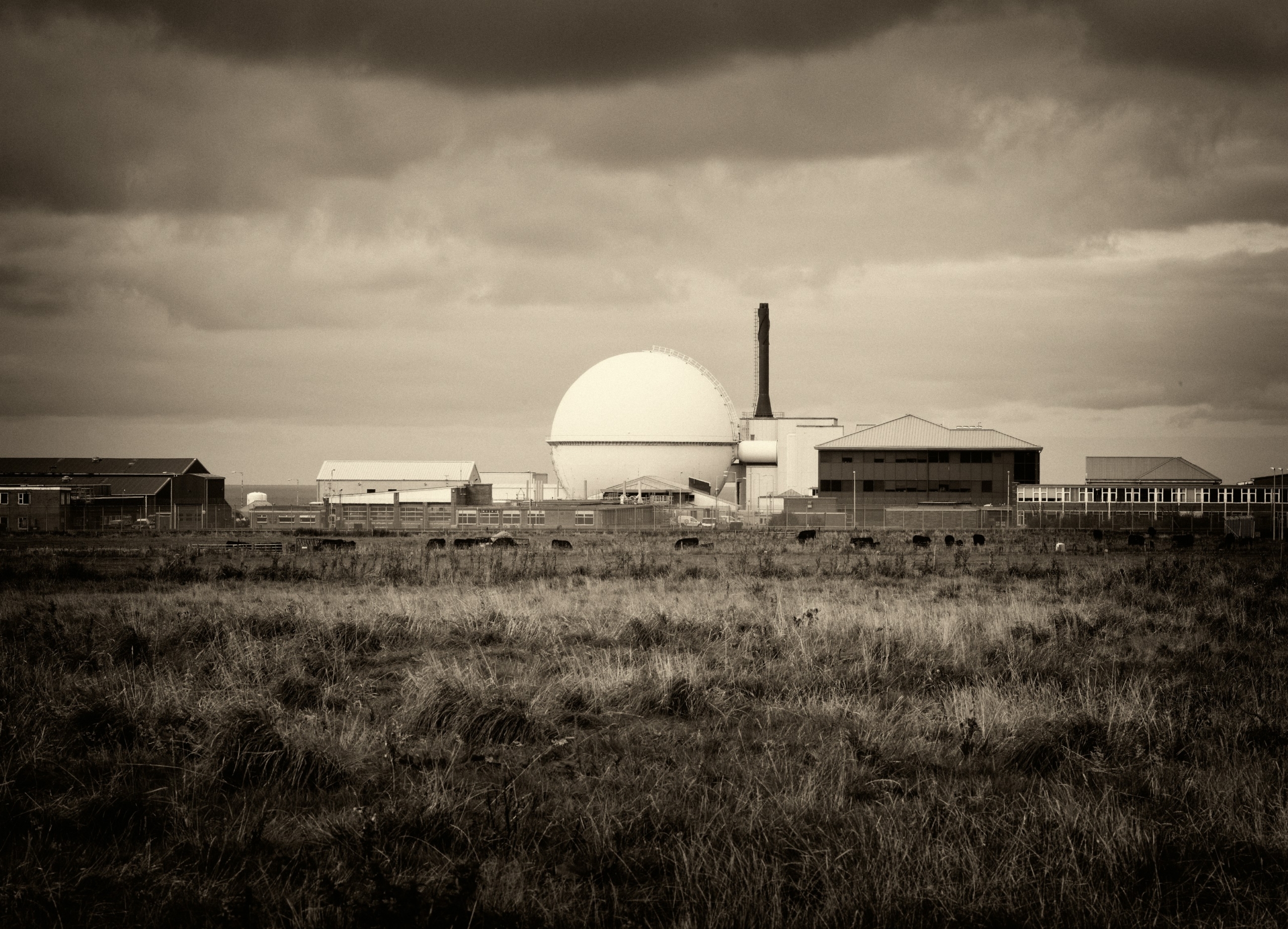
Also, the idea of personal loyalty to a candidate no longer holds any sway and Robert Maclennan was a man from a different era. He left the Labour Party to join the SDP, which in turn became the Lib Dems. His constituency was Caithness and Sutherland and the main reason for his “popularity” was Dounreay and the thousands of jobs it brought to the Far North. Jamie Stone, the current Lib Dem MP, is pro-nuclear for the same reason, although when queried as to exactly why in a renewable-rich area we need nuclear power, his answers are far from convincing. For the record, Dounreay was never a power station: it was an experimental nuclear facility. That is why it was built on the north coast of Caithness. Far away from London. Even though Dounreay is now being decommissioned and the workforce is greatly reduced the political and cultural hegemony of “The Atomics” – and London – remains.
Caithness itself, politically, is a duopoly. In the west, around Thurso, there is a strong Unionist, pro-nuclear, anti-EU constituency. In the east, around Wick, there is a strong independence/YES supporting, pro-EU constituency. There are variations on a theme here and there, of course, but when you add into the mix the major influx of people to the North Highlands who have sold property in the South to take advantage of cheaper prices, bringing their political and cultural values with them, then you can see why there was high level of Leave voting in 2016.
Whether this translates into a Reform vote in May remains to be seen. I suspect the Unionists will vote tactically yet again. What is a constant is the steady flow of letters to the local press from individuals who complain bitterly about the state of things, most significantly windmills, pylons and battery storage plants, and how this will affect the price of their house and how it is, inevitably, the fault of the SNP. The laws of politics asserts that you get what you vote for, especially if you vote for Unionist parties. The economic reality is that very few major socially beneficial infrastructure projects have been undertaken in the Highlands since the UK dragged Scotland out of the EU. Needless to say, the promised replacement funding from Westminster has never materialised. The environmental wreckage currently being inflicted upon us by SSEN is not compensation: it is punishment.
On the matter of fishing – the most important fish landing port in Caithness, Sutherland and Ross is Scrabster – not mentioned by James Kelly – with an annual turnover of £20m. That said, the loss of French and Spanish vessels landing is a concern as is the de-regulated bourach which operates in place of the Common Fisheries Policy. The mess created by Westminster falls on Holyrood to resolve.
Where James Kelly is dead right is when he says that if the Lib Dems take Caithness, Sutherland and Ross it “would be a real gain for the Unionist camp, i.e. one that the SNP would not be compensated for on the regional list.” It would also be a disaster for the people of the North Highlands. And John Swinney was also right – Caithness, Sutherland and Ross is stunningly beautiful. It is captivating. If you are Scottish, it goes deep into your soul. Even if the aesthetic and the political are the contrary deer in the forest. Those of us who live North of Inverness have to understand them and somehow square one with the other and make them work. But when it comes to beauty and the Highlands you have to realise that “beauty” is the harmony of nature, history, chance and the good of the people. Without people in this landscape there is no society, without society there is no culture, without culture there is no art and without art we are not fully human. We become mere beings who value nothing with no sense of worth. Land is power. The power of capital as it is presently manifest does not work for the good of the people.
If you wander across the Flow Country of Caithness and Sutherland or the wooded hillsides of Ross you will hear the cry of the eagle or, maybe, the roar of the stag. What you will also hear, all too often in the straths and glens, is the Anglo-sneer of superiority as the doors of the polished 4X4’s slam shut. In that acoustic mixture is the political problem waiting to be solved.
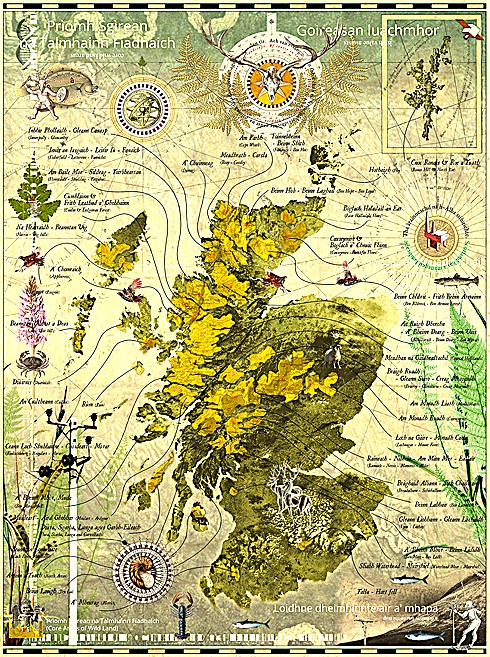
Image Credit: Murray Robertson, from Mapping Scotia – Inscribed Landscapes I Mapadh na h-Alba – Cruth-tìre Snaidhte

We are supported only by our readers. We don't have corporate backers and we don't take advertising, so we rely entirely on your support.
Help to support independent Scottish journalism
Agree with every word of this wonderful article. As an SNP voter and resident of Ross-shire, I am so disappointed that the SNP have done nothing about land ownership – the big landlords, some owners from the 12th century and some buying up with new wealth, are as powerful and dominant as ever – nothing has changed. An example of “old” ownership is the Moray estate at Darnaway, near Nairn, gifted to the Earl of Moray by Robert the Bruce and still owned by the current Earl of Moray. An example of “new” ownership is beautiful Glen Affric owned by the in-laws of Pippa Middleton, sister of the Princess of Wales, who have tightened up access at one end of Loch Affric.
What killed all the wolves?
Haven’t been over that way in years but a fine article, best I’ve read in a lang time.
Haven’t been over that way in years but this is the finest article I’ve read in a fair while.