
Holyrood 2026 – Iris Duane
This is the second in a series of interviews ahead of the Holyrood elections #Holyrood2026 [read Jim Monaghan Interview]. We spoke to Iris Duane, Glasgow Greens Kelvin and Maryhill candidate and #3 on the list.
What would you see as an aim for the Scottish Greens at the Holyrood elections? What will a good result look like?
Of course, for many parties a good result would be getting the keys to Bute House on May 18th, we in the Greens do things a little bit differently.
For us, it is about spreading the word of how green policies can help us all, why we should make Scotland a fairer country for all and why taking charge of our democracy with independence is the path forward.
As Greens, whilst we’ve been a mighty contingent, our numbers have been relatively small, in this election there is every chance to hugely increase our MSPs and be part of a pro-independence super-majority. That is how we can lock out the far-right and work collaboratively across the chamber to bring green policies to fruition.
With that said, you can’t count your chickens before they hatch. With so much attention being paid to the Greens for the first time in a long time, this election is an opportunity to get the word out that politics doesn’t have to be a continual race to the bottom, that we don’t have to accept managed decline and that the politics of hope can win.
Irrespective of how election night goes, this Holyrood is shaping up to be one that has Greens representing all parts of the country for the first time, and that in itself is a very exciting prospect.
What are the changes in political messaging that Zach Polanski has developed that have created such a boost for Green Party membership?
Zack is an incredibly talented communicator who has overseen a dramatic rise in both membership and polling for what was once seen as an incredibly marginal party.
I met Zack when he was the deputy leader and instantly thought that he would go on to do great things, it is great to see this actualised with Greens fighting for a better future across the nations in the UK.
For Zack, however, I don’t just think it’s just a change in his messaging. Rightly or wrongly, Green parties have often been regarded as ‘middle-class’ parties that have failed to capture the public imagination.
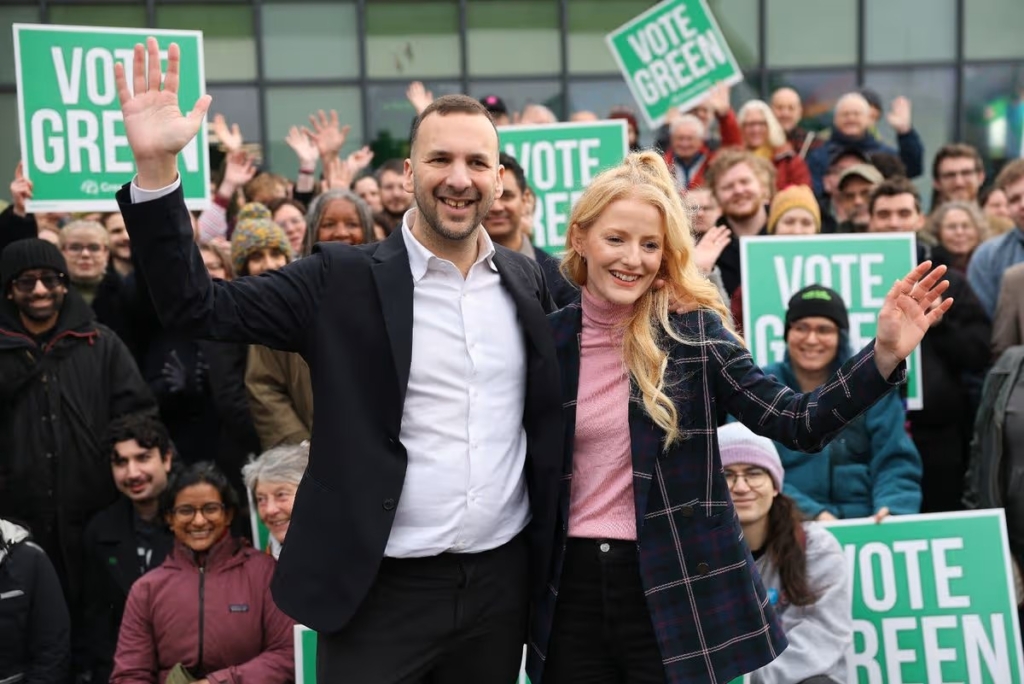
As a working-class Green member and candidate, I’m incredibly happy to see Zack widen our coalition, speaking about the bread-and-butter issues that affect us all and doing well in the polls because of it.
With hope, we can continue to work closely with our sister party to build a better future together. Looking forward, there could be an important role for pro-independence Green MPs in England and Wales in working alongside the Scottish Greens and the SNP to finally allow Scotland to be heard. I’m extremely excited to see what Zack does going forwards.
What for you, are the pressing climate policies that you’d like to see the next Scottish Parliament initiate?
Clean, green renewable energy is the cheapest and best energy available, but far too much of the debate is focused on how we can prolong oil and gas.
We know what works, but we need to invest in it. That means more on and offshore wind, more solar and more wave energy. Scotland has been blessed with a huge amount of resources, but they’re no use if we aren’t using them. As the ‘battery of Europe’ there is absolutely no reason that almost a third of people live in fuel poverty, we can defend our environment and build a more equal society on the way!
Additionally, more money for nature is essential, with funding for grassroots initiatives to make every community greener. That has to go alongside reinvesting the money being thrown at unproven technologies like carbon capture.
You were part of the 30 Under 30 programme, can you tell us something about why having more young women in politics would make a difference?
I was named as one of Scotland’s 30 women under 30 for my continual fight for support for individuals who have faced or continue to face gender based violence; an issue that is very close to my heart.
Having more young women in politics isn’t just about tokenistic representation but about having a parliament that truly reflects the people it represents. There are a number of inspirational young women across many parties running in this election, and though I may be the youngest, if I am given the honour to sit in our parliament, I am looking forward to working closely with them all to represent our often disregarded experiences.

For example, research has shown the vast majority of women have faced some form of sexual harassment, many actions that often preclude gender based violence. By adding my voice to this battle against a scourge on our public life, I’m hoping that we can truly make a structural difference.
But this isn’t about me personally, I’m hoping whoever is elected to this next parliament will prioritise the welfare of young women and girls and particularly uplift funding to our refuges, domestic violence and gender based violence are not inevitable and we should be doing everything in our power to stamp it out.
We’ve seen the problems in other smaller parties – with internal factionalism and division – why do you think this is?
I truly believe ‘factionalism’ is natural for any democratic party, where individuals will automatically form groups around the issues they believe to be the most important.
Unfortunately, though a key part of the democratic process, in smaller parties, due to the number of active individuals, what once may have been legitimate political differences can often devolve into personal divisions between individuals and groups.
I would be lying if I said the Greens haven’t previously seen these kinds of divisions, and yet we go into this election as united as ever.
As we continue to grow, it is important we maintain our stringent democratic procedures whilst ensuring all members, new and old, feel empowered to take part in our processes without fear of divisions occurring. I’m incredibly proud of the collegiate nature in which we choose to disagree where we deem necessary.
You are the Glasgow Greens Kelvin & Maryhill candidate at the Holyrood elections. What are the big issues facing people in that constituency that you’d champion if elected?
As one of the new constituencies, Kelvin and Maryhill is quite demographically interesting with the southern part being much more affluent than the northern part, and in many ways, due to the University, representing entirely different experiences of Glasgow.
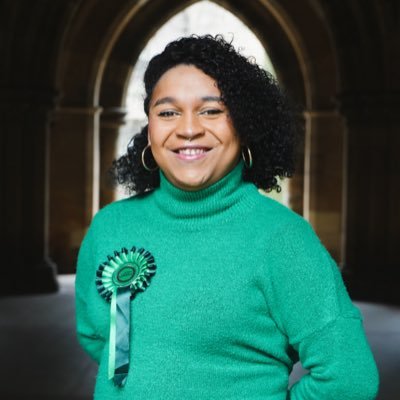
If I am lucky enough to be the next MSP for the constituency, I would be championing bringing these experiences together, highlighting how ridiculous it is that 1 in 3 children live in poverty whilst we also have some of Glasgow’s more affluent areas.
It isn’t just this inequity; having such a high density of students as well as older individuals puts housing at the top of the agenda, fighting in the chamber not only to increase our dwindling housing stock to the levels required to sustain us but also retrofitting the houses we have to ensure everyone can go home to warmth.
There is absolutely no reason why, in the world’s 6th largest economy we have so many people choosing between heating and eating. I personally believe it is a disgrace; having grown up in a single-parent household, I understand deeply how hard people are working just to be shafted by the system – our parliament can and must do more.
We’ve seen the war in Iran massively affect the movement and price of oil globally leading to renewed calls for a switch to renewable energy. What would the Scottish Greens do to make renewable energy more beneficial to the communities in which it is based?
One of the biggest changes would be de-linking cheaper electricity prices from extortionate international gas prices.
With prices likely to spike, we need immediate intervention from the Westminster government to support households as they continue to be hit with eye-watering bills that are being forced up by events outwith their control.
Every time politicians cause a major global crisis, it’s always us that pay, not them! Our governments have failed ordinary people and left us vulnerable to powers outside of our hands by refusing to break our dependence on oil and gas and it is normal people and families paying the price.
The SNPs decision to effectively axe the Heat in Building Strategy was entirely negligent and will keep even more people trapped on gas. It’s hitting those of us at the bottom whilst the pockets of fossil fuel giants cash in; it is simply unfair.
Thanks Iris, best of luck in the elections.
Follow Iris Duane: (5) Vote Iris Duane (@IrisDuane) / X
Iris Duane | Instagram, TikTok | Linktree

We are supported only by our readers. We don't have corporate backers and we don't take advertising, so we rely entirely on your support.
Help to support independent Scottish journalism
I am pleased to see such Green policies increasingly seen as vote-winners, although I think our politics should be based on Health rather than Will.
I have two caveats from reading this.
Using ‘supermajority’ in the sense that Alba’s Alex Salmond used it is anti-democratic, as is an attempt to ‘lock out the far-right’. I don’t think it very principled to use democracy to abuse democracy. And excluding the democratic far right from parliaments will likely drive right-wing political violence including terrorism. Better to expose them, as Bella is helping to do.
I am concerned by the statement that resources are “no use if we aren’t using them”, which is exactly the argument that European settler-colonists made for invading and occupying lands where the indigenous people were not fully exploiting them, whatever that means. It is also speciesist, and runs counter to the belief that the planet is for all kinds of life, for now and for the future. In historical terms, indigenous peoples were often making successful use of their environment in ways so in harmony with nature that these forms of ‘honorable harvest’ were invisible to European eyes. Scotland may even become a leader in the field of Half-Earth Socialism (although that still falls too far short of biocracy for me), setting half of its land and sea aside from human exploitation for Economy and habitation.
It may just be awkward use of language in a couple of cases, but language matters.
Not sure how this wacky Englishman is going to tie together the social and cultural variants in this constituency its descended from a sectarian class divided shit show into a neo-liberal shit show, or maybe both are layered onto one. I’m sure they will get votes from folks not paying to much attention, they party seems as tone deaf as it was in the last government, and just as belligerent.
excuse the typos, would be good to be able to edit the comments after the fact.