
Hopium and Electoral Kryptonite
We’re Entering the Spin Room now as the countdown to the Holyrood election begins.
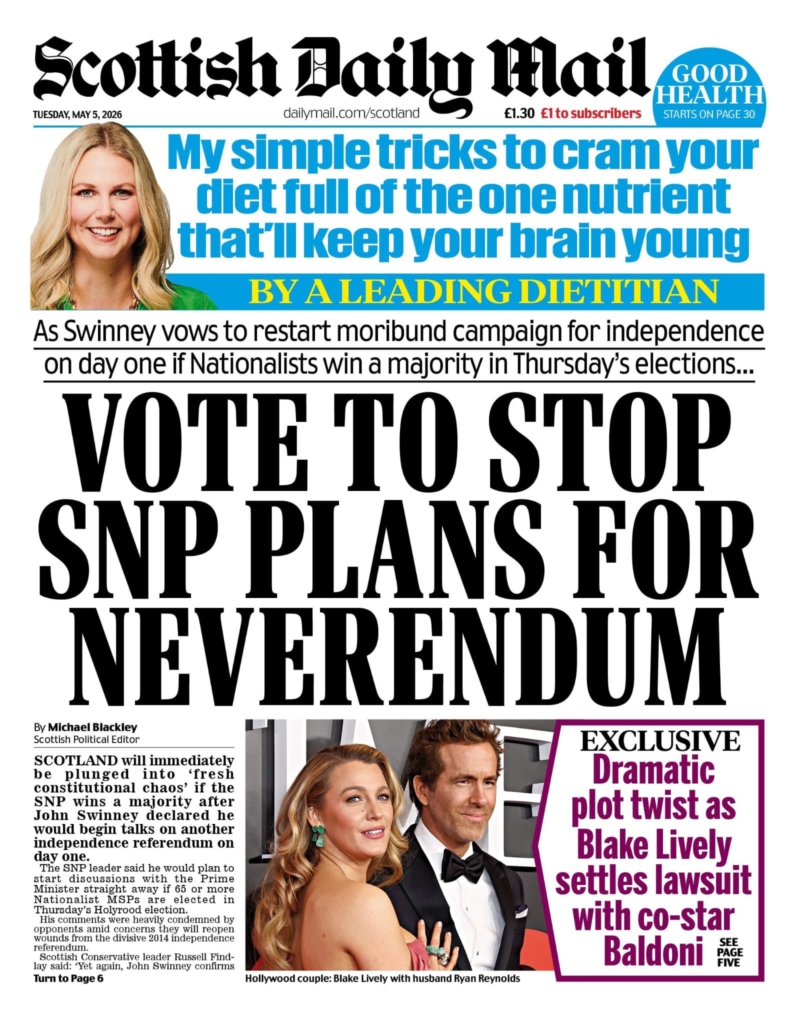
With not long to go now the political parties and the media are busy trying to re-frame expectations as the campaign draws to a close. Last-minute predictions are hopeless as the polls vary widely, and there are many Undecided voters out there.
The Unionist Bloc remains relentlessly negative, The Sun and the Scottish Daily Mail leading from the front in trying to conjure up visions of the SNP/Greens as a constitutional version of The Terror.
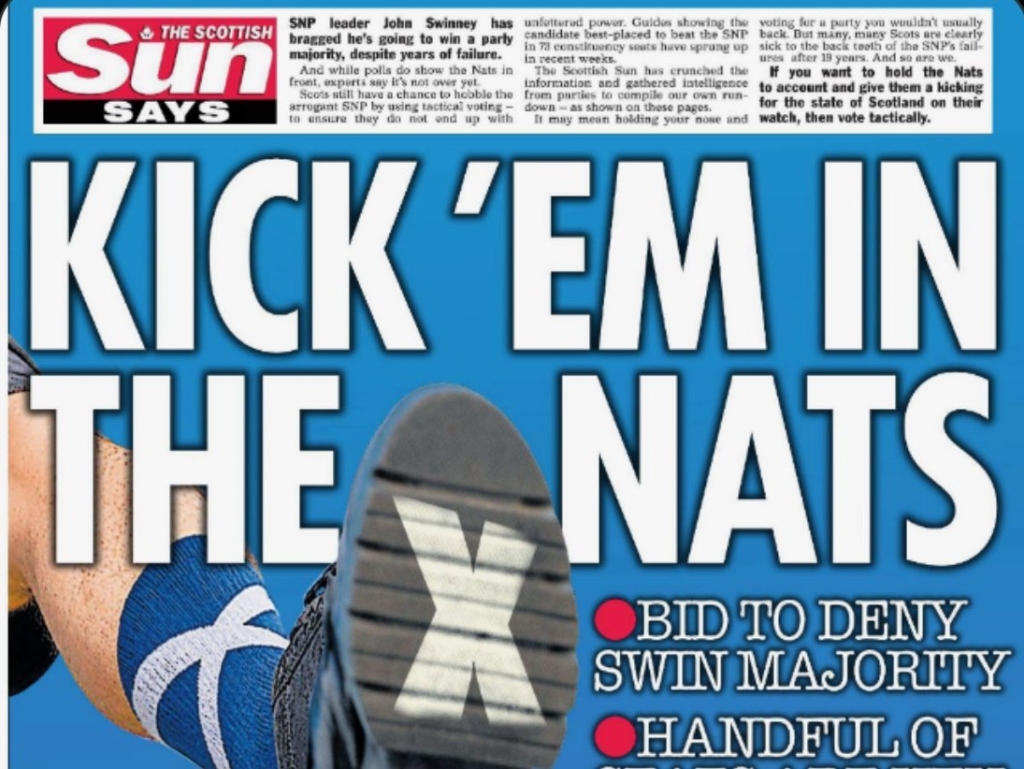
There is certainly an element of panic-mongering to scare traditional Unionist voters to get-out and vote. The problem, of course is that this vote is split at least three ways, and the voters that ‘leant’ their vote to Labour are abandoning them in droves. In addition, the Uniparty is haemorrhaging votes to Reform.
Love’s Labour’s Lost
Labour are trying to talk tough and deny the obvious. The ever-faithful Paul Hutcheon pointed out, perhaps unhelpfully: “In Glasgow, Scottish Labour deputy leader Jackie Baillie choking back tears as she urges voters to back her party.”
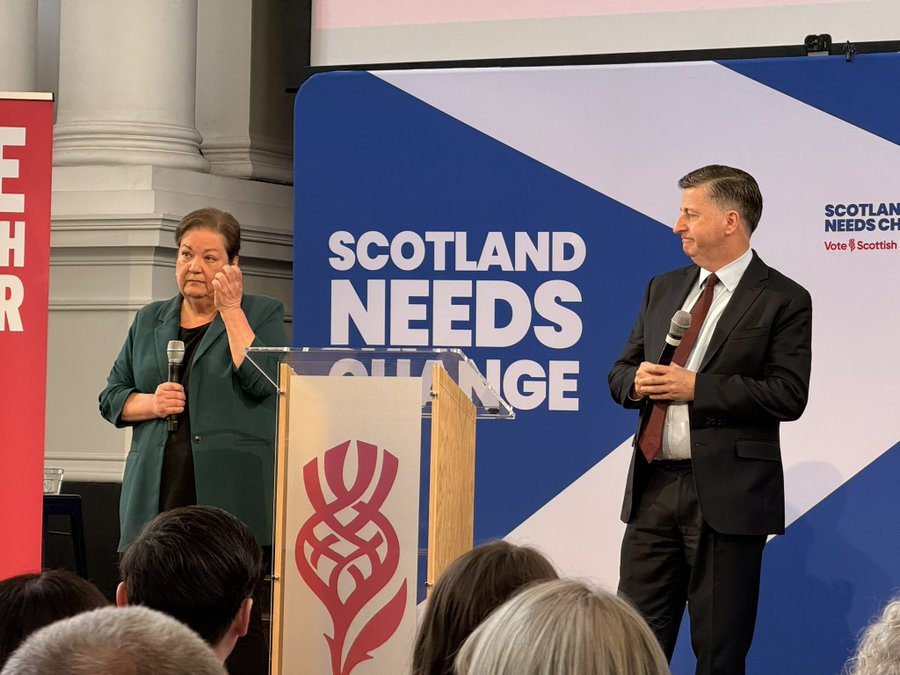
Such emotional scenes clash with her colleague Anas Sarwar whose response to the question from Craig Mehan (Scottish political reporter for the Press Association) seemed like a man channelling Ally McLeod circa June 1978:
I ask Anas Sarwar if he will lead Scottish Labour into the full term of the next Parliament, regardless of the election outcome. pic.twitter.com/N0sc4HJnCe
— Craig Meighan (@craigymeighan) May 6, 2026
And Finally …
We don’t know how the final votes will fall, but here’s three things to consider:
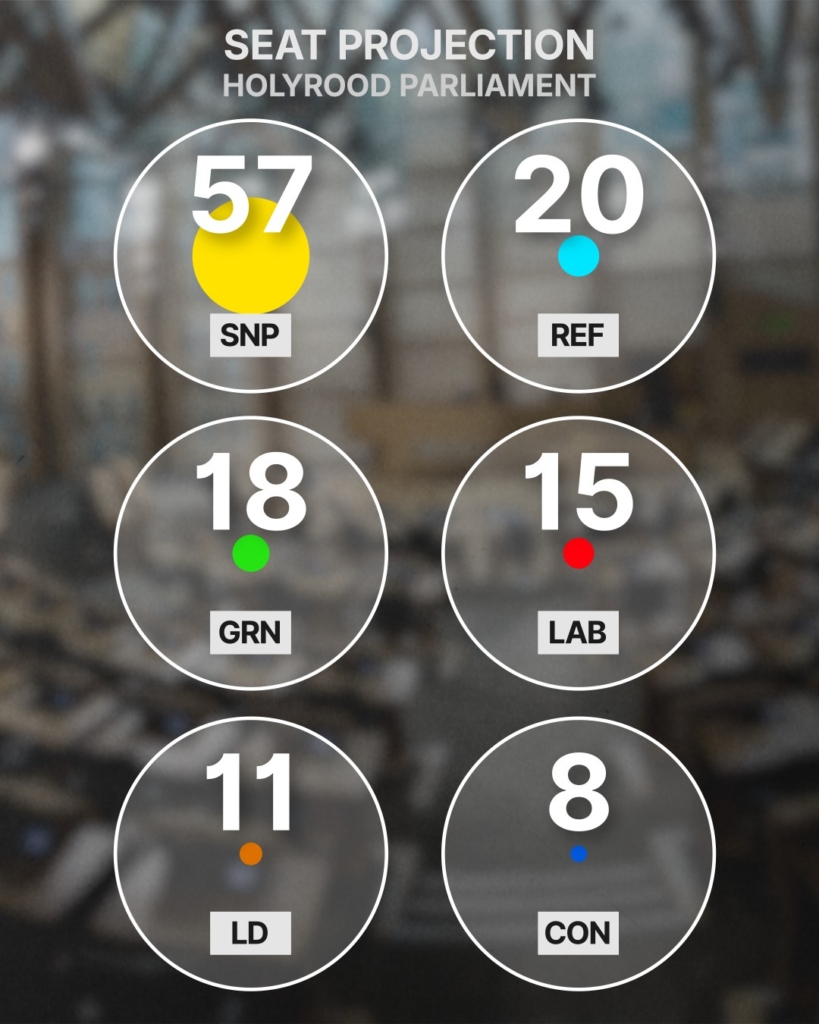
Who comes second matters. One poll (from IPSOS for STV) shows a late Green surge putting them just behind Reform by one % point. Such a result would give the Greens a possible 18 seats and the SNP 57, which would be a huge pro-indy majority with 75 seats.
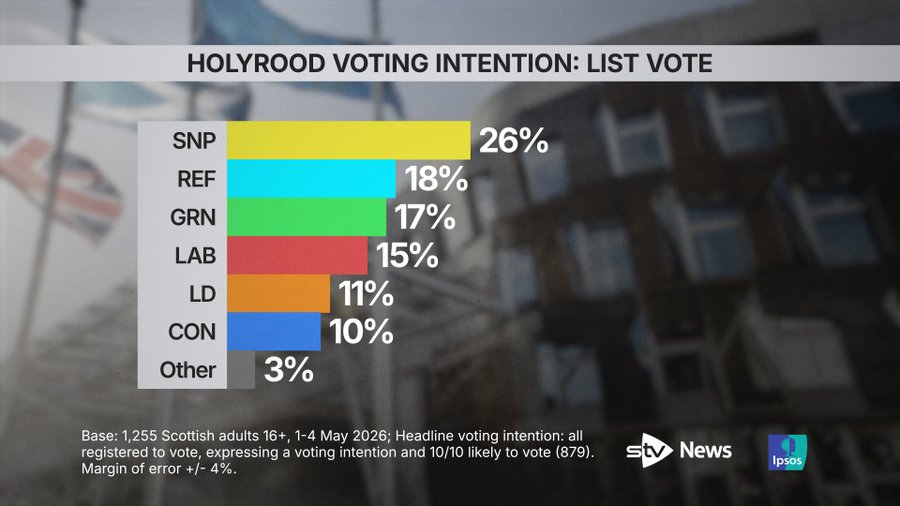
A result like this would mean the Conservatives landing in sixth place, and would mean curtains for their short-lived leader. Labour coming fourth would also inevitably mean the end of Anas Sarwar’s political career, and, I suspect the employment of whoever was running his disastrous campaign.
Such a result would not require the SNP to be in coalition with anyone, they could still outvote the entire Unionist Bloc if they decided to co-operate together.
But another scenario is a Confidence and Supply arrangement between the SNP and the Greens. But this would depend on a political calculation from the SNP on how this would go down with some of their core supporters, and for the Greens what they would choose as the political price they asked for such a transaction.
Secondly, what happens in Wales and England matters too.
We know that Anas Sarwar famously called for his own leader to stand down, but Starmer’s unpopularity is a major factor in Wales. As the New Statesman’s Ethan Croft puts it:
“In the event of an electoral bloodbath, we got a taste of what the post-election Labour Party might look like this morning with the Daily Telegraph’s splash, in which Eluned Morgan, leader of Welsh Labour, candidly said that Keir Starmer “comes up as an issue on the doorstep”.
While we’ve been out and about across the country, the NS politics team has heard much the same, privately, from Labour candidates. One prominent Scottish Labour MSP recently described the PM to me as “electoral Kryptonite” in Scotland.
“Plans are being made to shore up Starmer’s position if/when he faces a wave of personal recriminations for the party’s performance. But this will all be after the party potentially loses thousands of council seats and comes third in Wales – and the wave of emotion may be hard to bottle up.”
Croft concludes: “What strikes me as remarkable is how little expectation management there has been from Labour about these results.” The same is true in Scotland where the crash will come harder because there has been no benchmark set. Scottish Labour has been operating a zero-sum game in which the only outcome, however unlikely, was Total Victory. The problem for Sarwar, and the Unionist Bloc that would surround and support him if it was remotely feasible, is that it is all or nothing. Imbued with an incoherent level of optimism and confidence born of entitlement, Sarwar tried to convince everyone that he would be the next First Minister. When asked by Martin Geissler why he thought this when none of the polls indicated it to be possibly true, he replied: “Because I want it more.”
A Labour loss in Wales is arguably more important than a Labour loss in Scotland. Why? Because, aside from the blip of the 2024 General Election, Labour have been out of power in Scotland for a very long time. Labour losing the Senedd would be hugely symbolic. As Richard Wyn Jones writes [Wales and Welsh politics after Labour hegemony]:
“… Amidst all this uncertainty about what next, we can be sure of one thing: 2026 will be remembered as the year in which Labour’s electoral dominance in Wales came to an end.
Labour dominance has been the central fact in the political lifetimes of everyone currently living in Wales – just think of that for a minute – and the central fact around which the rest of Welsh political life has revolved.
“That the party’s aura of invincibility has already been punctured even before a single vote has been counted means that nothing can be the same again.
You may think this sounds hyperbolic, but – if so – you’d be wrong. This is because Labour’s electoral dominance has meant that the party has come to enjoy a hegemonic position in our midst.
We usually associate the term hegemony with the left of politics. It was popularised by the Sardinian Marxist Antonio Gramsci and, in the Welsh context, is probably best known because of its centrality to Gwyn Alf Williams’s magnificent When Was Wales? But, more recently, right-wing ideologues have also become interested.
“For the uninitiated, the key point is this: to say that Labour has been the hegemonic force in Welsh politics means much more than that it has won election after election for decade after decade.”
It means that it has parlayed its political leadership into cultural – even moral – leadership in Wales. Labour values have come to be seen as the very core of Welsh identity itself.
Welsh Labour begat Labour Wales.
“This is why the end of Labour dominance is set to mean so much more than a very different colour scheme on an electoral map. It will entail a potentially radical revision of our very identity, our culture and our values, and of course our sense of our place in the world.”
It’s a process that Scotland has already undergone, though this may be the final phase of Labour’s collapse, and we come to talk of a post-Labour Scotland after this weekend.
But a Plaid victory would be a hugely significant moment in the disintegration of the Union. As Jamie Maxwell writes [Britain Leaves Two-Party Politics Behind. Local elections this week will lay bare growing fragmentation across the United Kingdom]: “the Labour Party and Conservative Party duopoly that has dominated U.K. politics for more than a century, is coming apart” and “this week’s elections will signal a new dawn for nationalist and populist parties across the United Kingdom. The great British electoral realignment is about to begin.”
Thirdly, the collision of Left Nationalism and far-right populism will put the Union in jeopardy.
But this depends not just on how the pro-indy majority at Holyrood act together, but how the Celtic Alliance across Scotland, Wales and Ireland works together.
As Alex Niven writes in the New Statesman [Britain is still breaking up]:
“Nationalism, we are told, defines our age. At any rate, it seems likely to have defined these May elections. In Scotland, there is a strong possibility – at the time of writing – that the Scottish National Party will emerge with a majority in the Holyrood parliament for the first time since 2011. Reform surged in popularity ahead of the Senedd elections, but Plaid Cymru looks like it will be the dominant force in Wales, one way or another. If we include Sinn Féin’s sway over the Northern Ireland Assembly, then the United Kingdom may be confronted with the heady prospect of the three devolved governments being controlled by explicitly anti-unionist parties for the first time.”
“These parties are moving in parallel, if not quite in alliance: the SNP First Minister, John Swinney, said on 22 April that he would “enjoy the cooperation” with Plaid and Sinn Féin should his party win. “I think the UK would be changed irreversibly if that outcome was to be the case,” Swinney said. Meanwhile, in England – the historical motherland of British unionism – there is a contrasting blend of ambiguity and rancour about the whole question of nationhood. This may well be the age of the lamp-post flagpole and the performative patriot. But at a fundamental level there is widespread confusion over matters of constitution and English identity.”
As the centre of British politics collapses in on itself, the Union is again in peril. What comes after Labour, and how they respond to this crisis – other than just repeat-to-fade the same constitutional intransigence – may be as important as whether England can reconfigure a post-Brexit national identity, other than that of Faragism, which will drag us all into a very dark place.

We are supported only by our readers. We don't have corporate backers and we don't take advertising, so we rely entirely on your support.
Help to support independent Scottish journalism
The substance in question is not kryptonite, but pitch. That touch of fossil fuels that defiles our political classes. A pool of darkness indeed.