
Arts Journalism and the Gap in Scottish Cultural Commentary
The Scottish media has invested in industry reporters, not arts journalists. This adds to the impression of a low-brow cultural scene, lacking in critical thinking and often bowing to the lowest common denominator of commercialism.
What is the role of cultural journalists? ‘Meet the Correspondents’, a public event held on 20 May 2026 at the Traverse Theatre and organised by the PR consultancy Charlotte Street Partners, offered a window into this question. The panel featured Brian Ferguson, Arts Correspondent at The Herald, and Jane Bradley, Arts and Culture Correspondent at The Scotsman, with the discussion chaired by David Gaffney of Charlotte Street Partners. The event was well-attended, and at times genuinely interesting-especially for those hoping to break into cultural journalism. It was also an illustration of the very problem it had been convened to address.
The Traverse frames itself as a venue committed to ‘new ideas, conversations and new Scottish writing’, and to the belief that the arts sector needs ‘thoughtful and meaningful cultural commentary’. Whether The Herald and The Scotsman consistently provide that was a question the event raised without ever quite answering.
Both papers retain a degree of profile, even if the decline of ‘legacy media’ has long been predicted and its grip on public discourse substantially weakened. In the case of The Scotsman particularly, a declinist narrative is hard to avoid. Arthur MacMillan’s ‘The sad decline of The Scotsman’ gave a stark account of this trajectory. By common consensus, the paper is a pale shadow of what it once was, when it still harboured ambitions to compete directly with London-based titles.
The Survivors
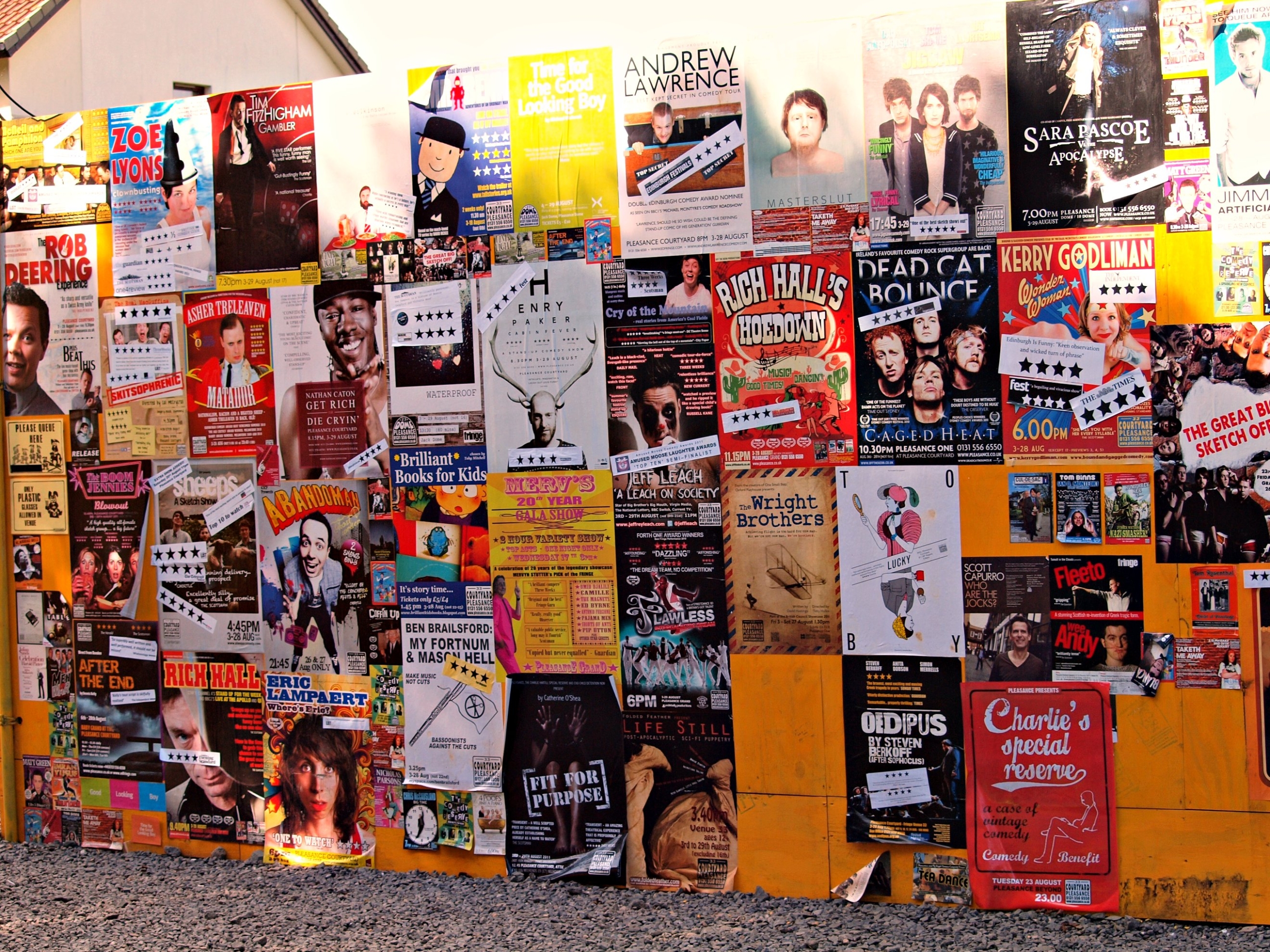
Ferguson and Bradley spoke with evident enthusiasm about their work, describing it, without a hint of irony, as ‘the best job in the world’. Their journalistic credentials were solid. Both had come up through the trade rather than through the arts, working across demanding beats (business and politics among them) before gravitating toward cultural coverage.
That grounding, they felt, was what distinguished them from arts writers whose primary allegiance was to the creative world rather than to journalism itself. It is worth pausing on this. The habits of mind formed covering business and politics, including a working familiarity with power, money, and competing interests, are not neutral tools when brought to the arts beat. They actively shape what looks like a story and what does not.
This background gave them something genuinely valuable: an instinct for breaking stories, a habit of cultivating sources, and a refusal to treat the cultural beat as a genteel sinecure. The audience, largely composed of people from within the cultural sector (reviewers, journalists, institutional representatives, and students from Napier University where Ferguson trained) seemed to find this reassuring.
Champions, Not Critics
The most substantive thing the two correspondents said was also the thing they said most casually. They were not, they explained, in the business of criticism. Their job was to champion the arts, to report on cultural activity, and to give all sides fair representation when controversies arose. Searing criticism was for others: the reviewers, freelancers, and columnists. The correspondents were simply part of an ecosystem where those were distinct roles played by distinct people.
This position deserves examination rather than acceptance. It rests on a distinction between reporting and criticism that is hard to sustain. All reporting involves selection. Deciding what is worth covering, how much space it receives, what framing is applied, and whose voices are sought out are editorial decisions with real critical implications. The claim to mere championship, enthusiastic but neutral promotion of a scene, does not eliminate those decisions; it renders them less visible and less accountable.
There is also a practical dimension. Maintaining ongoing relationships with cultural institutions, PR teams, and communications departments (essential to the source cultivation Ferguson and Bradley described) creates its own pressures. The correspondents were alert to the charge of cosiness but felt it was entirely possible to be simultaneously a champion and objective. That may be true in theory. But the incentive structure they operate within does not make it easy, and the event itself, organised by a prominent PR firm and attended largely by sector insiders, illustrated the circularity they navigate.
A recent advertisement for The Herald, appearing in The List Guide to Scotland’s Festivals, features Bradley alongside the tagline “Dare to be Honest.” The tagline raises an obvious question: are there not structural pressures, if not to be dishonest, then to avoid the more difficult questions about the scene being covered?

There is a personal parallel here. As a sideline, I write articles on specialty coffee shops, and I would readily admit that I feel like a champion of these places. I only write about venues worth visiting for excellent coffee made by people who care about what they are serving. The judgments I make stem from experience of the scene, including insider knowledge and a developed sense of what actually constitutes good coffee. The question this raises is whether arts correspondents operate under a parallel, unstated sense of what kind of culture deserves championing, and whether that prior commitment shapes their coverage in ways that are never made fully visible.
None of this is a particularly novel observation. Parts of the discussion took on a mundane tone, prioritising the functional mechanics of journalism over its deeper purpose. The focus remained on logistical realities: cultivating sources, managing relationships, generating traffic. This suited an audience of institutional publicists seeking coverage and media professionals with an eye on career advancement. But it left fundamental questions unasked. Whether a high volume of cultural activity necessarily translates to genuine cultural richness was not a question the event found occasion to address.
The Numbers Game
The discussion proceeded from a broad definition of culture that comfortably accommodated what others might call entertainment, and from a market-populist view of cultural health: the primary measure of a thriving culture is audience numbers. Markets, on this reading, promote true cultural democracy.
Growing visitor figures at museums, and what the speakers described as a “boom time” for big shows at the Playhouse, were offered as indicators of a scene in robust shape. The sheer level of cultural activity in Edinburgh and Glasgow was, they suggested, ‘astonishing’. Yet alongside this positive outlook, both admitted that multiple threats to the scene’s health existed. Several cultural institutions seem to be in a permanent state of funding crisis, and the optimism about audience numbers sits uneasily alongside repeated warnings about institutional fragility.
The numbers-first position has a certain democratic appeal. It is also a significant intellectual commitment that makes no distinction as to quality. It is a logic that has long shaped coverage of the Edinburgh Fringe, whose extraordinary growth since the 1970s has been driven largely by stand-up comedy. Whether that expansion automatically constitutes cultural health is a legitimate question, and a numbers-based view simply cannot ask it. Nor can it account for work that, at the time of its making, attracts little attention but proves lastingly significant. The standard example is the Velvet Underground: modest initial sales, but, as the saying goes, everyone who bought one of those albums started a band.
There was a further admission embedded in the discussion: correspondents now work with an acute awareness of which subjects generate online traffic, and this awareness shapes what they cover. Articles on subjects that have previously attracted hits tend to attract hits again. This is not a corporate conspiracy against serious cultural commentary; it is how digital publishing functions. But it is worth naming for what it is: a structural bias toward the already popular and away from the emergent, the difficult, or the unfashionable.
The career of Richard Gadd offers an instructive example. Gadd was a cult figure on the Edinburgh Fringe, with significant artistic breakthroughs in 2013 and again in 2016 when he won the comedy award, long before his Netflix series Baby Reindeer brought him to mass global attention. The question of when the press should have been paying serious attention to him, when the talent was evident rather than when the numbers finally confirmed it, is precisely the kind of question the correspondents’ framework cannot comfortably answer. And for every Gadd, there are others equally talented who never reach the point at which the algorithms take notice.
The Boycott Discussion and the Limits of Balance
Their work is, by its nature, story-driven. “A story is a story,” as the discussion put it. Cultural institutions facing imminent closure reliably generate coverage, as do stadium concerts and the Edinburgh Festival. The recurrent drama of British political life offers a parallel: the spectacle feeds the media well, but what is frequently missing is the slower, analytical work that asks what the deeper story actually is.
That political parallel is worth pressing further. In recent years there has been substantial coverage of crises surrounding multiple UK prime ministers, with journalists finding rich material in the daily machinations and leadership speculation of Westminster. But they have done rather less well at analysing why the UK has been through so many prime ministers in the first place. Reporting on events has been energetic; analysis of underlying causes has been thinner. Something similar applies to cultural journalism: announcements, openings, and controversies receive attention, while the deeper currents in cultural life are examined far less often.
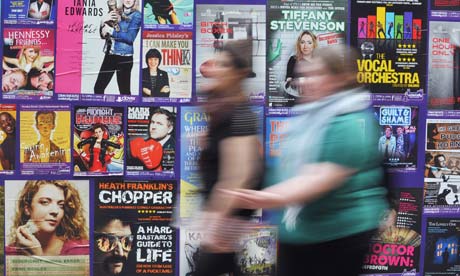
One of the more animated passages of the event concerned media coverage of arts boycotts by practitioners. An audience member felt the journalism had been too even-handed, arguing that there was a responsibility to take a stance and subject the case for boycotts to greater scrutiny, particularly regarding the long-term financial consequences for funded organisations. Conversely, a representative connected to one of the organisations involved argued that those supporting boycotts needed a much greater awareness of the fragile financial realities at stake.
The correspondents’ response was consistent with the position they had outlined throughout. On controversies of this kind, a specialist reporter “can’t really come down on one side or another.” Their job is to highlight the controversy and give all parties fair representation. The more pointed, evaluative commentary was kicked upstairs to the columnists.
The parallel with political Brexit coverage is obvious, and it is one the correspondents would probably resist. The principle of balance, taken to its absolute limit, can easily become a kind of evasion. Giving equal credence to arguments that are not equally credible is not objectivity; it is a simulation of objectivity that flatters the journalist’s self-image while abdicating the basic responsibility to think.
Neil Postman famously observed that the media excels at telling you who is winning, but remains fundamentally incapable of telling you what it means. The observation was originally made about political coverage, but it applies with equal force to contemporary arts journalism: breathless reportage on announcements, openings, and events is abundant, while the underlying currents in cultural life receive progressively less attention.
The End of Serendipity
One particular observation during the discussion was striking: newspaper readers in an earlier era tended to read most of what was physically in front of them, meaning they regularly encountered writing on subjects they had not actively sought out. Serendipity was built into the printed form. Online, readers largely see what they already want to see, and stories that fail to generate immediate traffic quickly disappear from the homepage. The implications for cultural coverage, which cannot realistically compete with sport, crime, or politics for click volume, are considerable. There is constant pressure to produce content that covers topics and individuals that already possess prominence.
Cultural journalism has historically depended on this exact serendipity. The reader who turned to the news pages and found themselves drawn into a long piece about a composer they had never heard of, or a theatrical production they had no prior interest in, was central to the democratic enterprise of the arts. That reader is now much harder to reach, and the digital incentive structure no longer rewards the attempt. The deep dives the correspondents cited as evidence that their coverage was not shallow may well be excellent pieces of work. Whether they constitute genuinely critical engagement, or simply detailed promotion of already prominent subjects, is a different question entirely.
What Else is Needed
It would be easy, and unfair, to dismiss Ferguson and Bradley as uncritical cheerleaders. They insisted there was “no shortage of stuff to write about,” and both genuinely believed things would “be bleak” without specialist arts coverage in national papers. They are working journalists operating within structures they did not design and cannot unilaterally change. They are competing for space against sections (most obviously sport) that are significantly better staffed and resourced. They are subject to the same numerical pressures as every other writer working in digital publishing today. Their survival as specialist correspondents, in a media environment that has shed most specialist roles, is a genuine achievement, and neither of them struck an audience that knew the sector well as credulous or incurious.
The problem is structural rather than personal. Both correspondents essentially admitted, without framing it in these exact terms, that what they cover is largely determined by others: by PR teams, by the communications departments of cultural institutions, by market forces, and increasingly by algorithms. They were not attempting to shape the cultural discourse but merely to report on it. They described this with a pragmatism that is to their credit, but it also represents a significant historic abdication.
Cultural journalism has, historically, had a much more expansive ambition: publications with explicit manifestos; criticism that challenged the status quo; writing by people deeply embedded in the world of ideas who were attempting to alter what was valued and why. These traditions have always existed alongside the reporting function, and the relationship between them has been productive precisely because of the friction generated.
The correspondents invited those from cultural institutions to pitch column pieces to their papers. That kind of input has its uses, but it is not what is missing from the scene. What is truly missing is writing by people capable of critically contextualising what is happening in Scottish culture rather than simply reporting on it: writing that can ask whether a boom in audience numbers is the same thing as a thriving culture, or whether the critical coverage of a scene and the cultivation of comfortable relationships with that scene’s leading institutions are compatible activities.
The Traverse believes the arts sector needs thoughtful and meaningful cultural commentary. The event it hosted was an enjoyable and informative event. These are not the same thing, and the gap between them remains real and persistent.
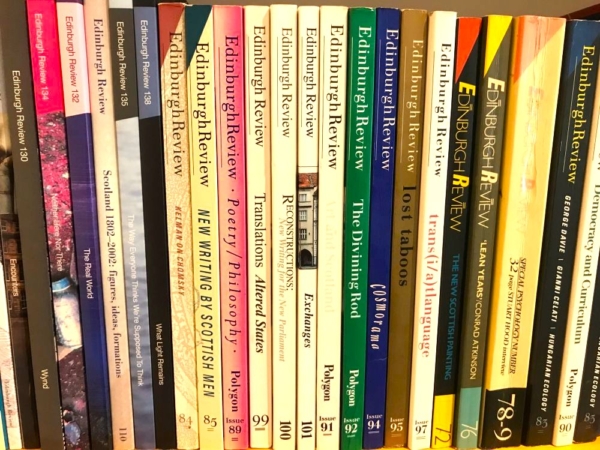
In-house columnists and guest contributors carry some of this weight, but the standard column form is poorly suited to the task. Its natural register is the single note, whether boosterism, declinism, or a contrarianism that fills 800 words without quite sustaining an argument. It is easy to thunder; it is harder to think. What ‘Meet the Correspondents’ made visible, without intending to, is not a failure of individuals but an acute absence of forms: the forms in which serious analytical cultural commentary might actually be written, and where it might still find its readers. The gap left by the disappearance of several ‘little magazines’ (among them Chapman, the Edinburgh Review, and the Scottish Review of Books) has not been filled [although arguably replaced by Bella, The Skinny, or Scots Wha Hae? – Ed]. There is serious cultural commentary out there, but much of it exists in disparate online spaces, which makes it difficult to track and erodes any sense of a national cultural conversation.

We are supported only by our readers. We don't have corporate backers and we don't take advertising, so we rely entirely on your support.
Help to support independent Scottish journalism
The thing about Britain is that everything is so serious and straight. It’s full of pompous and petty experts, it’s based on a unique and hideous class system which disfigured society, and it still reeks of empire and entitlement…
Think of a TV programme like Question Time for example. Where on earth do they have a TV show like that? It’s a preposterous show, always presenting really boring, conventional, straight people talking about the most obvious things in the most obvious ways…
It naturally follows that culture, generalist culture, which is the lifeblood of your average European, is despised. The thing is to be a specialist and get paid, in essence, a technocrat, or a scholar, which in so many cases is the same thing.
The history of Scottish culture in modern times is the history of really admirable individuals battling against the powers that be to turn Scotland into a normal European country…McDiarmid, MacIntosh, Trocchi…and countless others… Helen Biggar for example…
Then you have the Universities and the Edinburgh Festival, which dwarf, with the exception of Scottish music (where we are a superpower) almost the entire cultural output…
But there is a Scottish aesthetic, a Glasgow aesthetic for example, it definitely exists…Lynn Ramsay, for example, in RATCATCHER, totally captures it…
Finally, it’s a mistake to think the so-called legacy media should disappear. What needs to happen is someone smart, imaginative and wealthy needs to buy them and transform them…
As an English speaking country, we should be aiming for a worldwide readership, international news told from a Scottish perspective…
The arts pages in the Herald at the weekend are no bad, all things considered…
No, seriously, talking of the cultural pages, I think of my neighbourhood pal, Marcos, in Madrid,he’s a floor layer, he lays floors, parque and tiling and things like that, he’s maybe 63 or 64, an anarchist, a Spanish anarchist. His knees are going…
He has never paid social security, he will have no dealings whatsoever with the Spanish State who imprisoned his father in one of Franco’s slave labour camps, for 4 fckn years!!!
He’s one of the most amazing Spaniards I ever met, Marcos. A brilliant guy!!!
Marcos, the other day, says to me, “I’m reading Tom Jones. Have you read it?”
“No, I haven’t read it,”, I said. ” I read “Joseph Andrews” at Glasgow Uni, it was on the reading list. But I never read Tom Jones. I saw the Tony Richardson adaptation which I think won an Oscar”…
Marcos was extolling the virtues of Tom Jones…
Anyway, I met up with Marcos today, to give him some books, cause I am leaving Madrid and so giving away my library.
I gave him the Spanish edition of “The Forging of a Rebel” the stunning 3 part autobiography of Arturo Barea, a Spanish working class Socialist…
The last or third part of the book, The Flame, is the greatest and most moving account of Franco’s 30 month siege of Madrid that exists…Barea was a key figure of the resistance in Madtid, a true working class hero… it’s a wonderful book…
But Marcos didn’r seem impressed by
it. It seemed inconceivable to me he hadn’t heard of it…
Then, I clicked. Silly me,..
Marcos is an anarchist, Barea was a socialist…
Old habits die hard in Spain…!!!
Marcos’ knees are going… no wonder, laying floors all day…
You can tell, cause you arrange to meet Marcos in a standing room only kind of bar, you’re waiting for him…then the message comes through “I’m at the bar around the corner at a table, come…”
He wont tell you it’s the knees of course…
He takes inordinate pride in paying neither taxes nor SS to the post Franco stare and earning in “B” as they call it here…it’s his calling card…
He told me again what happened to his dad, who was maybe 16 or 17 during the Civil War was happening and everyone was hungry…
A truck pulls up…”hey, you son, you want the heel of the loaf?”
“Oh aye!”
“C’mere then!”
The next thing he knows, he’s in the back of the truck and the Republican Army, at the Battle of the Ebro, in a dhigny, the last gasp attempt by the Republic to push back Franco, which failed… the most deadly battle of the Civil War, 50,000 I think died…
Then a prisoner, who Franco doesnt shoot cause he’s so young…
But 4 years of slave labour in one of the hundreds of camps Franco set up for Republicans after the war…
Marcos is maybe right..
100,000 people died at the Battle of the Ebro, not 50,000…
The most fatal battle of the Civil War
Most of them were young Republican conscripts… 14, 15, 16, 17 year olds… like Marcos’ dad!
The so called “regiment of the baby bottle”…”La leva del biberón”…
The idea was to launch a surprise attack on the fascists, crossing the mighty river Ebro in dinghies at night, and pushing Franco back…
It worked at first, but, just like Brunete, just like Teruel, just like all the Republican military offensives, the Republican advances were quickly reversed by Franco’s superior army and brutal air power…
After that, the road was open to Barcelona virtually, which fell in January 1939,,,
@Douglas,
https://wordpress.com/ppc/create-blog-campaign/
Los 4 generales, los 4 generales
Los 4 Generales Mamita mia
Se han alzado, se han alzado!!
Ay mamita mia, ay mamita mia!
Se han alzado!!!
Madrid, que bien resistes!
Madrid que bien resistes!
Madrid que bien resistes!
Mamita mia
Los bombardeos, los bombardeos!!
De las bombas se rien!
De las bombas se rien!
De las bombas se rien!
Mamita mia
Los Madrileños, los Madrileños!!!
De las bombas se rien, los Madrileños!!!
Los 4 generales, los 4 generales
Se han alzado, se han alzado,
Para la Nochebuena seran ahorcados!
Seran ahorcados!!!
(The 4 Generals, popular republican song of resistance)
Franco’s four rebel generals!
Franco’ four rebel generals!
Franco’s four rebel generals
They tried to betray us, tried to betray us!
Raining bombs on our city
Raining bombs on our city
Raining bombs on our city!
They wanted to break us, wanted to break us!!!
But the great Madrilenios
But the great Madrlenios
But the great Madrilenios
They laugh in defiance, they laugh in defiance!!!
A thoughtful piece, which reckons partly with issues of patronage, mutual dependence and embedded journalism.
I suppose that arts critics cannot easily criticise what they cannot encounter (though they have opportunities to censor by neglect), they may assume a position of gatekeeper justified by defending against a downward spiral of taste, but their tendency to seek novelty may not represent naive (not-jaded) consumers well. Journalists may be out of step with cycles and waves of public taste, but that’s not necessarily a bad thing.
It is curious how overburdened sport (football, anyway) is with enlarged commentary teams and panellists these days, in inverse proportion of anything new to say. One match can spawn a handful of articles, one tournament a glut, some feeding off each other in a pyramid scheme of coverage and opinion.
Perhaps the influence of art might be detected in citations (lyrics quoted in public discussions, maybe) and other forms of mimesis, more than anecdotally. However, the chains and webs of influence are long, obscure and complicated, and it’s generally Older Than You Think.
On the ‘natural register’ of articles, the relation to ya-boo politics seems evident. Fans are partisan, haters have reason to coalesce in opposition. The trajectory appears to be bending towards the cage fight (let’s not stand too much in awe of ancient Greeks and Romans). Civil broils may have even more to do with blind love than ignorant hate. Nuance, broad comparisons, adherence to principle, conceding faults and sober reflection may be bold and even seditious stances though poor clickbait.
I think (despite what views philosopher David Hume held about the practice) that literary criticism generally falls far short of ‘critical thinking’. Would we take the views of an art critic as seriously today as when Kenneth Clark was allowed to make a whole television series on the grand theme of Civilization c1969? However, they can make important (though always-challengeable) contributions like EH Gombrich. It would take great skill to effectively summarise these in an 800-word article, though.