
Public Libraries of Refuge
Kirsten MacQuarrie and Kavan P Stafford discuss libraries as spaces for refuge and solidarity in times of social crisis.
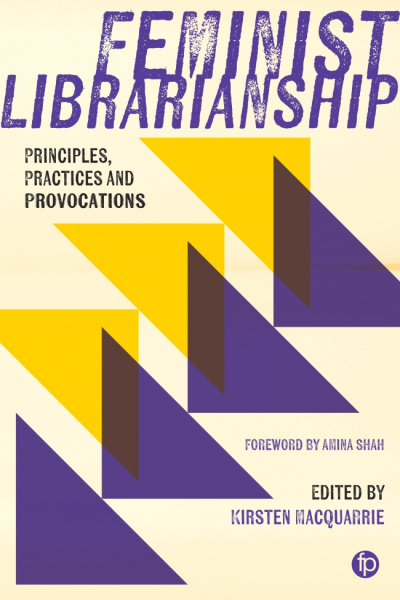
Kirsten MacQuarrie is an author and chartered librarian, and the editress of Feminist Librarianship (Facet Publishing, 2026). Kirsten’s debut novel was Remember the Rowan (Ringwood 2024; Red Squirrel Press 2025) and her next book, The White Rose and the Red Rose, is coming soon.
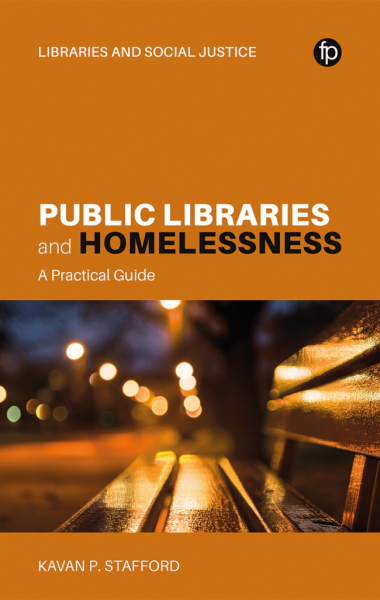
Kavan P. Stafford is also a librarian and author. He wrote Public Libraries and Homelessness: A Practical Guide (2026) and, with Sean McNamara, “More Than One Way to be a Man: A Call to Action for Colleagues”, in Feminist Librarianship.
Below, they discuss their recent books and Scottish Libraries in general.
KM: Something both books do in novel ways is explore what we’ve identified as a ‘bittersweet remit creep’ in how librarianship is defined today. As the first person to tackle the theme of Public Libraries and Homelessness, could you tell us what your research adds to but perhaps also exposes about the profession?
KS: Yeah, I think that it’s such a nice way to put it, bittersweet remit-creep. In the chapter I have about social work, I call it a thin grey line. Really, it’s that our expectations of public libraries and what they do have increased with cuts to government services. It’s become harder and harder for librarians to find this line between what they should be doing and what they shouldn’t be doing. Especially when it comes to social issues, libraries are in danger of becoming a little bit like food banks where they’re absolutely a good thing; the people working in them are doing great work, but yet you’re also struck by this feeling, that this work shouldn’t have to be done by this service. I think that Feminism in Libraries is similar. When you read the book and the essays, there’s a fantastic effort made to shift the balance as far as we can in libraries. But really, what we’re doing is we’re fighting against a societal reality.
I mean, if you take another example, one Scottish government policy which I think is generally agreed to be great and is talked about internationally, is free and accessible period products. That’s one of those policies where it’s brilliant, but you kind of feel like it should have to be such a big deal to get that done. It should be normal.

KM: I couldn’t agree more: the fact we’re only there now when, spoiler alert, women have been menstruating since time began. One of the references I cite within my chapter on ‘Bloody Brilliant Libraries’ and what I call menstrual/menopause literacy is the new British Standard on Menstruation, Menopause and Menstrual Health. And when a man once asked facetiously within a webinar ‘but how does one menstruate to a British standard?’ I told him that it turns out women were doing it right all along; it was workplaces and our wider environment that hadn’t quite cottoned on, pardon the tampon pun.
This is something I think we share across both books as the UK’s first texts dedicated to these themes. Yes, it’s incredibly exciting to be part of momentum towards change, but one also thinks ‘wow – we’re really only here now’.
I also completely agree on the point of bittersweet advocacy and that’s something that comes up in my ecofeminism chapter:
In autumn 2022, CILIP collaborated with money-saving expert Martin Lewis to publish A Warm Welcome, providing guidelines for libraries seeking to set up warm banks in support of what felt like the exponentially growing number of people struggling to heat their homes during the cost of living crisis. ‘Warm spaces are far from a panacea,’ Lewis cautioned in his introduction, ‘Yet I think they will turn out to be a crucial extra help to get a decent number of vulnerable people through the winter’. That such a sentence needs to be written – and make no mistake, our guidelines urgently needed to be written – can never be a cause for celebration. However, effectively it evidences the vital role of libraries for vulnerable patrons in particular, suffering as a direct and often devastating result of a society consumed by avarice, we cannot champion our warm, cool, or wider ecospaces work without firstly acknowledging that librarianship’s load is growing. Our women-majority sector is increasingly tasked with the societal housekeeping that is picking up the slack for state failure.
Certainly something that strikes me with feminism, and I’d be curious as to whether it’s the same with homelessness advocacy, is that progress is not linear. There’s the assumption – perhaps it comes from evolution itself! – that we’re inevitably going in the right direction (although I think that bubble has very much burst thanks to the online world). One of my favourite chapters in Feminist Librarianship is by Pamela McLean, a school librarian, in which she examines attachment theory through a feminist lens. Something we say often in library advocacy, which can therefore almost become a bit of a truism, is that the school library and indeed any library is ‘a safe space’. Pamela proves it. To learn and to take in information, we need to be emotionally regulated, and the world has never been more menacing, more threatening and more dysregulating to all young people, but particularly and disproportionately to young women and girls. Therefore the role of this uniquely trusted space, staffed by a uniquely trusted professional – because librarians are consistently amongst the top three most trusted professions in the UK – becomes allowing brains to re-regulate in a way that makes learning possible again. It evidences the unparallelled value of libraries and the women who make up the majority of library workers.
KS: Girls in school libraries, having these issues and anxiety about the way the world is and this need for safety demonstrates that the political and social situation has a particular effect on women in more significant ways than men. You have a similar thing with homeless women where they’re particularly affected by their homelessness but are almost invisible.
There’s this article called Homeless Women in Public Spaces: Strategies of Resistance from 2006 by Casey, Goodie and Reeve and what they talk about is that homeless women are often invisible on the streets. What they say in this article is that “homeless women tend to ‘do’ rough sleeping differently to homeless men, rejecting the highly visible profile of many male rough sleepers in favour of hidden locations”. They can’t just sleep on the high street as it’s far too dangerous so they need other spaces and this is where libraries end up being a particularly important space for homeless women. What [they say is that libraries, art galleries, and museums feature a lot in responses and in homeless women’s accounts, as top where they carry out their day-to-day activities partly because homeless women are so much more likely to hide their homeless status. They do this because to be homeless is always to be vulnerable, to be a homeless woman is to be especially vulnerable.
So you have this situation where women are in particular danger of attack and also harassment by police and so on. And they then have to protect themselves and hide their homelessness. When I talk to library staff, one of the things I always say is that you don’t know all the homeless people who use your library because most of them are good at hiding it, and you particularly don’t know the women because they are especially good at hiding them. And then you also have this facet of women’s experience of homelessness where women who are homeless are often being victimised twice because, and the Scottish government found this, that women are more likely to be homeless as a result of a violent or abusive household dispute. They’ve been victimised at home and then made homeless only to be victimised again by the state and others. So spaces like libraries have become one of the only safe places available. It’s indoors, there are staff around, it’s a place where you feel like the police would come if there’s an issue. You have libraries filling that societal gap where they become a place where homeless people, and women in particular, feel safe. That’s why libraries become especially vital for people in that situation.
KM: I feel like this evidence is not part of our political discourse day to day; there’s so much within your book that we simply don’t encounter. There’s a section where you look at research into homeless women using the public library for entertainment, and the dignity this public space can afford anyone and everyone as what is increasingly the only non-commercial, non-clinical place left in our communities. As a physical space, the library can grant people a unique dignity at the most vulnerable point in their lives.
KS: Yeah, there’s a great quote from Ryan Dowd, who runs a homeless shelter in America and wrote a book about American libraries and homelessness a few years ago, where he says you should always consider that you’re not only talking to a homeless person; “if you see someone as a one-dimensional “homeless guy” and he sees himself as an “out-of- work mechanic with two children and a passion for old Ford Mustangs” you two will have a hard time truly communicating”. You’re talking to a man who loves classic cars or a woman who’s a rugby fan or whatever, not just a homeless person. What’s happened is that the identity of “homeless” has swallowed up the person.
And I think that can happen, to come back to Feminist Librarianship, with women as well. We still haven’t moved away from this kind of fixed identity of “woman”, which is then marginalised. And it actually feels like there’s a kind of push backwards towards that identity becoming even more marginalised. I’m thinking particularly of what’s called Trad Wife content. It feels like there is an attempt to push back on women’s rights which libraries can help to combat by combatting mis- and disinformation and I wonder what you thought about how libraries can go about that?
KM: To be honest, there’s a part of me that relishes the irony, because the Instagram trad wives are businesswomen. Every time somebody watches their content, they are monetising that pseudo-submission, so there’s a supreme irony that is indeed entertaining, which I guess is the point.
KM: As we both know, one of the things that libraries represent – whether we call it neutrality or, as I prefer, plurality – is the way in which we bring together diversities of opinion and diversities of perspectives. That’s something I hope comes across in the book. If readers have encountered the Latin ‘tots and quots’ – there are as many opinions as there are men – then in my book, there are as many opinions as there are women. And you’re right, being stuck on the hamster wheel of making the same arguments and leading the same campaigns, leaves us always in Class 101, and the lack of feminist progress in wider society means we often can’t actually celebrate the richness of women; much as we can’t celebrate the richness of what libraries offer when our services are continually fighting to survive for another month or another year.
One of the main things that struck me was how much the role of editor parallelled the role of librarian. Whether we’re talking about definitions of womanhood itself or other feminist factional fractures, I know for a fact that within the book there are viewpoints that complement my own but also ones that conflict and challenge my thinking. That’s exactly the way that the library floor feels, and the way that our library collections should feel.
I also really liked that part of your chapter in Feminist Librarianship when you noted the legislative journey of women’s rights, because one date in particular has always been prominent in my mind. It was 1991 in England and 1989 in Scotland when marital rape was finally criminalised, and that is exactly the window into which I was born. I think of a baby girl coming into the world on that threshold and the conversation metaphorically taking place over her cradle: society still debating whether or not her future husband will be permitted to rape her. It’s well within living memory, so the idea that any sort of battle has been won or that we can rest on our laurels and consign the women’s rights movement to history is tragically far from the truth. Going back to bittersweetness, the sole silver lining I can think of with regards to the toxicity and vitriol of the online world is that it exposes what was already and always there, against women. Across the profession, even those of us in a position of relative privilege, cannot assume that any of these battles are won.
KS: I think relative privilege is actually quite a good thing to touch on a little bit because one of the things about librarianship is that it is quite a middle-class profession. And that’s something which can be tricky when you’re dealing with, for example, homeless people. Not because middle class people are bad or anything like that, but because the experience is often far away from what they know. And assumptions they make about that experience may also be far away from reality. What that means is that the prejudices that exist are very unconscious because often the issue hasn’t been considered at all.
There’s an article that I talked about quite a bit in the book by Bullard [Gypsies, Tramps and Rage (2002)] in which she says that the library has become, “a haven for the homeless, the young, the substance abuser, the sexual deviant, the elderly, the criminal minded, and the mentally disturbed”. And I always think that’s a fascinatingly revealing list. It’s revealing about who this middle-class person considers to be the other. You have the young and the old and the mentally disturbed and the sexual deviant and the homeless people all lumped in together.
Another quote, this one from Cronin [in What a LIbrary is Not (2002)] is about bringing bags into the library where he says “I don’t take bulky bags into the Tate Modern” and in my book, I say, I don’t either because I have somewhere to store my my things so when I go to the Tate, I don’t need to bring everything I own with me. Homeless people aren’t in that position because they need to carry everything they own with them. So of course, they keep that close to them. That’s another example of one of the kind of blind spots that I think can appear.
Another example of a blind spot I came across in myself recently was learning in my work [in an NHS library] about why Lanarkshire has such low rates of breastfeeding among new mothers. There were lots of reasons but they included, for example, women having to go to work earlier than they would like due to limited maternity leave. Both me and my wife work in jobs where this would not be a consideration. Libraries are usually jobs where this is not an issue and, for that very reason, maybe we need to recognise as a profession that we might be coming from different places than those using our services.
KM: Very much so, and something else that emerges strongly from these discussions with feminists from all walks of life is the difference between individual action and what could be done as a sector and as a system. Again, I know that also reflects some of the stories you share in your own book about what is falling on an individual professional’s shoulders. Professor Kathleen Riach, a global expert in menopause matters I was lucky enough to interview for Feminist Librarianship, reminds us that if something is a workplace priority, we wouldn’t and shouldn’t allow it to have a single point of failure.
That strikes me as important in homelessness work as well. One of the anecdotes you include is from when you were working at the Mitchell Library and somebody discloses they don’t have anywhere to sleep that night. You and your colleague are doing everything you can to try and phone around shelters, to try and secure that support, but what if that person hadn’t got you? What if they’d encountered a colleague who doesn’t have the knowledge or the confidence to deal with that situation? Not only is the current system putting so much pressure on individual professionals that they’re at risk of burnout and overwhelm, but it also places our most vulnerable patrons at risk, unless we move as a sector and as a profession.
KS: And obviously, that’s a training issue as well. I have whole chapter training in my book about training and I think, while bad training can be a tick-box exercise, what good training does and what was reported by survey in Public Libraries and Homelessness as well as in other library literature, is that it makes staff feel comfortable and confident at work and to do the things that they know is the right thing to do.
In terms of what good training looks like, I give an example of dementia training in my book but another great example of training was training for the Mitchell LIbrary where I worked at the time to become a breastfeeding friendly space. A nurse came in to train us on it and the training was just genuinely fascinating and we all learned so much. The Mitchell has great staff but some of the men at the time were uncomfortable with the idea that there would be breastfeeding encouraged in the building and one reason I say it was a great example of training is because of how they dealt with one common suggestion for breastfeeding, which is to do it in the toilet. What the women who came said was would you like to eat your dinner in the toilet? And I remember a guy who had been very against the training say that he had never thought of it that way.
You know, breastfeeding and menstrual products were these come under what some theorists call “uncivil functions”. That is to say, functions that we don’t welcome in civil life as a society. There is an essay from a guy named Amster called “Patterns of Exclusion: Sanitizing Space, Criminalizing Homelessness”. He talks about homeless men and women accessing toilets, both for day to day use but also for washing and for cleaning up during periods and points out that “the homeless have no private spaces in which to perform “uncivil” functions such as eliminating and sleeping”. The fact is, though, that these are basic human functions and they must be done. If you don’t give access for people to do it, you’re robbing these human beings of the chance to retain their dignity and to perform these functions in a civil way. You end up with this strange thing where you don’t give homeless women, for example, a place to change, to wash, to eliminate, access to period products and so on and you go down this road where you are actually saying you want them to stop being a human being. And that’s the gap that libraries can fill because they can then be a space to do all these things and so much else.
KM: I’m struck by how many of these uncivil actions are just functions of women’s bodies in the first place. Goddess knows, in feminism we have to talk too much about toilets as it is these days, but it has been a theme ever since the early days of suffrage and even before. And of course, back then women were encountering that urinary leash in a legislative landscape where our autonomy didn’t exist, and it reinforced a lack of legal personhood. It sounds like for homeless women, and for homeless people overall, that continues today: everywhere one turns, a message of hostility. Libraries can play such an important role in challenging that through the visibility we bring to support services; a facet of what we call information literacy and yet an impact that we don’t necessarily recognise our profession is capable of having in such a powerful way.
KS: Yeah, well, I think this idea of not existing as a human is something that women, and also homeless people as well as any marginalised community, come across often. You can end up being seen by society as a monster in a way, and I use the term advisedly, because the monstering of women’s bodies and beings is one of the oldest ideas in the world (think of Medusa, for example). It perpetrates this idea of women’s bodies as unknowable and I think that’s the kind of misinformation and ignorance that libraries can fight against.
You know, we’ve talked to a lot of the libraries of social spaces, but we’ve not talked about them as sources of information and it’s important that we do because making sure that libraries have the kind of information that homeless people and women need and that we work to build our collections around that and to develop them in a less housed and male-centric way is important and rarely done. For example, does your library have plenty of information about, say, female reproductive health, female desire, access to books about women’s lives? You know, what does your history section look like? How male-focused is it?
KM: Exactly – there’s the world, and then there’s a woman’s world. It’s something I play with in the book, because I realised early on, bringing it together as an edited collection, that the instinct is to call that file the master document – so just for fun, I started calling it the mistress document instead, which amused the Facet team no end. I call my women contributors my authoresses, and myself their editress. Some people have picked up on it in events and they note that the direction of travel is quite often the opposite: actresses wanting to be known as actors, for example, because they don’t want a diminution. Which is very valid, of course, but we must also confront the fact that female and diminution are automatically conflated.
Is it the same with homelessness? Compared with somebody who is privileged enough to have a warm, safe home. I’m not going to say the latter isn’t neutral or it isn’t a default, because it ought to be something that we all experience as a human right. But the reality is that it simply isn’t, amongst our patron communities or amongst our wider communities. Language offers an interesting way into advocacy and something that really appealed to me in your book was how you blend qualitative and quantitative evidence: you have anecdotes, interviews and citations, but you also have survey data, and I particularly liked your note to the reader not to skip the stats!
KS: Well, we get a lot of stats thrown at us, not just about homelessness, but about everything and I think they start to become meaningless. Every news article we read has a stat or two and we start to skim over it but sometimes really taking a moment to reflect on what those stats actually mean or they look like in real life. I wrote a companion piece for my book where I talked about how if all of the children who were homeless in the UK were to walk past you one by one, it would take them two days. Again, I think libraries can have value here with helping to sort out the real meaning of information. Taking the classic example of women earning a certain amount less per pound than men. I can’t remember the exact amount [87p to £1]. Whenever you see that stat talked about, you see men misunderstand it. They might mention that the women they work with earn the same as them and so on. A real value libraries can have as informational places as in helping people to understand the world through the statistics they’re presented with. Parsing the information we are presented with on a daily basis can be impossible and bad actors take advantage of that. That’s where libraries come in.
While we’re talking about information and collections, one of the things that struck me is that women and homeless people actually share something when it comes to blanket circulation policies. If you take the classic loan period of, say, about a month, both women and homeless people, as well as other vulnerable groups, can be disproportionately affected by that. Women are disproportionately in lower-paid jobs, which tend to have longer hours, they are often primary caregivers for children and parents. And, for that reason, getting that book back in a month can be harder for them. I talk in my book about policies which seem equal but actually end up affecting people in ways they wouldn’t expect, and give these types of policy as an example. It sounds bizarre but getting a book back on time can be quantitatively harder for some people, such as the homeless, than it is for others. So policies can seem equal, but actually end up affecting people in ways you wouldn’t expect. Libraries can make small changes to things like that and improve services for everyone.
KM: It’s the subliminal message – I’m calling it subliminal messaging, but it’s sometimes pretty explicit – of who is this service for? And how does it fit or fail to fit into their lives? You and I have previously discussed ecofeminism, recognising the patriarchal framework upon which our cities, towns and villages were built, and the messages that sends women. Navigating public transport systems with multiple dependents; travelling suburb to suburb to deliver domestic or care work, rather than simply from the suburb to the city and back again in that classic ‘bowler hat’ model. It’s a world literally not built for us. The positive is that these can often be tangible tweaks, because the last thing we want is to add to a library professional’s to-do list: we both know from having worked on the frontline how long that list already is. Instead, we can recognise that this work actually complements and strengthens our wider professional mission.
Advocacy approaches are something I thought long and hard about in the book, and still do at CILIPS in my role as Sector Development Manager. It can be hugely frustrating to have to quantify what librarians do into pounds and pence, but so often that is the language that decision makers speak. One of the stats I’ve found resonates most is that we know through social impact analysis every £1 invested in libraries generates a social return of at least £6.95 through tackling social isolation, connecting patrons with evidence-based health information and so on. Thanks to feminist economist Emma Holton, I now know that for every £1 invested in banking, £7 in social value is lost. As Feminist Librarianship says, whether we choose to prioritise economics or ethics, financial backing for libraries and the women who work in them adds up.
Speaking of talking to politicians, something else I wanted to touch on, because I’ve just delivered a talk for the American Library Association and you have one coming up in August, is a discernible shift in political approaches to libraries.
KS: Yeah, I think it’s worth consideration, because I think that if we look at the way our friends across the Atlantic have been approaching government and libraries in particular, especially in Trump’s 2nd term. Libraries have become a bit of a focus for him and his administration which I think is like having the focus of the eye of Sauron on you. One of the first things he did was fire …
KM: …Dr Carla Hayden, yes. A woman with 32 years of experience; one of the best qualified Librarians of Congress the US ever had, which may or may not be a coincidence.
KS: What his governance has led to is an emboldened right-wing local government in the US which is working to challenge libraries more than ever before. I think what we could also talk about is how when these libraries are challenged, are closed down, have books removed and so on, it’s often women who are affected. Books by women – I’m thinking The Handmaid’s Tale and so on – are often removed. It’s not well off white cis men who suffer, it’s working-class people, it’s the homeless and it’s women. They are suffering and losing access to the libraries and the information they need. I was reading recently about Texan libraries who had been forced to take books on abortion off of the shelves because of the statewide ban and the overturning of Roe Vs Wade. I think what we can take from American libraries is the importance of reflecting upon how dependent we are on the government and social fabric of the country in which we sit right now and that this can change fast. Roe Vs Wade is a good example because it’s something which seemed set in stone but was overturned. Cuts and censorship of libraries are downstream of that.
KM: That legal angle offers a good call to action for readers to remember that decision makers are not doing us any favours by allowing us public libraries. Public library access is your right, although that message gets lost even in media coverage where outlets should know better. We see it all the time at CILIPS: ‘libraries are being cut because statutory services are being prioritised’, but of course, you and I both know that public libraries are statutory. It’s the duty of every local authority in Scotland to secure the provision of adequate public library facilities – and that term ‘adequate’ is being defined and strengthened as we speak – for all persons resident in their area. That includes homeless patrons too. I hope in different ways both books inspire people to fight for that right; to be armed with that knowledge and ready to articulate their understanding of their right to public library access.
KS: Yeah, it’s important that this idea of a statutory service stops being, to use a deliberate term, a gentleman’s agreement
Probably one last thing to end on, just because we haven’t talked about it and I thought it was interesting, is an idea from one of the chapters in Feminist Librarianship which spoke about how libraries are predominantly staffed by women but predominantly run by men. My mum is a teacher and schools are like that – primary schools I mean. They’re staffed by women but men tend to get promoted further and faster. So, do you think to finish us off you might like to talk a little about how we best can get more women into leadership positions in libraries? I think it’s something which might seem small and less important but it isn’t because changing the way we approach leadership can change the way we run library services because maybe the way we are running them now isn’t working.
KM: The main thing that comes to mind is having as expansive a definition of leadership as possible. There are women who feature in the book and are already in leadership positions. I’m thinking particularly of Amina Shah, our National Librarian and the first woman and first person of biracial heritage to hold the post in the National Library’s century of existence, and of Alison Nolan, the CEO of the Scottish Library and Information Council. What I see from them is not as simple as just getting behind the top table. They are not mimicking men. Because of course, there’s so much misogyny inherent in the idea that a woman is successful according to how close she gets to male mimicry. Women like Amina and Alison are redefining what leadership looks like: it’s collaborative, it’s compassionate, it’s co-creative. It’s about listening to their colleagues and to their communities, even and especially when times are toughest. The rallying cry of the book is that, to me, library cuts and closures are not just misguided. They are misogynistic. And we can evidence the case that investment in libraries is investment in women. Our leadership will take care of itself when we are valued, in every sense, to the degree that we deserve.
KS: Absolutely. We’ve tried the way we do things now for a long time. In the case of homeless people, we’ve tried being cruel to them as a society and in the case of running libraries, we have tried a male-centred approach. Maybe we can say “we gave that the good college try and it didn’t work so why not try something else for a while?”. Just for ten years. Just to see if things improve. If they don’t, we can always go back to the old way and maybe the 200th year will be the charm. I doubt it though.
KM: It’s so interesting to me that this is the note you end on, because in my conclusion I cite work like (Un)kind by Victoria Smith, recognising that women should no longer need to apologise for our own advancement and certainly not for fighting for the cause of our own advancement, because ‘to be acceptable, even women’s progress must currently be construed as an act of deeply feminised service.’
Your call to action to male colleagues and allies is to bring kindness into their everyday practice; my call to action is for women to fight for their rights and fight for recognition of what they’re already doing. And for everybody, we know that libraries can show us a better, more equitable way of being. Books like ours are the carrot, but the law can be the stick, should we need it in our advocacy!
Photo by Zaini Izzuddin on Unsplash

We are supported only by our readers. We don't have corporate backers and we don't take advertising, so we rely entirely on your support.
Help to support independent Scottish journalism