

On No 10 North and the Limits of Manchesterism
There have been no fundamental changes in the powers of neighbourhoods, communities or boroughs within the city-region: Manchesterism isn’t based on principles of community empowerment, subsidiarity or community wealthbuilding. Mike Danson explores the myths of Manchesterism.
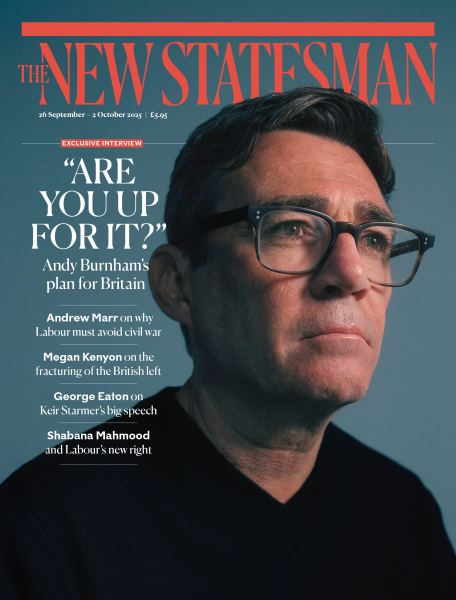
With only headlines and soundbites to inform us what might be imposed on Scotland and its communities, it is difficult to know what an Andy Burnham government might actually mean for devolution and decentralisation in England, never mind across the three Celtic nations. Under the Manchester Mayor’s leadership, much is thought to have improved in Greater Manchester both relatively to other metropolitan areas and to Scottish cities especially. So has the Manchester conurbation fared better than expected under his management, have the communities around the Manchester core benefited from greater autonomy, and has there been a decentralisation within that region that suggests Scotland should look forward to an enlightenment in governance driven by a new PM?

Brief reference to the data suggests there are myths being generated around the Manchester miracle of the last few years with regard to economic performance, decentralisation, and who has benefited from development: many economists do think Greater Manchester has performed better than other UK city regions over the past 15 years – and they argue it’s justified to partially attribute this to the devolution of powers, particularly on transport, planning and housing [see https://www.bbc.co.uk/news/articles/c5yz4x9ew49o].
In terms of productivity and economic growth, overall there are no differences since 2004 between the performances of Greater Manchester and Greater Glasgow measured in terms of GDP per head or GVA per hours worked. Published expert analyses reveal that all the perceived successes of Andy Burnham’s strategies are due to a rising population in his region – improvements in productivity have followed exactly the same trajectories in Greater Glasgow and Greater Manchester [see Muscatelli, A. (2025) ‘Independent report on regional economic development in Scotland’, https://scottishlabour.org.uk/wp-content/uploads/2025/11/Independent-Report-on-Regional-Economic-Development-in-Scotland.pdf ]; indeed, if economies of scale and scope have indeed been in play then the former must be doing much better than expected given its lower rates of demographic growth.
Across the UK, poverty and inequality are extremely high, absolutely and relatively to European standards, although significantly lower in West Central Scotland and falling compared with the experiences under the Manchester Mayor. Gross disposable household income per head [see here] in Greater Manchester has fallen relative to the UK average 1997-2023 (between the election of the Labour Government and the latest statistics) by 5.5 percentage points, a worse outcome than for West Central Scotland (effectively Greater Glasgow), while Manchester city has improved on this measure and Glasgow deteriorated though still ending up better than its English counterpart. Even during the Manchester Mayor’s period of fiefdom 2017-now, households on average have been no better off after his tenure relative to the rest of the UK and to, for example, Greater Glasgow.
If decentralisation is the promise, suggested by reference to a No. 10 North – though that appears to be in the geographical context of England only, then why have the ten boroughs of Greater Manchester seen no increases in their incomes relative to national averages? Where is the evidence of powers being sent down to their level rather than centralised in the office of the Mayor and the Combined Authority? Indeed, it has been argued that Glasgow City region has achieved a more balanced development than Greater Manchester with lower cost of living and lower unemployment [According to this Social Science Research Network assessment by Richard Goulding, Adam Leaver, Jonathan Silver: ‘Centripetal Cities A critique of supply-side urban development’, https://papers.ssrn.com/sol3/papers.cfm?abstract_id=5176817].
If we look at the neoclassical and neoliberal economists’ commentaries on the relative city-region rates of development, these are only based on uncritical application of the measures of output: GDP (Gross Domestic Product) and GVA (Gross Value Added). There are many criticisms of these as indicators of economic, environmental and social welfare [See, for example, https://medium.com/@patrick-oh-sglion65/rethinking-gdp-why-it-fails-as-a-measure-of-national-strength-and-what-should-replace-it-cbc821185fd0 ], but here it is sufficient to consider what they do actually record: they are measures of outputs, not income earned by local households and businesses but the market value of goods and services generated in the area. For small open economies, such as a rural community, city, region or small nation, much of these can flow out of the area as profits, rents, externally owned producers and in-commuting workers. This raises the issue of who has benefited from the increases in absolute GDP and GVA, especially as the positive reports on Greater Manchester’s recent history focus on inward investment. What the above analyses demonstrate are that the people and communities of that region have not seen improvements in their living standards from greater levels of output but rather these have been shared across increased populations. There have been no fundamental changes in the powers of neighbourhoods, communities or boroughs within the city-region: Manchesterism isn’t based on principles of community empowerment, subsidiarity or community wealthbuilding.
Rather, detailed analysis confirms left-behind areas and people within the Greater Manchester model have not been advantaged by the sort of boosterism and growth coalitions that were promoted as the answer in the 1980s [Lloyd, MG and Newlands, D., 1988, ‘The “growth coalition” and urban economic development’, Local Economy, 3 (1), 31-39] and yet seem to be what are being proposed again.
That should confirm that Andy Burnham has given no indication of an understanding or strategy for decentralisation of powers below the levels of the old metropolitan counties, and offers nothing to justify interfering in the devolved powers over local government in Scotland, Wales and Northern Ireland. As Michael Keating argues:
“Two points of principle need to be taken as foundational in the coming debate. One was the recognition that the United Kingdom is a union of nations whose constitutional rights need to be recognised. The other is that the foundation of local government lies in community, democracy and citizen engagement.”
Nevertheless, as we have been advocating in the Build a Local Scotland campaign: Scotland must go further than the English model of mayoral city regions if communities are to be genuinely re-empowered. We argue that Europe’s most successful democracies combine strong regional institutions with genuinely empowered local government and communities. We believe Scotland requires both a stronger strategic regional tier and a more local level of democratic decision-making if power is to be brought closer to citizens. This ‘hollowed out democracy’, as COSLA has described it, must change. We therefore urge the Scottish Government to go beyond Manchesterism – and convene a Citizens’ Assembly to produce a template for a truly decentralised Scotland.
Photo by Surya Prasad on Unsplash