
Britain’s Police State and Corporate Spying
Donna McLean continues her new column with a look at this week’s revelations about the role of corporate spying from the Undercover Policing (Spycops) Inquiry in London.
A recent evidential hearing of the Undercover Policing (Spycops) Inquiry in London revealed startling new information on the links between Britain’s secret police and the murky world of corporate spies.
Detective Chief Inspector Michael Dell divulged that BAE Systems offered to pay the Metropolitan Police’s Special Demonstration Squad money to spy on anti-arms trade activists in the 1990s. Dell, who managed the corrupt Special Demonstration Squad from 2001-2005, denies that the unit accepted the offer, though went on to say “… the Branch could well have done with the money.”
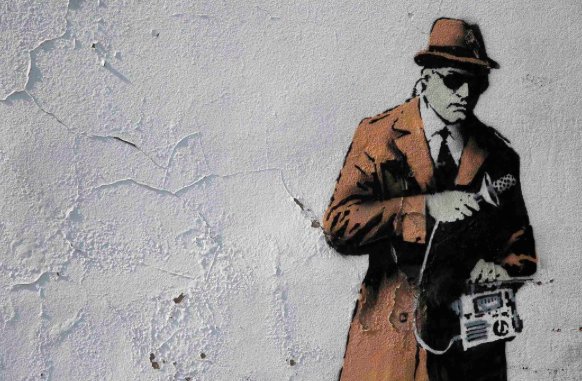
Dell had previously worked in Special Branch C-squad (C for counter-subversion) which specifically dealt with protest. There, Dell had oversight of SDS reports and he then went on to manage the undercover officers who produced them, including the spy I was deceived by, believing him to be a locksmith and left-wing activist. In a strange quirk of fate, this man I was in a relationship with for over two years, and even got engaged to, seemed impressed with the fact that my father was a trade union activist and the convenor for the BAE factory at Prestwick, which I knew as British Aerospace as a child.
Dell’s revelation wasn’t the first time that BAE Systems, the giant multinational with factories across the UK, was mentioned in evidence. There is in fact a long and murky history of information sharing between state and corporate spies. In fact, BAE Systems had installed their own corporate spy, Martin Hogbin, into the activist group Campaign Against the Arms Trade (CAAT) back in 1997. Hogbin remained embedded within CAAT until 2003. Hogbin was so involved in the group that he became a close friend to and godfather of CAAT activist and journalist Emily Apple’s child. Emily is a fellow core participant in the Undercover Policing Inquiry, having also been spied on by multiple police spies.
In 2003, the Sunday Times exposed a “spy network” run by a woman called Evelyn Le Chêne on behalf of BAE Systems. Le Chêne, who previously worked for the Ministry of Defence as a consultant on chemical and biological warfare, apparently managed a database which held the names and addresses of almost 150,000 activists, including peace campaigners, environmentalists and trade union members. The Sunday Times report also claimed that a network of spies were posing as activists to infiltrate campaign groups and obtain valuable information for BAE Systems.
In Spycops survivor circles, we are familiar with the sight of (often early) retired police officers moving seamlessly into lucrative consulting work within the world of corporate security. This secretive industry enables large organisations to hire spies to monitor and infiltrate activist groups that object to their dubious trade and activities. The most valuable information alerts companies to actions that are being organised against them. It is often former state employees who are prized recruits for these firms, bringing with them the surveillance skills they learned in the public sector, as well as valuable contacts. The credentials of the ex-police officers they employ are explicitly advertised by the corporate security firms when they ‘network’ for new clients. Some of the main corporate security firms operating in the UK include C2i, Inkerman and Vericola.
Vericola specialises in spying on environmental campaigners on behalf of some of Europe’s biggest energy companies. Although these firms are highly secretive about their clients, a leaked email seen by The Guardian revealed Vericola had acquired intelligence for Gordon Irving, the security director of Scottish Power, who joined the firm in 2001. Irving had spent 30 years in Scotlands biggest police force, Strathclyde, before the forces merged to become Police Scotland. Irving was the head of Special Branch.
The Kent-based Inkerman Group employed former Met commissioner Lord Imbert as a strategic adviser. In 2009, Inkerman produced a “restricted” report – seen by The Guardian in a leaked email – which warned of a growing threat of “eco-terrorism”. In a section titled “recent acts of eco-terrorism”, there was a list of multiple campaign groups, including Plane Stupid, a grassroots environmental activist network that campaigns against airport expansion and the environmental impact of aviation.
Tilly Gifford is an environmental campaigner based in Glasgow. In 2009, Tilly managed to record undercover police officers in Glasgow following and harassing her. They offered to pay off her student loans in exchange for intelligence on fellow activists following a Plane Stupid protest at Aberdeen Airport. Soon after this incident, her flat was broken into.
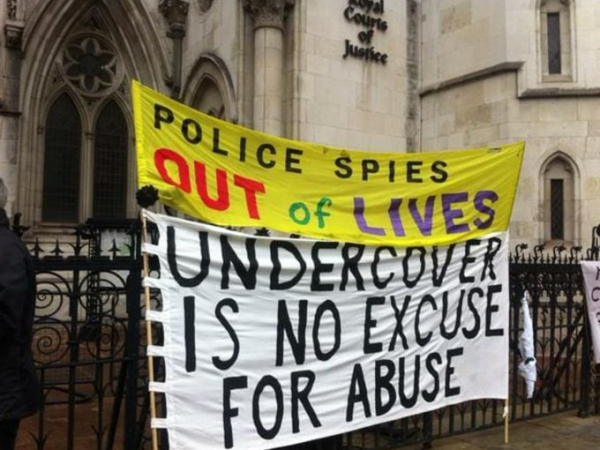
I campaigned alongside Tilly and other activists to try and force the extension of the Undercover Policing Inquiry to Scotland. In 2018, she led a judicial review seeking to bring the “Spycops” inquiry to Scotland. However, a Scottish judge dismissed the action in the High Court, ruling that European human rights law did not apply to the specific circumstances of her case against the police.
While we know that the notorious Metropolitan police spy units sent more than 140 undercover officers to spy on over 1,000 political groups over a forty-year period, we may never know the true extent of corporate spying, in Scotland or across the UK. Senior police officers claim that “there have been more corporate spies embedded in protest groups than police officers.”
One of the tactics used by corporate and police spies alike is to create discontent and conflict within groups, often pitting activists against each other. At a time of increasing clampdowns on legitimate protest, we can certainly guess that the extent of corporate spying is vast and, more than ever, insidiously linked to the state.

We are supported only by our readers. We don't have corporate backers and we don't take advertising, so we rely entirely on your support.
Help to support independent Scottish journalism