
The Summer of Scotland after Sarwar, Sturgeon and Swinney
The Andy Burnham administration has taken office. It faces huge challenges – economic, political, geopolitical – along with no direct popular mandate and the rising storm of radicalised right-wing opinion in the UK waiting to devour anything that gets in its way.
At the same time implicit in this is a challenge to Scottish politics: its assumptions, beliefs and dynamics of recent decades and the present. This is particularly true of those of an independence persuasion who are used to treating all things Labour with scorn, have some reason to, but in so doing can miss the nuance of developments in Labour and UK politics to the detriment of their views.
In the past few weeks many of the interim judgements passed on the Burnham government have an air of predictability and even caricature. Labour cannot govern; are torn apart by divisions; the UK is on the verge of ‘bankruptcy’ and ‘going bust’; and from the extreme right on the ‘brink of a civil war.’
The Scottish take on this is equally filled with pre-prepared positions, like a general fighting the current war with the tactics of the previous. Labour is incapable of addressing the huge issues facing Scotland; every Labour government ‘betrays Scotland’, ‘does not care about us’ and ‘treats us with contempt’ – all of which lacks just a little shade of grey or insight into the state of Labour, Scotland and the UK.
What this also does by design or default is give a free pass to the SNP and independence despite 20 years of SNP domestic rule which, to put even the best gloss on it, has a patchy record of good, bad and indifferent like any long-term incumbent. And that is without mentioning the specific internal SNP problems. Similarly, the voices repeating yet again the almost daily calls for an immediate indyref from John Swinney and his representatives, and repeated by a dwindling constituency, are now almost a comedic act of diversion – obvious to nearly everyone – and treated as such by opponents.
In this climate of the changing of the Labour government guard, new leadership coming again in Scottish Labour, and the aftermath of the SNP victory and beginning of positioning for the inevitable post-Swinney leadership, the predictable positioning above is not enough. Rather some hard truths and truisms need articulation and discussion across the political spectrum. Some will not agree with all of them; some will upset certain folk; but there is a need to break out of Groundhog Day politics. Doing so is cathartic and healthy, as will eventually be the terrain that Scottish politics needs to reach.
Where is the SNP after its election victory?
For starters, let’s take the state of the SNP after its recent election victory and 20 years in office. It is exhausted, hollowed out, and bereft of plausible policy ideas and strategy. Rather, it is in a holding pattern, knowing that by doing what it has previously done it can continue into the foreseeable future as the leading party of Scotland.
Where is the SNP agenda for governing? Where is the sense of direction, prioritisation and honesty about the difficult choices Scotland faces? Moreover, where is the SNP inquest into the culture of how the party ruled itself – and by extension wider Scotland?
Two decades of quasi-presidential leadership under Salmond and Sturgeon alongside two sets of inter-connected controversy and scandal have left a party bruised and confused which has forgotten how to do party democracy. First, there was the slow attrition of intra-party culture due to the SNP’s ascension to power; the sheer force of the second Salmond leadership and self-discipline of focusing on retaining office and the indyref. Second, under Sturgeon this became explicit: a politics of managing and manipulating party democracy, concentrating power in leadership hands, and marginalising any dissenting or critical voices – all it now has become evident to mask the Sturgeon-Murrell misgovernance of party and country that people are still coming to terms with.
The SNP leadership position for now is to sweep the most obvious criminal part of this under the carpet, to state that all the previous inadequate management processes have now somehow been corrected and that to ask questions about this is somehow impertinent and unwanted. Indeed, even worse the SNP official position is to present itself as ‘the victim’ of Peter Murrell’s crimes while having no interest in the systematic culture which let his crimes go on in plain sight.
One insider opines that ‘the party dare not launch an independent inquiry into its inner workings because of the scale of wrongdoing and questionable acts it would bring to the surface.’ They conclude with the assessment: ‘Without such an inquiry the current party exists in a half-life, unable to fully move on from the Sturgeon era.’
Where now for Scottish Labour?
Alongside this is the predictably sad state of Scottish Labour: once a force which could impose its views on Scotland and widely seen with a mixture of awe and dislike. That now seems a long time ago – in part because it is. Twenty years of SNP rule in Holyrood has seen twenty years of Labour in opposition but despite this long period in the wilderness, the party has not managed to adapt to opposition or successfully critique the SNP.
Ten Scottish Labour leaders have been in post over devolution – Donald Dewar, Henry McLeish, Jack McConnell, Wendy Alexander, Iain Gray, Johann Lamont, Jim Murphy, Kezia Dugdale, Richard Leonard and Anas Sarwar. The first three held the office of First Minister. The next seven opposition leaders have all held the leader’s post to diminishing impact and relevance. Who can even remember some of them or any of their pronouncements?
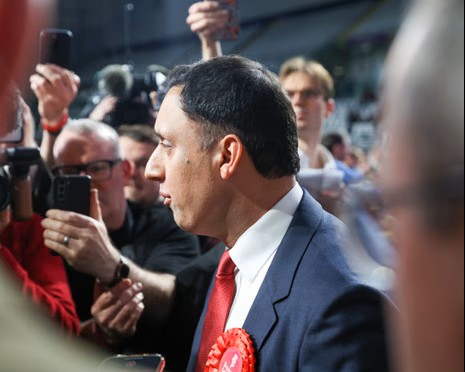
There is still a generational capture of Scottish Labour with some media and public debate clinging to the views of Lord McConnell or Lord Foulkes as if they have some currency in 2026. Whereas any relevance they have is part of the problem, about Labour’s weakness in opposition, its inability to adapt and evolve to devolution and the lack of quality in the present party. Will Labour leader number eleven be the one to crack it? Likely front-runners Michael Marra or Monica Lennon have qualities, and at least they won’t have Anas Sarwar briefing against them now he has been fast-tracked to the House of Lords.
But can anyone explain what Scottish Labour is for? One commentator suggested that ‘all Scottish Labour’s problems of recent past came from London, and this will be true in 2029 and 2031’ which begs the question what is the point of Scottish Labour? After a quarter century of devolution it has failed to decide if it should be unapologetically Scottish Labour – ‘made in Scotland for Scotland’ – or ‘British Labour in Scotland’. It has tried to blur the lines, ride both horses, ended up satisfying no one, and in the process been unambiguously neither of the above. The reason is both involve taking risks, alienating people, and charting a new course. That is scary for a party which in its DNA believed it had a divine right to govern, has still not adapted to opposition, and cannot comprehend the continued dominance of the SNP.
It is possible that any Burnham bounce and honeymoon could offer Scottish Labour a reprieve. Burnham could bring a new agenda not just to England and the UK but north of the border. SNP politicians forget there is more to politics than Holyrood. There is local government which in 20 years in office the SNP have shown no interest in nurturing; instead seeing it as a sycophantic support act to the main national act. A Burnham Scottish approach which bypasses Holyrood but does so in a collaborative manner building buy-in with other public and civic bodies could have traction and the SNP would be wise not to be too cynical and dismissive in their response. But Scottish Labour would have to positively contribute to this and seize any window of opportunity – something Sarwar and company failed to do in the run-up to 2024 and Labour victory.
The Future Direction of Scottish Politics
The independence question and its evolution hangs over all this. Some honesty and inconvenient truths would be welcome, rather than the same old stale rhetoric and positions. SNP politicians cite their mandate and pro-independence majority. The pro-independence Believe in Scotland stated that the 2026 election witnessed ‘the biggest ever indy majority’ in parliamentary seats and that ‘the Scottish people have voted for a second independence referendum’ and that is a conclusive mandate: the reality being independence won 41% FPTP and 42% of the regional list vote.
The stances of Swinney and Burnham are part of a predictable stand-off where everyone knows the script. None of this really matters and more importantly, no one is making a substantive move of genuine consequence. The big question for independence is how to advance the principle of Scotland’s right to decide its future; all sides at some point have an interest in agreeing a constitutional process which allows this to be decided in a future indyref.
But that is not for now. Independence has the road post-2014 unexplored by Sturgeon to navigate. In what way is an independence offer different from 2014? What lessons have been learnt from why Yes lost beyond the usual litany of culprits (Brown, ‘the Vow’, BBC)? Whatever you think of that predictable list Yes fell short and failed to win a majority then or a sustained majority since. Then alongside the economic and social questions and the rupture issue there is the geo-political context: the world of 2026 is not the world of 2014 and the threats of Putin, a resurgent China and an increasingly unpredictable Trump needs acknowledging.
The future direction of Scottish politics has to see the SNP attempt a reset and renewal: a tough ask after two decades in office and one which will require a post-Swinney leadership to explicitly break with the Sturgeon era. Related to this, where will the main forces of challenge and opposition to the SNP emerge from? Could Scottish Labour finally get their act together and speak for a centre-left constituency more convincingly than the catch-all SNP? It has not happened over the past 20 years, but that does not mean it is impossible.
Similarly, the Scottish Greens represent a constituency beyond the SNP, Labour and the centrist politics of Holyrood. Could that politics get more serious, radical and develop a wider constituency or are they at the boundary of their maximum support? Then there is the sudden influx of Reform into the Scottish Parliament who have so far shown their propensity for performative politics and anti-virtue signalling but have yet to work out the kind of politics they want to promote beyond this. Reform have a host of negatives in Scotland – Farage, English nationalism, the overt racism and bigotry – all of which puts a ceiling on their support.
Politics and power detests a vacuum and will not continue as it is at present in a world of disruption and flux. In this the Swinney leadership is clearly an interregnum and the party will have to adjust to loosening its grip on its own party members and country – always a tough balancing act after years of control politics. Related to this the unconvincing offers from all the opposition parties will at some point see a political critique emerge which challenges the SNP’s centrism and speaks for the Scotland not won over by the Nationalists.
Finally, Scottish politics must take cognisance of the gathering storm of radicalised right-wing sentiment and agitation across the West. Scotland is not immune to this. Nor is our current complacent slightly centre-leftish politics an adequate answer. First Minister-inspired ‘civic Scotland’ summits may have once carried weight and been appropriate a quarter century ago but that is no longer the case.
And who, if anyone, will politically dare to speak for the Scotland which is discontented and dissatisfied with the present political offering? Who aspires to speak for the constituency of opinion beyond Holyrood and Westminster who feel they are not being represented and seen?
For all the hyperbole and over-the-top rhetoric of Scottish politics much of it flies over the heads of a vast part of Scotland. A Scotland for whom much of our mainstream politics is mere background noise is there to be championed and addressed and the insider politics of Holyrood and devolved Scotland challenged.
Speak to that Scotland and address the forgotten Scotland and missing million detached from our politics. Whoever does that has the prospect of seizing the terrain and defining our collective future – irrespective of our constitutional status. Indeed, independent or self-governing in a looser union they could give meaning to a different kind of politics, power and political settlement – one beyond abstract visions and centred on an economy, society and democracy which works for the vast majority and treats them as adults and citizens in their own land.

We are supported only by our readers. We don't have corporate backers and we don't take advertising, so we rely entirely on your support.
Help to support independent Scottish journalism
Grey, bland and lacking in imagination and creativity. The 2nd rate political class in Scotland.
How many more pointless marches up the hill and back down again? Where is the ambition? Where is the steel and determination? Where is the charismatic leader?
“no one is making a substantive move of genuine consequence”?
https://www.thenerve.news/p/stewart-lee-andy-burnham-north-sea-drilling-licences-wildfires-arthur-s-seat?utm_source=www.thenerve.news&utm_medium=newsletter&utm_campaign=stewart-lee-on-andy-burnham-s-first-week-weekend-edition&_bhlid=9f0de1d73173ffb6d92d33a4477bbaf6d425b6a0
“no one is making a substantive move of genuine consequence”?
https://www.thenerve.news/p/stewart-lee-andy-burnham-north-sea-drilling-licences-wildfires-arthur-s-seat?utm_source=www.thenerve.news&utm_medium=newsletter&utm_campaign=stewart-lee-on-andy-burnham-s-first-week-weekend-edition&_bhlid=9f0de1d73173ffb6d92d33a4477bbaf6d425b6a0
The devolution of much of the internal business of government to Scotland requires that the SNP must concentrate on demonstrating they know how to govern efficiently and effectively. If Labour are ever to return to power they need to become an effective opposition and convince the Public that they have what it takes to be the an alternative Government. Both should remember that Holyrood was promised o be more centred around consensus than the opposition for opposition’s sake Westminster approach. The Committees were intended to work on the Scandinavian model with Ministers answerable to them, and certainly not kept blinkered by lack of information and candour.
As the SNP has become more defensive so it has fallen into the usual traps of power, which even internally is too centralised. Too much time and resource has been spent on worthy but marginal issues. Too little effort has been expended on creating consensus before legislation is proposed. And like all Parties an eagerness to create new laws has come before making sure existing ones are actually working. Permanent revolution is exhausting, a little stability lets policies be properly assessed and the workers to become skilled in best practice.
Canada largely separates the Provincial level of political parties and the federal one, an acknowledgement of just how different the Provinces are from one another. Within the UK we could take the same approach. Scottish Labour could put clear on water between itself and British Labour (it has no Northern Ireland section). It could be as separate as the Ulster Unionists once were from the Tories, or the Christian Social Union from the Christian Democrats is Germany if it wished, although it would mean no Prime Minister from Scotland would be likely in the near future.
Politics in Scotland is dictated by the wishes of sometimes cozy, complacent and sometimes frenziedly partisan urban debates (“net zero” or “equal rights for men in women’s prisons”) – in a country where a third of the population lives outside urban centres. That third sees rocketing fuel prices for transport and heating, deteriorating roads and weather events (e.g. wildfires) that pose existential threats, while urbane urban politics emphasises whimsical irrelevancies such as free bus travel or 20-minute urban “villages”.
Even many in the urban population have family and friends in the country and see their mounting problems – and, of course, the spread of a colonising population from the south flexing its greater financial resources by driving up house prices and replacing indigenous communities with English settlements. Holyrood and local councils? Turning a blind eye.
Industries from banking to whisky distilling are all but exclusively within the control of the City of London – and in the case of oil processing, entirely exported south of the border. Something is rotten in the state of Scotland.
An interesting round-up of the current situation. However, you really need to give a bit more attention to the Scottish Greens and the wider Zack Polanski assisted rise of an eco-left alternative. The Greens are showing clear signs of being able to break out of previous electoral limitations.
“No one is making a substantive move of genuine consequence”:
This sentence, para and surrounding argument is clearly about the stand-off, inertia and phoney war of the constitutional question.
This is the best summation of the current situation in Scottish politics which I have read in a very long time. Obvious once pointed out, the Swinney/Sturgeonists SNP have done nothing to define what independence could deliver, not even devised a workable currency proposal in 12 long and wasted, in terms of preparation and vision, ambition setting for independence. Swinney needs removed from both leadership and office and, to move on, we need the whole Salmond malneverance case examined ant those responsible exposed and prosecuted if appropriate. Then we can move on.
A very interesting article highlighting many of the issues in Scottish politics in mid 2020’s.
There are a few things that haven’t been stated that provide a wider context to Scottish political scene.
One of the primary reasons behind Labour government establishing devolved government at Holyrood was to reduce demand for independence in Scotland. This hasn’t happened and if anything it has helped fuel support for independence especially amongst younger voters. It is therefore highly unlikely any Westminster government will devolve more meaningful powers to Holyrood such as Full Fiscal Autonomy, Energy, Immigration etc. Post Brexit an argument could be made that devolved powers have been if anything restricted by Westminster.
David Cameron only agreed to independence referendum in 2014 because he was sure No would win easily (wrong assumption) and he hoped it would split Labour in Scotland (correct assumption). It is highly unlikely that any future Westminster government will agree to hold another independence referendum unless they are sure No would win. This effectively means that Westminster will not to agree to any process that would trigger any future independence referendum as by doing this they lose control of process. Andy Burnham’s comment saying any discussion around independence referendum was just a more blunt and honest way of stating this fact. This fact allied to polling indicating that ~50% of electorate support independence and little chance of Westminster extending any meaningful powers to Holyrood government would indicate that the current seemingly negative endless arguments about independence are set to continue for foreseeable future.
Labour won 2/3rd of seats at last GE on 1/3rd of vote and with less votes than in 2019. (in Scotland Labour won 75% of seats with only 35% of vote). Labour primarily won because Tories had become so unpopular and the right wing vote was split by Reform in England. Andy Burnham has only been shoehorned into becoming PM because in just 24 months Labour had become very unpopular under Keir Starmer. Andy Burnham is a far better communicator and politician than Keir Starmer but he has a very difficult job to turn around Labour fortunes before next GE due to difficult financial background, power of financial markets, hostile right wing media and a disillusioned electorate. If Burnham cannot overcome these immense challenges a far right wing Reform or Reform/Tory government will be voted in at Westminster by electorate in England. The potential impact that such a government would have on Scotland is unlikely to be positive for majority of electorate and could well be devastating for Holyrood government and its powers. The reality is that this bleak outcome may well come about regardless of what politicians in Scotland do or don’t do in next 3 years.
Thanks for the positivity, comments writers! Join the SNP, pay your dues like the rest of us and contribute your policy prescriptions for discussion. SNP is really not North Korea. You won’t be shot. Good bit of Gerry”s critique has substance and he does have some ideas for alternatives in future. For me Ian talking about English settlements is desperate stuff. CIVIC nationalism can never invoke that in my view.
Apologies F.I.’s comment about English settlements I was referring to. It was not Ian.
There does seem to be a dearth of fresh thinking in Scottish politics, especially from the SNP who, after all, are in power.
I left Scotland in 1992 and came back recently to live here (more accurately, to die here; a Scottish friend died in Madrid a couple of years ago and, while attending his funeral, I suddenly realized I didnt want to die there like he had) and I am struck from time to time by how far behind we are Europe now, which we werent in 1992…
Progress can be measured in many ways, as can decline, but one of the ways Spain has progressed is in those facilities which are there for everyone: museums, art galleries, high speed trains (catch the 7.00am AVE in Madrid Atocha, and you’re in Barcelona by 9.30 am, previously a 7 hour train journey) sports facilities (the Spanish have become a powerhouse in sport in the 21st Century) libraries, book shops, restaurants (another Spanish success story, cuisine)…
But then they tax more to ensure the public realm is adequately financed…
If I recall correctly, the SNP ran a campaign in one of the first elections for Holyrood promising to raise income tax by a penny, and lost.
Since then, they have been reluctant to look at income tax again, but I believe that if you make the case to the Scottish middle class that paying a wee bit more is better for them too, you can win them over…
Scotland’s problems with drugs, alcohol and mental health have got everything to do with lack of investment in the public realm, in sport, in culture, in local community infrastructure…
I’m not optimistic, but the SNP ought to be trying to improve the country, not just keep things ticking over…
And as Gerry says, their reaction to corruption at the highest level is just a complete joke… talk about sticking your head in the sand…
I was in Bute recently, Rothesay, a place I love, but the train from Glasgow to Weymess Bay and the ferry takes one hour…
Imagine a bullet train from Glasgow to W.B? Imagine how it would transform Bute, which has all those wonderful 19th century mansions and a truly grand setting?
A 15 train journey and then 30 mins on the ferry…the island would be transformed… maybe there are more suitable routes for a bullet train, maybe Oban would make more sense, but one to a port to the isles would be a smart move…
I love Bute, and there are a couple of new places since I was last there ( a deli, a trendy bar), but the overall feeling is of a place in decline…
There wasnt even a giftshop with an Inlove Bute T-shirt / mug kinda thing…
I met a couple who live near Aberdeen, a Swiss man and Austrian woman, in Scotland for 30 years, sht scared of Farage and Reform sending them packing. They were complaining there was nowhere to eat dinner…
With climate change, people will be holidaying closer to home surely? Bute could be recovered for the Scottish tourism industry, but you need a govt to get behind it and see the potential..
There does seem to be a distinct lack of vision….
Ian – I would agreee wholeheartedly with your comments. SNP have not only become defensive but cynical in way in which Swinney campaigned for a SNP majority as a route to another independence referendum. The dogs in the street knew that in the unlikely event of a SNP majority the Westminster government would reject any request for a referendum. This policy was more about shoring up the SNP vote after a rock few years.
It would also seem so obvious that Scottish Labour should become an autonomous party similar to SDLP in NI. Despite Labour’s dreadful performance at recent election I have not heard one elected Labour MP or MSP come out clearly and support an independent Scottish Labour Party. I suspect to do so would finish their political career such is the power the UK party holds over its Scottish branch.
The SNP and Scottish Labour are in their own ways as conservative as the actual Conservative Party in Scotland.