

The Rage of Populism
Populism is all (the) rage: The rise of the Populist International and its Scottish Potential
We might be tempted to dismiss populism as the knee-jerk reaction of those who have been ‘left behind’ by economic and social forces broadly labelled ‘globalisation’, Hillary Clinton’s basket of deplorables. We would be unwise to do so.
Consider the standing of ‘populist’ parties in opinion polls in 2025 across Europe. The eastern and central European examples – Hungary, Poland, Slovakia – are reflections of the failure of autonomous civil society to develop under state communism, but that is only half the story. In the west, there is Trump, obviously, the head of Reactionary International, to whom populists bend the knee, but we don’t look too far from home to see examples. In the recent Hamilton, Larkhall and Stonehouse by-election, Reform got 26% of the vote. This is Scotland: Populism isn’t meant to happen here. At UK level Reform is currently ahead of Labour, and way ahead of the Tories.
Elsewhere, the Populist Right are a force to be reckoned with. In Austria, France, Italy, Germany, Switzerland, Flanders, and even in the erstwhile Social Democratic bolt-holes, Sweden, Norway and Denmark. Researchers at Essex University have found that in terms of belonging to the authoritarian populist tribe, the highest proportions are found in France (65%), Italy (61%), Finland (50%), Denmark (49%), and UK (48%). Looking back to 1945, they concluded: ‘an authoritarian mindset has always been relatively widespread among the citizenry of the West. Its characteristic features are a suspicion of minorities, especially ethnic and religious minorities; distrust of political, financial and cultural elites, including mainstream politicians of the stablished parties; a disposition to believe in conspiracies; a faith in simple solutions to stubborn and complicated problems, notably involving the breach of individual rights and due process’.
Authoritarian populism of the right flourishes by mobilising hostility to immigration and replacing the politics of class by the politics of ethnic and national identity. The data show the strength of populist opinion across various states, and in western Europe ranging from around one-third to one-fifth.
All this begs a key question: what is Populism anyway? If we bundle everything we don’t like into the category of Populism, what are we left with? Let us start with a few definitions. One of the most astute commentators on Populism is the German-born Jan-Werner Müller who teaches in the USA. Müller’s definition is useful on two counts: the juxtaposition of ‘people’ and ‘elites’; and the ‘moral’ component of populism.
Populism goes back a bit, as far as ancient Rome where the social divide was between two key groups, ‘populares’ and ‘optimates’. The political practice of the Roman republic left a complex legacy and political elasticity relating to ‘the people’; that the term’s vagueness was its feature and its utility. Thus, the Populus Dei of the early Christian Church, transmogrified into ‘God’s People’ for Protestant reformers, and claims by a diversity of national groups (including the English as well as the Scots) that they were truly the people of God.
From there it was a short intellectual journey to ‘we, the people’ of the American Revolution, that ‘popular government’ was the antithesis of implicit aristocratic (and British) government. The American Revolution launched the career of “the people” as a universalist and progressive cause. This embedding of populism deep into American culture and politics has been reflected in the rise of Trumpery.
At the core of populism is a configuration which juxtaposes ‘the people’ versus ‘the elite’, but what constitutes each is problematic. ‘The people’ can mean the common or ‘ordinary’ people (‘the plebs’ in a Roman sense), a culturally or ethnically distinct people (ethnos), or a people defined as sovereign (demos). Populists are anti-elitists, and in essence, anti-pluralists, for it is a fantasy that there is a single, homogeneous, authentic people. This people, assumed to be a homogeneous whole, can be authentically represented only by populists. The populus is a mystical body (corpus mysticum) given voice by the vox populi.
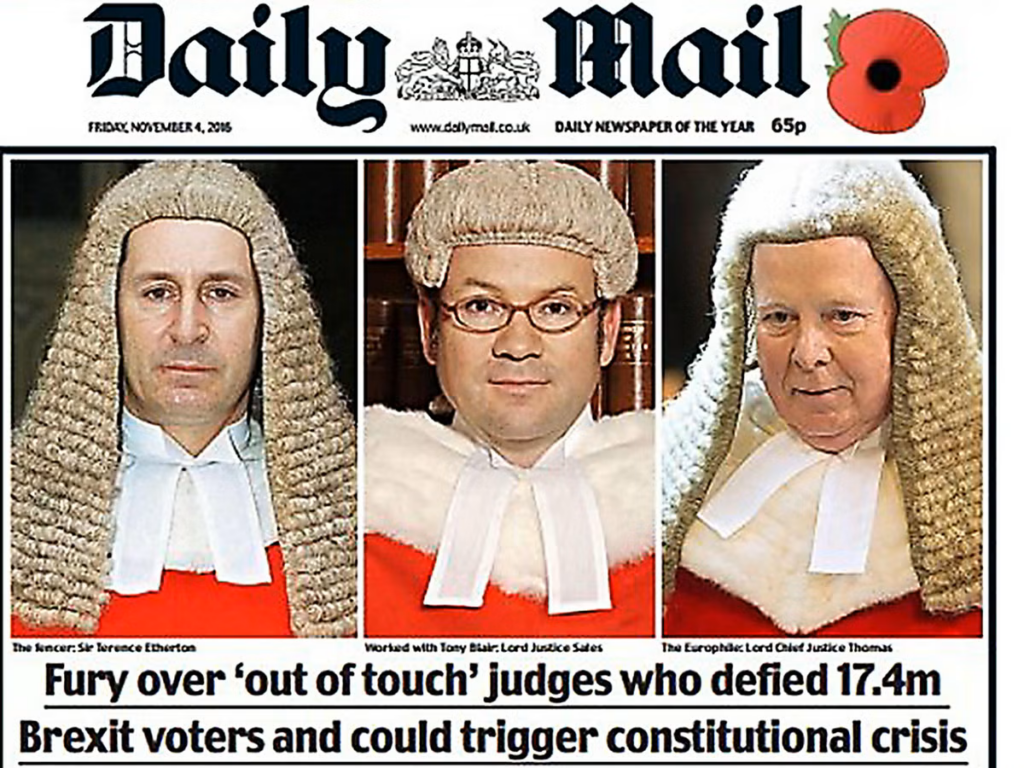
At the heart of populism is a juxtaposition of ‘the pure people’ versus ‘the corrupt elite’. Social and political analysis requires us to parse each of them such so as to cast doubt on a single, homogeneous ‘people’, still less a coherent, undifferentiated ‘elite’. In any case, the latter concept is an accusatory one, a kampfbegriffe, literally a ‘fighting word’, not generated by the elite itself. When, for example, Michael Gove, the-then Conservative government, and The Daily Mail (4 November 2016) at the time of Brexit called judges ‘enemies of the people’, this was an accusation, not a considered self-definition by The Bench.
While populism claims to speak on behalf of ‘the people’, who precisely they are is never clear. That is not its weakness, but its strength, as a discursive tool to cow the opposition. There is a tendency of non-populists to dismiss populism as a ragbag of inconsistent ideas and policies; hence, the ‘basket of deplorables’. It would be foolish to dismiss populism, and not only because its leading proponent is currently US President. It has, behind it, a powerful set of ideas in the form of the writings of Carl Schmitt (1888-1985), a right-wing legal theorist in the inter-war period who supported Hitler and Fascism. For Schmitt, ‘the once mystical body of the sovereign king is transposed into the nearly sovereign body of the people’. We can grasp the appeal of the charismatic ‘strong man (or woman)’ and of the attachment to plebiscitarian ‘democracy’ by populism. Populists view ‘the people’ as passive; to be shown the way by an all-powerful leader. Remind you of anyone?
We are the people; I am your voice
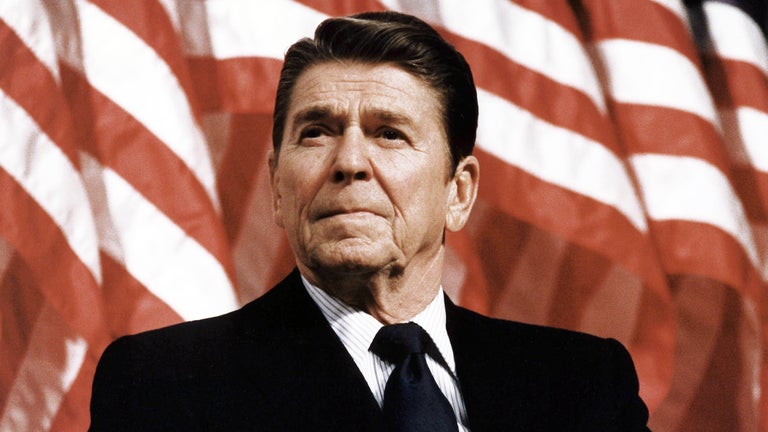
It is doubtful whether populism would have had such a run for its money without Trump as the leader of what French president Emmanuel Macron called l’internationale réactionnaire. The foundations of that populism are well-known: we, the people, written into the US Constitution. By the 1890s, there was a People’s Party, popular among small farmers, and fueled by the moral revivalism. The rest of the story is familiar: zealous anti-Communism, McCarthyism, George Wallace, the rise of the Christian Right, and the campaigns of Richard Nixon (and the ‘silent majority’) and Ronald Reagan. And almost uniquely, there is the notion of ‘unAmerican’ activities. As one observer noted, Populism is everywhere in American politics, but nowhere in particular.
It is a moot point as to whether populism would have had such an impact globally without Trump’s lead. There are, however, underlying social, economic and political conditions which have operated to render it popular elsewhere. A number of social and political crises have provided the perfect storm for populism to emerge: the financial crash and the so-called Great Recession from 2008; the ensuing sovereign debt crisis, and ‘austerity’; rising numbers of ‘asylum seekers’ and refugees, immigration from the world’s trouble-spots; the trope of a ‘Muslim invasion’, fueled by acts of terrorism especially since the Twin Towers in 2001; and the language of ‘swamping’ and so-called ‘replacement theory’.
Populism as Performance
Populism is also a matter of style, not simply policy. Its practitioners, notably Trump, treat it as performative. Politics is not simply a matter of right versus left, but of high versus low in terms of performative style, and relating to people (in British terminology, think ‘punters’). The ‘personalist’ pole claims to be closer to ‘the people’. The ‘high’ is more abstract and restrained; the ‘low’ is more concrete and immediate. The style of ‘low politics’ is coarse and uninhibited, nativist and personalist. The ‘high politics’ style tends to be well-behaved, ‘proper’, cosmopolitan, and proceduralist. Populism tends to be ‘politics in your face’ and provocative: ‘it flaunts a politically or socially “unpresentable other”, a historical by-product of an allegedly “civilising process”, and champions it as the authentic “self of the nation”.
The Appeal of Populism in Scotland
Is anywhere immune to the charms of populism? Consider the case of Scotland on the grounds that if anywhere fused nationalism and populism it would be here, for a belief in ‘Scottish sovereignty’ is significantly high. People and Nation appear to coincide.
Scottish (and British) Social Attitudes surveys have long carried useful scales measuring attitudes from left to right, but also on liberal to authoritarian values. The correlations between leftist political values and liberal social values are strongly significant, much as we would expect. Nevertheless, the survey evidence from the 2024 British Election Survey does suggest that the two dimensions, political and social, are orthogonal, at right-angles to one another. In Scotland, as many as 38% on the Left politically are also ‘authoritarian’ in social terms, compared with 50% of those on the Right. Turning the data around, we find that as many as 61% of ‘authoritarians’ consider themselves on the Left (compared with 84% of ‘liberals’). A strong majority of people in Scotland either agree or strongly agree with the view that ‘Lawbreakers should be given stiffer sentences’ (59%); that ‘Young people today don’t respect British values’ (52%); and that ‘Schools should teach children to obey authority’(51%). Lower proportions support the view that ‘for some crimes, the death penalty should be the most appropriate sentence’ (43%), and that ‘censoring is necessary to uphold moral standards’ (38%). As many as 4 in 10 people in Scotland are ultra-authoritarians, and only 15% are ‘extreme’ liberals, with the rest in mid-positions.
The point of the exercise is not to show that people in Scotland are closet authoritarian- conservatives, but that there is sufficient fodder/raw materials for authoritarian values in what is indubitably a left-liberal society. What is lacking is the political ‘spark’ which would shift public opinion to the authoritarian right, for both Tories and Reform are too thirled to English nationalism to appeal to Scots. Being left and liberal is a large part of perceived Scottish national identity; and while public opinion in England is, by and large, quite similar, culturally constructed ‘English’ identity is not.
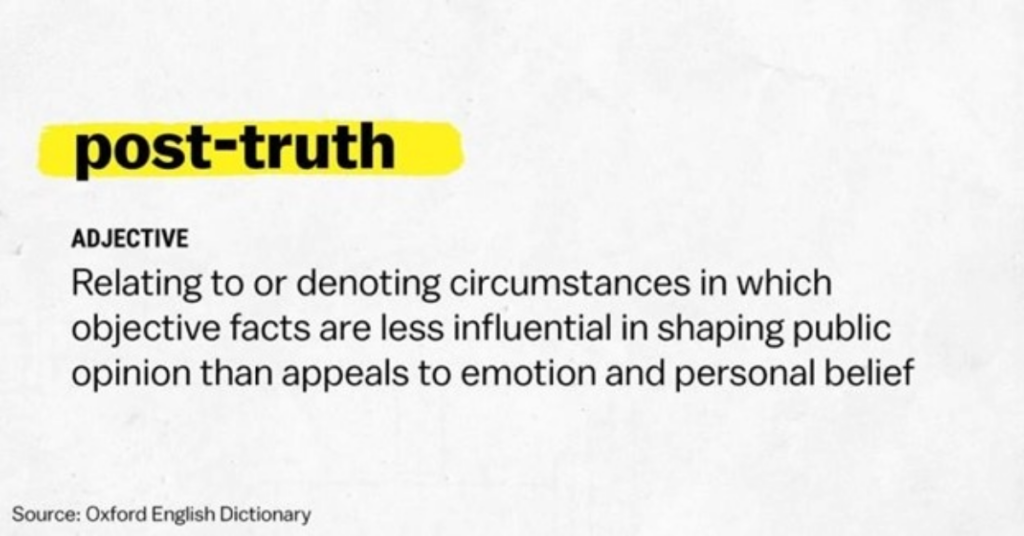
Populism in its various national guises has become a key feature of 21st-century politics. The destabilising effects of de-industrialisation and demographic shifts, and cultural accounts laying the blame for change on those ethnically ‘different’, have been woven into the fabric of politics in many countries. The rise of ‘Reactionary International’ has meant that narrative accounts have passed readily from one country to another, led and exploited by the Trump regime in the United States, which has embedded populism in its sense of itself. It is not a coincidence that it has. It is no longer outré to be right-wing or to have reactionary views about culture, economy, gender relations, climate change, even the place of science. We live in a world of alternative facts.
The left gave up on the class struggle years ago and embraced identity politics.
Could the abandonment of the working class by the left which traditionally supported them have anything to do with the rise of Populism ?
The left created a political vacuum which is now been filled.
It appears that populism has got a bad name because of the German people’s proclivity for militarism. What’s more, everyone else is being punished for it.
Given than the ruling elites stopped listening to the concerns of the wider population, and in the case of Blair undermined the UK’s remarkably long-lived and effective constitution so much that the very protection we had enjoyed for generations was dismantled, and replaced with Neo-Marxist madness.
He adopted and promoted an unproven globalist and technocratic form of government that tried to match that of many of the other EU countries.
It was clear that the British intelligentsia had developed a loathing and disdain for the British working class and the nation state.
He (and the British establishment) totally failed to notice how different the UK is politically from the other European countries were.
We’ve ended up with:
* A bloated, yet ineffectual state, unable to adequately keep us safe, and prosperous.
* More than 10m people added to our population in less than 30years than between 1066 and the 1950’s.
* Authoritarianism at a level not seen in Britain for more than 200 years.
* A failing economy, record borrowing.
* Deep division.
* Lost sovereignty.
* Total distrust of our institutions – broken social contract.
* Our young people are now so demoralized that they are don’t expect to afford a family or even to have secure accommodation for themselves.
Yet, you blame the ordinary non-educated class for the rise of populism.
Who has failed the majority of people in the UK and Europe.
It’s the educated elite! You have created this mess.
We trusted you educated elites to build on an amazing civilization and culture to make liberal social justice work for all of us, yet all you did was to hijack it for Neo-Marxist Critical social justice and water down the democratic mechanisms to give people real choice.
If you want to see the culprits. Look in a mirror.
Your elitist globalist experiment has failed.
It’ll be down to old-school people like me to stop our nation from slipping into violent civil strife, and collapse.
Wake up and smell the coffee.
Your phrases ‘educated elites’ and ‘neo marxism’ plus the links between them seem really vague to me. Would you say more
Globalists who despise the nation state, and their own working class compatriots.
Critical social justice warriors, who have an almost religious devotion to group identity politics.
Self-serving opportunists.
Graduates of academic institutions where they have been indoctrinated with ideologies that cannot work in the real world.
The United Kingdom has failed, it is high time that it was dismantled.
@Alec Lomax
I couldn’t agree more, but what is it going to take?
Scotland seems to be crying out for some charismatic leadership.
A Geronimo or Jesus.
A Jimmy Reid or Martin Luther King.
Jock Stein/ Jock Wallace/Alex Ferguson
Ma Granny. Joan of Arc. Sinead O’Connor.
I don’t know, ah dinnae ken.
What’s it going to take?
@Nazi Steve, you seem to find living in the real world to be too frightening, and who could blame you? I watched Disney’s live-action Snow White the other day, and your (at times nebulous bordering on coy) politics seem a ringer for those of the character Evil Queen. Perhaps she went to an old school and learned sadism and irrational abuses of power at an early age.
“Nazi Steve”. You wouldn’t know what a Nazi is if he/she goose-stepped over you.
Only the mentally feeble still thinks you can use the “far-right” trope to dismiss an opinion you can’t debate, or makes you insecure or “feart”.
Grow up.
@Steve ‘Evil-Queen-posing-as-People’s-Princess’ H, as you may have gathered I graduated with a degree centred on Politics, I’ve known several Nazi sympathisers, I briefly studied under one of the UK’s foremost German National Socialist experts, and I’ve tried to keep up with my studies. So perhaps I can recognise the odd Nazi. Or are you saying it was a lucky guess?
So instead, let’s fact-check some of your assertions.
What Constitution are you talking about? The British Empire doesn’t have a codified constitution, a state of affairs it shares with a few fellow travellers like Israel. Going back two hundred years, and racialised chattel slavery was still legal across British colonies, the draconian aftermath of Peterloo oppressed democracy and the Great Reform Act which did something against the Great Corruption wasn’t yet passed, while children were also effectively enslaved as factory workers, women only got the vote later, colonial subjects bled, sweated and groaned, the Empire waged belligerent wars, the Opium Wars were in the near future, punitive expeditions were gearing up, etc etc.
So who did this work well for, exactly?
You appear to be a royalist, although I gather your planned military coup in which you were to play A Very Important Role is now postponed, and your chosen figurehead Prince Andrew (I guess) gathers dust in waiting.
It isn’t clear what Neo-Marxism Blair&Co was responsible for, since New Labour introduced Private Finance Initiatives, privatisation, deregulation and market-led policies, while Blair personally sucked up to rich capitalists. Elsewhere you complain about restrictions on freedom of speech (Freedom of Expression is the more apt and general term), yet Blair copied and pasted the Freedom of Information Act from the USA, which in theory loosened the civil service omertà.
You also confuse critiques of populism with blaming populists for government policy; these are entirely separate concerns. The British Establishment is elitist and has for centuries leant into forming a proto-caste system which excludes as many of the general public as feasible from rising through the social class structure.
You foam about Islam yet there are many Islamic nations allied to the West, which supports even more organisations (though these sometimes turn against them), while Turkey has long been in the NATO sphere. British royals have long had chummy relations with authoritarian Islamic rulers, and the British arms industry relies on contracts with Islamic nations.
As others have pointed out, your comments are a bit of a word salad. Whether ACEs or later trauma, you might want to get yourself checked out for cognitive impairment (but that would mean seeing a member of the graduate elite, I guess).
Reform are very much supporters of the British Establishment, which is why they are adamant on protecting private schools. How is Reform’s plan for a ‘patriotic’ education anything other than identity politics, ideology in the classroom, self-pleasing flattery, wishful thinking for weak minds and cowardly hearts and rotten souls, a recipe for division and a sowing of future conflicts?
https://www.theguardian.com/politics/2025/mar/25/reform-uk-war-teaching-unions-nigel-farage
And you ignore the environment, Earth systems and non-human life as political concerns. Why?
SteveH, if only you could get your head out of the arse of the clichéd scripts that go with the worst kind of populist rhetoric, you might actually have something useful to say.
But I do not think you are capable of it because just like some of the people you attack, you are an ideologue whose views are driven by ideology, not reality. It is just that you think your ideology is the right one and the others are ALL wrong and not just that, evildoers to boot ins some kind of cabal. It’s amazing how like religious fundamentalism this all sounds.
And I mean, can you not see that dividing people up into all these groups (intelligentsia, neo-Marxists, educated elites, non-educated class, globalists, working class), then basing your worldview on the competing interests of said groups IS the very definition of identity politics?
Ha Ha! For all your education, you can’t get your head around why the UK (incl. Scotland) has been turning to shite, despite being run by a technocracy of people just like you.
Look at the countries of the EU. Run by the EU Commission. A technocracy of people like you. Again, just more shite.
Globalist Critical Social Justice warriors like you have applied a whole lot of uni nonsense to the real world, and made a great steaming jobby of our world.
Reform UK are just the folk who will reset the UK. It’s like doing a factory reset on a malfunctioning smart phone. We need to remove the malware, the bugs and faulty apps in order to return the phone to some kind of acceptable working order.
Words can and often do carry widely differing definition & significance. In the 1800s in the USA, the Populist Party was briefly powerful in a number of rural states because it represented farmers’ interests better than did the Democrats. Later, the Pops morphed into/became the Farmer-Labor Party…and in the 1960s, I recall the Populist Party was the name adopted by a virulently antisemitic, racist outfit that had some electoral activity but thankfully passed from the scene (probably to morph into yet another incarnation/brand). So, speaking of ‘populism’ in a meaningful way is entirely continent on definition–which varies, according to speaker/writer’s intention, is bound by time & locale, etc. Saying all this, my suggestion is to drop the term and use–more meaningfully and with greater clarity–the narratives that spell out who and what are under consideration. I think the foregoing discussion and the article itself do a pretty good job of that, but the term will still crop up. Do we want to employ it? Or can we do better without?
One of the definitions which does not get a mention is the simple idea that populists simply go for the stuff they know is popular, hence policies are often a ragbag of stuff. Reform seem to be going more and more like this and the economically left but right wing on social issues / migration party in power in Denmark another variation.
Niemand – how are Reform left on economic issues when they believe in a smaller state and tax cuts?
Not much but I was thinking of their recent claim to want to lift the child benefit cap. I think we will see more of this from them.
Niemand – Reform are essentially a hedge fund backed, Thatcherite, English nationalist party.
Farage, the charismatic frontman whose personality appeals to large sections of people south of the border, realises that pure Thatcherite economics aren’t very popular so he offers up some random policies to try and make his party more attractive to the poorer sections of society. Some policies such as cutting two child benefit cap are reasonable and some such as reopening mines in Wales are pure nostalgic batshit. He is also very adept at exploiting public concerns and identifying scapegoats which explains Reforms rising popularity even in Scotland.
If Reform ever to get into power I doubt they would improve anything and the social fabric would unravel even quicker but I have no doubt that they would identify loads of groups of minorities to blame for their failure.
I agree 100%
What I was getting at is Farage’s offering ‘up some random policies to try and make his party more attractive to the poorer sections of society’ is definitely one form of populism.
I fear Reform could get in at the next GE especially with the mess Labour are making of things. I am torn though, as despite my own frustrations with Labour, they have also done so good things, yet they are condemned by all sides at the moment, and that rings alarm bells about a kind of OTT feeding frenzy. I worry that the combination of left and right attacks and a hostile media is really helping Reform which is one reason why I find it hard to join in.
Incumbency is a lot more difficult than being in opposition even more so when majority of media are hostile to you – just ask the SNP!
Populism these days is typically a humanism (as in a subcategory of Humans-First), though old-school theocratic versions (as manifest in the English Civil War) still persist in places. All humanists and deists are elitists. This is one of the self-contradictions of populism, which is after all a form of identity politics and feeds off the irrationalities of in-group and out-group psychology.
The Labour movement is only incidentally Leftist, really it is just an interest grouping, as Mick Lynch has elaborated. And it can be, and often is, infiltrated by other groups (like MI5 in the UK, organised crime in the USA).
The logical Left is not invested in identity politics, chosen people, religion, industrial growth or national myths. The logical Left does respect authority in one area: natural laws, as the anarchist Bakunin said. And generally the non-centricity of humans, the intrinsic values generated by life. So the logical Left coalesces around the environmental and peace movements, and stands against exploitation, abuses, capitalism, imperialism, militarism, pollution, ecocide and genocide.
However, the logical Left is not represented well in political parties, and pollsters are generally not interested in asking questions that would elicit logical Left beliefs. It would not do to inject too much reason into political discourse; that would upset business-as-usual.
Of course there is no ‘logical Left’ in organisational or categoric terms, and logic is far too narrow for such a label. But the patterns are clear enough, at least for those without inch-thick political cataracts. There are no ‘good guys’. Humans are poisoning the living planet. We need a politics beyond our own species that neutralises the toxin of Human Will.
#biocracynow
@SleepingDog
Who actually are you?
(Apart from being one of the most prolific commentators on this website)
@Alistair Taylor, no-one of any public significance, nor a member of any political grouping nor in academia. I try to limit my comments to avoid boring people but on the other hand feel an obligation to make a return on the investment the state made in my education and training. And for avoidance of doubt, I was born in Scotland and live in Scotland, so Scottish Independence is a live issue for me.
@SD, thanks! I always find your comments interesting.
I’m a Canadian, who was born and raised and educated in Scotland. (Well, partly educated).
One of the interesting aspects of populism is that it come in different forms; nativist, neoliberal, conservative,socialist. This makes it hard to pin down a definition. How are immigrants/benefits claimants part of the elite? Also who constitutes elite varies in different countries, can be based on wealth, race, education, political influence.
Some politicians dip their toes into populism and others seem to only espouse populism.
Probably many people have said something like ‘populism is popular’. It’s a type of politics fuelled by emotion. While I don’t believe it’s necessarily bad, the conditions that give rise to it seem to be.
I agree with Chantal Mouffe who says that left populism is required to combat right. The left could frame bankers and big companies as the ‘corrupt elite’ who destroy the environment, exploit their workers, and take too large of a share of the profits. Populist and true?
This reminds me a bit of the Stop The City movement of the early 2000s. That sought to attack the way huge corporations were a global elite ruining the world. It was an anti-globalist radical left movement. Somewhere along the line though being anti-globalist became a sign of hard right conspiracy nutcases. How did this happen? I still cannot see much value in a globalist worldview. Big is not Beautiful.
The origins of the wave of Populism in our time clearly start on the Left, back in 2011, when the German/French writer Stephane Hessel published the very short pamphlet called Indignez-Vous! – Become indignant! – which sold 1.5 million copies in 3 months in France alone!!!
Hessel was 93 at the time and became an unlikely hero and reference figure for young people, especially in austerity Europe, where the “indignados” movement was born, leading in its watershed moment, to one of the main indignados, Pablo Iglesias of Podemos, actually becoming vice-president of Spain!!!
So how did we go from that, not even 10 years ago, to Trump and Brexit? And is populism the same in UK/USA to the rest of the world?
Naomi Klein tries to address these points in Doppelganger, her penultimate book, in which she details how she has been serially confused with conspiracy theorist Naomi Wolf, who in turn, flipped from trendy feminist to Steve Bannon acolyte and how, in any case, the populist right has stolen the language of the populist left…
Thanks to the mirror world of the internet, what started as a short pamphlet by a 93 year old European against austerity,ends with an almost 80 year old American cutting aid and taxes for the rich…
One thing never changes: Palestine. Hessel devoted a section of his pamphlet to Palestine, and things are much worse there today than back then…
And how big a factor is Covid in all of this? It has certainly played a role, with a big impact on mental health and a conspiracy theorist’s dream…
Finally, rioting isn’t something I would associate with populism, as the caption photo might lead one to think. Hessel’s pamphlet specifically eschews violence and calls for peaceful albeit “indignant” protest!!!
Hessel’s pamphlet was directed at the people, hence populist, and very much against the governments of EU austerity states and non-accountable EU bodies like the Euro Group, made up of the finance ministers of all Euro using States, who collectively imposed brutal austerity on Greece, Portugal, and Spain when the interest rates on the debt of those countries began to skyrocket…
That is a very clear cut case of the people against unaccountable elites and who can say the indignados were wrong to protest? Almost no one except the financial markets!!!
As it happened, the crisis ended when Dragi, the head of the ECB, made a public statement to the effect that he would do whatever it takes to save the Euro and that there were no plans to cut Greece out. End of debt crisis virtually in one line…
But what was the Inignados movement but a kind of call for social democracy and an answer to the rapacious – and faceless – financial markets? It was clearly a populist movement and clearly had positive effects…
At university half a century ago studying Politics, the question, ‘What is Populism’ came up frequently. The search for an over-arching theory took up a lot of time and, in the end achieved little.
In the 21st century, it is more worthwhile – and easier – to look at the issues which have led to ‘populist’ parties gaining significant electoral success, often at the expense of parties that traditionally relied on working class support. David McCrone alludes to some of these at the end.
Much of this is negative. Opposition to mass immigration, resentment in areas left behind by de-industrialization, communities unable to compete with low wage competition from across the globe and increased inequility between the working and middle class.
Each country will have its peculiarities. In Scotland, the ‘Trans’ issue has become masssively more important than you might expect. Here, the political elites have demonstrated that they are both foolish and out of touch with most voters; enter Farage.
The most significant fact about contemporary populism is the failure of those on the left in opposing it.
Two articles on Populism I read in the last month or so – hardly an arcane subject these days at all – this one by Simon Kuper in the FT weekend mag:
https://www.ft.com/content/1d57892f-913b-4bbe-8d74-1cbadd2c8851
and this in the LRB on the neoliberal origins of the Populist Right:
https://www.lrb.co.uk/the-paper/v47/n09/david-runciman/hokey-cowboy
Most of what is written about populism is academic escapism. Thomas Frank’s recent history of American populism, ‘People without Power’, is an important exception,
What is needed is political action to win back voters who have – disillusioned with the left – drifted to populism. John Learmonth has pointed out how this has been achieved in Denmark. Other successful examples are scarce.
It will involve prioritizing people already here over recent arrivals. For the progressive left, internationalist by inclination, this will be difficult to swallow. The alternative is oblivion.
Eh, no it’s not. Why not try buying the FT weekend edition and read Simon Kuper in the magazine who, totally unsurprisingly, writes about the Great Theme of our time with regularity?.
Of course we don’t have someone on the ball like Kuper, we have the reactionaries McKenna and MacWhirter who, in stark contrast to Kuper, are on the side of the populist right, or else G Hassan to walk us through the SNPs failings for the gazillionth time…
Kevin McKenna and Iain Macwhirter are not reactionaries. They are two journalists, from very different backgrounds, who came out in favour of independence a decade ago. They are now disillusioned – like so many voters – with the deadbeat nature of ‘progressive Scotland.’
Simon Kuper is certainly on the ball when writing about football. On politics, he is less impressive. ‘Chums’ was an exercise in telling opponents of Brexit what they wanted to hear. ‘Good Chaps’ a poor follow-up.
Kevin McKenna and Iain Macwhirter are 100% reactionaries.
The left wing govt of Denmark has successfully seen off the rise of ‘Populist’ parties
However if a UK party advocated those policies that have been implemented in Denmark they would no doubt be accused of fascism.
You keep making these vague and unsubstantiated remarks about how the “left” has abandoned ordinary people when we know that Jeremy Corbyn, who tripled Labour Party membership, was taken down by the industrial-political-media establishment on trumped up anti-Semitic charges… Cornyn didn’t abandon ordinary people, he was stitched up by the right wing of the Labour Party, who even went so far as to expel him…
Just as author of the article writes of right wing populism as if it wasn’t something well organized, well financed and broadly accepted by the clueless elite who simply do.not know what they are doing anymore, and have no plan to get us out the mess of the Great Recession + Brexit, and can, if nevessary, accommodate Nigel Farage, but never J Corbyn, or someone like him…
I agree we tend to see right wing ‘populism’ as something spontaneous and almost natural. The Irish journalist Peter Geoghegan has done more than anyone I know of to track the massive amounts of dark money behind Farage & Co, technofascism and more. Do check out his work on Democracy for Sale here: https://democracyforsale.co.uk/
@Editor, and a lot is linked to far-right white supremacist Christian Nationalism, not just Evangelicals (Geoghegan covers Polish Catholics too), Christian Zionism, capitalism-friendly prosperity gospel.
The growing influence of Christian Nationalism and Christian Zionism in the United States | UpFront:
https://www.youtube.com/watch?v=nM8bXD2FpQ4
Many countries have heavily suppressed their own atrocious colonial histories of Christianising, but those cans of worms appear to be bursting open.
But remember that the British Empire is already a theocracy with a hereditary ruler as head of an established church. For a long time, laws excluded dissenting Protestants, Catholics and other religious groups from the Anglo-British Establishment, so we had a de jure ‘pure’ people here for all that time.
Jeremy Corbyn was bought down by the UK electorate when he led the labour party to their worse ever defeat.
As I say if you want to defeat populism look to Denmark…….
So, it is not that the Left (Corbyn) have rejected the people, as you and others always say here, but quite the opposite, the biggest election defeat in 80 years for Labour can only mean the people have rejected the Left, the exact opposite of what you and others always say here…
Politics in Britain is mediated in a way unlike any other country in Europe. There are no left wing papers at all almost, and the TV and radio offering is about a 10% of what you can watch in the rest of Europe….
Obvious!y the UK has for a long time now been the most right wing country in western europe…
Change the people then Douglas!
Florian Albert: “McKenna and MacWhirter are not reactionaries”… oh, aye they are.
Good old uncle Kevin, that smug preening believer, for a very long time from the pages of The Guardian put the boot into anyone and anything to do with Scottish nationalism, only to undergoe a Damascene conversion at just precisely the right time for his own career, that is, a couple of years before the independence referendum… and since Sturgeon, he flipped back to being an old reactionary who uses intemperate language to express his hatred (his word) for the SNP and anything to do with independence and is now pro Reform….
Kevin is good at one thing, and one thing only: putting his finger into his mouth and then holding it up in the air to see which way the wind is blowing and then acting accordingly… all these mutations under the persona of good, old, caring uncle Kev…
McWhirter is Edinburgh Academy / posh boy material who, again, expressed but a passing interest in the idea of reclaiming our lapsed statehood. He is a much, much better journalist than uncle Kev, and it’s sad to see him lose the plot from the most reactionary pages of the western press, ie, The Spectator, which, no, you are right, I never buy and I never would buy…
John Learmonth and Florian Albert, it sounds to me that you are two old men with reactionary views about immigration.
No, I don’t think it makes you fascists, I know neither of you are as bad as that, but my vision for a modern, plural, vibrant Scotland is completely the opposite to yours…
As for “changing the people”, very drole on your part, John, very drole indeed…
But I do sometimes wonder if in fact a progressive society is possible anymore after 40 years of ferocious neoliberal class war against working people…
Britain, as Ken Loach said, is a country where capitalism is very strong and socialism is very weak… and nobody, not even the neoliberals, pretend that their view of society does anything for human wellbeing and happiness… that just doesn’t enter the equation, but hey ho, we’re social animals first and foremost, not just individuals, and we collaborate and cooperate every single day far, far more often than we compete… better to make a society based on collaboration and cooperation than competitiveness I’d say…
As for immigrants to Sccotland, well I shudder to think where we’d be without the Italians and the Asians, for their culinary skills alone. As Tom Nairn, a very witty man, once said, “the Italians made Scotland liveable”….
And so they did. If it wasn’t for the Italians we’d be eating that rank mince and tatties and stew we used to get at school… a total joke of a food culture… no one on the planet eats as badly as the Scots do, left to their own devices, which is why we have the lowest life expectancy in Europe barring Bellarussia..
As for the contribution in other fields, they’ve made a huge contribution: just to take one example given we’re at that time of the year: Richard Demarco.
Richard Demarco, born in Leith to Italian parents, is absolutely synonomous with the success of the Edinburgh Festival. He is the guy, above all, who turned it into a world event in the 80s… he is the guy who did MacBeth on Inchcolme Islands, who brought Joseph Beuys here, and goodness knows ho many other things…
If we actually stopped to make a list of the oustanding people in Scottish society today, I reckon about a third of them would be descendants of immigrant families…
Just saw this at Jacobin, so posting it here as the most appropriate locale at Bella:
“The Rage of Populism” https://jacobin.com/2025/07/texas-populism-farmers-knights-labor
You lot overthink this stuff, and trying to make it your educated minds, makes you prone to missing the point entirely.
You are constantly blaming populism for today’s political conflict. Has it not occurred to you that a country, indeed the whole of the Western world has been failing and on a dangerous path of decline because the likes of globalism, critical social justice and group identity ideology has not only failed, but making our collapse almost inevitable.
Ignoring the concerns of the less educated majority has led to the rise if populism.
The majority of the population doesn’t give a toss about political ideology. But they do care about being replaced with moss-immigration, with being silenced, and being taken for numpties, with their hopes for their kid’s futures are trashed.
Try being empathetic for once. Put yourself in the average person’s place. If you were them would you put up with your ideas?
@SteveH, bit of an outdated rant. This OECD chart compares national
Population with tertiary education
25-34 year-olds, % in same age group, 2022
https://www.oecd.org/en/data/indicators/population-with-tertiary-education.html
The majority (57.7%) in that age group in the UK have had tertiary education.
Even the British Army says it will pay for career-enhancing civilian qualifications and provide assistance to recruits from literacy and numeracy skills up to Masters and PhDs.
Thanks for the heads up about the moss invasion, I’ve taken some time to familiarise myself with species like Salvinia and Campylopus introflexus. Coming over here, reducing our biodiversity. So what if we did it first to their original habitats? What’s this, Pseudoscleropodium purum? I’m not sure that moss will exactly replace you unless you are in a permanent vegetative state. Which I imagine is a real risk, given the strain of reading millions of minds across the UK.