
Scrieving Scotland: Let’s Talk About Culture and Politics After the Singularity
Scotland is the land where ideal has never, even for an instant, coincided with fact.
Tom Nairn, 1968.
The publication of a collection of essays and poems on Scotland in the Northern Irish journal, Irish Pages, gives us cause, and pause, to consider once more the relationship between culture and politics. I use it here as a jumping-off point to make some general observations about this relationship, or rather, how it has been construed in writing, scrieving, about Scotland.
Insofar as there is a thread to these essays and poems, it is fair to say that it is a pessimistic one, but as Tom Nairn implied above, that’s a fairly old and comforting sang. The editors, Kathleen Jamie and Don Paterson, aver that ‘we are poets, primarily, and our work is not overtly political in itself’. That, however, has never stopped them, or anybody, from being so. Revealingly, and almost as a throw-away line, they admit to being ‘elders’ (over-60s) who speak out of a cultural memory which brought us to the brink of independence in 2014.
Still, we enter familiar and muddy waters. The collection is in an Irish journal ‘because no Scottish journal exists which is capable or willing to perform the task’. One of the co-editors Don Paterson entitles his essay ‘D’Ou Venons-Nous/ Que Somme-Nous/ Ou Allons-Nous’, for reasons best known to himself; maybe it sounded better in French. It contains a familiar refrain. ‘The old lullaby of “too wee, too poor and too stupid” gets an outing, as does our old pal, self-loathing, eating away at our sense of ourselves. The Scottish universities get it in the neck for discriminating against the Scottish middle class as well as working-class Scots. Really? ‘The class – an xenophobic shaming of these students… is now routinely reported (‘routinely’ being a useful weasel-word in these matters). Above all, Paterson says ‘the Cringe’ is back, and ‘our low-ebb confidence currently offers far too little resistance’. More really? One is tempted to offer a deal: I’ll stop writing bad poetry, Don, if you stopping doing cod-social analysis.
Thinking about Tom Nairn’s Scotland
Strangely enough, the past-master of this psychoanalysing the nation, Tom Nairn, doesn’t get a mention in this book. Tom of course didn’t invent Scotland as a psychiatric condition, but he gave it voice, including the text for today’s sermon with which we began. When he died in early 2023, The Herald referred to him as the ‘godfather’ of Scottish nationalism. Nairn’s focus, however, was on the perceived deformities of Scottish culture, rather than what he dismissively called ‘mere constitutionalism’, and the ‘tired legalistic arguments for independence’. He was far more interested in the ‘nation’, the cultural dimension, than the ‘state’, the political one.
Nairn employed the concept of ‘neurosis’, whereby in the nineteenth century the Scottish bourgeoisie had to ‘sublimate’ (another psychiatric trope) because ‘there was no call for the usual services’ of leading the nation to full independence. Thus it was that ‘a strange sort of sub-national culture emerged’, and ‘the best title for this is … cultural sub-nationalism’.
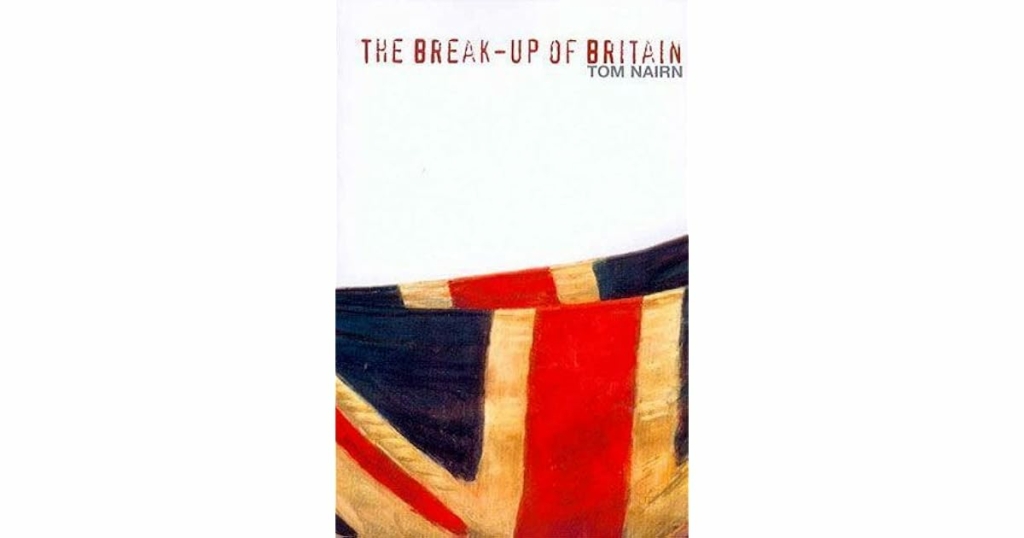
Any discussion of the relationship between culture and political change in Scotland inevitably encounters Tom Nairn’s view that Scottish culture is (or was) a roadblock to political change.
Nairn excoriated Scottish nationalism in 1968: ‘SNP Nationalists are merely lumpen-provincials whose parochialism finds its adequate expression in the asinine idea that a bourgeois parliament and an army will rescue the country from provincialism’.
If Nairn was the ‘godfather of Scottish nationalism’, this amounts to disowning one’s offspring. He cited in co-disapproval the work of literary scholar David Craig ‘who has outlined the problem [of deformed cultural expression] with admirable precision’. Craig, however, was no (Scottish) nationalist. Consistent in his beliefs, he wrote in London Review of Books in 2014 at the time of the Scottish referendum that he ‘mistrusted any party which is founded on nationhood as such … and for that reason, if I still lived in Scotland, I would vote No’.
Disappearing and Reappearing Scotlands
Much of the writing about Scottish culture and politics in the twentieth century assumed that ‘Scotland’ had effectively ceased to be; it had come to an end. It was common to see Scotland’s literature as ‘fundamentally a dead literature, the literature of a nation which once existed but now has no independent identity’ (Cairns Craig, 1999). Much of the commentary was elegiac, which saw Scottish culture as doomed to failure, conspiring to produce a cultural wasteland.
And then in the 1980s and 1990s the old wisdom that Scottish culture was ineradicably deformed, thus preventing ‘proper’ political change, was turned on its head. It shifted to the assertion that it was cultural change wot won it, responsible for bringing about key political-constitutional changes. If ‘culture’ had prevented political change, then in post-1970s Scotland, it was deemed responsible for making political change happen. That, at least, was the claim. It fitted in with the shift in intellectual perspectives generally that ‘culture’ rather than ‘structure’ explained social change; what became known as the ‘cultural turn’. Thus was Kitschland created. ‘If there is one thing that the Scots in particular know all about, it is self-colonisation. They lived it for three hundred years after the Treaty of Union in 1707’.
What’s wrong with that? If Scottish culture was so doun-hauden that it was unable to generate political change, how was that possible? And what changed to make it possible?
Cairns Craig (no relation to David) coined the term ‘nostophobia’ (phobia of home) to refer to cultural pessimism about Scotland. Consider, for example, the writer Andrew O’Hagan, who in 2002, shortly after the Scottish parliament was set up, observed: ‘the half-hearted nation [Scotland] will want to hold fast to its grievances … the problem is not the parliament, it’s the people, and the people’s drowsy addiction to imagined injury’. Recall Bertolt Brecht’s comment in his poem The Solution: ‘Would it not be easier in that case for the government to dissolve the people and elect another?’, and O’Hagan would have been aware of that. By 2017, O’Hagan (and Scotland, presumably) had moved on. In a lecture at the Edinburgh Book Festival that year, he recanted.
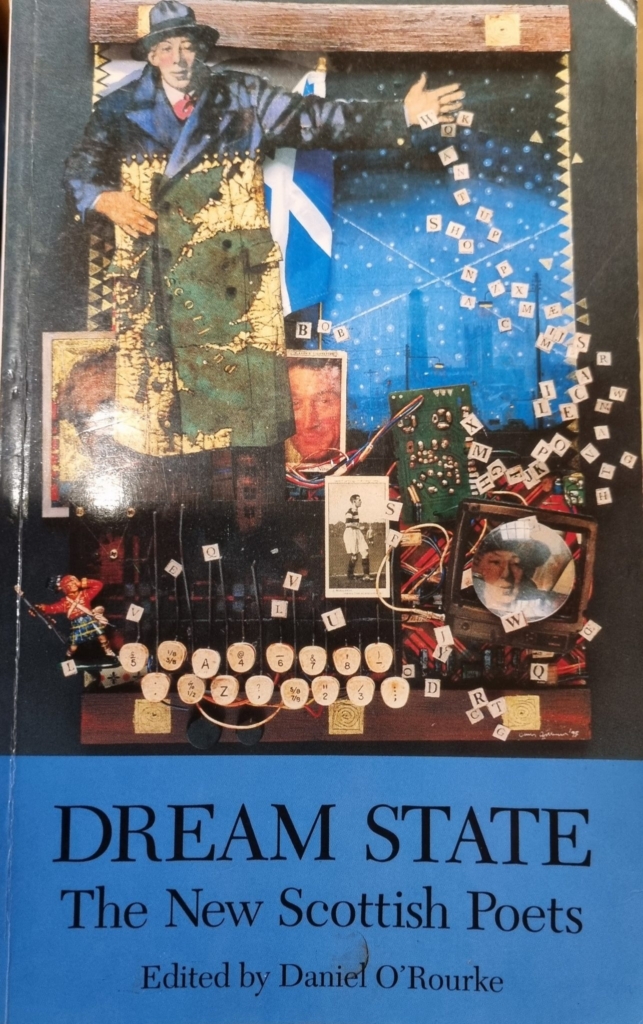
The poet Donnie O’Rourke claimed in 1994 that: ‘Scotland’s artists did more than its politicians to dream up a new Scotland’; quite a claim, and note the word ‘dream’. Academic writers made similar observations. Robert Crawford, in 2000, thought that ‘devolution and a reassertion of Scottish nationhood were imagined by poets and writers’. And Cairns Craig: ‘if politics and votes were the means of bringing the parliament into existence, they were not its direct cause’; nevertheless, he continued, the parliament ‘has been built on the foundations of a revolution in the nation’s culture’. He argued that after 1979, and the ‘failure’ of the referendum that year, saw a change; ‘as though in defiance of the stalled political reality in which it is trapped, Scottish literature of the 1980s and 1990s drew its energy from discovery of a variety of routes into alternative ontologies where the imaginary can become real’.
What was perceived as a weakness – Scots, by and large, spoke and wrote in English – came to be considered a strength in that there were fewer barriers to be considered ‘Scottish’; the tariff to belonging was, so to speak, sufficiently low. Hence, externally, there were few barriers in imperial influence to Scots on the make. Internally, it mattered too, because territorial inclusion rather than ethnic belonging, as expressed through language, was easier to effect.
The rise of Scottish culture: from supposed impotence to omnipotence
There is something odd here. If Scottish culture was so doon-hauden as to make political change impossible, how come such a thing came about? The trouble is that both assertions are far too stark, for they attribute a direct relationship between culture and politics without much in between. What is missing is the concept of ‘civil society’, that relatively dense network of social institutions which permeate any society, and which act as a transmission belt for cultural and political change.
Nairn did not think much of this ‘institutional identity’, and poured scorn upon the notion, and upon ideas of ‘civil society’, which he called the poor relation of ‘political society’ Crucially, in his view, ‘real [national] identity’ could not surface, and thus a ‘display identity is needed to fill the gap’ (ibid. 207).
Nevertheless, institutions and organisations are the carriers of values and tropes, such that civil society represents the sphere of culture in the broadest sense. It is where values and meanings are established, where they are debated, contested and changed. Nairn had little truck with ‘civil society’, seeing it as a poor substitute for a state, and its practitioners too infected by feelings of inadequacy.
Furthermore, we are not the people we were, nor is our culture. Recall the editors of Irish Pages referring to themselves as ‘elders’ (older folk; nothing to do with the Kirk). They observe that ‘the somewhat younger generation … have had to develop their artistic practice and their careers in a digital age’. As a consequence, culture, Scottish or otherwise, ain’t what it used to be.
Culture has a double-edge: it is both descriptive of a society, but also prescriptive for, in terms of what its desired values are deemed to be. Scottish culture’ should be pluralised, given the multiplicity of symbolic systems. We (and especially non-elders) live in an age which is no longer simply the printed word. Scrieving has gone digital. To borrow from that ancient scriever, Lewis Grassic Gibbon, ‘A new generation comes up that will know them not, except as a memory in a so ng, they passed with the things that seemed good to them with loves and desires that grow dim and alien in the days to be’ (from Sunset Song). Still, ‘culture’ is the essence of ‘nation-ness’, and, by and large, arguments about Scotland relate to the singularity of its culture in the round. It is, however, in the hands of a younger generation whose memes and takes are different. Their views are shaped in a different world.
Culture and Politics in Scotland in the Digital Age
And what of the relationship between culture and the new politics? They are separate spheres which collide with each other periodically, and so inform each other but not in predictable ways. Baith gang their ane gyte. Nevertheless, they bleed into each other. The Scottish Parliament isn’t simply a debating chamber, but a cultural institution whether it likes it or not. People’s views, shaped in a maelstrom of influences, are multifarious, and brought to bear on the ‘political’, as we saw in 2014, and will see so again, in due course.
It might be comforting and comfortable to fall back into our old mindset that Scots are too wee, puir and stupid to advance further, but it makes for poor sociology and poor politics. The name of the game is convincing people that they’d be better off, in all senses, living in an independent state (whatever that may mean these days). Psychiatric tropes have had their day, and there is no point resurrecting them to explain (the lack of) political change. We should have better things to do, as well as doing them much better.

We are supported only by our readers. We don't have corporate backers and we don't take advertising, so we rely entirely on your support.
Help to support independent Scottish journalism
Cheers for that I have ordered a copy of the journal from Irish pages
I don’t wish to devalue, by nitpicking, the many interesting and valid points that David McCrone makes in this article – and it is good that reviews of the Irish Pages ‘Scotland’ issue are beginning to appear – but the title of Don Paterson’s essay refers directly to Paul Gauguin’s painting of the same name, done in the last year of his life, and isn’t there just because he maybe thought it sounded better in French.
‘And what of the relationship between culture and the new politics?’ David McCrone writes. ‘They are separate spheres which collide with each other periodically, and so inform each other but not in predictable ways.’ Well, quite!
Indeed. and politics and culture don’t just collide ‘periodically’. McCrone acknowledges that ‘civil society’, which he describes as the ‘relatively dense network of social institutions which permeate any society’, acts as ‘a transmission belt for cultural and political change’. If that model has any validity, then, while the ways in which culture and politics interact may be unpredictable, the points of contact are numerous. Which suggests that spheres may not be a terribly good analogy. Elsewhere on Bella’s pages, Douglas Robertson and I have written about the warp and the weft. Of course, these days, in this digital age, folk fret that civic society is not what it was, which may be the pessimistic point at which we came in.
Probably both sides overestimate their contribution to 18/9/14, the politicos and the culture-vultures, both were essential to the breakthrough of 2011… which way you see it is where your interests lie…
Alan Warner tells of seeing a workie coming out of Waterstones in the west end of Edinburgh in his safety helmet and illuminous vest clutching four or five Irvine Welsh novels in each hand…!!!
Gerry Hassan would tell you that it was the collapse of Labour in Scotland which opened the door to the SNP…
As for Scottish culture, I think you have to look at each art form. My hunch would be: music, strong or very strong, literature middling to strong, film and tv, weak to non-existent, theatre, weak, painting/visual arts, middling to strong…
As for arts administration, very weak, but let’s be frank, there is little or no precedent of it in Scotland!
The Irish took until the late 90s, decades after independence, to work out how to build a film industry from scratch, but they were very open about not really knowing what they were doing. By I think 95 or 96, they had produced Neil Jordan’s MICHAEL COLLINS with Warner Bros, and progressed from there…
The question is: do the SNP leadership understand yet that they dont understand, that they really need to address culture urgently?
I think the significance of each art form depends very much on individual experience. Theatre was very important to my own cultural and political awakening, starting with Robin Cook’s production of ‘Antigone’ in the Royal High School Assembly Hall in the mid 1960s. The Lyceum Theatre Company’s productions of ‘Confesssions of a Justified Sinner’ (1971), Bill Bryden’s ‘Willie Rough’ (1972), and ‘Kidnapped’ (1972), and the first reading of John McGrath’s ‘The Cheviot, the Stag and the Black, Black Oil’ at the What Kind of Scotland? conference at Edinburgh University in April 1973 all spring to mind.
Scotland is usually considered to have a strong music scene.
That’s true – but it isn’t / hasn’t always been the whole story.
Our classical / orchestral music scene, just like those scenes everywhere else, strongly features the work of long-dead composers from continental Europe.
It seems that almost nobody sang pop/rock in a Scottish accent until the Proclaimers in the 1980s (30 years after Lonnie Donegan); it’s still a minority thing.
Has anybody ever sung jazz or country in a Scottish accent?
Even our traditional folk music isn’t always as Scottish as it might seem – there may be more Irish traditional music than Scottish music played in pubs in Scotland.
And Scottish children’s media is particularly low profile, if not non-existent, in many crucial areas:
– podcasts (apart from the BBC’s schools’ resources)
– audiobooks
– Scottish children’s radio – does this exist?
– TV (provision has been OK for younger children, but there’s very little Scottish teen TV)
– I can’t think of any Scottish children’s films since Brave in 2012.
– has there been any commercially successful Scottish children’s literature in the last 100 years, unless you count comics?
(Alistair McCleery claims in Scottish Comics (Edinburgh Napier University): ‘There are 4 national traditions in comics: the American, the Franco-Belgian, the Scottish and the Japanese’
Really? How much of DC Thomson’s output is distinctively Scottish?
And do Scottish children still read Scottish comics?)
Generations of children in Scotland have grown up hardly seeing themselves represented in art or culture.
So true, Gavin, it’s important Scots get to see their reality represented, the current state of affairs leads to Scots not really being quite sure who they are, you see it again and again. You need the mirror of culture, at least it helps. And a foreign language, at least one, another indispensable route to cultural self-awareness.
All these forest fires, hundreds of them, which are devastating Spain this summer – an area five times the size of Madrid has been reduced to ashes – to a large extent are ever more severe because the land has been abandoned, the small farmer has given up, his children have moved to the city, so the foilage gathers, everything has become overgrown, and when the spark alights, the natural barriers farmers used to establish between plots of land are not there to check the blaze… the result are these roaring infernos, stretching miles, which no amount of water can put out…
It’s a bit like culture too..if the art of the book review, the art of the film review, if the essay and reportage are no longer being cultivated on an everyday basis, if a country can no longer support even a monthly cultural magazine, then maybe the whole game is up?
Anyway, these fires: this is how it maybe ends? Not a heatwave for a couple of weeks, but months or years, and the whole world turns into a ball of flames….
Amidst the general glumness, we need to resist the temptation to portray this as a uniquely Scottish condition. As far as I can tell from looking at other countries, it’s pretty widespread – understandably so. Parochialism won’t help: let’s recognise it as the Scottish dimension of an international sense of dread. Perhaps that was Don Paterson’s intention in choosing his Gauguin-inspired title?
Do they actually use the word ‘elders’? There is no direct reference. Being over 60 does not automatically imply elder which in this context means an older person who should be respected, not just being older. If you/they really just mean elder as in ‘elder of the two’, the word is completely neutrally descriptive.
I find the article quite sniffy and patronising which undermines its value in other respects. As someone over 60 I find the slurs disheartening, and Dave, you look very much like you are in that category yourself, so by your own rationale which attacks the past-it, old, tired mindsets (and cod social analysis), why should I listen to your version of that? You cannot have it both ways.
Yes the term is used repeatedly in the Foreword. ‘Recently the elders have been sidelined. The explanation is, at least in part, a simple one: most of us don’t do social media, the medium through which so much cultural business is now conducted. Our defunct print journals were also keepers of memory, tradition, and historical continuity – and radicalism. It has left us, in the eyes of the young, looking irrelevant and out of touch in a way our own elders did not look to us.”
There’s a quite a lot to unpack here, but in brief, three points. Is it really true that people in their sixties don’t do social media? Second, which ‘defunct (Scottish) print journals’ were radical? And what does that say about the other existing (unnamed) Scottish print journals?). Third, isn’t it just part of a cycle that a younger generation should think of their elder as out of touch and irrelevant?
Thanks Mike. I wonder how much ‘respect’ is implied by ‘elder’? I suppose by saying they feel sidelined it might suggest a lack of it.
Over 60s certainly do use social media though less than younger people (55+ =32%, 18-54 =47% according to some quick research). Is this digital divide significant in terms of what Paterson is talking about? Up to a point, though you would have thought if you want to communicate ideas you should do it in whatever the current medium is.
‘Third, isn’t it just part of a cycle that a younger generation should think of their elder as out of touch and irrelevant?’ Yes it is but then so also is listening to those with more experience (we’d be really foolish to stop doing that). It is an age old conundrum. But is this classic generation gap worse than in the past? I have a sense that it is though I suspect that is also not unique where there have been such sea changes in the past, especially in communication tech (and its use in life generally). As McLuhan said, these tools ‘shape us . . . sensory life shifts’, but not uniformly or in the same way.
Yes I don’t mean any disrespect and I agree that listening to older generations should be a benefit.
Lewis Grassic Gibbon’s most popular book was Sparticus (with Charlton Athletec). Like Grassic, that wasn’t his real name. Smiley Dave missed Trainspotting and pretty much ever
that was a miserablist pontificatoin with no point from someone in a timewarp