
Messy Democracy: Ireland’s Reshaped Presidency
As Ireland elects its new President, Claire McNab offers a historical overview of the role and its prospects.
Ireland is on its fifteenth instance of a task which Scotland has never done: electing a head of state. Outgoing President Michael D. Higgins has served his maximum of two seven-year terms as Uachtarán na hÉireann, and leaves office in November. Polling is today, 24 October.
The choice is getting more complicated. Nominations for the tenth president closed on 24 September, but even at this late stage, there was still a huge uncertainty about the list of candidates.
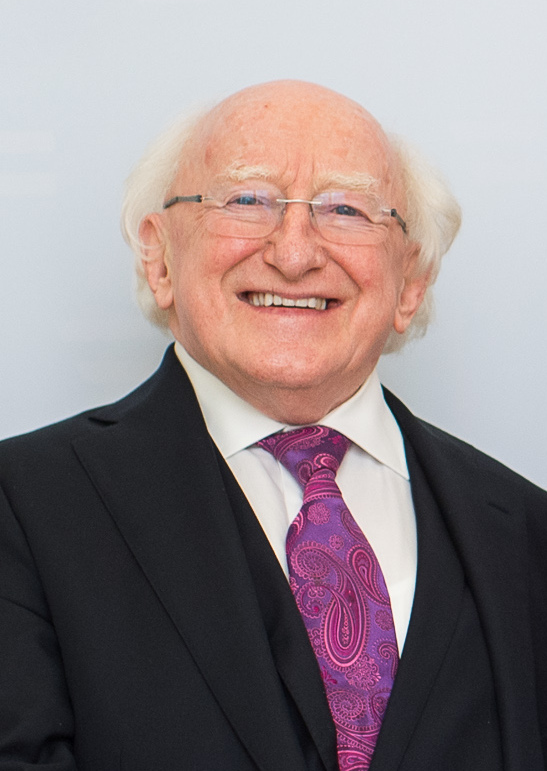
Michael D Higgins
And the nature of the job is on the line. The choice used to be simpler, but the job used to be simpler. After 35 years of three very popular, prominent, outspoken presidents, it’s worth taking a little time to remember how the powerless presidency became such a big deal and how independent personalities came to be so prominent in presidential elections.
The Retirement Home
For the first half century after the creation of the presidency in 1938, there were nine elections to the office, based in Áras an Uachtaráin. Only one election had more than two candidates, and five of those nine elections had only one candidate, returned unopposed.
The first president, Douglas Hyde, was a cross-party choice. A protestant co-founder of the Gaelic League, Hyde was a unifying figure for a country then only fifteen years on from a bitter civil war. He was elected unopposed aged 78, and chose to be very low-key.
Thereafter, the presidency reverted to the task intended for it by Éamon de Valera. As Taoiseach, DeV had overseen the drafting of the 1937 Constitution, and he intended the presidency to be an undemanding role, suitable for his own retirement.
The President of Ireland has almost no power. The three constitutional powers are narrow, and one has never been used. Some excitable people describe the President as “defender of the constitution”, but that is an American phrase with no place in the Irish constitution or presidency.
Our president appoints ministers elected by Dáil Éireann, whose trip to his official residence, Áras an Uachtaráin, is the ceremonial part of government formation. The president also accepts credentials of ambassadors, and does meet and greet visiting dignitaries. Apart from occasional considerations of whether to refer a Bill to the Supreme Court, the rest of the job is ritual signatures and handshakes and public events: opening buildings, unveiling monuments, encouraging worthy groups. Like a town’s ceremonial mayor or a minor royal, it is mostly a job of dignified small talk. The core skillset required is much like that of a ceremonial mayor, well within the repertoire of a modestly-experienced local councillor.
This is not an exhausting job, so Douglas Hyde’s first five successors were retirees: one judge and four Fianna Fáil politicians. Former Tánaiste Seán T. O’Kelly took office aged 63, and served two terms. Former Taoiseach DeV’s plan worked out for him: he succeeded O’Kelly aged 77, and served two terms until he retired, blind, aged 91.
After DeV
The presidency was by then an almost invisible institution. In 1966, the Fine Gael candidate Tom O’Higgins had come within a whisker of defeating 84-year-old DeV’s bid for re-election, despite rising young minister (and later Taoiseach) Charles Haughey successfully bullying state broadcaster RTÉ to not cover the election. O’Higgins looked well set for the 1973 presidential election.
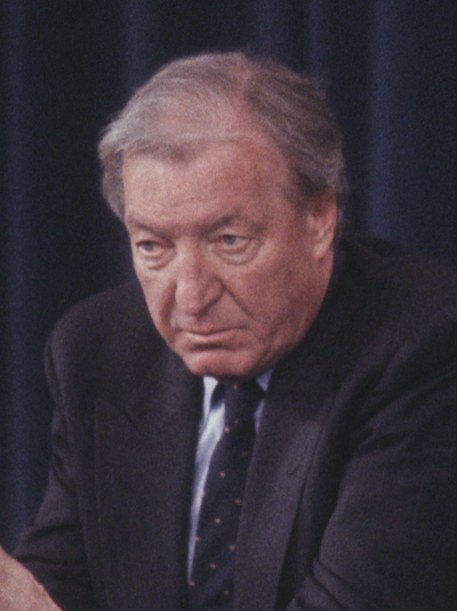
Charles Haughey
But the 1973 election worked out rather differently. It should have been a car crash, because the Fianna Fáil candidate was Erskine Hamilton Childers, whose famous spy novelist father Erskine Childers (author of “The Riddle Of The Sands”) had been executed during Ireland’s civil war. The warrant for Childers’s death had been signed in very dodgy circumstances by O’Higgins’s father, Thomas. But instead of a civil war revival, the two men turned the contest into a moment of reconciliation, and the sparkly Childers won a surprise victory.
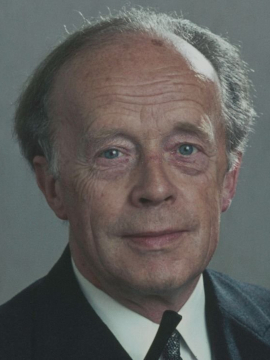
Erskine Childers
Childers was the second protestant President of an overwhelmingly Catholic country. He was a dynamic, highly visible, popular president who ignored Hyde’s low-key model who revitalised the ceremonial model of restrained presidency. But he died suddenly after only seventeen months in office. His successor Cearbhall Ó Dálaigh was Ireland’s first judge on the European Court of Justice, a former Fianna Fáil Attorney-General, but a cross-party nominee.
Ó Dálaigh was a complex man, an adventurous, polylingual intellectual famous for easily switching between Irish, Latin, English and French in one paragraph. His personality clashed with the dour Fine Gael Taoiseach Liam Cosgrave, who was reluctant to brief Ó Dálaigh on affairs of state.
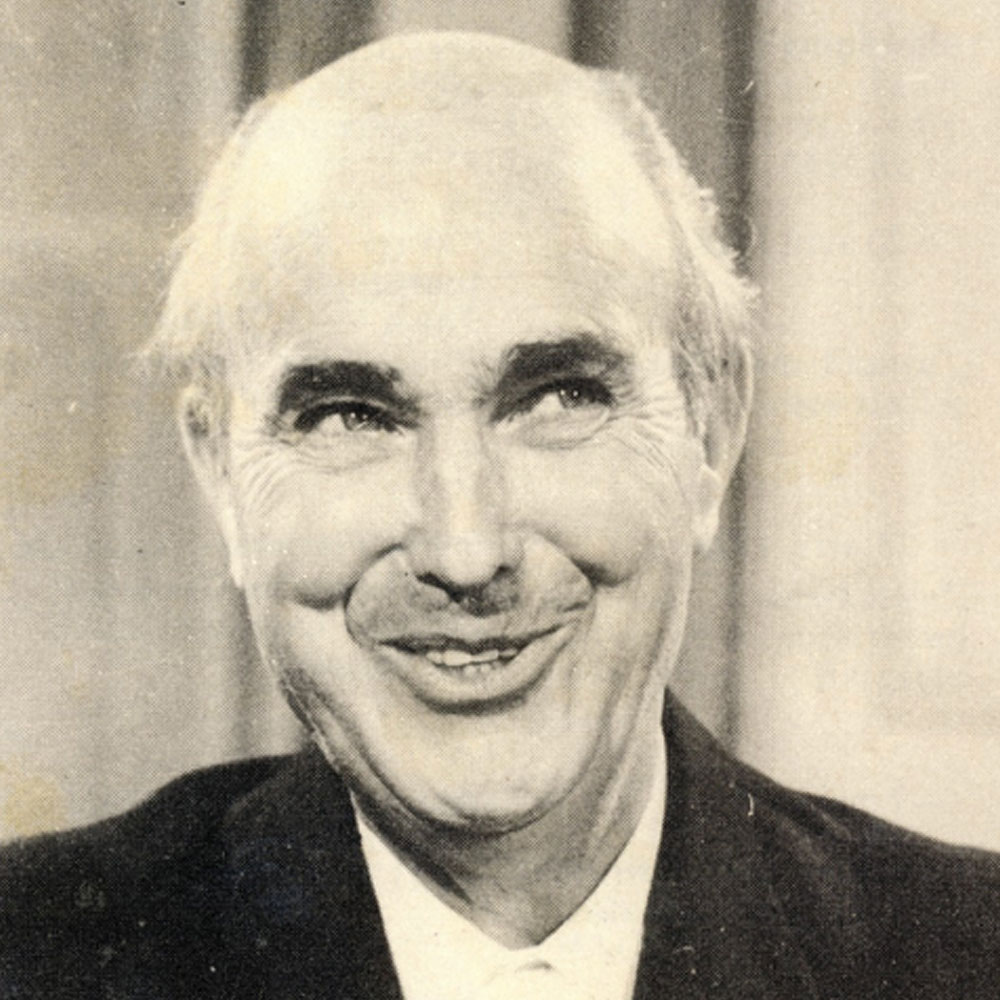
Cearbhall Ó Dálaigh
The stand-off exploded in late 1976, when the Fine Gael Defence Minister Paddy Donegan denounced Ó Dálaigh in a speech to army officers as a “thundering disgrace” for referring an emergency powers Bill to the Supreme Court. The referral was a rare use of one of the president’s few powers, but a wholly reasonable and legitimate use.
In the Irish cabinet, Defence is a very lowly portfolio, reflecting Ireland’s long-standing policy of low-key neutrality and minimal military spending. So Donegan was a minor player. It was expected that Donegan would be forced to resign and/or apologise for his probably drunken words, but that didn’t happen. Ó Dálaigh, feeling that his office had been fatally undermined, resigned.
Again, the parties chose an agreed candidate. Patrick Hillery was Ireland’s first European Commissioner, and a vice-president of the European Commission. A former Fianna Fáil foreign minister, the medical doctor was one of the stars of a new generation of Fianna Fáilers, an articulate, modernising intelligent man admired outside Ireland as well as within.
Hillary was a reluctant president, who agreed to take the job in order to stabilise the country after the Donegan affair and the still unresolved 1970 Arms Crisis which had split Fianna Fáil. With the Troubles still raging in Northern Ireland, Hillery chose to revert to the very low-key model of earlier presidencies.
The Mould Breaks
By the time Hillery’s second term was drawing to a close in the late 1980s, his reputation was poor. He was later rehabilitated when it was revealed that in 1982 he had firmly resisted attempted strong-arming by the corrupt Fianna Fáil leader Charles Haughey, but his presidency was seen by contemporaries as shamefully low-key.
Then a bold plan was hatched by young Dick Spring, leader of the small Labour Party. Spring persuaded Labour to chose its first ever presidential candidate, and the hard-left Workers Party added its support. At 46, Professor Mary Robinson was a stark contrast to the over-60 men who had held the office. She was a Dublin-based academic lawyer and a prominent feminist, but she started her campaign a year early, travelling the most remote parts of the west coast, speaking mostly to women’s groups.
By the time Fianna Fail and Fine Gael chose their candidates, Robinson’s low-key campaign already had significant momentum. Her cry of “the West’s awake” was a claim to Fianna Fáil’s core territory.
The Fine Gael candidate was also an unusual choice. Fifty-year-old Austin Currie was from Dungannon in Northern Ireland, where he had been a nationalist MP in the Stormont Parliament, and then a founder of the Social Democratic and Labour Party (SDLP). He was a prominent figure in the 1960s Civil Rights Movement, and in 1973 became a minister in the power-sharing Executive, which collapsed in 1974. He had moved south in the 1980s, and in 1989 was elected as a Fine Gael TD for Dublin West.
But Currie never achieved in the Republic the prominence he had once held in the North. His presidential campaign never gained traction, and the running was made by Brian Lenihan, the Fianna Fáil candidate and a rerun of FF’s old recipe for the presidency. Lenihan was the serving Tánaiste, a sixty-year barrister who had been a cabinet minister in every Fianna Fáil government for 25 years, holding a huge range of the senior posts. He was the archetypal “safe pair of hands” minister, not known for policy innovations or reforms, but reliably popular. Smooth, charming, and slippery, backed by the dominant political party, Lenihan seemed the probable winner.
But Lenihan’s campaign faced a crisis. A rumour emerged that Lenihan had been involved in an attempt in January 1982 by Charles Haughey to bully President Hillery not to exercise his previously-unused power not to dissolve Dáil Éireann on the request of a Taoiseach who had lost his majority. Garret Fitzgerald’s coalition government had lost a budget vote, and Haughey wanted to try to form a government without an election.
Lenihan denied the rumour. But then a doctoral student of political science produced a tape of his confidential interview with Lenihan, in which the Tánaiste recounted the attempt in detail. As the row exploded, Haughey abandoned his old friend and asked Lenihan to resign from the government. Lenihan refused, and after bizarre scenes of a helicopter carrying a megaphone to shout in Lenihan’s bedroom window, he was dismissed.
With his reputation shattered, Lenihan campaigned on, out of government. His charm was unimpaired, and he won some sympathy for his difficulties. His advertising slogan “Is the left right for the park?”, a reference to the President’s residence in Phoenix Park and to Robinson’s backing by the left parties, was a clever attempt to turn the heat on his opponent. But it failed. Robinson was clearly a middle-class liberal academic, not some socialist revolutionary.
In the end, the wounded Lenihan still topped the single-transferable-vote (STV) poll, with an impressive 44% of the first preference votes, against Robinson’s 39%. Austin Currie’s 17% was disappointing, and he was eliminated. 77% of Currie’s votes transferred to Robinson, making her the winner.
The Presidency Transformed
President Robinson was a visual contrast to her predecessors. She took office seven years younger than her youngest predecessor, and more than thirty years younger than her oldest predecessor.
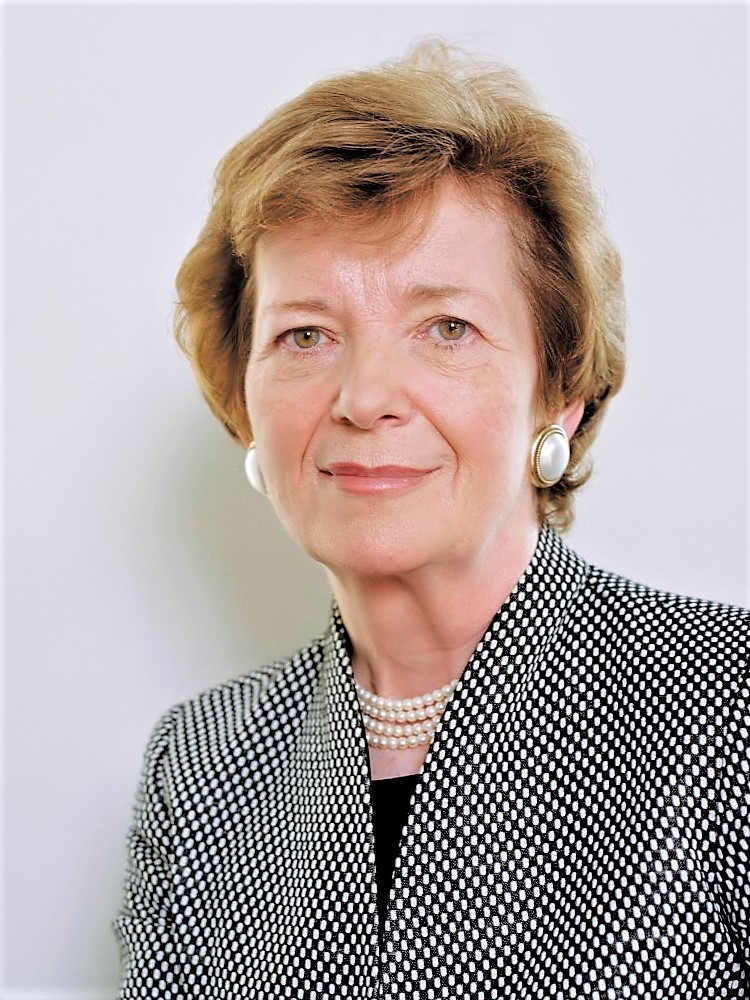
Mary Robinson
The new president was visually striking. Robinson brought the first ungreyed hair to the office, with a short skirt and bright clothes. At her inauguration, she spoke of how women’s campaigning had triumphed, saying “the hand that rocked the cradle rocked the system”.
Robinson kept a candle in the window of the Áras, for the emigrants. For 140 years, Ireland’s biggest export had been people, but Irish politics barely acknowledged them. That small gesture sounds cheesy, but it helped Ireland start to talk about its diaspora and rebuild relationships.
Moving beyond the ceremonial role of her predecessors, Robinson took on a diplomatic role in the emerging peace process in Northern Ireland. She was the first president to meet the British monarch, and the first to meet Sinn Féin leader Gerry Adams. She made two addresses to the Oireachtas, after fifty years in which there had been only one such address.
Social changes for which Robinson had long campaigned were enacted while she was in office. As president, her only role was to sign the laws, but the decriminalisation of homosexuality and the introduction of divorce had been high on her agenda as a Senator.
Robinson’s transformative presidency was hugely popular, having had approval ratings of 93% in mid-term. If she had wanted a second term, she would have won by a landslide and probably been unopposed. Instead, she resigned in 1997 just before her first term ended, to become United Nations High Commissioner for Human Rights.
Another Mary
After Robinson’s departure, Labour leader Dick Spring tried to repeat his 1990 success. Labour’s new candidate was Adi Roche, the 42-year-old founder the Chernobyl Children International. Her organisation supported children in Belarus, Western Russia and Ukraine following the 1986 Chernobyl nuclear disaster.
Roche was backed by the Green Party and the Democratic Left, and was initially the front-runner. But a smear campaign accused her of bullying, and her campaign crashed painfully. Redemption came decades too late.
Fine Gael chose Dublin MEP Mary Bannotti, a former nurse. The only serving politician on the ballot, her mother was a niece of the War of Independence hero leader Michael Collins.
Fianna Fáil’s new leader Bertie Ahern was a master strategist. He had learned the lessons of 1990, and slyly out-manoeuvred his predecessor, Albert Reynolds, who was desperate for the nomination. Instead, Ahern persuaded the party to choose a non-politician. Mary McAleese was Robinson’s successor as criminal law professor at Trinity College Dublin, and like Robinson, she was a co-founder of Ireland’s Campaign for Homosexual Law Reform. But McAleese was also a television journalist, a Belfast-born nationalist, and a more bubbly personality than Robinson.
For the the first time ever, other candidates were nominated by local authorities rather than by the Oireachtas. Dana Rosemary Scallon, winner of the 1970 Eurovision Song Contest, campaigned against abortion. Derek Nally was a retired Garda Síochána, and a victims rights campaigner.
After Roche’s campaign collapsed, McAleese won easily over the second-placed Bannotti. Her 45% of the first preferences was boosted to 56% when the three minor candidates were eliminated.
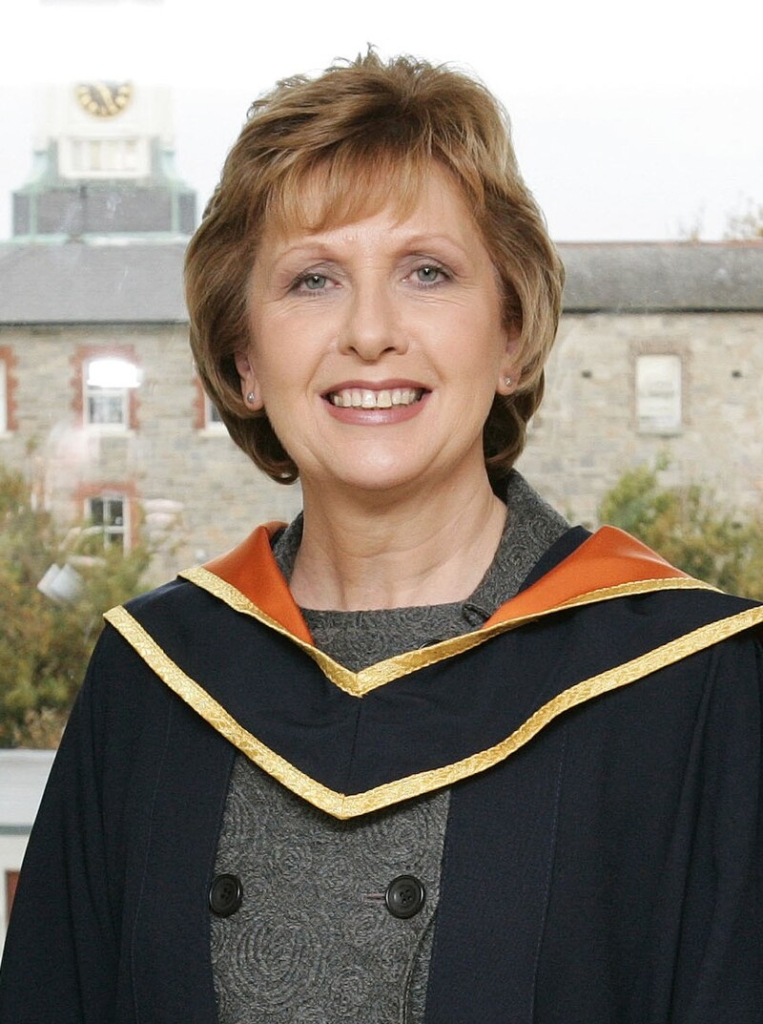
Mary McAleese
McAleese’s presidency was less left/liberal -aligned than Robinson’s. But she maintained the office’s high profile, building links with both communities in Northern Ireland and with Britain, and was hugely popular. She was the first Irish president to make a state visit to Britain and built a good relationship with Queen Elizabeth II. The result was the British monarch’s hugely successful first state visit to Ireland, confounding those of us who thought it premature.
In 2004, after her first seven-year term, McAleese became the third president to be re-elected unopposed. Without the constitutional two-term limit, she would have been easily re-elected in 2011.
After the Celtic Tiger
Ireland’s fifteen-year Celtic Tiger boom collapsed in the post-2007 financial crisis. The Irish poster child of neoliberal success was left brutally exposed to a storm of global banking failure, Irish lax regulation and overt corruption, and loss of financial sovereignty to the ill-designed Euro.
As the October 2011 election loomed, Ireland was enduring savage austerity imposed by an EU/IMF “Troika”. Social spending was slashed, many businesses failed, and mass emigration resumed as the country’s building boom collapsed leaving a rash of unfinished “ghost estates”. The dominant Fianna Fáil party had been routed in the February 2011 general election, losing 74% of its seats in Dáil Éireann.
Unsurprisingly, Fianna Fáil sat out the 2011 presidential election, avoiding the inevitable humiliation. Fine Gael, which had replaced it in government, nominated a long-serving TD Gay Mitchell rather than the high-profile former broadcaster Mairead McGuinness MEP. Mitchell made little impact.
The small Labour Party, now the junior partner in the austerity government, chose as its candidate Michael D. Higgins, an academic and long-serving TD from Galway. Higgins was a former arts minister and champion of the nascent Irish film industry, but was best known as a popular firebrand orator on the left wing of his mostly-centrist party.
The early front-runner was David Norris, a veteran independent Senator and pioneering gay rights campaigner. But Norris’s campaign exploded in scandal over his written support of a Palestinian former partner who faced sexual charges in an Israeli court, and his support from the Oireachtas collapsed. Instead, he was rescued at the last minute, as one of three candidates nominated by local authorities.
The other three independent candidates were: Mary Davis, a children’s rights campaigner who made little impact, and finished last; Dana, campaigning again on a religious conservative platform; and Sean Gallagher, a businessman and star of RTÉ’s Dragons’ Den TV show.
Gallagher’s social effective social media campaigned on a bring-jobs platform. That pitch was way outside the scope of the powerless office, but resonated in an era of mass unemployment. By mid-October he was front-runner, with Higgins a strong second. Gallagher would probably have won if it hadn’t been forward bizarre episode of a fake tweet aired by RTÉ during the last television debate, which implicated Gallagher in dodgy fundraising for Fianna Fáil.
The Firebrand President
The first preference votes gave Higgins 40% to Gallagher ‘s 29%, and Higgins won on the fourth round, with transfers. He used the office vigorously as a platform for social justice, peace and human rights, combining often overly-scholarly erudition with direct challenges to neoliberalism.
In 2018, having promised to be a one-term president, the 77-year-old Higgins stood again. Fianna Fáil, Fine Gael and Labour all supported the incumbent, and only party to contest the election was Sinn Féin. But their candidate Liadh Ní Riada MEP failed to win over even her own party’s base, finishing with a humiliating 6%.
Four independent candidates were nominated by local authorities. Joan Freenan and Gavin Duffy were also rans, with only 6% and 2% respectively. Reality TV businessman Sean Gallagher was nominated for a second time, but having been invisible in the previous seven years, was derided as uncommitted. He was never a contender, and won only 6% of the vote.
The breakthrough independent was businessman Peter Casey, like Gallagher, a former panellist on the RTÉ’s Dragons’ Den. Casey took an alt-right populist approach, excoriating Irish travellers and stirring growing resentment against immigration. His shock tactics mobilised a nativist anger over Ireland’s housing crisis, as the post-austerity boom had not been matched by a revival of house-building. The 2011–16 Fine Gael–Labour government had deliberately handed the Irish housing market to foreign vulture funds, with disastrous consequences which were ripe for exploitation.
Casey surged in the final polls, but his final tally of 23% left Higgins with an easy first-round victory on 56%. The progressive alliance had won yet again, despite its cringeworthy invention of the short-lived nickname “Miggledy”.
Higgins’s second victory followed two major referendums on social reform. In 2016, Ireland became the first country in the world to legalise same-sex marriage by referendum, and in 2018, another referendum overturned the 1983 constitutional ban on abortion. His second term was heralded as a symbol of a new liberalised Ireland, confident in its economic revival.
But Higgins didn’t just re-run his first presidency. His second term brought a shift from broad reflections on themes of social and global justice to direct outspokenness on policy, from the housing crisis to European militarisation to Palestine. As the left cheered, the governing centre-right coalition of Fianna Fáil and Fine Gael became increasingly uneasy, and its allies grew angry. The Irish Times began to publish regular criticism of Higgins for not just allegedly outstepping his role, but for overtly opposing the foreign policy of the slavishly pro-EU Irish centrists. As the genocide unfolded in Gaza, Higgins became the darling of Ireland’s hugely pro-Palestine public and a huge irritant for the cautious government.
Putting the Presidency back in the box
As the 2025 election loomed, the Irish centre-right wanted to put the presidency back in a pre-1990 box. For them, the Robinson revolution had gone too far; time instead for the old model of a retired conservative, politely opening flower shows.
But that was not the only challenge. The destabilising of Covid pandemic and the enshittification of social media had opened a new space in Irish politics for an overtly racist, Trumpian alt-right. Attacks on asylum accommodation escalated into a racist riot in Dublin city centre, and in 2024, a pair of spectacularly botched constitutional amendments to the constitution saw overwhelming rejection of the proposed redefinition of the conservatively defined family. The emergent far right adopted “anti-woke” rhetoric, and wanted a presidency to reflect their rejection of feminism and LGBT rights as well as a halt to immigration.
First out of the traps was the former MMA fighter Conor McGregor, who had recently been found in a civil case to be a rapist. In March, Trump even hosted McGregor in the White House on Saint Patrick’s Day to recommend him as Ireland’s future president, and the two rapists got huge publicity.
McGregor never had any chance of securing a nomination from either the Oireachtas or local councils, but his supporters still decry what they misrepresent as an establishment stitch-up.
Amidst several unsuccessful quests for a nomination, the most significant was barrister Maria Steen. A conservative, anti-abortion barrister, Steen is articulate and media-friendly. She gained support from the growing groups of conservative rural TDs, but her eighteen supporters in the Oireachtas fell short of the threshold of twenty.
Meanwhile, the local authority path had been effectively closed off by Fianna Fáil and Fine Gael whipping their councillors to oppose any presidential nomination. Young businessman Gavin Sheridan won the support of only two councils when he needed four.
That left the political parties. Independent Catherine Connolly is a TD for Galway West, as Higgins had been. A psychologist and barrister from a council house of fourteen children of a widowed father, Connolly is cautiously analytical and persistent. Her parliamentary career has been concentrated on the rights of marginalised people.
Long-discussed as a potential candidate, she announced her interest, but only if she had broad left support. That emerged in early July, when she was backed by the Social Democrats, People Before Profit, and enough independents to guarantee a nomination. The Labour Party followed, and in September Sinn Féin ended months of speculation by adding its support.
As Connolly began her campaign, establishment wisdom was the race would be won by FF or FG. Polls showed her trailing to a range of potential centre-right candidates, mostly former ministers.
In mid-July, Fine Gael selected as its candidate Mairead McGuinness, the former MEP and European Commissioner who it had foolishly rejected in 2011. Polls gave McGuinness a clear lead. Fianna Fáil remained undecided.
The Box Breaks
In August, McGuinness withdrew due to ill-health. Fine Gael restarted it’s selection process, and chose former minister Heather Humphreys over Seán Kelly MEP.
On 9 September, Fianna Fáil chose as its candidate Jim Gavin, over Billy Kelleher MEP. Kelleher was a veteran TD turned MEP, and a very experienced election-winner. But FF’s control-freak leader Micheál Martin had out-maneouvred the ambitions of disgraced former Taioseach Bertie Ahern, and strong-armed his TDs and Senators to back Gavin. The logic was clear enough: as a former military man and hugely successful Gaelic football manager, Gavin brought experience and profile, without political baggage.
However, Jim Gavin also lacked political skill. His taciturn management style worked in football, but failed to win voters. His comments on policy and values were anyodyne and uninspiring. He trailed in an opinion poll, but then a scandal broke: Gavin had failed to refund a rent overpayment by a former tenant, for fourteen years. In a country of sky-high rents, this was huge news, but Gavin floundered when challenged in a Sunday TV debate. By the evening of 5 October, he had withdrawn, but because nominations had closed, he remains on the ballot paper as a zombie candidate. The recriminations in Fianna Fáil are muted, but severe.
Smear the bejaysus out of her
That left only two active candidates in the first two-horse presidential race since 1973. Connolly had been actively campaigning long before Humphreys was nominated, and had both a brilliant social media campaign and a huge cross-party ground operation. Posts from the two teams repeatedly showed dozens of Connolly canvassers, but a handful for Humphreys.
Humphreys is good-looking and very engaging one-on-one. However, she doesn’t sparkle in bigger gatherings or on television, and it was only late in the campaign that her team announced a focus on her “vision”. But the vision never appeared, and her social media campaign was reduced to listing funding she had allocated as minister, as if it were personal generosity. €5 million for County Westmeath years ago didn’t inspire.
As the soft-spoken Connolly addressed packed meetings about a politics of empathy and justice, she also wowed the cameras with impromptu football keepie-uppies and dancing, the establishment media continued its attacks on Connolly. She was previously alleged to be insufficiently critical of Putin, and lukewarm on the EU. Her visits to the Middle East were combed for evidence that someone she met in a refugee camp was a bad ‘un. Fine Gael party communications amplified the attacks.
Then on 9 October, former Fine Gael minister turned bankrupt bookmaker turned broadcaster Ivan Yates used his Newstalk radio show to comment on how Humphreys could regain momentum: “I would go bullheaded: ‘Do you want a provo in the park? Is she a Russian asset?’ I would smear the bejaysus out of her.”
Yates had no role with the Humphreys campaign, but is still very close to Fine Gael. His call to “smear the bejaysus out of her” was seen as representative of Fine Gael thinking, and dominated the rest of the campaign.
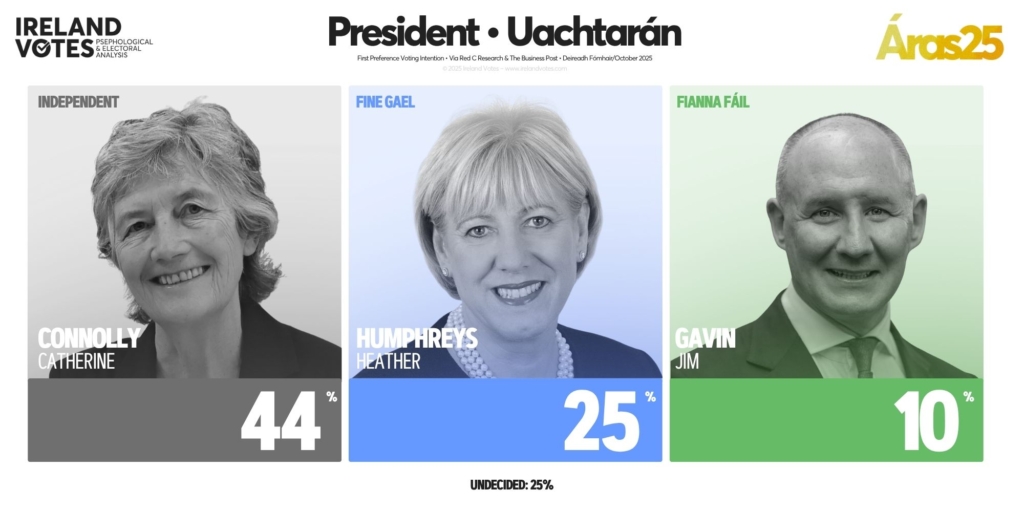
On Wednesday, the final opinion poll gave Connolly a huge lead. Presidential elections in Ireland are about personality rather than policy, and inevitably, character attacks loom large. In the past, four front-runner Irish presidential candidates have been derailed over character issues: Brian Lenihan in 1990, Adi Roche in 1997, and in 2011, both David Norris and Sean Gallagher. But in 2025, the pattern seems to have been inverted: a significant factor in the expected defeat of Humphreys is her campaign’s perceived negativity.
Democracy is usually messy, and sometimes dirty. This election has been both. When the counting of votes begins on Saturday, we will see whether Ireland has successfully filtered legitimate criticism from muckspreading. And a glance at Britain’s current crisis of monarchy doesn’t suggest that inbreeding is a better way of selecting a head of state.

We are supported only by our readers. We don't have corporate backers and we don't take advertising, so we rely entirely on your support.
Help to support independent Scottish journalism
It sounds like divorce, sodomy, abortion and displacement level mass immigration are the reality of all the talk about “social justice, peace and human rights”. For a right-wing analysis of recent Irish politics, I’d recommend Catholic activist E Michael Jones’ How Google Conquered Ireland (2020) or the media coverage of young philosophy graduate Keith Woods, editor of Irish Nationalism: Essential Writings (2025).
Sounds like Stehen Cowley has adopted the Catholic taliban’s obsession with controlling people’s sex lives and womens bodies. What happened to Stephen to persuade him to wield a gospel of love as a cudgel?
Ireland moved on from that savagely anti-life cruelty after Savita Halappanavar became the latest woman to die a hideous death as a result of the fundamentalists’ ban on a simple medical intervention.
Meanwhile, the Catholic taliban were illegally selling babies for export, while hundreds of other babies were illegally buried unrecorded in septic tanks in Tuam alone, and in other venues.
Young women were subjected to decades of slave labour in the Magdalene Laundries by the same taliban. Millions of Irish women were forced into the physucal trauma of multiple unwanted pregnancies because the Irish taliban banned contraception, and forced famikies into poverty.
As a child, I leant what gay rights are about thanks a wonderful nun. She had met on the smailboat from Holyhead the famous pair of gay theatre managers Hilton Edwards and Micheál Mac Liammóir. By then one was old and infirm, and she watched the other gently caring for him as made their journey home. Sister Fintan came back a changed woman, and told everyone that she didn’t care what the bishops said: that was love.
Episcopal perverts still resist compensation to the survivors of the endemic clerucal rape in schools and children’s homes. Generations of Irish children were not only scarred for life by the violence of clerical thugs and raped on an industrial scale even in the most prestigious schools such as Blackrock College, but threatened with eternal damnation if they spoke of the crimes they had survived, while the Vatican sealed the records and protected the abusers.
Thank you, Stephen, for your timely reminder that the brutal, anti-life, anti-love, misogynistic, rape-protedting taliban have never gone away, and continue to pervert and invert the gospels. Ireland has sent them packing, and continues to support people like Catherine Corless who found the mass graves in Tuam, and Catherine Connolly who has been a tireless advocate for survivors of the taliban’s mother-and-baby homes.
Glad to be of service. I see you’ve since had a victory. I also think that there is an incoherent philosophy at work here, that contributes to dubious interpretations of fact. If God is excluded as a source of value, value is determined by the human will and hence freedom becomes the highest value. We all become existentialists. Jesus specifically says that he did not come to abolish the law, so his idea of love has to be interpreted in that light, rather than by cherry-picking passages that support the “gospel of love”.
Hence, when a nun (from the Consiliar church) sees a benevolent act by the homosexual theatre director, she is mistaken to conclude that there is nothing wrong with a homosexual lifestyle, even if it is freely chosen. It doesn’t follow from the fact that pregnancy is “unwanted” (at a particular time) that the aborted child is a worthless “clump of cells”.
The Tuam case thus far looks like the Kamloops Residential school scandal in Canada. It was reported in 2021 there was talk in the press of “mass graves”, “cultural genocide” etc. Many churches were attacked. It is true that there was high child mortality in the 19th century and that the catholic church ran schools. Then in February 2024, the Fraser Institute reported that there was “no evidence of “mass graves” or “genocide” in residential schools”. A book, Grave Error (2023) by Tom Flanagan, was published. A RTE headline in August 2025 said “no infant remains recovered so far in Tuam excavation”. There are to be monthly updates.
There are scandals in the church and we all know that unhappy marriages exist. It doesn’t follow that the solution is to abandon the idea of life-long marriage or the institution of the church. The church is condemned because people imagine it claims perfection, but there are scandals just as bad outside its walls.
There was some good history in the article, so thanks for that at least. We need more such comparative pieces.
@Stephen Cowley, no, it is a false dichotomy to claim that either God or human will must be ‘sources of value’. Life itself creates value. Something that narrow theological or human-centric biases might have trouble recognising, for sure. Health, at any level from sub-organelle to planetary, is a far saner and more coherent principle for organising life, as happens in Nature anyway, than human Will.
You deny the abuses and murders at Christian-run institutions because it suits you, not because you are interested in the facts. There is nothing new about these criticisms, raised in Canada by Chief Medical Officer of the federal Departments of the Interior and Indian Affairs, Doctor Peter Bryce in reports to his civil service superiors around 1905, later in a publication The Story of a National Crime: Being a Record of the Health Conditions of the Indians of Canada from 1904 to 1921 (which I’ve read). Many more abuses were of course uncovered later. For the USAmerican story, I recommend Medicine River by Mary Annette Pember.
These Christian institutions presented themselves not only as state-sponsored caregivers but as moral authorities, a position they used to facilitate abuse, as IICSA noted. In the patriarchal high churches like Catholic and Anglican, in contrast to many secular groups under investigation, boys were as or more likely to be sexually abused than girls by male priests. This is a worldwide pattern, I imagine also under the sex-segregated Afghanistan Taliban too. Taboos around sexual matters reinforce abusive power structures. The Catholic Church has been rightly condemned for its cover-ups, moving dangerous priests around, and promoting known, suspected and confessed offenders. Indeed Catholic clerics have long abused Confession to target and manipulate vulnerable victims.
Unfortunately Claire McNab, in an otherwise powerful riposte, conflates sexual desire and love (something which abusive clerics also do for nefarious purposes), which should not be conflated, nor with sexual acts, nor mutual love with unreciprocated love (problem of other minds here), nor with thought crimes or unlawful behaviour, nor public displays of affection with whole-life behaviour, advocacy, and so on, in the context of political-social discussion, as it degrades the quality of debate into false claims of a category mistake nature. It really isn’t safe to generalise from single examples, which are better used to counter absolutist positions.
I discovered recently (the word is used in Shakespeare) that Detraction is considered a Christian sin by Catholic doctrine. That is deeply perverse. Own it.
https://en.wikipedia.org/wiki/Detraction
You are right that it’s a false dichotomy between God and man. I have trying to put the natural law position in my own words, but not doing so effectively or accurately.
Whatever suits me, I try to take an interest in the facts. Facts are sacred, opinion is free, as the editor of the Manchester Guardian used to say.
Thanks, Stephen Cowley, for putting “gospel of love” in scare quotes. That succinctly clarifies your repugnant values. Thank God we drove monsters like you from power.
Your deflection from the mass graves at Tuam is worse than I have seen from Ireland’s Catholic Taliban. Most of them have at least some trace of contrition.
But it’s still odd that you came here to this page be a far-right troll. Do you troll elsewhere? Or just here?
The original idea of Bella Caledonia – from Alistair Gray’s novel – was that it was to be a blank slate for new thinking about, or from, Scotland, not a far-left sounding box. I tend to express support for the Scottish Family Party or ideas further to the right as the mood takes me in various forums. Apologies for the grammar in my reply to SD above.
There is no “new thinking” in hard-right support of the Catholic taliban which systematically destroyed lives and weaponised the statevas a tool of murderous misogyny. It is just discredited old thinking.
I love the idea of promoting the ideas of the Scottish Family Party thinking they are being faithful to the founding principles of Bella Caledonia.
https://theferret.scot/scottish-family-party-leader-far-right-interview/
Thanks for a great article. Of all the presidential systems on offer that I know anything about, Ireland’s seems to me to be the most successful. This piece helps to explain why that might be: it’s been able to reinvent itself to suit the demands of changing times. There are lessons there for Scotland.
Thank you, Paddy. That ability of messy democracy to create new possibilities is exactly what I was trying to convey.
I hsve had so many conversations with Scottish and English people who fear that dumping hereditary monarchy leads inevitably to the head of state being chosen for ugly qualities. But I don’t believe that Ireland has some unique political virtue. Scotland has no shortage of people who would make magnificent presidents, and I keep faith that the Scottish people have the democratic wisdom to navigate the noise and choose them.
Anyone expecting the British hereditary monarch to be a defender of the (quasi-) constitution should have had their illusions dispelled by Elizabeth Windsor’s illegal consent to Boris Johnson’s request to prorogue Parliament, despite having all the legal resources of the Crown at her disposal and being presumably trained throughout a long life for just this kind of eventuality. Surely if anyone would be expected to know what was outside the powers of HM’s own Prime Minister, it was HM herself?
https://en.wikipedia.org/wiki/2019_United_Kingdom_prorogation_controversy
#epicfail
It is up to the people to choose to defend their own constitution (or not). Or in the British case, demand and choose one first.
But whatever a president’s politics, the idea of one person at the top representing a nation is an embodiment of the right-wing Great Man (Occasionally Woman) View of History.
It feels to me like a very big stretch to suggest that a fixed-term stint in a powerless role is some application of the Great Man theory of History.
A ceremonial president is a big contrast to either a monarchy or an executive president. It has much more in common with the municipal office of ceremonial mayor, which uis also powerless and seems free of Great Man concerns.
.0ther models for head of state are available, such as the Swiss Federal Council, which combines the roles of cabinet and collective head of state. There is also Ireland’s Presidential Commission, an ex-officio trio which takes over during a vacancy.
Personally, I prefer to separate governing from ceremony. Putting the meeter-geeeter in a grand house in a park frees up the government to do governing or sleeping.
@Claire McNab, hmmm, it sounds like we might be better with a mascot or an AI-powered computer-generated avatar representing the (non-human) essence of a country (perhaps an animated shamrock), with the benefit of being in multiple places simultaneously in adaptive guises, rather than a fallible/mortal/frail human, then, if ceremony is the job of a president. Now if only the USA had Clippy for President…