
The Guga Hunters
The Sula Sgeir gannet hunt, or “guga hunt,” is a centuries-old Scottish tradition where men from Ness (Isle of Lewis) sail to the uninhabited island of Sula Sgeir in August to harvest young gannets (guga) for food, a practice licensed by NatureScot and considered culturally significant, though animal welfare groups call it cruel and argue it’s unsustainable. Alice Millar Thompson reports.
A plume of smoke rises from the remote Scottish island of Sula Sgeir. The smell of burning feathers and butchery fills the air. The Men of Ness have had their hunt for the first time since 2021.
The annual Guga Hunt – the mass slaughter of juvenile gannets – has resumed, following a three-year hiatus due to the avian flu epidemic. The hunt is thought to have originated in the 15th century due to food scarcity on the Isle of Lewis during winter months, though it has endured well into the 21st century under the guise of tradition.
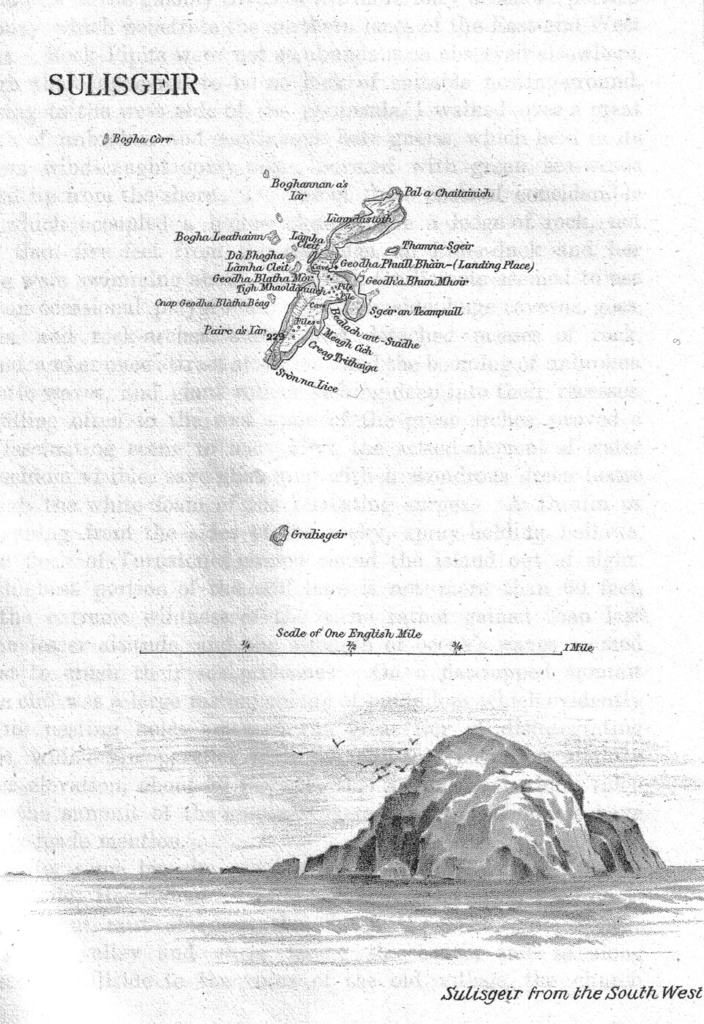
Sula Sgeir is a narrow, rocky reef that lies 38 miles from the northernmost point of Lewis, amid the hostile waters of the North Atlantic. Yet for centuries, it has been a fertile refuge for seabirds, to such an extent that its Scots Gaelic name translates as “gannet skerry”.
There are an estimated 10,200 breeding pairs of northern gannets currently living on the island, though the impact of avian flu on the colony has been devastating. The RSPB reported that its population dropped by 23% between 2021 and 2023, and though Sheila Voas, the Scottish Government’s chief veterinary officer, says that the species as a whole appears to be developing a “degree of immunity,” the colony has not yet made a full recovery.
On Sula Sgeir, gannets have few natural predators: a vulnerability that has long been exploited by hunters. Guga meat comes from juveniles killed during a specific two-week period in their lifespan, while they are still unable to fly, and is now considered a delicacy rather than a necessity.
However, the methods of capture and slaughter have not changed in centuries and remain a controversial feature of the practice. One hunter uses a 10ft-long long pole with either a noose or metal jaws on one end to pull young birds from their nests by the neck, before handing them to their partner, who bludgeons them to death. This has been heavily criticised by Protect the Wild, and Charlotte Smith, the organisation’s lead on hunting campaigns, states: “The method of killing chicks has been recognised as inhumane and barbaric by leading animal welfare organisations, such as the Scottish SPCA.”
The island is designated a Special Protection Area (SPA) however, Section 16 of the Wildlife and Countryside Act 1981, enables NatureScot to issue annual licenses to the hunters. In August of 2025, the “Men of Ness” were permitted to take 500 birds, which were reportedly sold for £35 each at Port of Ness. While this marks a reduction from the culls of 2,000 sanctioned in previous years, northern gannets remain on the amber list of conservation concern, and the decision has been widely criticised by charities such as the RSPB and Scottish Seabird Centre.
This is partially due to concerns around NatureScot’s methods of population monitoring and failures to correctly enforce their own regulations. Charlotte Smith from Protect the Wild said, “There are serious weaknesses in how conservation laws are enforced, issuing licenses based on incomplete science being one,” highlighting the continued licensing of the hunt, despite the hunters’ failure to report important details, such as the method of slaughter.
An RSPB spokesperson said: “We have called on NatureScot to pause the granting of licences to hunt on Sula Sgeir until there is clear evidence of population recovery to pre-HPAI levels and until the risk level for the disease amongst wild birds is assessed as ‘Medium’ at most.” The organisation has requested that more thorough investigations be carried out using drone surveys as an alternative to the current method of computer modelling, though it has yet to receive a response from NatureScot.
Gannets reach maturity between the ages of four and seven years old, and each pair only produces one chick per year, meaning that colonies are slow to recover from any sudden loss. Protect the Wild argues that the population on Sula Sgeir has long been suppressed by the Guga Hunt and has tirelessly campaigned to show the inherent cruelty of the practice. “Gannets have really strong bonds and they are intelligent birds, but the parents can’t do anything to save their chicks,” Charlotte Smith explained, “They’re just very vulnerable animals.”
The men perch on the edge of the cliff face amid a flurry of downy, white feathers. The carcasses have been plucked, singed, scrubbed, gutted, salted, and arranged in a concentric pile, which forms a gruesome companion to the cairns left behind by generations of hunters before them. In previous centuries, islanders of all ages worked together to stockpile meat for the winter, but attitudes have shifted.
The community is no longer reliant on guga meat for survival and younger generations are increasingly aware of the impacts their actions have on the environment. Amid the ageing populations of remote communities such as Ness, the growing number of short-term holiday lets, and the erosion of the Gaelic language, anxieties have risen around the preservation of cultural heritage. In response to this, Charlotte Smith of Protect the Wild said: “Tradition alone cannot justify cruelty or ecological harm. There have been many historic practices, like bear fighting, that were once defended as heritage, yet societies rightly ended them. I think we can still honour cultural heritage without having animal cruelty involved.”
“People across Europe and the rest of the world come to Scotland to see these seabirds alive. Gannets enrich Scotland’s natural heritage,” said Smith. Wildlife forms an important part of coastal tourism and the image of the northern gannet – with its yellow cap and ethereal blue eyes, diving arrow-like into frigid waters – has become emblematic of the country’s wild spaces.
Avian flu remains a threat, and scientists have warned that changes to migratory patterns caused by climate change may increase the risk of disease transmission globally. The Scottish Government’s animal health and welfare team has measures in place for this eventually, to identify and mitigate the spread of emerging diseases among both wild birds and livestock. “We do international disease monitoring, so we can spot trends,” Sheila Voas said. “We speak to ornithologists about what’s happening with migration to understand whether we’re at peak migration and whether there’s anything unusual.”
As climate change accelerates and human activity intensifies in their habitats, gannets face increasing pressures. Overfishing has depleted stocks of haddock, anchovies, and sardines, upon which gannets are reliant, and offshore developments such as windfarms and oil extraction encroach on feeding grounds, causing food scarcity. It is possible that, in the coming years, the species will experience a further decline. We need to be prepared to adapt, in order to reverse the damage we have caused as a species, and accept that some traditions must be consigned to history out of necessity.
A survey commissioned by Protect the Wild revealed that 69% of the public are in favour of a ban on the Guga Hunt, and as of December 2025, a Scottish Parliament petition with over 21,000 signatures is under consideration.

We are supported only by our readers. We don't have corporate backers and we don't take advertising, so we rely entirely on your support.
Help to support independent Scottish journalism
No need. Consign this grotesque farago to history.
Evolutionary Biologists, ecologists, archeologists and anthropologists will tell us that where ever humans went (after we left Africa), extinctions followed. You can see why.
When mass murder is dressed up as culture, it is an anthropogenic sleight of hand, a selfishness that is not part of nature, but part of a hubris that says we can dominate nature.
Having been up close to gannets at Bempton Cliffs, I cannot see how anyone can want to kill gannets just for the sake of it.
it is times like these that I want humans to go extinct, quickly, before they finish off the remaining fragments of the biosphere.
Disgusting and cruel stop it now !
This case illustrates points I have long been making. One cannot reasonably blame this murder spree on lairds, poverty or capitalist forces. This is commoner bloodsport. What if we had a form of government that recognised these gannets as Scots?
#biocracynow
It is a tradition based times when survival where food was in very short supply.
Hunting is not the threat. This is scapegoating.
The threat comes from industrial practices for massive profit such as fishing.
It’s their tradition not mine or yours. I therefore support it because it represents a bold and challenging experience, which is important especially for young men in this day and age in this part of our nation
What would you replace it with .. a job on a fish farm or perhaps a free subscription to Netflix? Or perhaps even a life with meaning as a keyboard warrior?
In environmental terms I could list 5000 things more important than this in Scotland alone.
keep it going. like salmon netting it should be allowed over the demands of anglers and estates, as a link to communities continuing direct relationships with nature, the folks should maybe focus on meat in a factory farm context if there going to pick a fight, as that’s a fundamental issue of environment, first nations groups come under the same odious pressure to. I’m glad it’s still in practice, one of the few tangible traditions left in Scotland and Europe. This is definitely a class issue, and cultural/colonial issue, as much as people in Ness having a right to have interaction in a direct way with nature and subsistence, I’m sure the communities are well aware of how much they can afford to harvest.
Really interesting article, thank you. I wonder what percentage of local people (in Ness, or on Lewis) think this should be banned.
As a Lewis native, it’s really obvious you’ve not spoken to locals but have just followed the narrative that’s out there. Maybe spend some time in Ness, get to know more about the subject?
Hi Peigi – would be good to hear more about how this is viewed in Lewis.
I think that should have been done before the article was written. Would be interested to read an article after locals and the younger generation that’s keeping the tradition going were spoken too.
would recommend “the guga hunters” by donald murray, published in 2014. its largely based on stories from communities in ness and lewis at large and discusses the conservationist and historical basis of the guga hunt. it also outlines how guga hunting has consistently been scapegoated by anglo-lowlanders to paint hebrideans as uniquely cruel or brutal, while the rest of scotland largely relies on factory farmed meat (which is not cruel or brutal of course). all of lewis is still technically considered a food desert and in general hebrideans pay a premium for food, especially fresh meat (i can vouch for this in person – and it got much worse during covid)
Guga on Sùlasgeir have a far better and healthier existence before a small portion are culled, than the animals whose products are consumed without thought by the noble petitioners and their AI-slop posters.
I expected better editorial scrutiny from Bella than to publish an ignorant polemic by someone who’s probably never been to Lewis… let alone attempted a semblance of balance within their article. I’m reminded of the Sutherland man explaining mì-rùn mòr nan Gall to James Hunter better than I could: in London they don’t give a damn for the Highlanders. In Edinburgh they hate us.
Complete ignorance to compare guga with bear-baiting, to blame for ecological destruction the Gaels who have looked after our land and sea more sustainably than most, to choose as the target of one’s ire sustainable practices by an indigenous people in lieu of a broken agricultural and fishing system managed (to some extent) within the same parliament outwith which they played fancy dress…
Very disappointing read, save perhaps as a helpful illustration that there is no fundamental difference between misanthropic advocates of rewilding “improvement” in the Gàidhealtachd, and the Anglo-Lowland lairds and lords of yesteryear with their deer forests and sheep runs. But at the very least talk to the communities you choose to insult.
The fact that the author cites the need to bolster gannet populations *for the tourists* just shows how culturally and ecologically tone-deaf this article is. The Nisich are the least of the gannets’ problems, just like the Faroese are the least of the pilot whales’ problems.