

Huge Pro-Independence Majority for Holyrood 2026
The latest polls show us a close glimpse of voter intentions for the Scottish election in May. This is the Scottish Holyrood projection based on @FindoutnowUK polling of 1000 people:
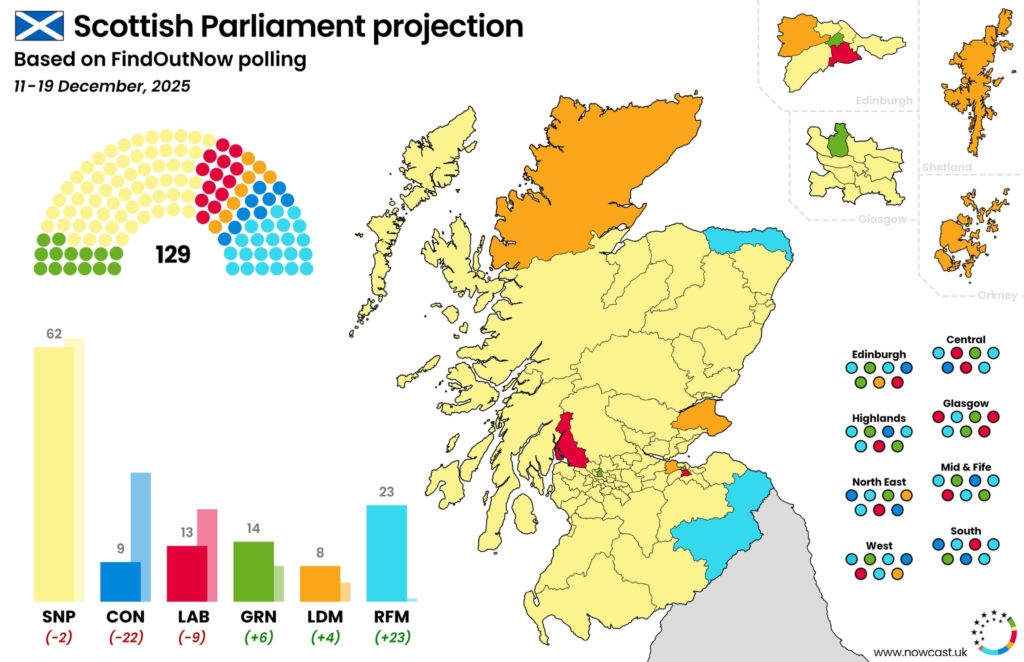
It would result in the following seats: SNP 62, Reform 23, Labour 13, Conservatives 9, Greens 14, and the Lib Dems 8. This would mean annihilation for the Tories, failing to pick up a single constituency and reduced to picking up just nine seats on the list. It puts Scottish Labour and the Conservatives projected to fall into joint fourth place, despite Labour spending lavishly on social media and Anas Sarwar only a couple of days ago being interviewed by the Daily Record and boasting that he’d be First Minister next year. It would, of course, be a breakthrough moment for Reform UK, who would have a batch of MSPs that nobody had ever heard of. We have no idea what any of their polices would be (neither do they).
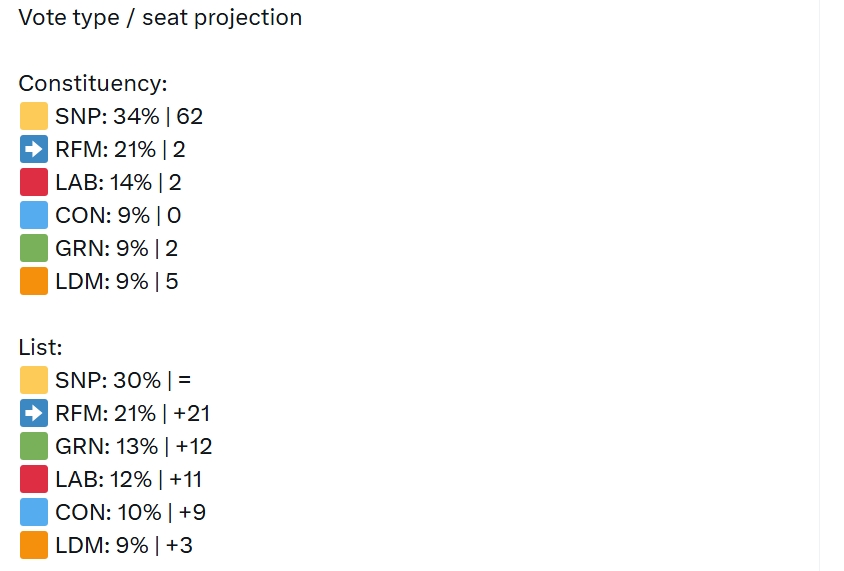
It would mean the Scottish Parliament would have 76 pro-independence members.
According to this polling, neither Alba nor Your Party would make a breakthrough or return a single MSP.
Despite mutterings from Reform MSP Graham Simpson about working with the Conservatives to ‘remove the SNP’, the numbers don’t support such a claim. Even a ‘grand alliance’ of Reform, Tories and Labour wouldn’t have the numbers.
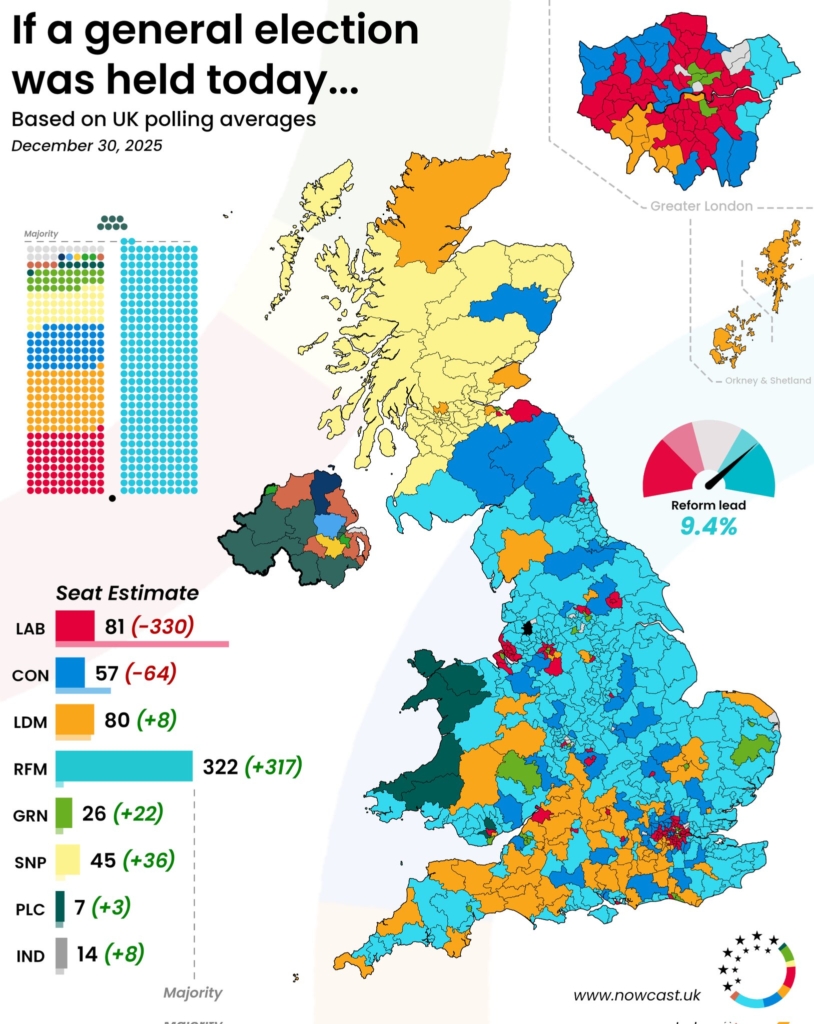
There are a number of x-factors at play that should be taken into account. First, at the same time as these polls were published, so too were polls predicting a Westminster election with a landslide for Reform UK.
These are extinction-level events for the two main political parties, but also show gains of +36 for the SNP. The two polls (Holyrood and Westminster) have an interaction with each other. If, as seems extremely likely, the Scottish electorate goes into the polling stations in May with the very real prospect of a Farage Prime Ministership, it will act as dynamite to propel a defensive action of supporting pro-independence parties.
Whether this would have enough of an impact to raise the number of SNP seats from 62 to 65 (a majority) remains to be seen, as does whether this is important.
The Westminster polling shows decimation for Labour (-330) and for the Conservatives (-64) and huge gains for the Greens under Polanski (+22) and the SNP (+36). This would be a massive historic breakthrough for a populist left-green party in England. It would also mean that former SNP voters who ‘leant’ Labour their vote in 2024, abandoned them and returned to the SNP.
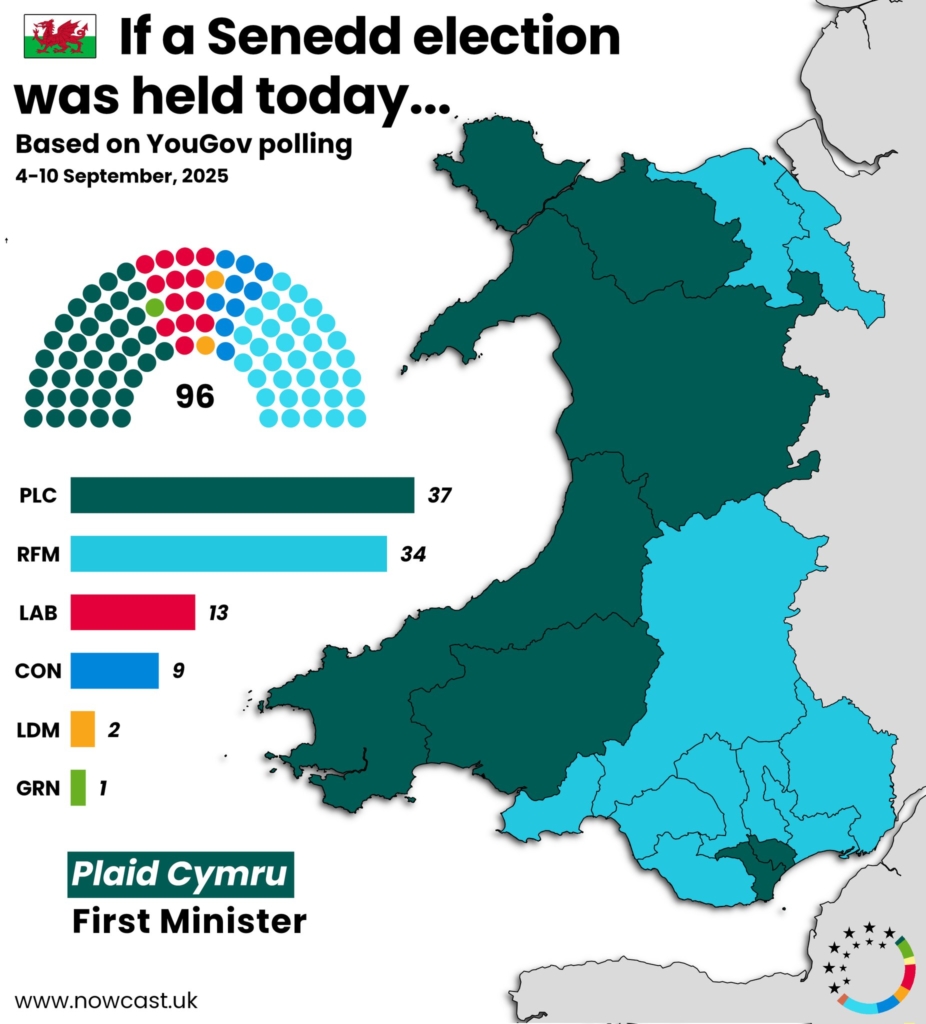
The same effect, of electing a nationalist party as a bulwark against the far-right, can be seen in Wales, where Plaid Cymru are predicted to take the Senedd for the first time. It would represent a landmark change in Welsh politics, as Labour has run the government in Wales in all the 26 years of devolution.
You can see the map of ‘gains’ across the UK from Nowcast’s map (see below). You can adjust their map to see rural or urban gains, second place etc here. I reduced the size of the map to include Shetland and Orkney.
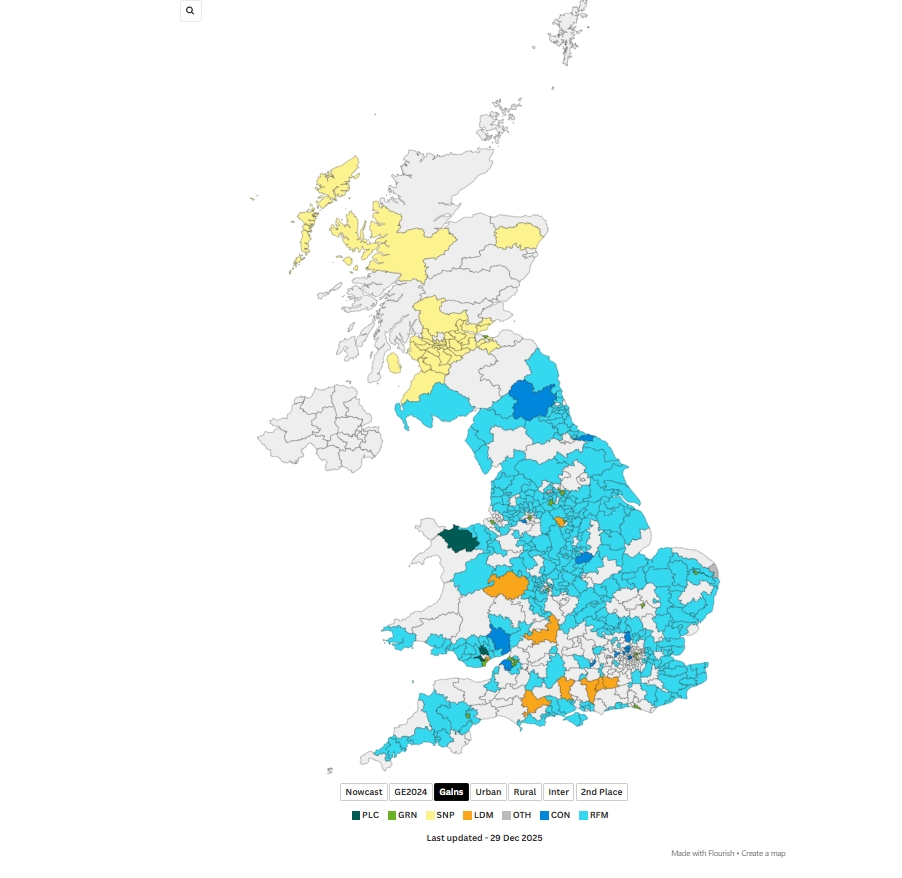
If these votes played out we would be in a situation with a huge pro-independence majority at Holyrood and Britain’s most right-wing government ever in power at Westminster.
There are some other issues at play here.
First, how would the SNP and the Greens manage their relationship and potential pacts after the disaster of the Bute House Agreement, and how would they navigate the difficult issue of women’s rights, trans rights and identity? Is this the seminal issue some think it is?
Second, it seems that, under such conditions, with the prospects of a huge pro-independence majority, the Alba party’s demand that people lend them their vote in order to gain a ‘pro-independence majority’ is completely obsolete. However, the dissident wing of the nationalist movement who are completely disaffected by the conduct of the SNP may not just disappear, even if the Alba Party does. And, the SNP would also be under extreme pressure to deliver something if they succeed in this election. So it is unlikely that they escape scrutiny even in electoral success.
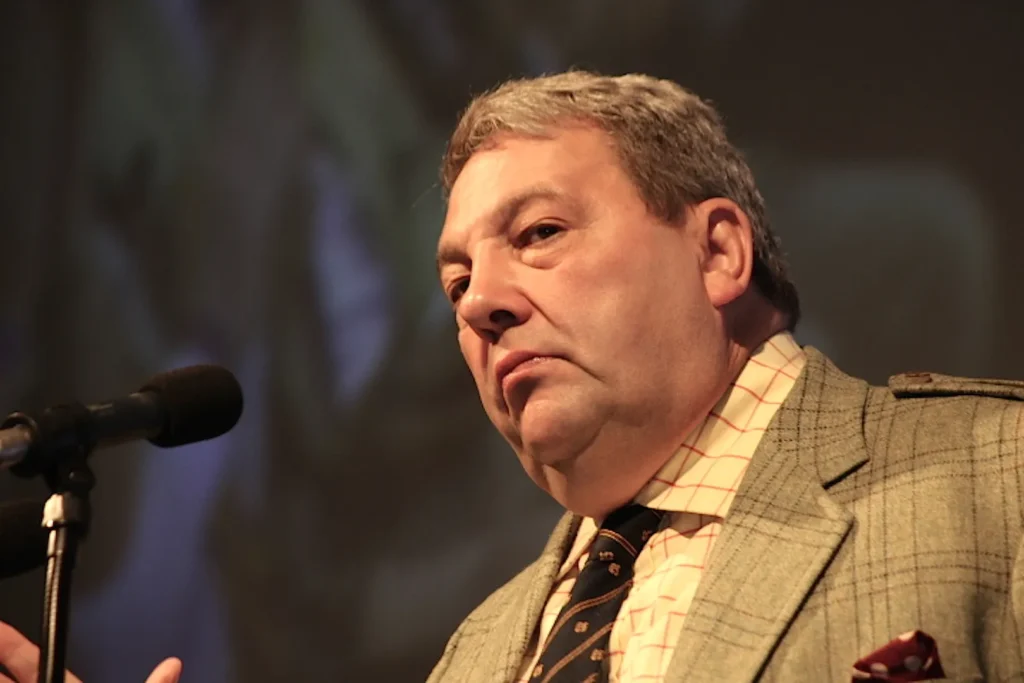
Third, will Reform’s vote actually hold up under the pressure of an actual campaign? There is first the growing interest in their murky past – see The Ferret’s investigation into David Coburn here: Here’s what former Brexit party MEP David Coburn has said about Russia and Ukraine
and second, there is the small problem that they have no Scottish policies whatsoever.
Finally, the polling suggests that Your Party may not make any breakthrough at the Holyrood elections. These elections may have come too early for Your Party, with no figureheads, policies or presence (yet) in Scotland. That may change in the years to come.
Very interesting – dramatic electoral changes but probably little change to the state of the country! How depressing!
PS Don’t doubt the national picture but cant see how Reform would win Galloway – SNP have always been strong here and surely a significant number of anyone but Reform would lend their vote to SNP?
huge demographic change in Galloway, English migrants – probably explains strength of Reform there.
When looking at the percentage of voters each party has (list or regional) it’s depressing to see that unionist parties have the lion’s share. Given recent independence polling showing YES regularly in front, it means there must be many independence supporters voting for unionist parties or who are registering as don’t knows because they’re not willing to support the SNP, Greens or Alba.
This is indeed an interesting observation. But I don’t find it depressing. What it suggests is that party politics is not the way to approach the independence question – or perhaps not the only way. It’s why we need a broad movement for self-determination not wholly associated with the pro-independence parties, but reaching out to those – within Scottish Labour and perhaps the LibDems – who support independence but who, for a host of reasons, do not feel comfortable supporting the SNP or the Scottish Greens. Another lesson to take from it is that independence strategies based on so-called de-facto referenda are the wrong way to go, now and in the foreseeable future. We need to build that broad movement.
It is interesting. A couple of thoughts: first, it is likely that a good number of those who may vote for SNP and Greens in Scottish elections are not particularly ardent supporters of independence. SNP track record so far and Westminster intransigence does not suggest that it is an imminent likelihood even if they form a solid majority, so some voters (provided they’re not passionate unionists) will see it as ‘safe’ to vote for either party without it being a threat to the constitutional status quo. Independence will still depend upon being effectively fought and argued for outwith parliaments. Second: I think it is worth pausing to reflect on how, despite Scotland’s supposed inherent decency/liberal-leftism etc., we have come in a few short years from N Farage being hounded out of hiding in an Edinburgh pub and sent on the highway south tail between legs, to breathing a sigh of relief that there might be ‘only’ 23 seats taken by Reform at Holyrood, forming the second largest party group. That is a truly appalling prospect that we would have thought wholly improbable not long ago. We should be very worried. ‘The price of freedom is eternal vigilance’ etc.
Thanks Cathie. It will be interesting to see how the SNP and Greens frame the vote in terms of the constitutional question. I think that the Greens, though a separate party, are benefitting from the Green surge in England and Wales. 100% agree that the idea of Reform forming the second largest party at Holyrood is a truly appalling prospect.
Cathy – support for independence is just over 50% in current polls and support for Greens & SNP is 45%. At the 2021 Holyrood election where holding a second referendum was front and centre of both SNP & Green manifestos their combined support was ~50%. I interpret the fall in SNP support to 34% being partly due to their inability to obtain Westminster consent for a second referendum. Incumbency over 18 years and a general disillusionment with NHS are big issues which would surely mitigate against people voting SNP. I would strongly suggest that the 34% level of support for SNP is indicative of voters who see independence as a very important issue if not the number one issue. I really fail to see how you can reach the conclusion that people are voting SNP because they don’t want independence based on all the polling evidence. Perhaps you can enlighten me?
Cathy – re your comments on rise of Reform. I am afraid that this has been almost inevitable for a number of reasons:
1)Scotland has no independent media and does not exist in a bubble. Virtually all of UK media while not openly supporting Reform have been to a greater or lesser extent promoting them and their policies.
2)Scotland is not immune to social media influence eg X which again promotes a far right wing agenda worldwide.
3)Scotland has never been immune to racism. Anyone that thinks so has lived in a very narrow strata of Scottish society.
4)Older people in Scotland are quite socially conservative possibly even compared to elsewhere in UK (possibly due to stronger influence of churches in previous generations?)
5)38% of Scot’s (600,000) voted for Brexit in 2016. Farage may have been run out of Edinburgh in 2013 but his ideas were not anathema to a considerable section of Scottish society even back then.
I would add the following though that shows that Scotland has been and remains politically different in perspective from England;
1)A right wing party has not won an election in Scotland for 70 years.
2)The combined Tory+Reform vote in England is currently ~50% while in Scotland it is ~ 30.%.
3)The Reform vote in Scotland is in my (& many others) opinion mainly a protest vote by disaffected voters rather than an endorsement of their policies (if you can find any apart from immigration which is a reserved issue!)
Scottish politics has become more split along the independence issue post 2014 and Reform have taken votes mainly from Tory & Labour parties in Scotland and this is shown in the collapse of their vote.
I would add that despite their vote being affected much less by rise of Reform the SNP have been more hostile to them than Labour or Tories. I would suggest that Labour and Tories have far more to gain from attacking Reform. Why they don’t is a mystery to me.
I would like to end on a note of agreement by saying that, despite understanding why Scotland is not immune to rise of Reform, I also find it very disappointing to see the level of support they appear to currently enjoy in Scotland.
When the ardent nationalist people find out that they have a choice between Ross Greer and John Swinney running Scotland I think a lot of of them will not bother to vote.
You need to work on your right-wing attempts to sow nihilism Mr Horseserse. “Ardent” supporters of political causes do tend to vote, rather than “not bother”.
Have another go. Tell us that ‘All politicians are the same’. Or that ‘Democracy has failed’.
Chortle.
Received a leaflet from Reform this morning headed ‘Scotland Needs Reform’ a photograph of two men Farage and a Lord Offord of Garvel. Women know your place.
It begins with ‘Scottish politics is a straight fight between the SNP, the failed party of the past and Reform.’
They go straight into their racist chant of uncontrolled immigration and our wee pieces of Scottish gold, our children ,not speaking English as their first language. I so totally object to this racist language being posted through our door. Who can you complain to?
Further on down comes climate change denial language.
Next,this leaflet declares ‘we will employ more police and deploy stop and -search to drive knives off Scottish streets’. Disgusting attempt at frightening folk and developing a fear psychology.
Reform will they declare ‘close the migrant hotels and detain and deport illegal immigrants ‘ all language with images of ICE’s disgusting activities in Trumps US.
The leaflet finishes with the clarion call to ‘ Join the People’s Army Today ‘
Thank you, Maisie.
Argh!
I just hope that all the independence foot soldiers who knock on doors to persuade people to vote for self determination take these polls with caution. There is so much to lose and we cant afford to do so!
Does it seem weird that fishing communities on the North East coast (Moray Firth) and farming areas in the Borders would vote for Farage’s Ltd Co. to represent them? After he threw farmers, fisherfolk, and the rest of us, under a bus with his Brexit farago?
I’m struggling to understand what appeals to these voters?
If the SNP wins the Holyrood General Election with 43% of the votes – as the table seems to suggest – Unionists in general, and those at Westminster in particular, will be entirely relaxed.
They will note that it is a lower percentage for independence than was achieved at the 2014 referendum.
I think you’re a bit confused. Current polling for independence is well above support for the SNP.
I am not in the least confused. Opinion polls come a very poor second to election results, particularly results for the Scottish and UK parliaments.
If only 43% of voters support pro-independence parties, it strongly suggests that independence is not a high priority for a majority of voters.
Judging by the willingness of a large number of people to ACTIVELY support it, the Palestinian cause appears to be a vastly more important cause than independence right now.
You are correct in saying opinion polls come a poor second to votes cast.. We live in a parliamentary democracy so if the electorate return a majority of MSP’s supporting an independence referendum then that is the only democratic way you can decide on whether to hold one or not. This is what have happened post 2011 Holyrood election and should have happened post 2021 election but Westminster (electorate 90% from outside Scotland) blocked request from Holyrood (electorate 100% from Scotland)
The electorate in Scotland can then decide in a referendum whether they wish the country to become independent as they did in 2014.
In a properly functioning democracy it should be that simple.
Right. I mean I’m commenting on Opinion Polls. When there’s election results I’ll comment on them too. People can be interested in more than one thing at once, and the fact that we have been watching the first live-streamed genocide means that people are, rightly, highly motivated about this. There is no contradiction here, in fact, people witnessing the appalling intransigence of the British state will probably be more motivated to want an alternative.
I am pointing out that, according to the opinion poll for the Scottish Parliament election you cite, SNP + Greens are on track to get 43% of votes in both the Constituency and List elections.
This is a seriously underwhelming vote for those who want Indyref2 and view the 2026 Holyrood election as a means to that end.
It will be ignored by Westminister.
The 2021 combined vote for parties that were explicitly Pro independence and pro second referendum was around 50%. There is a good case for saying that Westminster’s rejection of not only Holyrood’s request for a second referendum but refusal to even to identify any circumstances under which they would even envisage agreeing to another referendum has depressed support for parties openly campaigning for another referendum. It looks as though it has failed to depress it sufficiently to prevent SNP retaining power at Holyrood.
This is a very cynical tactic implemented by Labour & Tories for short term political advantage that will store up resentment and potentially trouble in medium to longer term. This is no way to run a self proclaimed democratic nation and shows that the major UK parties see an independent Scotland as a threat. This undemocratic approach enables a potential future extreme right wing UK nationalist party such as Reform to go further and ban outright the independence movement and any political parties supporting independence. On second thoughts when reviewing the authoritarian tendencies displayed by current government and opposition I would not be surprised if they considered this approach if they cannot defeat the independence supporting parties at the ballot box.
Certainly, specious arguments such as this may well be deployed. Yet 43% is the kind of mandate that Starmer can only dream of. And if the response of Westminster is just to ignore it, as I agree is likely to happen, this will just serve to amplify the question: if the Union is voluntary, what is the democratic route out of it?
support for independence is 53% latest poll, a lot of people are supporters of independence, don’t support , unionist parties, but haven’t got a political home, if Alba had grown legs instead of infighting it might have taken up the slack and gathered the 10 to 12% who don’t vote SNP or Green, I know some from work who voted yes but have drifted to reform and even more who have just drop’d of the map politically not engaging with anyone, a lot of faith has been squandered over the last 11 years. I guess that’s when something from left field comes in?? it happened with the SNP in 2007.
I find the anti-Reform comments deeply unfair and I understand that Reform will have some policies relevant to Scotland.
One of them involves kitchen hygiene and cleaning behind fridges (Nigel is very keen on this). Naturally this is a womans job and Reform will legislate to encourage this. Whilst not in favour of wife-beating per se – efforts will be made in the legislation to enforce delivery by the women of Scotland – with mottos such as “ladies don’t be a slut”. Other enlightened policies will follow.
Remind me how we all got to this point – where imbeciles such as Reform once could only be found as bores in local pubs but now call the political shots.