
Greenland’s Real Crisis: The Colonial Legacy We’re Not Discussing
As Donald Trump renews his demand for US ownership of Greenland, the world has erupted in outrage over sovereignty violations. Denmark stands defiant. International law is invoked. Yet amid this geopolitical theatre, we risk missing the most crucial question – what about the Greenlandic people themselves?
Greenland’s 57,000 population are 88% indigenous Inuit, with a distinct language and culture. The irony is stark. The international community rally to defend Denmark’s sovereign claim over Greenland whilst conveniently forgetting that Denmark’s “ownership” is itself a product of colonialism. Greenland was not freely given, it was taken. Further, the colonial violence inflicted by Denmark upon the Inuit population represents a dark history that demands our attention now more than ever.
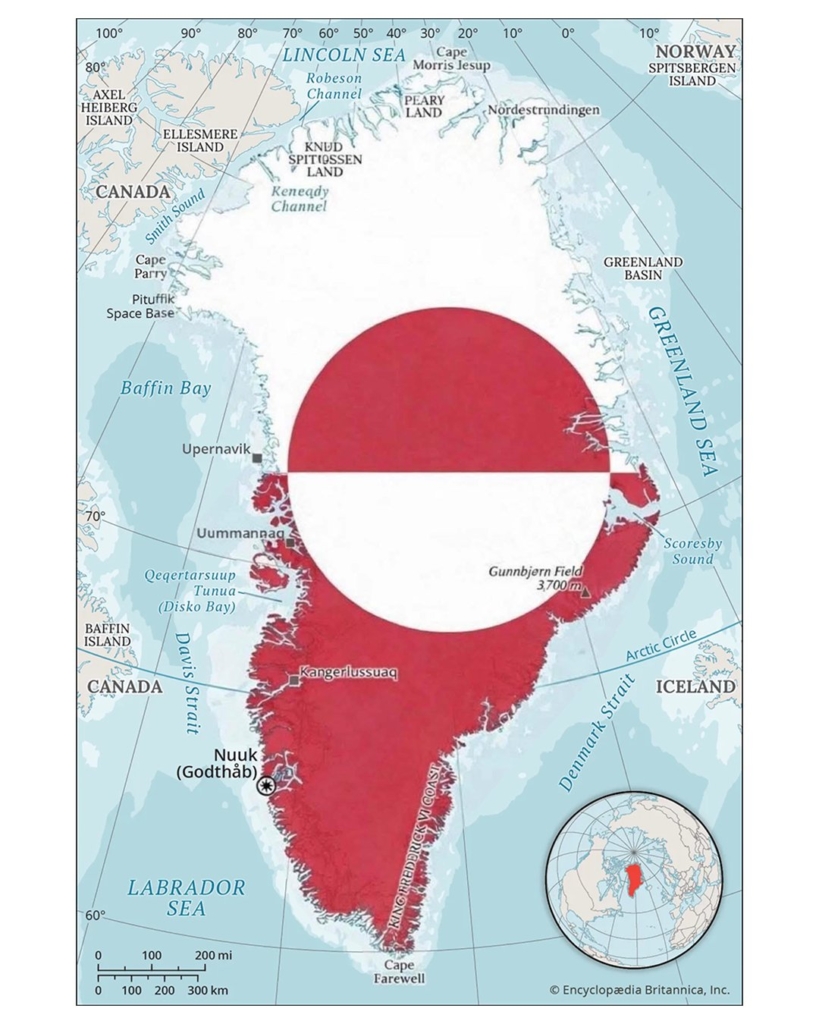
Greenland was colonised under Danish-Norwegian rule from the 18th century, later becoming a formal Danish colony in the 20th century. An essential part of any colonisation project has always been the targeting of indigenous children, either through genocides, ethnic cleansing or more suspiciously labelled as “re-education”, as children are the future of any community. In 1951, Denmark conducted what became known as the “Little Danes” experiment; a social engineering project that would horrify any modern observer. Twenty two Greenlandic Inuit children, aged between five and nine, were forcibly removed from their families and sent to Denmark. The stated aim was to create a Danish-speaking elite who would return to “modernise” Greenland. In reality, it was cultural genocide masquerading as benevolence. Typical colonial behaviour.
These children were stripped of their language, their culture, their families. Some were adopted into Danish families and never returned home, while those that did return were not permitted to go back to live with their own families. Many who returned to Greenland, could no longer speak their native tongue. They no longer fit into their own communities, yet they would never truly be accepted as Danish either. The psychological damage was profound and lasting. Most of these children suffered throughout their lives, and many died young, some without ever reconnecting with their families in any meaningful way.
But this isn’t merely historical injustice confined to the archives. Denmark’s conscious assault on Inuit families has continued into the present day. Until 2025, yes, 2025, Danish authorities used a parenting assessment test called the Forældrekompetenceundersøgelse to evaluate Greenlandic parents’ competence to raise their own children. This test, rooted in Eurocentric values and norms and administered in Danish, even where those parents may not understand it, was systematically weaponised against Inuit families.
The results were predictable and devastating. Inuit children were removed from their parents at disproportionate rates, judged “at risk” according to standards that bore no relation to Greenlandic culture or ways of life. Traditional parenting practices, community-based childcare, and cultural norms were pathologised. Families were torn apart and dehumanised. Children lost their heritage. Denmark, all the while, maintained its progressive reputation on the international stage.
This is the context we must hold as we watch Trump, Danish officials and other Western world leaders, trade barbs. When we speak of Greenland’s sovereignty, whose sovereignty do we actually mean? The Danish state that colonised it? The American administration that now wants to purchase it like a property transaction? Or the Greenlandic people who have inhabited this land for centuries?
Greenland has achieved greater autonomy in recent decades, with home rule established in 1979 and expanded self-government in 2009. The Greenlandic people have their own parliament, control over most domestic affairs, and have reclaimed their language and culture in remarkable ways. Yet Denmark still controls foreign affairs, defence, and monetary policy. Full independence remains economically complicated, in part because centuries of colonial exploitation left Greenland dependent on Danish subsidies. Again, a predictable tool used by colonisers to keep nations dependent on them, despite independence.
This uncomfortable truth should inform our analysis of the current crisis. Trump’s propositions represent a return to 19th-century imperial thinking, where territories and peoples could be bought and sold. But Denmark’s moral authority to reject this claim is itself compromised by its colonial legacy and ongoing injustices.
This pattern should sound familiar to anyone following global politics. Whether in Palestine, Kashmir, or countless other territories, we see the same dynamic: powerful states debating sovereignty whilst ignoring the fundamental rights and self-determination of indigenous peoples.
Our education systems have a prime opportunity here. As these lessons of history play out before our eyes, we can finally teach young people meaningfully about colonialism, imperialism, colonial ideology and systemic racism; not as abstract historical concepts, but as living forces that insist on continuing to shape our world. When students see Trump’s attempted land grab alongside Denmark’s colonial legacy in Greenland, they can understand how imperial thinking persists across generations and political divides. This is our chance to empower young people to recognise these patterns, challenge them, and build a future free from such ideologies. The question is whether we’ll seize these teachable moments or let them pass by.
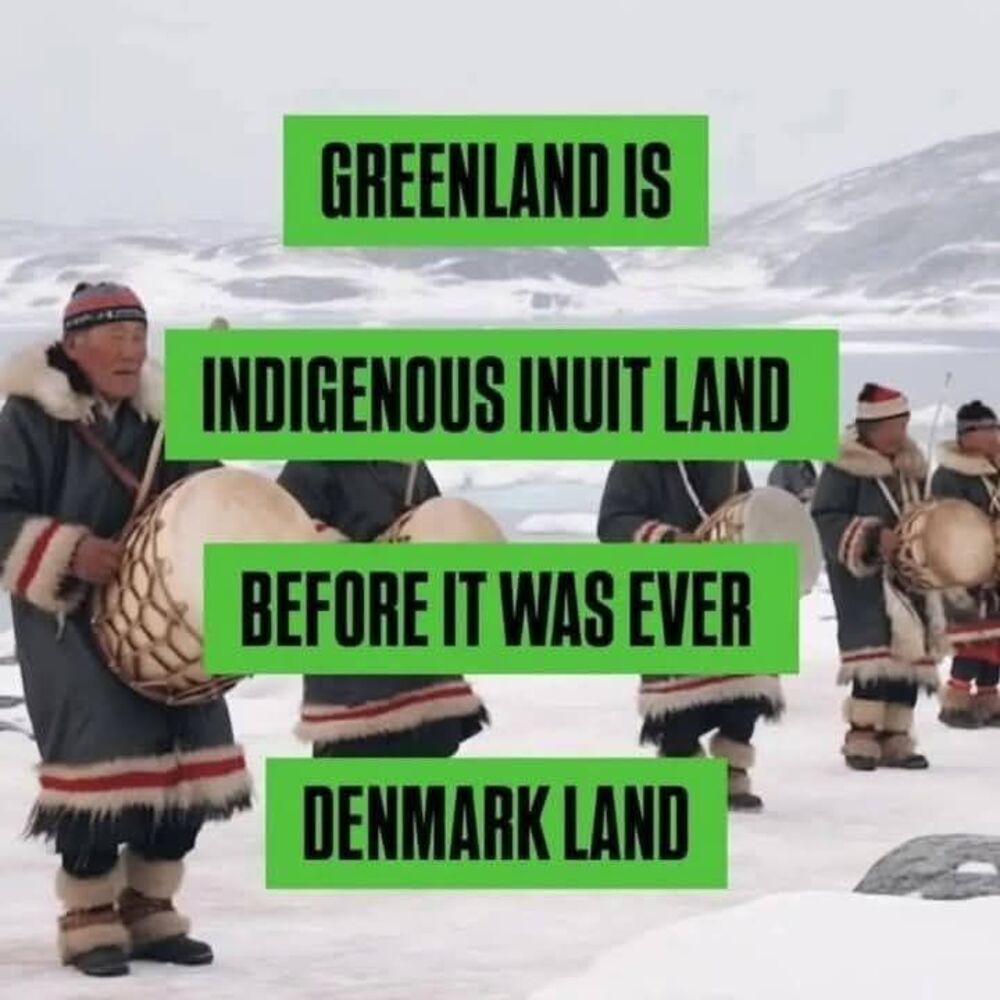
The question isn’t whether America or Denmark should “own” Greenland. The question is how we support the Greenlandic people in determining their own future, free from the legacies of colonialism that continue to constrain them. True sovereignty isn’t about which flag flies over a territory. It’s about the freedom of people to live according to their own values, raise their children in their own culture, and control their own destinies. It’s about acknowledging historical wrongs and making meaningful restitution.
Although Scotland has its own history of enacting and supporting Empire while benefiting from colonialism, we in Scotland do understand something about the complexities of self-determination within the shadow of larger powers. We should use our platform not to take sides between competing empires, but to centre the voices and rights of the Greenlandic people themselves.
Let us not forget, amid the posturing of powerful men, that real people with real lives, real histories and future generations, stand at the centre of this crisis. The people of Greenland deserve better than to be pawns in someone else’s game.
Reference List:
World Population Review (2024). Greenland Population 2024. Available at: https://worldpopulationreview.com/countries/greenland
Cultural Survival. Genocide Continues Today. Available at: https://www.culturalsurvival.org/news/genocide-continues-today
CNN (2022). How a failed social experiment in Denmark separated Inuit children from their families. Available at: https://edition.cnn.com/interactive/2022/01/world/greenland-denmark-social-experiment-cmd-idnty-intl-cnnphotos/
Euronews (2025). Denmark abandons controversial ‘parenting competency’ tests used on Greenlanders. Available at: https://www.euronews.com/2025/01/21/denmark-abandons-controversial-parenting-competency-tests-used-on-greenlanders
The Week (2025). The ‘racist’ parenting test fuelling Denmark-Greenland tensions. Available at: https://theweek.com/world-news/the-racist-parenting-test-fuelling-denmark-greenland-tensions
Leiden Law Blog. Culture misunderstood, families separated. Available at: https://www.leidenlawblog.nl/articles/culture-misunderstood-families-separated
DIIS (Danish Institute for International Studies). Available at: https://www.diis.dk/en/research/why-is-greenland-part-of-the-kingdom-of-denmark-a-short-history

We are supported only by our readers. We don't have corporate backers and we don't take advertising, so we rely entirely on your support.
Help to support independent Scottish journalism
Scotland went much further colonial abuse; it meted out cultural punishment to its own people. The SSPCK (founded 1709), a religious body that meted out physical punishment at school for speaking Gaelic. The Act of Proscription after the ’45, proscribed Highland dress and culture. As late as the 1872 Education Act, punishment and oppression was being administered on Gaelic speaking children. The intention was to extirpate the language.
Then there was systematic enslavement of the Scottish colliers (coal and salt mining), beginning with the ‘Act Anent Coalyers and Salters’ (1606); and it and subsequent enslavement of destitute Scots following harvest and economic failures in 17th and 18th centuries; which were not finally repealed by the UK Parliament in 1799. Then the UK found it was almost as atrocious in its treatment of miners; and passed the 1842 Mines Act; a half-hearted effort, that at least meant the stop using the wives of colliers (miners) as beasts of burden – literally; the Act led to the introduction of pit-ponies to carry the coal broken off the seam from the coal face, to the entrance to the mine. I could go on.
Excellent Mike. I learned a lot from your article. A while ago I read Caroline Elkins fine study of colonial Kenya, Britain’s Gulags. More recently I read her comprehensive history of Britain’s Imperialism, Legacy of Violence. These books, we’ll referenced, led me to other writings on colonialism and its enduring appeal. Another current issue concerns the Chagos Islands and the arrogant “diplomacy” surrounding so-called ownership. Thanks for your article; its badly needed.
Not by me, but by Nuzhat Uthmani.
The comments here on colonialism usually mention only British colonialism and so tend to imply that other nations were less guilty, did not pursue the same policies or create a similar atrocities.
I know this is not the intention of the writers but at the same time it is a dangerous assumption that is being promulgated.
The idea that there is a neatly defined “colonialist” mind-set (a word that itself badly needs unpacked), and that this concept adequately frames the intellectual problem, is frankly insufficient to understand or explain colonialism, particularly the British approach (which can be distinguished from the French form, which followed more closely the Roman model; the British approach was based first on its own model, constructed from ad-hoc success in piracy, its own native prejudices, and pure unrestricted opportunism).
In my comment here (complete with hasty, uncorrected grammatical bloopers), I attempted very briefly to show that Scotland’s colonialism came already pre-packed with systematic social engineering purposes and prejudices, long before Scotland turned to colonialism. Scotland was quite prepared to abuse and exploit social groups among its own people for the purposes of religious, political, cultural or economic objectives (by segregating from among its own people for the purposes of labour exploitation by force, where nobody wanted to undertake the dangerous work of a collier, even in destitution); and even before Scotland had figured out systematically how to exploit capital (as distinct from labour), effectively – for economic purposes. Only then did it turn to exploiting labour in areas of the world where natives were unable to defend themselves from European technology, or ruthlessness.
Thankyou for this .Devastating truth.
Thank you, Nuzhat, for this clear-eyed analysis of the situation with Greenland and what is not being talked about: the people who live there. Empires focus on states and territories. Your article addresses human beings, language, tradition, roots and those who would cut them. Helping us all, young and old, to see what is happening and how things could be different is essential.
Thank you for another excellent article!
Is humanist sovereignty really the Inuit way, or do they respect non-human interests in a way that colonial powers do not? Surely it would be a horribly missed opportunity for Greenland to just become another maldeveloped state at odds with nature?
I noticed the same double think / cognitive diffidence with the rhetoric coming from Canada about sovereignty and resources, I’m sure many first Nations would be rolling their eyes, but then there stuck in the trap of least worst option, like the last 400 year’s.
Mìle taing for this article.
On point.
Here’s to supporting indigenous people v capitalism / empire everywhere.
b x
Mòran taing Babs