
Anthems and Requiems
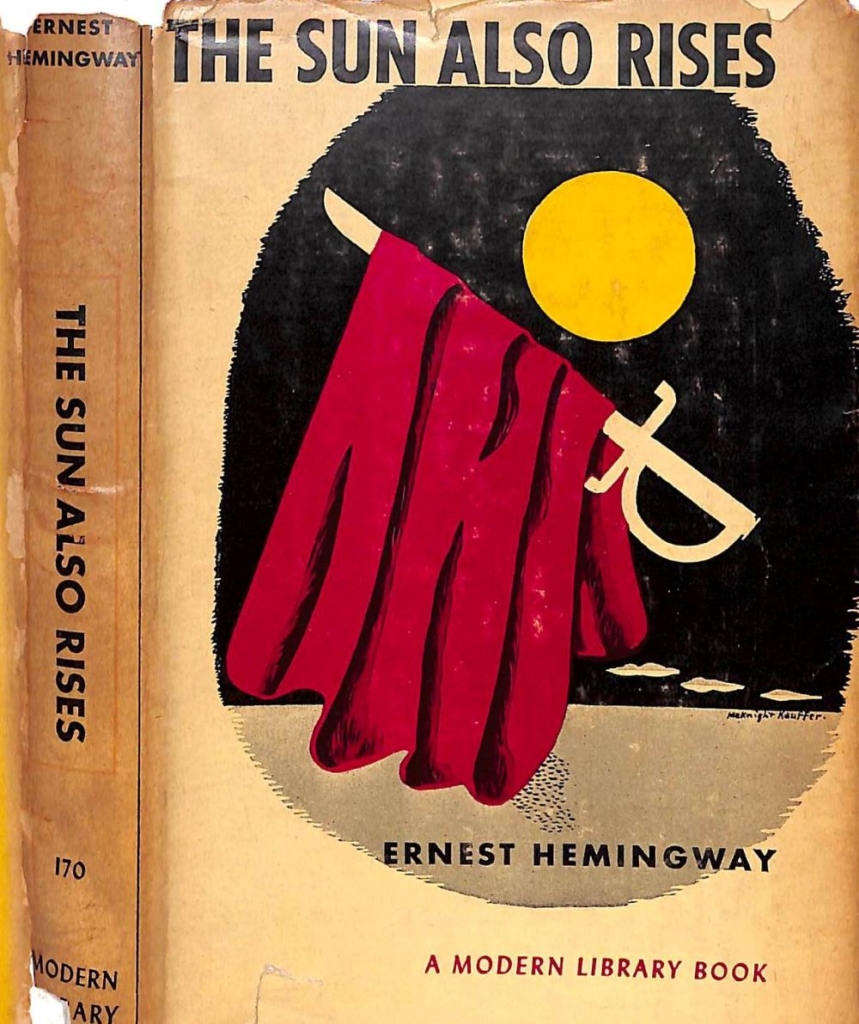
“Gradually, then suddenly” is a famous quote from Hemingway’s 1926 novel The Sun Also Rises – describing the descent into bankruptcy.
Hemingway’s quote has been used (over-used) as a study of how collapse happens in phases, the ‘Slow Decline’: of accumulating small failures; and ignoring warning signs, after which the “centre” of the situation stops holding, but it is often ignored until it is too obvious to overlook. The second phase is the ‘Tipping Point’ or collapse in which trust in the whole project suddenly evaporates.
We’re close to the second phase in Britain’s collapse.
Despite frantic efforts by Scotland’s establishment media, redolent of the late Saddam Hussein’s information minister, Mohammed Saeed al-Sahhaf, all is not well as we approach the last few weeks before elections in Cardiff, Edinburgh and across 136 councils in England on May 7.
In Wales, Labour is on course to lose its grip over Welsh politics after more than a hundred years as a new poll shows the party slipping to third place in May’s Senedd elections. Eluned Morgan’s party is set to be reduced to a rump of just 12 seats as it is leapfrogged by nationalists Plaid Cymru and Reform UK.
In England, Labour could lose “well over” 1,000 councillors in May’s crunch local elections, experts have predicted, according to the Mirror. It even looks like the ascendant Left-Green populism of the Green Party is now taking votes from Reform. Which, if true, is a remarkable testimony to the instability and ‘cracked’ nature of British politics.
In Northern Ireland, John Taylor, Baron Kilclooney, used an interview with the Irish News to tell his fellow unionists that it was time to prepare for a united Ireland.
“The people in Great Britain are no longer interested in Northern Ireland,” Taylor said, citing the “growth of a new sense of specifically English nationalism”, which he said was incompatible with Irish unionism. As a result, Taylor predicted that soon, “the majority are going to be in favour of a united Ireland” [see The United Kingdom Is Breaking up Right Under Labour’s Nose | Adam Ramsay | Novara Media]
In Scotland, a huge pro-indy majority is predicted at Holyrood and of the last ten opinion polls on Scottish independence so far this year, “Yes” has been ahead in seven. Despite division and some despondency within the independence movement, reports of its death have been greatly exaggerated. The cumulative effects of Linwood, Gartcosh and Bathgate are as fresh in the public mind as Ming Yang, Mossmorran, and Grangemouth.
If the British Establishment has been “accumulating small failures and ignoring warning signs” for decades now, Scots have been noticing the pattern of abandonment and industrial failure for fifty years and more. This is now part of the collective consciousness. Recent years have just sharpened the focus.
Balance and Order, Order
But if Late Britain can be seen to be collapsing and morphing in all four corners, it is their cumulative, not their individual parts that matter. If Zack Polanski’s unlikely meteoric rise tells us anything, it is not just that the climate and nature crisis have (finally) come to the political fore, or that storytelling is an essential part of politics, but that the post-war British consensus is collapsing.
Britain, and the stories we used to be told, and largely believed about it as a place of order and stability, is finished. For years, we were comforted by the idea that there were two parties, representing business and workers, one striving for tradition and conserving the order of things, the other striving for progress and change. According to the Pendulum Theory voters would grow tired of the incumbent’s “costs of ruling”. The idea frames UK elections as a largely predictable, long-term cycle of ideological shifts, moving between Conservative free-market policies and Labour interventionism.
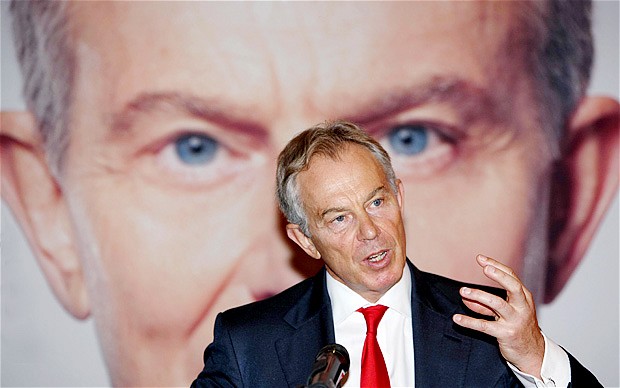
This is the grounding of the theory of the Centre Ground of British politics, which has held sway for much of the post-war era. The idea of a very narrow spectrum of acceptable political and economic social policy was the basis for New Labour, and its subsequent variants. As Tony Blair said: “I am convinced the Labour Party succeeds best when it is in the centre ground” (2014) and “The route to the summit lies through the centre ground” (2015). Such bromide was held together by institutional stability, entrenched hierarchy, a massively depleted and undermined trade union movement and deference and adoration to the Crown.
Of course, the assumptions about the conventional roles of the Labour and Conservative parties are long gone, as is the respect for the Royal family, who are now routinely heckled in public in the aftermath of Prince Andrew’s disgrace, in a way that would have been unthinkable only a year ago. The ‘window’ of accepted political discourse, value and policy was shattered by not just the chaos of Boris Johnson and Liz Truss, and the betrayals of Keir Starmer, or the arrival of right and left populism but arguably much further back to the use of state violence by Margaret Thatcher.
Now, the centre cannot hold, as Yeats foretold: “Things fall apart; the center cannot hold / Mere anarchy is loosed upon the world.”
What we are now witnessing is the unravelling of all of the cultural and political assumptions that held this unlikely Union together.
If the Queen held some level of respect across an older generation, such karma has not been bequeathed to her son. And it’s a sign of the diminution of the monarchy that Charles is effectively being pimped out to see mad Trump next month, even as he threatens Canada and mocks Britain [King Charles’s state visit to US will be ‘humiliation’ amid Iran war].
The Press Association says:
Charles and the queen’s long-expected historic trip to see Donald Trump will take place in late April despite calls for it to be postponed because of the ongoing conflict in the Middle East.
It will be the king’s first visit to the US as monarch and the first state visit by a British sovereign to America for nearly 20 years, since Queen Elizabeth II’s tour in 2007.
Charles and Camilla will commemorate the 250th anniversary of American independence, attend a glittering state dinner at the White House, and the king will address Congress, the Palace confirmed.
But exact dates and details have yet to be disclosed.
Buckingham Palace said:
On advice of His Majesty’s government, and at the invitation of the President of the United States, the king and queen will undertake a State Visit to the United States of America.
Their Majesties’ programme will celebrate the historic connections and the modern bilateral relationship between the United Kingdom and the United States, marking the 250th anniversary of American Independence.
The king will then continue to Bermuda to undertake His Majesty’s first Royal Visit as Monarch to a British Overseas Territory.
Back to Cardiff
The sense of decay is palpable as the ‘Special Relationship’ descends into parody. As the centrepiece to a unified Union, the monarchy’s decline into an object of ridicule and anger is visible and audible.
No better symbol of this general collapse could be offered up than the Welsh fans drowning out the rendition of God Save the King in Cardiff.
https://t.co/yvTexJ612s pic.twitter.com/U7adRm97qo
— TheWelshDragon (@TheWelshDragon9) March 31, 2026
If “Land of My Fathers” or “Hen Wlad Fy Nhadau” was first used as Wales’ national anthem in 1905 by fans at rugby, and then became the sole anthem used for Wales in sports from 1975, it took Scotland until the 1990s to take up Flower of Scotland (formally by the football team in 1997).
But there’s something else going on here. The assertion of Welsh culture has long been ahead of, and central to, its sense of identity, often displacing a desire for political self-determination. But as the coherence of British identity collapses, and deference recedes, the possibility of both emerges. And the imperial nature of the Prince and Princess of Wales titles feeds into a discontent that isn’t offset by stunts like these.
The Welsh fans aren’t just pro-Welsh, they are anti-British.
Jangle Pop, Post-Punk and Breitbart
The right-wing US publisher and commentator Andrew Breitbart had an idea that has become widely recognised. Known as the “Breitbart Doctrine,” it is that “Culture is upstream of politics” meaning that a society’s shared values, beliefs, media, and behaviours (culture) ultimately shape its political landscape, rather than the other way around. Andrew Fletcher anticipated much of the same thing in the 18th C arguing: “Let me make the songs of a nation, and I care not who makes its laws.”
The idea, that the Left are waking up to late has long been embraced by the American right. Less thinking more stories.
In 1986 The Smiths released their seminal album, The Queen is Dead. It was a glory of post-punk irony and bitingly clever bitterness predating anti-Royalism by forty years and becoming their best-selling record. In its 2013 list, NME named The Queen Is Dead the greatest album of all time.
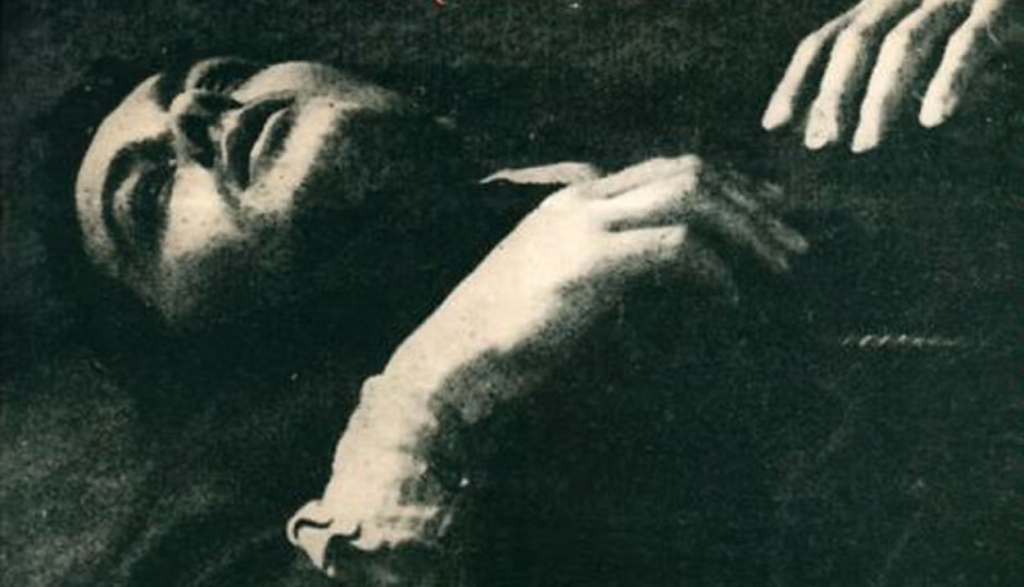
The lyrics, tone and aesthetic anticipate and understood the process of decay that Thatcher presided over.
The following year (1987) The Proclaimers released Letter from America from their debut album This is the Story. Back then, the idea that you could sing in your own Scottish accent was unthinkable and weird. The song, which was produced by Gerry Rafferty, connects the Highland Clearances with the industrial clearances experienced under Thatcher, has entered Scottish folklore.
Bathgate no more
Linwood no more
Methil no more
Lochaber no more
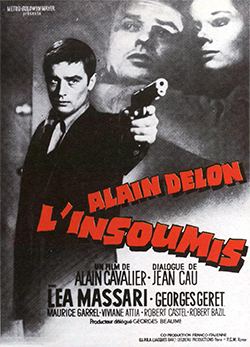
If the cover of The Queen Is Dead features a still of French actor Alain Delon from the 1964 film The Unvanquished – Letter from America features a painted image of a man and woman from the time of the clearances (from the John Watson Nicol painting Lochaber No More) – superimposed onto a black-and-white photograph of the interior of Gartcosh steel works after its closure in 1986.
Johnny Marr and Morrissey couldn’t be more different as artists than the Reid brothers, but the two songs stand as anthems and requiems to an idea of Britain that was already disintegrating under Thatcher in the late 1980s.
This sense of a ‘long tail’ to where we are today – whether it be the legacy of Thatcherism, or way back to the Clearances – is the reason for the delayed anger and frustration from so many as we watch history repeat itself on a loop.
Mayday
Two things may have changed after May 7. The first is that, as Adam Ramsay has pointed out, this will be the first time that a Labour Prime Minister has been confronted with a pro-independence majority at Holyrood. Ramsay writes:
“What’s certainly true is that, if there is a pro-independence majority at Holyrood, Starmer will be the first Labour prime minister to be confronted with an SNP first minister with a refreshed mandate for an independence referendum. While it was relatively easy for Tories to turn down demands for such a vote, because their base in Scotland is ultra-unionist, many Scots who voted Labour in 2024 are also independence supporters, or at least support the right to self-determination, and maintaining that uneasy coalition will be tricky if the party outright denies a mandate seen as legitimate.”
The problem with this argument, however, is that if Labour suffer losses as heavily as looks possible in May, neither Sarwar or Starmer will be there to negotiate. The upheaval that such losses as predicted could go either way, producing new leadership that sees that their past strategies have failed, or some unexpected outcome. Nationalist critics would argue that it is the British State that refuses to co-operate, regardless of party.
Perhaps Ramsay is on stronger grounds when he points out that [The United Kingdom Is Breaking up Right Under Labour’s Nose | Novara Media]:
“In just six weeks, Labour may well have lost a major election in Wales for the first time in a century. It will likely have been humiliated in Scotland. As a factional war unfolds over whether to replace Keir Starmer, and with whom, an emboldened Scottish first minister will be spotting an opportunity. It’s likely that, this summer, Swinney will assert his renewed mandate to hold an independence referendum and, in doing so, will quite possibly have the support of a new Plaid Cymru first minister in Wales; a Sinn Féin first minister in Northern Ireland; and Zack Polanski, the leader of the party which will have just taken hundreds of former Labour council seats across England.”
This would be an unprecedented position, and a new moment of peril for the rolling constitutional crisis that many at the heart of the Union seem oblivious to. For it to matter though, will depend on communication between very different disparate parts: Sinn Fein, the SNP, Plaid Cymru, the Greens (north and south). The role of the movements in each country may be to speak to each other and envision what lies beyond the wreckage of Late Britain.
* * *
This article is from my Substack, Fifty Six Degrees North. I have a special Easter Offer of a free 7 day trial. Go here to subscribe for your free trial: Subscribe to Mike Small

We are supported only by our readers. We don't have corporate backers and we don't take advertising, so we rely entirely on your support.
Help to support independent Scottish journalism
The ending of The Sun Also Rises, also known as Fiesta, is memorably good… as is the first line… I think it’s a great book.
People sneer at Hemingway these days, because he was such a boor and a macho man, but he arguably did as much as anyone else to modernize literature.
Hemingway destroyed himself by being Hemingway… His first three or four books were excellent, and then, once he had become Hemingway, the decline set in…
The toll of being Hemingway was too much to bear…
These things sound like linguistic tricks, but they’re actually not. RLS said the same about Burns. He died of being Robert Burns.
There was also that thing with Jose Robles in Spain…
Robles, a young, idealistic Spanish university professor at John Hopkins univeristy in the USA, offered his services to the II Republic when the Civil War broke out, ie, when the generals launched their coup, which misfired.
He was a polyglot and was assigned to work with the Russian experts Stalin had sent to help the II Republic because of his linguistic skills. He disappeared in January 1937 and was murdered by Stalin’s agents… We still don’t know why…
John Dos Passos was best friends with Jose Robles, they had met in the 1920’s on a train in Spain and become bosom buddies. Robles translated his novels into Spanish. Dos Passos, who was a big literary star then, was also friends with Hemingway.
When his pal, Jose Robles, disappeared, Dos Passos came to Spain to look for him…
Hemingway wasn’t interested. His view was that if Robles had been disappeared / shot for being a spy, he clearly was one.
Dos Passos, who knew his friend’s beliefs very well, would not believe for a second that Robles was a fascist spy…
Hemingway and Dos Passos fell out and their relationship never recovered…
Hemingway went so far to attack Dos Passos in A Moveable Feast, his autobiographical book about his time in Paris…
There, he describes Dos Passos as a “pilot fish”…
As for the family of Jose Robles, they have never received justice. Their story is heartbreakingly sad, especially that of the son, Coco Robles.
They never got an explanation why Robles was disappeared. Quite possibly, he was the victim of an internal war between Stalin’s secret services and his military personnel in Spain. Equally, it is possible that, translating sensitive documents, he simply knew too much and had to go.
As for the one time Socialist Dos Passos, he too lost his talent and never recovered from the bitter murder of his best friend. By the 1970’s, he was voting for Richard Nixon…
The story of that brilliant generation of Spanish intellectuals, of which José Robles was one, a pretty good example actually of the “new breed of men” who came to power when the Spanish king, Alfonso XIII, fled Spain in Abril 1931 for Rome, after Republican parties had swept the board at the elections, their story is one of the saddest stories ever told…
Known as the “silver generation” – the golden generation being Cervantes and Lope de Vega et al circa 1600 more or less – they were this incredible flowering of Spain’s intellectual traditions, forward looking, progressives – the Republic gave the vote to women, not immediately, but a few years in – and they all came to a terrible end: they were tortured and murdered in many cases, like Lorca, or they were exiled, like Buñuel, or else they were cowed and lived under Franco like ghosts of their former selves…
The roll call is very lengthy…. painters, writers, film-makers, musicians like the celoist Pablo Casals…
Franco shot people without the slightest compunction. He personally signed the death warrants of tens of thousands of Spaniards… Teachers, for example, the new teachers of the Republic, were particular targets (the fascists in I think Salamanca made a school teacher play the part of a bull in a mock “bullfight” before they killed him)…
Then there was the Barraca, the theatre group which Lorca was part of, and many Spanish intellectuals, which is that they went out into remote, rural Spain to take culture to the people, especially the theatre…
In fact, just a few months ago, a new image, some film footage, of Federico García Lorca turned up…
We see a car driving by, I think related to La Barraca, one of their excursions, and Lorca looking out of the back window and waving at the camera…
So, Franco’s coup wasn’t just another one of the dozens of coups there have been in Spanish history. It was directed against perhaps the most amazing generations of Spanish writers, poets, painters, film makers, philosophers and musicians there ever has been in Spain…
And still, the II Republic lost the war – which it never should have done… Franco had a unified command structure, more support from Fascist Germany and Italy, and better generals…
Picasso, of course, had left Spain for Paris back in the 1920’s, so he wasn’t an exile of the Civil War or anything like that…
Still, in the early 1930’s, under the new II Republic, he went to San Sebastian for a trip and was having lunch in one of those incredible Basque restaurants, and a couple of tables away was Jose Antonio Primo de Rivera, the founder of the fascist party, the Falange, then still in its infancy.
Apparently, Jose Antonio comes over to the table and tries to persuade Picasso to join the Falange (Picasso would by then have been a card carrying member of the Communist Party I think)…
Anyway, they have a few drinks. Everyone knows Jose Antonio Primo de Rivera, because he is the son (or maybe the nephew) of the military dictator of Spain between 1923 and 1930, Primo de Rivera. And he’s a published poet… a handsome, charismatic and personable man.
Anyway, Picasso notes down in his diary, I think, or maybe it was a letter, that he had met this guy and didn’t trust him an inch and was profoundly worried about what was happening in Spain…
One of the most serious mistakes of the II Republic once the war had started was to shoot Jose Antonio Primo de Rivera in Alicante in 1936 as a reprisal for the murder of Lorca…
A massive own goal…
‘As for the family of Jose Robles, they have never received justice. Their story is heartbreakingly sad, especially that of the son, Coco Robles.
They never got an explanation why Robles was disappeared. …’
But this is in fact no more than par for the course in contemporary Spain.
As we race towards the 90th anniversary this year of the Spanish Civil War (caused self-evidently by a military coup against the elected government) and then the 51st anniversary of Franco’s death, not one single Republican/left-wing party or trade union or social grouping has ever, to the best of my knowledge, taken any meaningful responsibility for a single murder in the period 1936-39, still less for anything which happened prior to the failed military coup.
It is an undeniable fact that the parties of the right are not a whit better and arguably, morally [in so much as that word has any political relevance] even more shitten. For they have consistently refused to confront in any meaningful way the reality of the murderous regime of General Franco which in the first 15 years or so after the Civil War sowed wholesale vengeance with barbarous meticulousness on the ‘reds’ including of course nationalists, whether Catalan, Basque or Galician, up to and including many years of widespread famine throughout Spain to complement the thousands of executions and the tens of thousands of prisoners, often enduring forced labour in the most pitiful of sub-human conditions.
Yet the left in its wisdom has seen fit to mirror wholeheartedly this brazen posture.
As a result, not a single family member of the many victims of the euphemistically and falsely titled ‘uncontrollables’ who did to death thousands of ‘fascists’ whether in their home, at the roadside, in the sacristy, in the checas of Madrid and of Barcelona or in labour camps which were set up on the government side during the Civil War has ever had the scant consolation of acknowledgement from successors of the perpetrators of their murder of their innocence.