
Parallel lines? Lessons from the nightmare of history
How a Dublin genius understood nationalism.
A politician championing nationalism – arguably the most talented of their generation – forced to resign following a petty scandal. Evidence thereafter of a split in those arguing for home rule. Analysts writing about a schism in a great movement, a ‘sundering’, the palpable nearness of solid statehood now evaporated into thin air. A sense of an unjust outcome. A crisis of ‘epic proportion that a child could get some dim focus of it’.
Sound familiar?
The year was 1891 and the child was James Joyce. Joyce aged 9 as he listened in to an argument over his parents Christmas dinner, a spat about Charles Parnell. Parnell, the disgraced leader of an Indy movement in touching distance of achieving the aim of an Ireland run by the Irish. Parnell, forced to stand down after a toxic alliance between haughty British liberals and a then censorious, hypocritical, Catholic Church in his homeland that condemned his affair with a married woman. He would die within a year. His followers were utterly distraught that what they saw as a trivial offense could terminate the career of a titan.
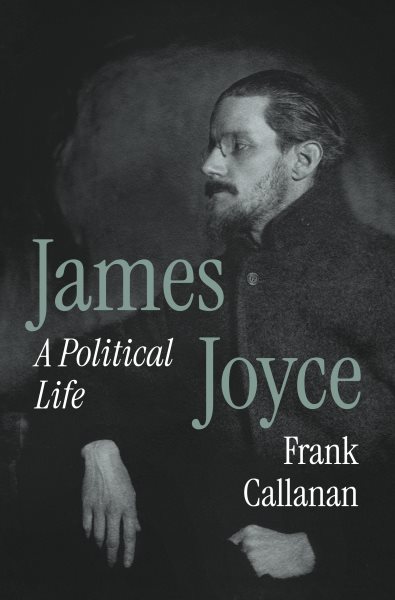
That the young Joyce was deeply scarred by the event is forensically examined by the late Frank Callanan in his masterful – albeit lengthy and unfinished – dissection of the great writer’s political life [James Joyce | Princeton University Press]. Callanan’s new biography uncovers much of startling relevance to Scotland’s contemporary desire for home rule. Why was Joyce so obsessed with Parnell and Parnellism and why does his fascination chime with Scotland’s current political climate?
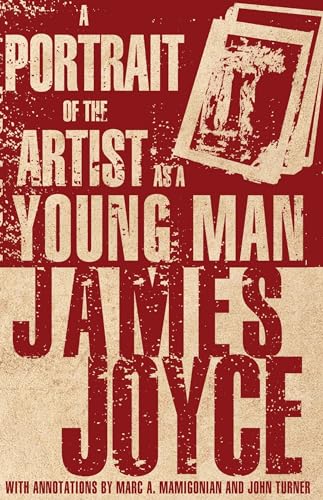
Joyce dramatized that Christmas family feud in his novel A Portrait of the Artist as a Young Man. The central character, Stephen Dedalus – a likeness of the youthful Joyce himself – overhears a heated discussion about the fate of Parnell. His father is pro, his governess ‘auntie’ Dante is…uh…anti:
“O, he’ll remember all this when he grows up, said Dante hotly, the language he heard against God and religion and priests in his own home.”
One of his father’s friends, an ally, joins in:
“Let him remember too, cried Mr Casey to her from across the table, the language with which the priests and the priests’ pawns broke Parnell’s heart and hounded him to the grave. Let him remember that too when he grows up.”
Then Stephen’s father – a stand-in for Joyce’s own father, John – joins in:
“When he was down they turned on him to betray him and rend him like rats in a sewer. Low-lived dogs! And they look it!”
All the while we sense the young boy Stephen – Joyce – listening in. By drawing attention to his earwigging, the adults have gifted him with a theme for life: his city, his country, and its political future.
You don’t need a tuning fork to detect a similar resonance across time. It’s not hard to imagine similar scenes around family gatherings in Scotland these last few years. Not hard either to imagine young Scottish adults of today, budding authors, sharpening their minds and pens in imitation of Joyce. Scotland’s future literary geniuses trying to forge, as Joyce wrote, ‘in the smithy of my soul the uncreated conscience of my race.’ See them pondering the current sundering’s in the body politic and what it all means for our own country’s future.
The victory of the anti-Parnell forces – akin, arguably, to those loud Reform voters against Nicola Sturgeon – gave rise to, in Callanan’s words ‘a reactionary reflux’. Callanan goes on in crystalline language utterly applicable to Scotland today:
‘In rejecting the opportunity to achieve the aspiration of an ancient nation, the Irish had also refused modern European statehood.’
For Ireland 1891 read post-Brexit Scotland today. It was this rejection Callanan argues, that ‘inspired and maintained Joyce’s unsparing indictment of his countrymen’s repudiation of their leader’. Hard not to compare the small wounds that proved fatal: Parnell’s humdrum adultery, Sturgeon’s proximity to a scandal involving a campervan. There’s the persistent hogo of misogyny in both cases, hints too of other distasteful prejudices. Parnell’s mistress was nicknamed by a worrying unionist press as The Uncrowned Queen of Ireland. Easy to imagine others seeing Sturgeon as The Discrowned Queen of Scotland. The net result: national aspirations stalled, progress thrown into reverse, the wheels blown off the campervan.
Joyce talked of nationalist Ireland’s submission to the dominion of the British state and the Catholic church, the ‘two masters’, and how it had consequently degraded itself. How it would not be worthy of independence until it had rid itself of abjection, how it had – in Callanan’s words – ‘severely compromised, if not quite forfeited, its own claim to independence’. We might compare this to Scotland in its present position as it wrestles with arguably a larger list of masters – the currently enfeebled British government, a festering local cynicism about the role of Holyrood and democracy, rampant drug and alcohol dependency – make that dependency full stop. What some would argue as an overdependency on palliative sedatives – be they pharmacological or financial. Cynics may contend that Scotland is content to be dependent rather than independent.
Joyce, Callanan tells us, was not an ideological nationalist. He was ‘hostile to ethnocentrism and scornful of ideas of cultural purity’. He was no fascist. Joyce was also, in Callanan’s terms, ‘unsparing on the subject of Irish disunion, enfeeblement, passivity’ and had a disdain for ‘a political and historical narrative in which the subjugated Irish were acquitted of all responsibility for their fate and self-beatified as victims of history’. Echoes of those today who fetishise Scotland’s defeats. If Joyce were Scottish and alive today, he would no doubt attest that post-Sturgeon Scotland in 2026 as with post-Parnell Ireland in 1891, must be held responsible for its own destiny.
Joyce wasn’t into a national narrative centred on self-exculpating victimhood – an attitude not exactly novel to the Scots – knowing that such a stance only leads to paralysis of the will. A paralysis typified by his short stories in Dubliners – or to make another comparison with Scotland, like Irvine Welsh’s scabrous tales in Trainspotting. Joyce rejected chauvinism and sectarianism, the insular anti-Europeanism of his day and ours. The great paradox – as regards his critiques of romantic nationalisms, his deep distrust of violent solutions – is that his attitudes are precisely those that made what many thought an apolitical man to be the most patriotic of creatures, an exile who became, who typified, who was, the meaning of Ireland.
The lesson for Scotland? Mind what you say in front of the kids…
James Joyce – A Political Life by Frank Callanan is published by Princeton University Press.

We are supported only by our readers. We don't have corporate backers and we don't take advertising, so we rely entirely on your support.
Help to support independent Scottish journalism