

Scottish Politics and the Twilight of the British State
Part One: Scotland’s Election and the Independence Question
In Scotland a SNP fifth term – the largest pro-indy majority in the history of the Scottish Parliament and record Green representation, while in Wales Plaid Cymru won their first ever nationwide victory and now form their first ever administration. There is now ‘a Celtic Tiger’ of nationalist leaders in office, contributing to not just the fragmentation of British politics but the emergence of a ‘four nation’ politics. Meanwhile, a pan-British political system ceases to exist except in the myopia of the Westminster classes.
As the Starmer Premiership staggers to its inevitable end, and Westminster and the London-centric media obsess on the endless psychodrama that follows a predictable pattern, Scotland needs an honest debate about where we are. This should address the implications of the Scottish election, where Scotland stands, the state of our supposedly progressive politics and the threat of Reform and right-wing populism. It needs to consider key questions of substance and strategy about self-government, and reflect on the challenges politics faces in Scotland, in the UK, and geopolitically. The following will try to contribute to this discussion through first looking at the immediate environment, and secondly to the future – and what can and should be done.
Some commentators saw the march of Reform as the death knell of Scottish exceptionalism – the idea that ‘Scotland is immune to racists, bigots and Farage’ as one observer put it. This is a red herring. Scottish exceptionalism is always raised with the aim of trashing it and burying it. What this ignores are the reality of Scottish differences with the rest of the UK now and historically.
Scotland is different but not completely different, reflecting our existence as a nation and 300-year union. Last week’s election illustrate this. According to BBC estimates Reform won 26% across the three nations of Great Britain – 29% in Wales, 27% in England and 17% in Scotland – a 10% difference between Scotland and England which is a not inconsiderable gap. Exceptionalism has always been a myth and trotted out to trash as a myth; doing so does not mean Scotland is not different to a degree.
The Meaning of How Scotland Voted
The SNP’s victory has been widely seen as impressive even by detractors. Its 38% FPTP may be 9.5% down on 2021 but still shows a resilience amongst many Nationalist supporters. Its 27% list vote is less impressive – the second lowest vote the party has ever recorded and only beaten by their 2003 performance under John Swinney’s first period of leadership.
Numerous factors shaped the size and nature of the SNP vote according to Ailsa Henderson of Edinburgh University:
SNP support always benefits from three sources: the level of independence support within the electorate, the fact that the salience of the constitutional issue makes standing up for Scotland a valence issue (much the same way that managing the economy is in other states), and the fact that the Scottish electorate is encouraged to undertake an constant comparison between the behaviour of the Scottish and the UK government.
John Curtice of Strathclyde University takes the view that the SNP’s undoubted success last week must be seen against the backdrop of the troubles the party recently went through post-Sturgeon:
The SNP were punished in the period before the Scottish elections. The period this happened was between the resignation of Nicola Sturgeon in 2023 and the resignation of Humza Yousaf in 2024. There was a very divisive leadership contest which Humza Yousaf narrowly won against Kate Forbes with 52% of the vote. After the contest the divisions continued and after Yousaf resigned Swinney has held the line.
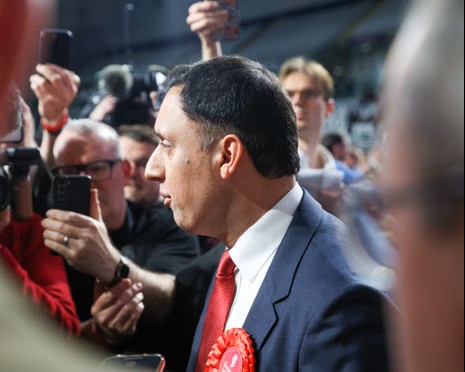
Labour’s continued retreat in votes and seats was widely predicted but its continual retreat across the first seven Scottish elections achieving the lowest vote in the party’s history – 16.0% on the list – still shocked many. Underpinning this Scottish Labour is a hollowed-out entity. It is still unsure how to act in opposition, to adapt to devolution, and to take on the SNP. Such incomprehension of the political landscape it operates can be felt in the way the party operates, still dazzled and confused at finding itself locked out of power in the devolution it has championed. This can be seen in the election strategy of Douglas Alexander stuck with a pre-devolution concept of the SNP and politics, while Anas Sarwar’s departure is only a matter of time as the party prepare for their eleventh leader under devolution.
The Scottish Tories had their moment with Ruth Davidson and finding relevance in the latter stages of the indyref and afterwards. This now seems a long time ago. Davidson did little to renew the Scots Tory brand and subsequently, the party has contributed little of any worth. Now it has been usurped on the right, won the lowest vote in its history – 11.8% FPTP and list – and may face a future on the margins as an increasingly irrelevant force.
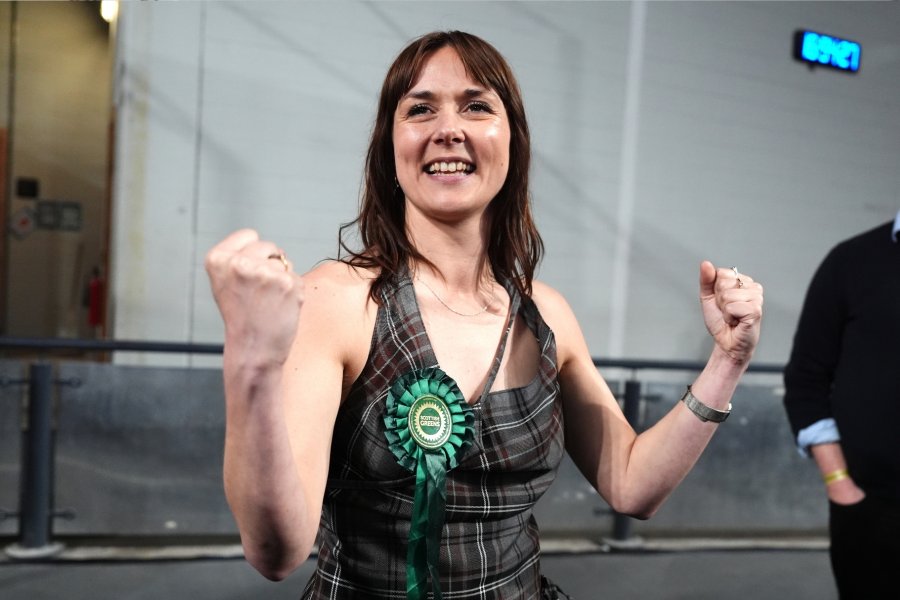
The Scottish Greens have brighter prospects and the challenge of increased expectations which come with success. They won a record number of MSPs and seats, including their first ever two constituency victories in defeating SNP minister Angus Robertson in Edinburgh and winning Nicola Sturgeon’s old seat of Glasgow Southside. Yet there is a missing dimension in the core of the party’s raison d’etre with too many activists and members not genuinely connected enough to wider social movements. The Scottish Greens have harvested an impressive regional list vote but have done so without offering a coherent radical edge; to develop they need to have more depth and to learn from their unhappy experience in office working with the SNP.
This brings us to Reform. It says much about their appeal that they had such an uncomfortable campaign with Malcolm Offord’s lack of experience of running for office, alongside numerous offensive, bigoted and racist comments by a plethora of their candidates from supporting Tommy Robinson to questioning Anas Sarwar’s loyalty to the UK. Despite this, Reform soared into second place in list votes with 16.6% winning seventeen seats, the same number as Labour.
This will bring a new political set of attitudes to Holyrood unseen so far. It will be noisy, attention-seeking and unapologetically opinionated. It will advocate rolling back the Scottish state and public spending, and wage war on DEI, equality and diversity while trying to fuel the fires of culture wars and launching rhetorical salvos at the threat of ‘the woke’. This will be combined with a virulent language on asylum and immigration, multiculturalism and race which will shock many in the Scottish body politic.
A defining story for Scotland will be how it deals with the rise of Reform. John Swinney has said that while he would engage in cross-party talks about future issues he will not talk to Reform. This has invited much debate about whether this is the right approach. But this is a diversionary tactic which ignores the need for substance. All parties in Holyrood will have to talk and deal with each other: such is the reality of a Parliament where all parties are minorities. The SNP, Labour, Tories, Greens, and Lib Dems will have to engage with Reform in the Corporate Body which controls the business of the Parliament, committees and chamber.
The bigger question, which Swinney’s process point ignored, was how best can Reform be taken on and defeated. Namely, Reform represent the legitimisation and normalising of racism, xenophobia, and stigmatising and dehumanising minorities – all undertaken in a lexicon of talking and acting in simple primary colours with the potential for cut-through in an age of bland politicians.
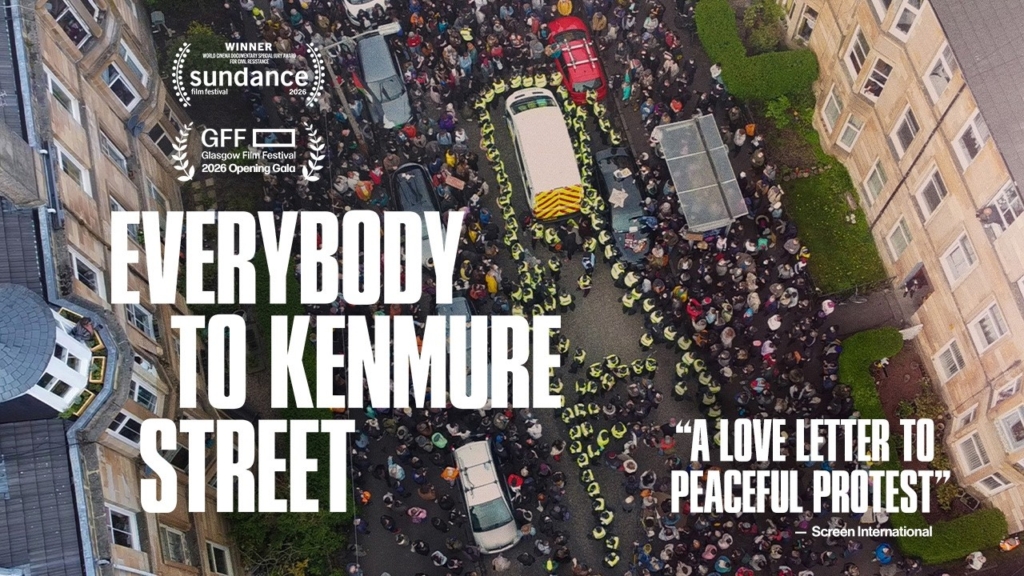
Scotland has not faced such a challenge for decades in terms of repulsive, far-right views with a significant electoral presence – probably since the 1930s and the threat of the anti-Catholic, proto-fascist Protestant Action who broke through at council level in Glasgow and Edinburgh. Swinney’s post-election posturing will not be enough. Nor will calling First Minister summits or STUC initiatives. Centrist political initiatives will not be enough. Instead, it will require sustained grass roots organisations and community alliances which take an unapologetic stand for anti-racism and solidarity with BAME communities, asylum seekers and refugees. The recent film, Everybody to Kenmure Street, (reviewed here) showed how this can be done at a pop-up level; but there needs to be support systems and a wider infrastructure.
Yvonne Stewart, former Assistant General Secretary of the STUC believes that you defeat Reform and what they represent by:
You defeat it by making the alternative real in people’s lives. Small, local, relational, concrete. Not messaging. Physical presence. The food bank that becomes a community hub. The union rep who shows up and actually wins something. The tenants’ group that stops an eviction. Kenmure Street. These are not glamorous. Most of the little collective acts of community don’t trend. But they are the only thing that has ever actually rebuilt solidarity from its ruins — and solidarity is the only effective protection against the viciousness of Faragism – his politics of blame and scapegoat.
Scotland has Collective Power: Let’s Use It
An impressive pro-independence majority was returned to Holyrood – 73:56 – the largest in the history of devolution. But this is based on 40% SNP-Green FPTP and 41% list vote. Even more the SNP FPTP vote of 38% on a 53% turnout is not as popular as on first impression representing a mere 20% of the electorate: the exact same share that Keir Starmer won in Labour’s ‘loveless landslide’ of 2024.
Independence was not high in voter priorities (often rated 12th or 13th); it was not even top with SNP voters (often ranked second or third). ‘We have a mandate and we need to use it’ is a common mantra among independence supporters. You can feel the frustration in such comments. However, a mandate is not a legal or fixed concept, rather it is something made and remade in the court of public opinion. Seats, votes, momentum, salience of an issue – all matter. Just invoking an abstract notion of a ‘mandate’ as carrying all before it is not how politics work; plus doing so invokes a Scottish version of the problematic Westminster version of tyranny with absolutist parliamentary sovereignty and ‘elective dictatorship’.
More than this, independence supporters cite Westminster’s blanket refusal to countenance another indyref. This is cited as evidence of Westminster’s lack of respect for Scotland, the fact the UK is not a democracy, and that this is supposedly not a voluntary union’. ‘There has to be an agreed and recognised exit for Scotland if Scots want to exercise it’ notes one pro-independence campaigner. And this is a strong argument which puts independence on the side of democracy.
There is more here which needs unpicked. The above take says that the external blocks put in the way of Scotland’s right to decide are disrespectful and anti-democratic and the reason Scotland cannot decide its own future and whether it is independent or not. This is not the whole picture – with the perspective outlined reinforcing Scotland’s collective sense of powerlessness and lack of agency.
Scotland has power and agency. Namely if Scottish opinion work out a new independence offer, address the trade-offs, choices and thorny issues, reach out to understand those who voted No and remain unconvinced, and analyse properly why Yes lost in 2014 (which is more than Gordon Brown, ‘the Vow’ and BBC) – a task the SNP willfully refused to do in the past twelve years – then that would be a potential gamechanger.
This would be an act of collective empowerment and agency. If it was combined with a strategy of public engagement and building public support this would emphasise that Scots collectively have the power to shape and make their own future and have decided to be serious about this and do something about it. This is the road not taken since 2014: in part blocked by the SNP, but also by the continual pretence that independence can be attained by the latest ‘mandate’ or ‘one more push’. Such an approach is one of diminishing returns playing to a declining number of the true believers such as the SNP’s 20% of the electorate last week.
What it would do is remove the illusion that all the main barriers to progress on self-government are external – with the consequent depowering of Scots – and do the heavy work on internal issues – practising and advancing a culture of self-determination and taking power and responsibility – which would not only aid independence, but a politics of substance. It would also be helped by having an honest reflection on a politics of timescales – and that independence is not on present circumstances just around the corner. The pretence that it is undertaken by Sturgeon and successive leaders has harmed independence.
Thus, Scots have the power to make self-government and independence real, vibrant and relevant. In so doing an emerging politics should address the nature of how the British state views Scotland and any independence referendum. The above would aid the creation of a cross-party consensus on what criteria and mechanisms could be used to trigger any future vote.
This would be able to draw on the Good Friday Agreement’s framework for any future border poll; and is a critical arena for challenging the nature of political power in the UK and how it views Scotland. There is in short nothing to be lost creating a substantive and informed political vision of Scottish self-government and then being in a position to demand that the British state act in response to that in a manner which is not anti-democratic – knowing that not doing so beyond the short-term – would carry a severe political price for the UK.
Above all this would make independence more real, relevant and not an abstract, as Yvonne Stewart notes:
In Scotland specifically — the independence question is only useful if it gets connected to that material reality rather than remaining a constitutional abstraction. “Independence for what?” – that is the question that needs answering. And it needs to be answered in local communities – in action that changes things for the better.
So we’re celebrating 20 years of work and planning the next 20 with a
refresh and re-launch. To do that, we are trying to raise £20,000 in 20 days.
GO HERE TO SUPPORT US

A solid summary of where we are, Gerry. I suggest a crash course in Gramsci might be useful for those in the SNP. Since 2014, they have been unwilling to consider building a hegemonic power base. They looked inward rather than outward. They refused to share ownership of the idea of independence. We are still hovering around 50% becuase of this. A new direction is needed. One that opens up the vision to Indy to the movement.
This is a great piece, in that it compellingly sets out the direction the independence movement needs to take if it is to make new headway. The post-2014 movement has truly run its course, and a new beginning is required. Gerry articulates well what this should involve: an enterprise of collective engagement and agency, as he puts it.
How do we get started on this? It is not just up to the SNP (though the SNP should help facilitate and sustain any movement that does emerge) or indeed other political parties: it needs somehow to emerge from grassroots campaigns. This is easier said than done.
Perhaps one way would be to place more emphasis on self-determination, with independence as a central option of course, but not excluding others from the start. This might frame the issue more openly, in such a way as to enable the building of alliances with other movements, in particular those sections of the labour movement that are at least open to such a discussion. And it would also reframe the issue as one of democracy, a key thread uniting progressives across the nations of the UK and beyond.
Reform’s results in Scotland are poor or very poor…
Never have the two big parties been in such disarray… they have both become dysfunctional…
They simply don’t know how to fix an economy broken by 40 years of neo-liberalism in which all the eggs were put into the basket of the City of London, sucking so many of the productive resources out of the economy, turning the UK into a giant casino which went bust with the financial crisis of 2008…
Housing crisis? Thacher again. She started it. Labour continued it. The surest way to make money? Buy property. Again, money that could go into start-ups or small businesses, goes into speculation…
Add the 8% of GDP that Brexit lopped off the UK economy, plus the Covid pandemic, plus the war in Ukraine and now Iran…
It’s no wonder Labour and the Tories are in a mess…. they are trapped in a way of thinking which can’t deliver results…
The Tories lost 10% of the regional vote from 2021 in Scotland. Reform picked it up along with some disgruntled Labour votes.
If they had a Scottish Farage, then you might be a little concerned. But, as far as I can see, they don’t have even single SMP who might cut some ice…
Reform’s project, which is essentially a continuation of the Brexit project, cannot work either and will make the UK much poorer even still…
As for the Scottish exceptionalism theme, and Gerry is absolutely right it is only ever mentioned to knock Scotland down, for what it’s worth, the same thing used to be said about Spain…
Spain was inoculated against the Far Right after 40 years of Franco. Couldn’t happen here etc, etc…
In actual fact, progressive Spaniards were always pointing to the opposite, to remnants of Francoism, or sociological Francoism, as it’s sometimes called, in the State apparatus, like the judiciary…
Anyway, both Spain and Scotland have a far right on about 15%-18% of the vote, a far cry from the 27% in England, which in turn is comparable to Germany, but significantly less than Italy or France…
I’m not sure I believe that a “historic shift” has taken place. If the Tories get their act together, given some time, I reckon most Reform voted wi!l revert to them…
I can’t see the Conservative Party of England just melting away…
As for Spain and Scotland, probably they have the two.most progressive governments in Western Europe right now…
Gerry – thanks for this excellent article. It is far more rounded and comprehensive than anything else I have read since last week’s election.
Post 2014 independence referendum Holyrood appears to be in a rut with too little focus on collegiate politics to improve services to public in Scotland. There is too much focus on arguing back and forth about whether and how to hold another Indy referendum. One suggestion to break out of this deadlock would be to change the voting system to a PR system (eg STV) in agreement from Westminster not to block a Section 30 request from Holyrood. This would hopefully remove bickering about another referendum which in turn remove major obstacle to parties working together. It would also virtually ensure that if Holyrood voted for another referendum it would truly reflect the Scottish electorate wishes.
The most important result of the recent Holyrood election is the success of Reform UK. Only a few years ago, such success would have been unthinkable. (Comparison with the success of anti-Catholic parties a century ago are misleading. They were confined to small areas in local elections)
In his piece, Gerry Hassan denounces Reform UK, as virtually all commentators on the left do. Is this an effective tactic ? I doubt that it is and, going further, suggest that it is counter-productive. The ceiling’ for Reform UK in Scotland is probably lower than in England and Wales but – right now – despite a cascade of denunciation, Reform UK is an electorally successful part of the Scottish political mainstream.
FA – the Brexit Party got nearly 15% of vote in 2019 European elections. Reform are the next incarnation of Brexit Party (Farage party funded by hedge funds).
The overwhelming majority of people in Scotland reject Farage (regardless of what his latest party is called). The problem is that though the majority of people throughout UK viscerally reject Farage’s philosophy the redundant FPTP system could give him the keys to Downing Street on his absolute ceiling of 30% vote. The ceiling in Scotland is probably 20% but we will still have his billionaire tax cutting, public spending decimated, minority hateful philosophy imposed on us.
And yet; with Brexit done, Reform UK got 5,793 votes in the 2021 Holyrood election – 0.21% of the votes.
More significantly, is denunciation an effective tactic ? If it worked, would Trump have won the triumph he did in 2020 ? Would AfD be prospering as it is in Germany ? There are plenty more examples. Did denunciation hinder the political career of Gerry Adams and Sinn Fein ?
Amidst a blizzard of denunciations, I read comparatively little about what led 383,425 Scottish voters to make the decision to vote for Reform UK.