

Great Expectations
Today John Swinney has been elected as the First Minister of Scotland. The SNP will be entering its second decade in office. Now the dust has settled, and as MSPs take their oaths, the new landscape of the next parliament becomes clearer.
A number of MSPs took their oaths in different languages including Arabic, Scots, Doric, Gaelic, Shona, Mandarin, French, Dutch, Shaetlan, Orcadian, Polish, and Hindi. While some on the Left felt this was a performative nonsense redolent of the shallowness of contemporary Scottish politics, some on the Right recoiled at the very idea of such diversity. For some the swearing in process is a signal of the MSPs connection to the British Monarchy, for others it is a sign of the sovereignty of Holyrood. But since Rosie Kane, the former Scottish Socialist Party (SSP) MSP, protested the traditional oath of allegiance to the monarchy during her swearing-in at the Scottish Parliament in May 2003, where she openly took the oath while holding up her hand, which had the words “My oath is to the people” written on her palm, the act itself has been contested.
The focus on the swearing-in ceremony is a microcosm of Scottish politics, with the Constitution battling with identity politics (in its best sense) and culture war politics (in its worst sense) for attention. And the deeper question is: what is the actual extent of the political ambition of this government?
While that is answer the new SNP administration will have to answer, the behaviour of the remaining parties is bemusing.
Alex Cole Hamilton, the rebarbative leader of the Liberal Democrats, announced to general confusion that he’d be running for the position of First Minister. No doubt the idea seemed a good one at the time, but it adds to the impression of a party all at sea. The Liberal Democrats increased their tally of MSPs from four in 2026 to 10.
While the Liberal Democrats have been accused of grandstanding, the Conservatives and Reform have become obsessed with the election to Holyrood of Dr Manivannan, a Scottish Green Party MSP. Dr Manivannan is a Phd graduate in Politics, self-described as ‘a queer Tamil immigrant’. He was eligible to stand and was duly elected. They have done nothing wrong and broken no law. But their very existence has acted as a lightning rod for those who are consumed by an obsession with trans people.
Much of what passes for debate on the subject skirts around the issue, purporting to be about issues of immigration status. As Craig Murray, a figure I don’t often agree with put it: ” …whatever view one takes on what the law ought to be, the law as it stands is clear. Dr Manivannan was eligible, stood, and was duly elected. That Scotland has subsequently been rocked by shrill calls for Dr Manivannan to be deported by the immigration authorities, I therefore find appalling. It is not only a denial of democracy, it is without doubt motivated by the most basic hatred and bigotry, both racist and anti-trans. To see such sentiments so openly espoused in Scotland I find deeply disturbing.”
The juxtaposition of the people who talk of the need for ‘insurgents’ and the desperate need for non career politicians (agreed) and the response to Dr Manivannan’s election is stark and betraying.
But if the right-wing parties of Holyrood – both those in the ascendancy and the Tories – are obsessed with, and reduced to – culture war smears, Labour are in an altogether different space.
No Change
Having come to their worst Holyrood election result ever, and reduced to just 17 MSPs (joint with Reform UK), Scottish Labour seem to be in deep denial about their predicament. The Daily Record, virtually Scottish Labour’s in-house newsheet told us: “A Labour source told the Record that Saturday’s meeting of the party’s Scottish Executive Committee had endorsed Sarwar to “crack on with our support”. Chris McCall, the papers Deputy Political Editor told us that: “Glasgow MP Zubir Ahmed – who resigned as a UK Government minister last week – claims there is “no mood” for a Scottish Labour leader contest.”
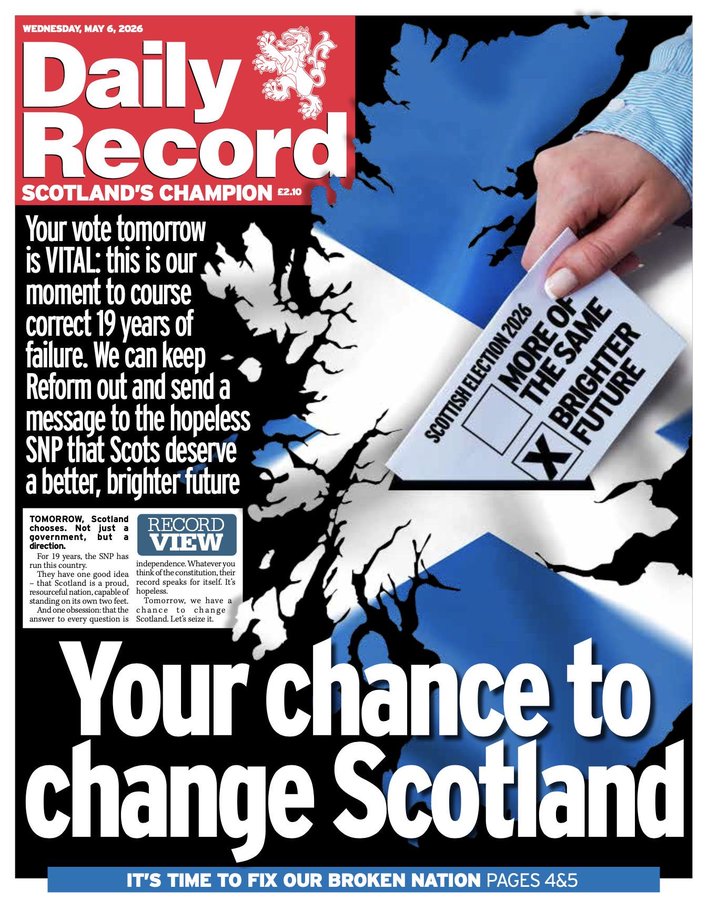
The result is that, Anas Sarwar, much like Russell Findlay, seems impervious to any consequences for running utterly disastrous campaigns.
As the writer Jamie Maxwell has noted:
“Struck by the contrast between Scottish Labour and UK Labour at the minute. The latter, however chaotic, mismanaged etc, at least seems to have a survival instinct. ScotLab is just meekly, terminally carrying on as if nothing happened.”
He concludes: “I suspect the failure to oust or even challenge Sarwar reflects Scottish Labour’s institutional weakness. The membership is small and shrinking. The unions aren’t interested. There is no one strong enough in the MSPs group to stand as an alternative.”
So if the UK Labour Party is in the midst of another internal Civil War, Scottish Labour seems deeply mired in its own complacency and hubris.
Now What?
So the next Holyrood Parliament is a swirling mess of expectation, far-right sound bites, Unionist denial and a resurgent pro-indy representation.
The new First Minister said today: “The people have now elected the largest pro-independence majority in the history of devolution.”
But the hanging question is, so what? What exactly will the SNP – Green alliance, however formed and articulated, do to take forward the constitutional question? We will have to wait and see. There is, however, a domestic agenda behind that.
One of the standout commitments from the SNP’s manifesto was a commitmento try and tackle the cost of living crisis y attempting to cap the cost of food. Such a proposal was met with uniform disdain and condemnation at such a ridiculious thought. Much as (take your pick) stopping smoking in pubs, having a bottle deposit scheme, or the minimum price on alcohol were (amongst others). In each case we were told such a thing was impossible and ridiculous and a strew of ‘business figures’ were wheeled out to explain why such was beyond the pale. A stalwart of such narrative is simulateneously that a) there are no good ideas and the politics is barren and b) anything outwith a very narrow bandwdth of thinking is rubbished.
It’s interesting to note that as I write such a radical as Ashley Armstrong (Chief UK Business Correspondent at The FT. Former Business Editor of The Sun & ex Retail Editor at The Times and The Daily Telegraph) writes: “EXCLUSIVE: UK government is in talks with large supermarkets about voluntarily capping food prices on basic food items, four people told @FT. Comes after SNP’s food caps were branded a 1970s style gimmick.”
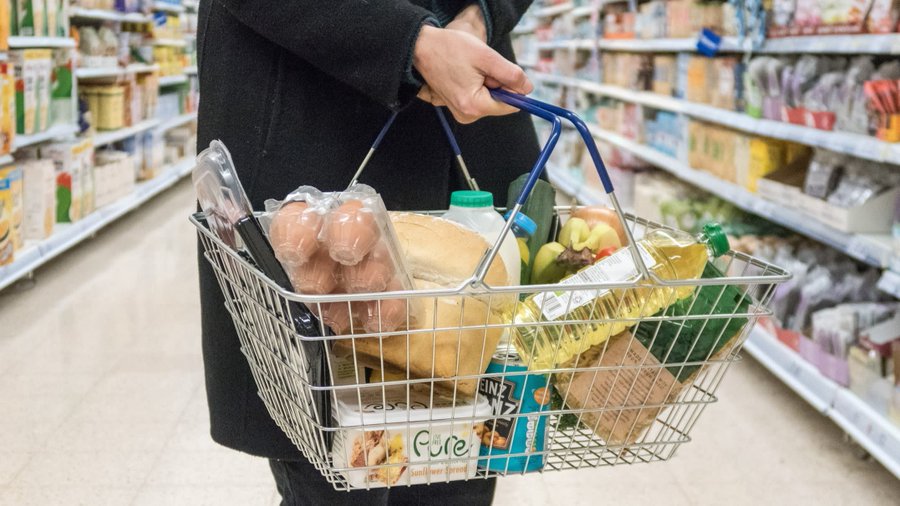
Such contradictions do matter as the Labour Party stumble over each other to celebrate Andy Burnham’s volte face about the whole neoliberal project of which he was so central. As they say ‘I hae my doubts’.
But the stark hypocrisy between the Unionist voices cascading down on anything the SNP attempt to do and the generous room given to the nascent Labour leader’s pronouncements is noteable.
As Ewan Gibbs points out: “Lots of folk queueing up to agree with Andy Burnham’s criticisms of neoliberalism and Thatcherite economics who had no such truck with Corbyn, Polanski or even Ed Miliband saying similar things. Probably best taken as a sign of progress.”
A Day Out in London
The other key point, beyond the Scottish Government’s ability, or not, to make any material difference to people’s actual lived reality, or to take forward the constitutional question, is how they (and we) respond to the rise of the far-right.
This is disgusting. No different from the anti Jew marches and rallies of the 1930s. pic.twitter.com/ZvK1omBOdH
— (@HomoSocialist) May 16, 2026
These things are intimately connected.
As William Davies writes in the LRB:
“…It is widely understood that Reform is benefiting electorally from a mood of socioeconomic hopelessness (which is not to say that it only courts the votes of the socioeconomically disadvantaged, still less that it has realistic plans to help them).
Numerous international studies have shown a correlation between local austerity measures – which result in the closure of public spaces, the loss of jobs and the shuttering of high streets – and increased support for radical and far-right parties…
As recent research on ‘zero-sum thinking’ attests, an absence of economic growth produces a sense that for one party to win, another must lose, exacerbating grievances that nationalists are adept at exploiting.
One intriguing feature of contemporary British hyperpolitics [meaning: a pervasive polarisation of views and “wars”, accompanied by little expectation of anything changing] is that Reform has ended up on both sides of the chasm between politics and policy.”
How this contraditction plays out in Scotland will be fascinating, and potentially terrifying.
What I think Davie is saying is that Reform (and its adjacent fascism) has in its favour a sort of disconnect. It is all vibes and no policy in a way that, say, doesn’t and didn’t work for those on the Left.
But this story of the inevitabilty of hate and the impossibility of hope isn’t quite right. It doesn’t explain the rise of Zac Polanki’s Green party, or indeed the popularity of Corbynism (before Burnham’s recent appointee Josh Simons and others smeared him). Nor does it explain the inexplicable support for the Greens and the SNP while surrounded by a deluge of Bad News. Projects as far afield as Nourish Scotland and Mamdani’s administration in New York are exploring the radical idea that people should be able to afford food.
There are great opportunities here, but only for those who take them and step up, and that isn’t reduced to professional politicians, but a wider, deeper movement, with great expectations.
As The Alternative has it: “It’s time to relinquish control over our British identity from the top and encourage more reinventing of the future from below. Scotland, England, Wales and Northern Ireland – whether through radical devolution or independence – have the opportunity to break the mould. They can encourage the central British state to let go of the past and re-start the future, both in relationship to its own citizens and the wider world.”
If you support our work, please donate here:
Bella Caledonia 20/20

The Claim of Right states that the king rules in Scotland by consent. MSPs meekly swear allegiance to a monarch who having sworn himself to uphold the Claim of Right actually rules by ‘Grace of God’ . The King then grants crown immunity and other favours to his chosen ones. Sinn Fein MPS have always refused to swear allegiance and until our MSPs uphold our sovereignty by insisting that in exchange for any oath by them the king comes ro Holyrood and repeats his full coronation oath to us, any real independence will always be ‘jam tomorrow’.
MSPs cannot sarve two masters. And at present they do not serve the people.
you should get Bonnie prince bob to do a weakly article, it could jazz things up a bit.
I think that Bonnie Prince Bob advocates beheading quite a few of the main claim of right jump-the-sardine protagonists for having more money than him. He did beat Craig ‘Spare House in my Garden’ Murray in the recent election.
“There are great opportunities here, but only for those who take them and step up, and that isn’t reduced to professional politicians, but a wider, deeper movement, with great expectations.”
Imagine if there was tsunami of huge membership increases for both the SNP and Scottish Greens , could that facilitate new ideas and change from below ???
“Imagine if there was tsunami of huge membership increases for both the SNP and Scottish Greens , could that facilitate new ideas and change from below ???” I think that would be (a) highly unlikely to happen, at least here in the highlands and (b) far from facilitating new ideas and change it would be sure to kill them off. Both parties seem to be just as ‘neoliberal’ as the others and completely lacking in any useful vision.
It’s all too understandable and easy to sneer and be negative. We have to move beyond that. And we are certainly not too wee too poor too stupid, despite centuries of colonialism.
We need a new, radical movement, a new ‘party’ and I’m pretty sure we’ll have one soon. If not I propose to start one – anyone interested? The idea would be to start with a few basic principles and see where they take us:
1. People and planet are not separate but part of a single, interdependent planetary ecosystem that ‘belongs’ only to itself. Self-interest must be balanced against common interest – they might even coincide.
2. Adherence to the rule of law and the Claim of Right. All those claiming authority must demonstrate public consent and be accountable. The law must apply equally to all and be equally accessible to all. No more crown immunity.
3. Scotland’s people have an absolute right to democracy and self-determination; and to ultimate ownership (i.e. stewardship) of our land, water, air, and resources or all kinds; and an absolute right to self-defence, regardless of the aggressor or would-be coloniser. Planning decisions and regulations must be made locally and in the public interest and no longer just bulldozed when unprofitable.
4. Small is beautiful. Empowerment of the people requires decentralised governance and an end to monopolistic corporate power.
5. Technology must serve the needs, freedoms, creativity of people and planet, locally. That means a distributive, peer-to-peer internet and power grid and an end to SMART (surveillance, monitoring, analysis and recording )tech.
I’m sure you can think of more, but that will do as a starter. It doesn’t seem so radical to me.
We need something we can at least aspire to. Voting for the ‘least worst’ is the real wasted vote, but at the moment it’s all we seem to be offered.
I have a dental bill that makes contributions to worthy efforts (this one being prominent among them) iffy at best, for the 2 coming months. Please advise if Bella will break if it doesn’t get the funds it needs, by that time. Thanks.
This is an extract from an email sent to some of my List MSPs, 3 of whom are party leaders, 1 is Depute PO, castigating all parties for saying little about community empowerment:
“This new Parliament has two potential roads to travel.
It can continue to be a distant, self-interested group of self enhancing politicians & political parties, serviced by a host of paid functionaries, passing away the next five years, OR
It can be truly Transformational & Relevant to ordinary folks in their communities by Engaging Directly!
It is entirely up to you. You will get paid whether you achieve nothing, something or a great deal. You write your own job spec, your own objectives & performance indicators. There is No actual “glass ceiling”, irrespective of political ideology or constitutional position. I hope you and your 129 MSP colleagues make the right choices. You might yet release some “magic alchemy” but only if you are brave & creative enough? ” (end)
On a practical note, there is too much “faffing about” since the election result was declared. The new Parl. has only 6 weeks max before they will probably go in to recess, with the World Cup commanding attention in 3 weeks. The productivity of the previous Parl was poor; they need to up their game from part time status. They should set their mark by taking a max 4 week summer break, at least for this year?
Spot on , Ian!
Thet could do worse than dig out the Citizens Assembly recommendations and get on with it!…so,.they dont even need to debate what to do…we’ve already told them! ( although it was shock8ngly ignored and now not even available on Scotgov website – deleted!)
I think the first Scottish gov. ‘citizens assemblies’ started about 2000. They have always been a pointless insta-headline PR excercise in Scotland. Publicising their findings would be a good start, but after 26 years of them, that’s unlikely.
PS: extract from a local note ‘re impact of Scot Gov appointments:
“Our two East Renfrewshire MSPs are Ministers. Celebrate? NO! It is a myth that having your MSP (or MP) in a top job is good for your area. It detracts from their local profile; it means that neither may be willing to take up controversial /major issues (other than of course defined case work which they are obliged to process) especially if it means criticising Scot Gov policies! We may have to rely on some of our more receptive List MSPs?”
I wonder if John Swinney knows what the price of a pint of milk is. No-one should take part in a debate about minimum pricing unless they don’t need advisors to tell them what the prices are for bimbo bread, orange cheese, and oven chips.
If we want to increase the pro-Indy energy in society, then pro-indy parties in parliament need to actively and continually push at the boundaries of ‘what is allowed’ – call it political disobedience – so that a) more and more people see what is being denied them by our subservient position within the UK and thus they demand change, and b) it forces the UK government to confront and respond to the realities of ‘power devolved but not shared’ by denying our demands.
As things stand, a fairly constant proprtion of people want Indy and a similarly-constant proportion don’t. The latter are the ones who need to join us and they need to have good reasons to change their views – the last 10 years of shouting and pleading for another Indyref has made very little difference.
Act on the ‘seek forgiveness not permission’ approach – ie operate on the basis that Scotland DOES have the powers to do XYZ and force the UK govt to deny them – only then will significant majorities of new people see the TANGIBLE BENEFITS of independence.
Thanks Sheila, agree totally
I think that the problem is that we rely too much on the Scottish Parliamentary parties to do too much. Meanwhile we plod along in a docile manner waiting for something to happen and quickly blaming our representatives because they haven’t moved things along. Maybe we should be exercising civil disobedience?
Lest Bella get in to bother for promoting anti British state something or other I should insert ‘allegedly’ or some other qualifying nonsense.
I think the Yes movement has disembowelled itself.
On potential new sources of misinformation and intermediation, the Guardian has:
ChatGPT and other AI bots made huge errors before Scottish election, study finds
https://www.theguardian.com/technology/2026/may/20/ai-chatbots-chatgpt-replika-grok-gemini-misinformation-scottish-election-demos
I’m not sure how reliable this research and reporting is (perhaps AI was somehow able to detect scandals the researchers did not), but the questions it raises are reasonable ones. Why people would be using these tools to find out about Scottish election news, in what numbers (is 20% of voters accurate?), and how much weight they gave the answers, remains unclear. Governmental interest in the election-tampering potential of AI seems curiously lacking (however high-priority organs of state say it is).
Again in today’s Guardian, I am a little surprised that George Monbiot has not quite fathomed the depth to which the British imperial political systems are designed to avoid accountability (particularly at the top, with circuitous and shadowy responsibilities, Crown immunities, rewards for failures in the Lords which he does mention, embarrassingly antique treason laws, lifelong official secrets omertàs, draconian royal secrecy, colonial memory holes etc).
Meanwhile the Scottish Greens are understandably exercised about possible impersonation by ‘the far right Independent Green Voice’, and call for ‘an urgent Electoral Commission investigation’. What they think about all those confused Green voters who were allegedly fooled isn’t so clearly spelt out.
Personality-focused party-coralled promissory-accusatory politics is still with us, for some reason. Although even Craig Murray has now identifying as a revolutionary, so perhaps the winds will change on that.
#biocracynow
Sleeping Dog – I think the Green Party and many others think that people who incorrectly put their cross beside the Independent Green Party rather than Scottish Green Party as they intended were effectively disenfranchised.
The List voting slip (toilet roll) was quite a surprise for me and I follow politics quite closely unlike majority of people. It was pretty comprehensively proven that the Independent Green (spoiler) party led to a significant number of voters to fail to vote for party they intended to in 2021 election. The fact that the Electoral Commission allowed this to happen again in 2026 election makes you question the effectiveness of the Electoral Commission?
@John, the Conservatives undermined the authority of the Electoral Commission and introduced the Elections Act 2022 and discriminated against younger voters:
https://en.wikipedia.org/wiki/Elections_Act_2022
The topic of demographic gerrymandering is live both in the UK and USA, with the prospect of partisan tit-for-tat.
I’ve seen reports on the effects of long candidate lists, with those as the top getting significantly more votes, it was alleged. Technology exists to automatically randomise (scramble) list order, or use some kind of standard aggregation pattern to make identification easier and quicker.
Perhaps the Electoral Commission is not up to the job, being part of the British Establishment, imbued with the taint of bipartisan politics, and international electoral bodies should take a lead role.
Its civil society antagonist, the Electoral Reform Society, is one of many calling for a more widely-used proportional system, an elected second chamber, and so on. Not radical stuff, by European norms.
Whatever children get taught in schools, it doesn’t seem enough to reliably train people for even our rare-periodical voting system. Our basic unfamiliarity with even the most limited, flawed and superficial implementations of democracy is surely due to it being quite alien to our culture. We have various trappings, like voting in committees and trade unions, but our institutions and businesses are pretty much run on bureaucratic and autocratic lines. The patriarchal template for families may have faded and warped a little, but not disappeared.
However, nobody has a copyright on the definition of Green Party, and IGV does have some published manifesto policies which are essentially autarkic, focusing on economic and energy self-sufficiency, even if they seem a little anti-science (I guess as a idea communism, global science doesn’t appeal to them — although I don’t knock their scepticism of Big Pharma). Political parties are very much in the business of ‘stealing’ votes from others, and I cannot condemn them as a ‘spoiler party’ on such grounds. One could argue that the Scottish Greens are something of a neoliberal mirror to IGV, and neither is the kind of Green Party we need, especially with the blatant and avowed careerism of its unusually-long-termed previous leaders. Well, we’ll see what they do with their extra MSPs this Parliament.
I listened to a discussion with Alan Rosen a former Labour Party official on Scotcast post election last week.
He was asked about Scottish Labour becoming a separate organisation similar to status of Scottish Greens. He basically said that Scottish Labour are financially supported by Uk Labour and can’t afford to become a separate organisation.
He was also asked about a suggestion by Paul Sweeney that Scottish Labour enter into negotiations about agreeing a route to another independence referendum. His answer was that Scottish Labour couldn’t afford to do this as having already lost most pro independence supporters post 2014 they cannot afford to antagonise anti independence supporters in case they lose their votes.
This interview showed not only how narrow minded a party Scottish Labour have become but also how desperate a situation they find themselves in.
“But the hanging question is, so what? What exactly will the SNP – Green alliance, however formed and articulated, do to take forward the constitutional question? We will have to wait and see.”
Swinney told you before the election (27.04.26):
“So I can confirm today that on the first sitting day after the appointment of the new government, we will bring forward a vote of the Scottish Parliament to approve the development of a Section 30 Order to give Scotland the power to hold an independence referendum.”
Swinney told you after the election (21.05.26):
“I intend to bring forward a motion to Parliament on Tuesday, following a statement, subject to the agreement of the parliamentary authorities, about the Government’s priorities, to give Parliament the opportunity to say what I believe it will say, because there is the largest number of independence supporting MSPs in the Scottish Parliament, that the constitutional future of Scotland should be decided by a referendum, delivered through a section 30 order involving a transfer of powers.
“So we will put that to Parliament on Tuesday, subject to the agreement of the parliamentary authorities, to enable us to have that choice.”
Swinney has merely reconfirmed today what he committed himself to previously, namely to pursue the dead end of a Section 30 order.
So there really was no need “to wait and see”.
Given the lacklustre performance of Scottish Ministers during the last Parliament, I think we need to be sceptical about what the SNP will do next on more than just the constitutional question. For example, the last Cabinet Secretary for Rural Affairs failed comprehensively, capituating to vested interests on land reform, the rural and marine environments, muirburn and National Parks. Part of the responsibility for that failure lies with the civil service teams supposedly supporting her, but will there be any consequences for the Scottish Government directorates concerned? And given how hollowed out the civil service has become, does Joe Griffin have the talent available to him to create teams that will perform better?
Indeed! In the 80s/90/00 I worked in public sector & studied public policy up to masters level. Then, nae problem accessing tons of published research in to UK Government, told of Civil Service etc. Now, with internet, mega tons of research plus political memoirs!
However, devolution’s inner workings remain, in relative terms, very sparse and hidden. There is not much written about what really goes on in St Andrews House. We don’t know how much influence the UK Civil Service in Scotland has on policy + implementation? The snippets we do get give a mixed picture. The Covid Inquiries shed some light on the dark recesses. Outwith Cabinet, politicians don’t seem to communicate with each other at Sec/Ministerial level; almost operate in silos? They spend their time on trivial tweeting whilst the real work of policy coordination takes place between civil servants? One boring example: The Scot Greens Ministerial proposals on banning gas boilers in new housing. My basic “research” indicated much liaison between relevant depts, civil servants & external groups (builders federations, trade training bodies etc) but not much evidence of political liaison? I think this new Govt may once again, lack strong political cohesion (other than on indy?) & be prone to more avoidable gaffes? Whose to blame? We will probably never know? Suppression of info is a shared enterprise of Scot Gov politicians + officials?