
Staring at Walls: Social Media Ban
I don’t know what was the greater stroke of genius; getting Taylor Swift to do the theme song or releasing Toy Story 5 the week that Sir Keir Starmer announced that the government are enacting a ban restricting children and young people under 16 from being able to use most of the major social media platforms. Hello, marketing win! My highly sensible response to, well, whatever exactly is going on in the wider world just now, was to take my offspring to see it on release day. I owe Pixar a thank you – they delivered an extremely slick fable about the (pretty pedestrian) dangers Disney weans face on social media. The ills in the film included pretending to be someone you’re not, being forced to grow up too fast and not making genuine friends. Helpfully, a plucky cowgirl and a space ranger did a far better job of playing bad cop than I ever could.
Back to reality (regrettably) and from Spring 2027, companies including Facebook, Instagram, Snapchat, X, TikTok and YouTube will be banned from offering services to those under 16-years-old. Why is the government channeling its inner Headteacher on the subject of social media? At the thin end of the wedge, social media is rotting our brains and young children are being sucked into the dopamine loop of the tech bros’ dreams. At the thicker end, children are dying after participating in social media challenges gone wrong and committing suicide after vicious online bullying. Social media, of course, isn’t all bad but equally, a lot of it is; The Academy of Medical Royal Colleges has stated that social media is as harmful for children as smoking. There are lots of depressing statistics regarding how many children have witnessed harmful content by the age of 10 – all of which seem a bit questionable because a good number of children definitely wouldn’t admit they’d seen something awful for fear of getting into trouble or having their devices taken away. Call me a Granola Mum but I don’t think anyone’s children should be exposed to beheading videos.
Naturally, there is a pungent whiff of the rose-tinted specs – in reality, no-one is suggesting that children should return to having ‘proper’ childhoods of collecting birds’ eggs and taking sweets from strangers, but still – even with my rational hat on, contemporary childhood does seem a little bit crap. I’m no psychologist but I feel the human psyche isn’t really equipped to have their excruciating teenage antics preserved by TikTok posterity. You’re meant to be an idiot when you’re young – there’s not meant to be video evidence of this.

I should probably share (thumbs up to like) that I abhor social media and I’m predisposed to ban the lot of it. However, I’m also wary of throwing our babies out with the bathwater based on a fear of karmic payback in the form of my own children being able to easily outwit me and any bans designed to keep them off social media until they turn 16. Some of Scotland’s (mildly esoteric) babies include connecting with other local traditional musicians and pipe bands, youth groups in rural locations and the way young people participate in Gaelic culture. As ever, Scotland’s casualties are idiosyncratic but for any young person currently using social media, a ban will mean losing things that matter to them from next Spring – unless they can hack the rules – I’d back them being successful because even a Luddite like me is aware of VPNs.
In one of the most depressing sentences ever written, the Good Law Project has declared that social media is ‘an unavoidable reality of modern life’ and that a social media ban is punishing children – who already have to inherit the dumpster fire we have helpfully bequeathed to them. Hardly seems fair and lets the tech bros off scot free. However, what it also speaks to is the inefficacy of the government – who regard it as easier to ban an entire cohort of people (teenagers, notably not famed for quiet compliance) than it is to make profit-riddled corporations treat humans properly. Late-stage capitalism, eat your heart out. Furthermore, at my high school, the girls’ uniform was a knee-length skirt. For six whole years, the only time the hem came anywhere close to my knees was up until I left the house each morning. We are incentivising a highly motivated group of (somewhat rebellious) people to continually upskill themselves in a digital playground where they are the only natives. It’s laughable to suggest that a simple rule will outwit the young ‘uns who are both motivated and phenomenally well-connected (at least on Snapchat.) Early reports show that 61% of Australian children still have access to their social media accounts post-ban. I’m struggling to find a helpful analogy for the social media melee we find ourselves and at the risk of being reductive, I proffer this: remember that time America banned booze? No, not in response to Scotland fans drinking Boston dry (lads!) but when there was a moral panic about the (peeshed) state of the nation. We now know that quite a lot of boozing went on during the 13-years of prohibition and that was when there was no group chat to help with organising and distributing. It’s reasonable to assume that Scotland’s young people will remain wedded to social media at a similar rate to those in Australia, which suggests a ban won’t achieve its stated aims.
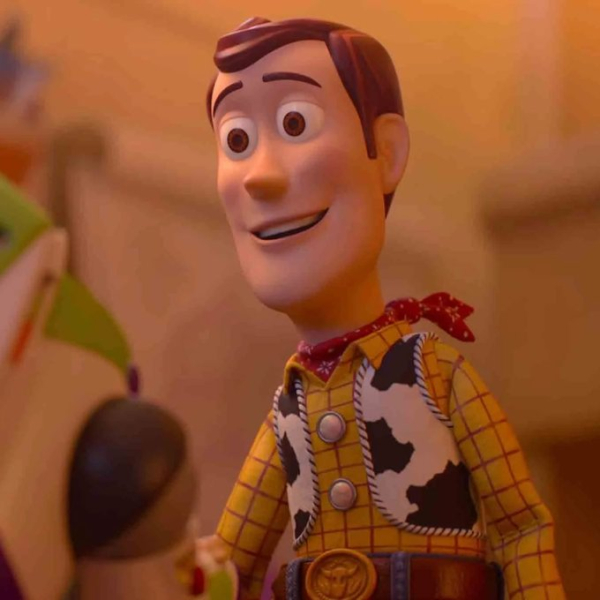
Instead, what might prove more (at all) effective is that the companies who are making a fortune from our little content consumers, be held to account and made responsible for their products’ harms. They have algorithmically engineered social media to hook its users – they can re-engineer it if they are suitably motivated. It’s also perhaps more just to throw the book at those profiting rather than those being profited from. The charity Children in Scotland describe the upcoming ban as ‘a very blunt tool’ and thus win the understatement of the year. It’s not sexy but what is a great deal more likely to work is the non-headline-grabbing robust regulation. Make lots of rules for large corporations to follow and enforce them to the hilt. Maybe we could start with a group screening of Toy Story 5 to set the mood and remind them of what’s at stake.

We are supported only by our readers. We don't have corporate backers and we don't take advertising, so we rely entirely on your support.
Help to support independent Scottish journalism
Been talking about this on substack.
See my comments in the thread.
https://postmoderniconoclast.substack.com/p/the-screen-is-not-the-problem/comment/276754133?utm_source=activity_item#comment-276908964
The upshot is, if the government (or anybody else) take away the screentime all at once, there’ll be a catastrophic mental health crisis in the schools for several weeks afterwards. What should be on offer, is an alternative, not just a ban. Where are all the youth clubs, sports clubs, etc? Long since privatised and abolished. Even 40 years ago such provisions had tiny threadbare support, and it’s probably worse now, with schools having flogged off playing fields to housing corporations.
Heard evidence today, that the Australian kids simply got round the ban over there, the UK kids will be no different.
Really interesting Mark. I wonder if anyone is writing about/practicing Illich in Scotland?
I think this is a really good article and approach Emma, and I also think the points made by Mark are spot on. This ban won’t work – and as the article says, it lets the real problem creators – the mega platforms off the hook. The other worry I have is that this is linked to the so far failed attempts by this and previous governments to force through electronic ID for everyone. If the ban is implemented then a corollary to it is that anyone who is not under 16 will have to prove it – by supplying their details on line. This is the wrong direction to go – data collectors, whether big media or central governments are certainly not neutral players in all this.
Social media is addictive because it is funded by advertising. If it stops becoming addictive ad revenue will probably fall or vanish.
If in response social media companies start charging users their revenue will fall further as not that many would be willing to pay.
I have no idea how places like facebook can square this circle.
Write-off adults as a lost cause? As far as I’m aware, typing while crossing a busy road like a zombie is legal. There is little of interest outside a not-so-little box that is glued to your hand whenever possible and turns people’s brains to putty. And these are the kid’s role models… When I grow up I want to be a social influencer.
I notice fewer people “glued to their phone” nowadays. Perhaps things are correcting themselves now.
I think it the total opposite. More and more people are umbilically attached – look around you. Post-humanity is here. Phones are not just tools we use but are now extensions of ourselves, rarely leaving our clutched palms. I find it totally depressing and resistance is difficult as more and more things in our lives become difficult if not impossible without a smartphone. It not only leads to addled brains but social isolation, social division and quite frankly, a kind of madness: just look at the serried ranks of humanity starting at their screens, earbuds in, walking around the world like zombies, hour after hour, scrolling, scrolling, scrolling . . . nothing of value. It is ridiculous.
Protecting children from this is vital to at least stave off the effects till adulthood but the real problem is much deeper: if the adult world is the phone world then children will want to ape that as soon as they are aware. The adult world needs to cease being the phone world. It is not about restrictions, app control blah blah but a move away from their need entirely, and the first thing that could be done centrally is make it illegal for vital services, private or public to require a smart phone to be accessed / used. But it is actually going the other way.
I agree Niemand, its worse than ever. However as we’ve created this world – lots of young people have their social community through SnapChat, Instagram and You Tube – to simply ban it for political expediency is short sighted brutal and unfair.
Yes this is true and the point about friendship networks and the virtual world being in a sense, the real world for children who have accessed it since pre-teen years is important – this is not just trivial access to mindless stuff. But I do not think the answer is in the tech companies doing their job better and making more rules for them (though that would be good for everyone).
We must find a way to not give phones to children at all, wean kids off phones that have them. We are robbing children of their childhood – how can we rationalise that away? It might have been better to stagger the social media ban but personally yes, in the end I think social media is simply not good for children as they are not mature enough to deal with it, and no amount of caveats about ‘some good stuff’ changes that.
Like climate change, it is no use fiddling while Rome (literally) burns; this is a very serious matter and if you work in education and have seen the changes over the last 20 years first hand, the grim situation is stark: as we become more and more addicted, so we shrug and say, it is inevitable what different does it make if it starts at 10 or 11, or even younger? I don’t think not addressing that head-on is excused by accusations of political expediency. Most politics is actually as much about expediency as conviction.
Agree totally. I think that the inability, or unwillingness of the politicians to deal with the Broligarchy is the modern-day equivalent of the need to keep in with Rupert Murdoch, they’re simply too powerful to fall out with. So there will need to be a societal push for change. Secondly, stating the obvious, we are all addicted to our phones and our screens, and as the ‘real world’ degrades, we are increasingly so.
Child road safety used to be entirely the responsibility 5 – 11 year olds. Drivers, car manufacturers and their lethal marketing just had to produce idiotic films about traffic savvy squirrels for primary schools.and everybody was happy. Same problem, same solution but response will be minimal I think.
good point, there maybe has to be an alternative educational network like tick tock where genuine public good can come of it, a bit like when there was just a few channels and if you managed to bunk off school there was a good chance you’d just end up watching open university anyway, certainly helped me see the wider world when I was young.
In response to the government’s announcement today of their intention to curtail access to social media platforms for under-16s, Mark Frankel, head of public affairs at Full Fact, said:
“Protecting young people from online harms is essential, but this announcement is neither bold nor decisive. It’s a misguided, retrograde step and a de facto surrender in the fight against harmful online misinformation.
Rather than curtailing access to social media platforms to under-16s, the government should be applying far greater regulatory pressure on technology companies to dismantle addictive design features, and to place a statutory duty on them to assist users of their services in distinguishing fact from fiction online.
We know from numerous surveys that young people routinely use social media for news and information. If the government is serious about extending participation in our democratic process to 16 and 17-year-olds, restricting their access to these platforms is unlikely to help them become better informed.
It’s not the technology itself that is harmful, but the way it’s designed and marketed to ALL users of these platforms. Far from protecting young people from online harms, this ban fails to address current weaknesses in online safety legislation and gives social media companies a free pass.”
‘It’s not technology itself that is harmful’. Hm, what does this remind me of? ‘Guns don’t kill people, people do’. I bet Full Fact would not buy in to the latter.
Technology itself certainly can be harmful and the tech we are talking about is. No amount of regulation, welcome as that would be as mitigation, changes this.
“… place a statutory duty on them to assist users of their services in distinguishing fact from fiction online.”
When politics gets involved the boundary between fact and fiction becomes porous. It would be better if they had a duty to promote critical thinking. But the schools should be doing that.