

How Late it Was, How Late
Sir Keir Starmer is on his way out as Andy Burnham arrives by train and fanfare from Manchester. It looks likely there will be no real election but a coronation. This, ultimately, weakens political leaders as they fail to arrive with a strong mandate or sense of legitimacy. It’s understandable, but part of the politics of fear that has defined Starmer’s short reign.
As John Kampfner has said: “If you wanted to encapsulate the reasons why mainstream politics has so struggled across the liberal world, you would call it Keir Starmer.”
He writes [The Lessons for Burnham]: “Everywhere you look you see liberal democratic leaders paralysed with fear. They worry about the markets (with reason); they fret about conventional media and social media (with less reason). They wait for bad things to happen, trying to anticipate what their critics might say of them in case they put a foot out of line. It’s a self-fulfilling spiral.”
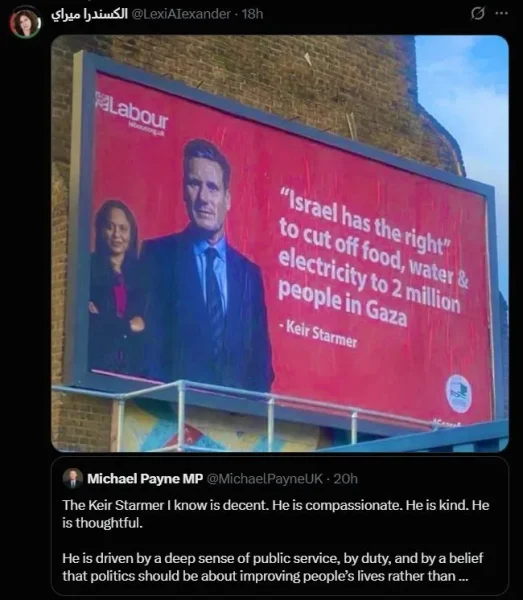
This is really like being on a doom-loop now in our third incarnation.
Despite being blessed with a huge electoral majority, Starmer was simply never to take the reigns of his own administration. He yearned for establishment approval and made a virtue out of approaching power by publicly renouncing all of the Left Wing policies and ideas he adopted to get elected. Not having any principles became the only point of principle. Starmer was emphatically Not Jeremy Corbyn, but other than that it was difficult to see what he was for.
If the British two-party political system that has dominated politics since the Second World War is over, Labour’s decomposition has been a long time coming. The pattern is cyclical and inevitable: any political leader even moderately of the Left: Foot, Kinnock, Corbyn gets monstered in the British press, often with the active collusion of the right-wing of their own party.
The grinding disappointment of Labour, over decades, is not confined to Starmer’s time in office, but it is now inter-generational, and it is part of what broke British politics. It’s what Marie Le Cone has called the Death of Hope.
The fundamental dishonesty of endless collusion with the far-right, endless triangulation and focus-group timidity inherited from Blairism was now combined with an unshamed right-wing social and economic agenda, In March 2025 the Scottish MSP Neil Findlay resigned from the party.
In a scathing, visceral letter to Keir Starmer Findlay took no prisoners:
“A party that gave assurances to voters that “change” was coming but failed to tell them that the “change” they meant was to impoverish pensioners through cuts to their winter fuel allowance, betray WASPI women by refusing to compensate them for the states’ failure, punish defenceless children by maintaining the horrific two-child cap, abandon the Grangemouth workers and now attack the long term sick and disabled by slashing social security payments (I refuse to call them benefits or welfare). All of this to fund increased spending on the UK war machine – weapons that will be used to kill and injure innocent men women and children in far-off lands”
He added: “At a time when more people are going hungry, fuel bills are soaring and the cost of living is leaving working class families unable to afford the basics, a Labour Government should be going after the billions lost in corporate tax fraud and avoidance, it should be making those companies that pollute our environment pay and it should be introducing a wealth tax on the super rich.
“But instead you choose to punish and stigmatise the weak, poor and the vulnerable.”
The letter concluded: “The reality is that Labour will be lucky to come third at the forthcoming Scottish election, will lose power in Wales for the first time and faces being routed at the next UK election and this will be down to your disastrous tenure as leader.”
Faced with a wall of such sentiment from within his own party, Starmer did nothing.
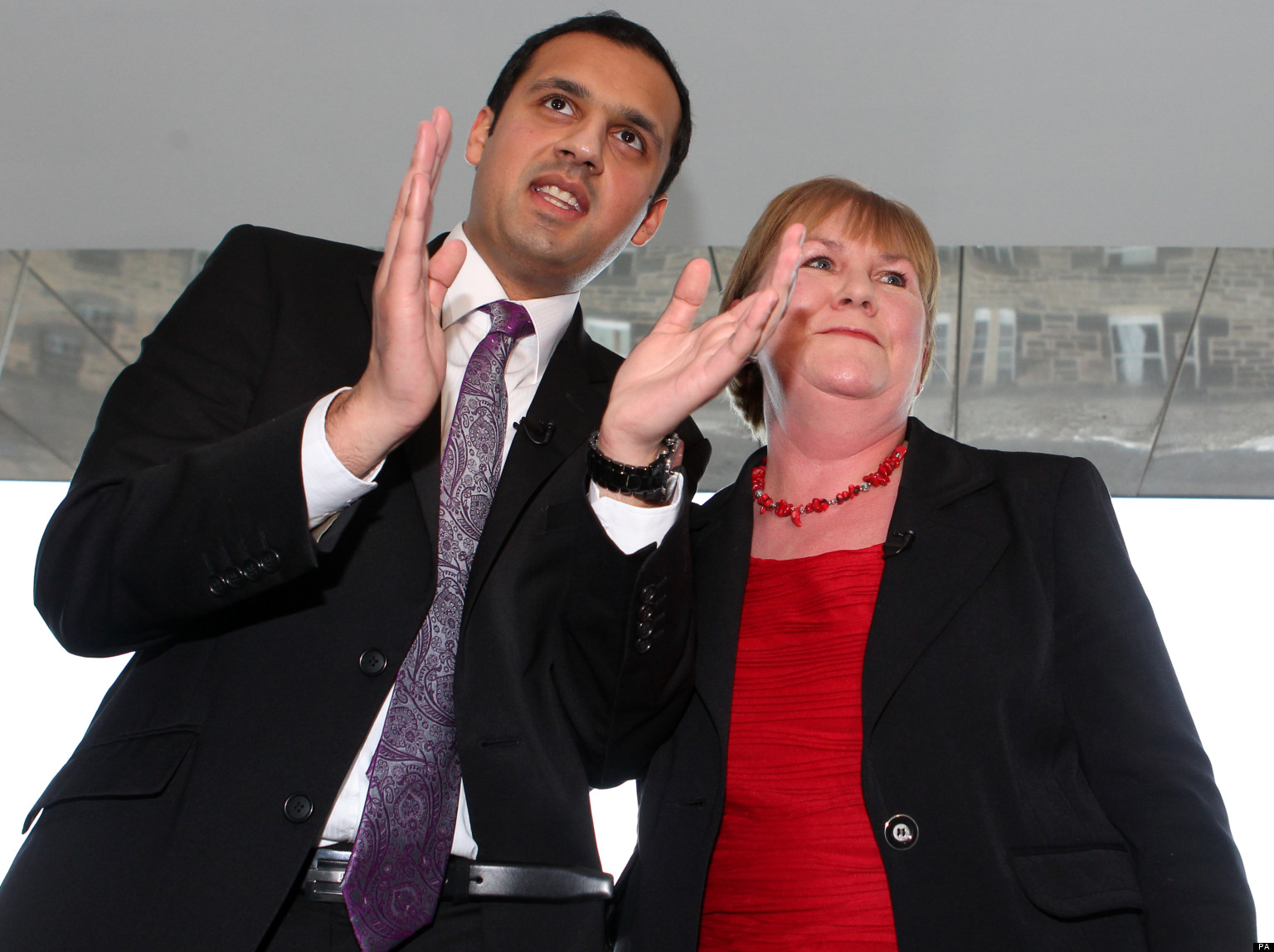
Even his own party leader in Scotland found him an electoral burden. Anas Sarwar famously abandoned Starmer mid-election campaign. It was a move that many celebrated as a stroke of genius at the time [Actually, this is brilliant – Bella Caledonia].
Alongside all of this – as Starmer prepares to leave – has been the mewling, self-pitying personal narrative. Starmer’s Exit Speech was peppered with personal story-telling. On the day he announces his departure, a Labour source says Keir Starmer feels “betrayed”.
“He gave everything to Labour, including sacrificing much of his children’s teenage years to help make the party electable. He feels deeply betrayed, especially by those he believed were loyal to him.”
The dark irony of all of this seems to have passed him by. This from the man who said: “If you don’t like the changes that we’ve made, I say the door is open and you can leave.” And they did, in droves.
Starmer, the broken centrist, couldn’t respond. He had nothing to say. All he could do is repeat stories about his dad, and host special announcements declaring his values, or explaining that people didn’t know the real him. But they did.
To be fair, Starmer was caught in-between two historical forces, the new populism of Left and Right under Zac Polanksi and Nigel Farage. But also to be fair, this was a situation of his own making that he then handled badly. Starmer would combine Normcore politics with ruthless pro-Israeli politics that he would let alter our politics, our laws and our civil liberties.
Starmer spent years telling anyone who would listen about how his dad had been a ‘tool-maker’ until it became a meme. He seemed to have swallowed whole the contemporary idea of having a ‘story to tell’ as if this was X-Factor or Britain’s Got Talent. This superficial blah superseded any policy direction and was widely derided by the general public.
Starmer’s Anglocentrism widened divisions within the UK while never talking to or about Scotland or progressing the constitutional impasse. The closure of Grangemouth and Mossmoran and the failure to back Chinese investment at Arderseir are just some examples of Starmer’s preference for investment in England rather than Scotland. But ultimately Starmer will be remembered for his position on Gaza just as Blair will be forever linked with the Iraq war.
Elected on a promise of ‘change’ he delivered continuity failure. As Yanis Varoufakis puts it:
“Consider the litany of Starmer’s moral and logical failures. He promised a ‘different Britain’, yet his actions were a masterclass in Tory-lite politics—using the same maxed-out credit card analogies that once served the austerity brigades to justify his own failure of vision. He promised a human rights lawyer’s approach but he embraced a racist-lite version of Farage. On Europe, Starmer promised Brexiteers that Brexit is Brexit yet stood before those who yearn to rejoin the European Union, winked at them to make them feel that Britain would gradually reconnect, even rejoin, with the EU while offering nothing of substance. This is not leadership; it is a fraud. And then there’s the manner in which Starmer and his government rushed to offer Israel unequivocal support in pursuing its genocide in Gaza, sacrificing precious political and civil liberties in the UK by imprisoning grandmothers, priests and peaceful activists who dared support Palestine Action, an organisation that Starmer and his minions proscribed as terrorists for practising the usual activist tactics of trespassing to spray paint military planes that had demonstrably aided in the genocide.”
“To add insult to injury, Starmer performed the diplomatic pantomime of recognising a Palestinian state, in a manner that ensured it would never happen. But above all else, this is a government that has learned nothing from the post-2008 era. Starmer and his Chancellor are playing the same tired austerity game while enabling and empowering the Finance Curse perpetrated by the City of London, throwing in for good measure cuts in international aid to fund a military spending trickle under the guise of a “Strategic Defence Review”. It is the same old doctrine: austerity for the masses, socialism for the financiers and the arms dealers.”
What does this mean for Scotland?
Nothing other than a revival of the myths of change in the UK locked into a cycle of personality politics devoid of meaning. We’ve been here before.
Anas Sarwar will no doubt pledge his allegiance to the new leader, and no one will reflect on his own era-defining failure as he remains shackled to Labour’s UK. We are in the last stages of Late Britain and the personality politics can’t distract from this reality.
Outstanding…but that’s a commonplace here, at this outstanding venue for insightful, well-written analysis with heart.
Gods–that’s saying a lot.
Great. Now do an article on John Swinney. He’s the Scottish Starmer without the gravitas.
Loving the whatabouttery
Great. Now do an article on John Swinney. He’s the Scottish Starmer without the gravitas.
Excellent article. Unfortunately, Burnham will be no different – new facia same workings. Agree with Billy here, Swinney was the one political leader that made Starmer look dynamic.
Excellent review of Starmer.
Two other things that show who he was:
1)During 2024 GE Lib Dem’s, SNP and various economists pointed out that Labour and Tories manifesto’s had significant financial black holes. Within days of being elected Starmer & Reeves were pronouncing shock that having looked at the books there was a £20 billion financial black hole.
2)The decision that probably finished him as PM was the appointment of Mandelson as US Ambassador. The story put out was that he wasn’t actually in favour of appointing Mandelson but allowed himself to be talked into it by McSweeney. He then claimed he took responsibility for the decision and proved it by sacking everyone else involved in the decision making process. This episode just sums up his lack of principles and leadership.
What about Murrel?
What does is it say about the cause of Scottish independence that the most powerful leadership team in the movement’s history, a time of peak indie support, one was embezzling hundreds of thousands, while the other was in another galaxy…
One tjhng for sure: the Murrel – Sturgeon team were not spending their free time plotting a course to independence… they obviously had no real interest in that at all…which means they were deceiving us .
And Sturgeon, as ever, telling everybody to wheesht. It’s her turn, for once, to shut the fck up….
“I didnt know”… yeah, we all know and believe you, Nicola. Which makes you a total idiot… that’s all…
Sturgeon is no downtrodden woman. She was the First Minister of Scotland for christs sake, a job she got because, among other things, she was meant to be reasonably intelligent and have sound judgement…
Neither were true, that’s obvious.
What about Murrel?
He’s a cheating embezzler who’s gone to jail for five years.
This article isn’t about him.
I think that Douglas is pointing out that those in glass houses shouldn’t throw stones
You can hold two thoughts simultaneously. Criticism of Labour’s woeful time in office doesn’t act as some approval of the SNP. This is nonsense. These are different things. To read an article about Labour/the UKs current predicament and respond, without reference to the article with “what about Murrel” is just whataboutery.
You’re right, Bella, but I am pretty bewildered the Murrel case hasnt led to much if anything at all among the indie commenteraiat…
I would be for completely revamping the SNP hierarchy with John Swinney “setting out a timetable for standing down”…as they day…
The idea that the same people carry on who put Murrel in power, defended a husband of wife team running country and party, and were part of the Murrel / Stuegeon dictatorship, is wrong…
Swinney could basically copy Starmer’s weepy, lachrymose address from the other day,on which point, it is worth nothing that UK PMs, and bad PMs, have taken to crying when leaving office, yet another sign of the narcisstic personality disorder running through our politics…
They all think it’s about them…
Actually Starmer resigning now and in the way he has done shows the opposite. He is putting the party and country before himself. Someone who saw his resignation speech and interpreted it as being all about him and evidence of narcissistic personality disorder, shows to me how warped people’s thinking and interpretations can be when their minds are blocked by ideological cement.
I don’t share the view this is a terribly failing government and Starmer is some kind of demon (or the ‘worst UK PM in history’ according to the DDNews), but as a minority of about one on this site holding that view there is no point in me defending Labour or Starmer here but you won’t get the same treatment of NS or Swinney because the ideological thinking that leads to the condemning of Starmer is the same that will not do the same to senior SNP figures.
I mean, Starmer is resigning now because his colleagues and cabinet members abandoned him, its not out of some kind of principle. I don’t think he is the ‘worst PM in history’ either but his social policies and foreign policies are, as I’ve outlined too many times, woeful and reprehensible. I’ve written about Starmer here because its a significant moment in British politics.
Niemand – Keir Starmer was going to fight any leadership election up until end of last week. Burnham won by such a big majority that virtually all Labour MP’s switched support to Andy Burnham. The cabinet members told KS over weekend that he had no chance in a leadership election so he was left with the option of resigning or fighting a leadership election on which he would have been humiliated. (ultimately the Labour MP’s have ditched him because he is so unpopular they think he has no chance of winning next election). Not surprisingly he decided to resign.
In his resignation speech he called the party morally corrupt in 2019 (Labour got more votes in 2019 election than 2024) which was both untrue and petty.
We have a lot of recent resignation speeches to compare and I would say it was a bit more gracious than Johnson or Trusses resignation speeches. I have no problem with someone showing a bit of emotion during such a publicly stressful situation.
I am no great supporter of John Swinney and would like to see SNP hold an enquiry into why Murrell was not investigated when queries were originally flagged up and if any senior members of party were involved in blocking any investigation. they should be identified and held responsible. The party should also be completely transparent outlining lessons learned and procedures put in place to prevent any repetition. This is though a crime committed by a party official within the party against the party where the party and its members are the victims and no public money was involved. I cannot help thinking that the faux concern expressed by those who oppose the SNP and independence to the Murrell affair is no more than political posturing and a way of expressing their frustration at their failure in recent Holyrood election.
Starmer was never a politician, he was the equivalent of the State Prosecutor of Scotland, which would be like us having Dorothy Bain as the First Minister so he was always a stop gap appointment with no roots in the Labour movement, and deep roots in the British State….
What I am not for accepting is this “second best for Scotland” which keeps coming out of Westminster, but also Bute House…
When a criminal has been running the SNP for 15 years and it is revealed, people have either to step down, or heads have to roll. It’s called political responsibility. Swinney has to go, he and his closest associates..
There are 2 statements I agree with, frequently repeated. 1) Only the SNP can secure independence for Scotland. 2) This SNP cannot possibly do so…
So simples enough: transform the SNP, NOW..
Douglas- independence is polling around 50% and the SNP are polling around 35% and the Green Party is now established as another significant independence supporting party in Holyrood. This shows that although the SNP remain the main political wing of independence movement, the independence movement itself is now bigger than the SNP.
The SNP’s focus and energy appears to be more focused on governing at Holyrood rather than developing case for independence. After nearly 20 years in power a significant numbers of actual and potential independence supporters are also a bit scunnered with SNP.
Other independent groups such as Believe in Scotland are stepping in to try and get some momentum back into independence movement and get people energised. If the SNP cannot deliver on independence via the current political structures the only realistic alternative is for independence movement to work around them and engage the people of Scotland directly. It will take effort and time from a lot of people but if we have learned anything since 2014 it is that the independence movement is most effective when it is a mass movement not something run by a small clique of politicians.
Mr Sturgeon is a loony. Mrs Sturgeon has very bad eyesight and is too rich to care. They presided over a party that apparently didn’t notice that £400,000 had gone missing until the police pointed it out. That’s after members of their finance committee resigned, and their auditors resigned. Mr Starmer got gifted a pair of glasses and isn’t the scandal of the century.
Billy – you may have noticed that Jeffrey Donaldson, former FM of NI Assembly and leader of DUP, was convicted of a series of sexual offences against women including girls this week.
Where is media coverage demanding answers as to how he could get away with this behaviour over a long period of time, who knew what within DUP and Stormont and should Westminster hold an inquiry into how this criminal behaviour was not picked up by the NI Assembly?
“The two party system” is indeed broken. Where each party previously had substantial figures they now have none. Where they had policies, they substitute waffle in its place (Badenoch et Al). Where they had principles, they now have petty survival. I heard Wee Dougie Alexander on the radio yesterday, bumming himself up (I served him, him, him and him) and throwing himself, figuratively, on a puddle for Burnham to walk over. Obsequious? Famous for his expenses and that sums up a wasted Labour career from the time of Scottish Labour Big Beasts to a party of nonentities in half a century.
Will Burnham last? The media are already sharpening their knives, and as with any politician, there will be secrets to dig up. Perhaps leaked by a vengeful Sir Keir or the one of the Whips, who know where the bodies are.
Gavinochiltree
The whole political system is a maldevelopment, Crown Ministers have immunity and often only this perverse kind of accountability to internal party coups. Voters struggle with the choice of lesser evils. Meanwhile London stews and another UN inquiry says “Israel continues to commit genocide by targeting children in Gaza”:
https://www.theguardian.com/world/2026/jun/23/israel-deliberately-targeting-gaza-children-to-commit-genocide-un-inquiry-finds
There are too many child abusers and blind-eye-turners in the political class to imagine they will take this as an affront.
Medialens provides a useful summary of media failings and departing-but-unapologetic-PM Starmer’s actual record in office:
Whitewash: Media Silence Over Starmer’s Gaza Legacy
https://www.medialens.org/2026/whitewash-media-silence-over-starmers-gaza-legacy/
I suppose they could have also mentioned secret British treaties with Israel and the USA under various royal prerogative powers.
The British establishment tend towards continuity, militarism, secrecy, propaganda, hypocrisy, faux piety, private vice. There is no ‘defender of the Constitution’ to keep HM’s PMs in check (because there is no codified constitution).
Things haven’t really moved on much since Shakespeare and Fletcher depicted the downfall of Thomas Wolsey (effectively from Prime Ministerial office) in Henry VIII. I’d check Starmer’s pockets when he leaves for his gravy train/sinecure at the Tony Blair Institute.
Thank you, Mike, excellent contribution helped as you are by aptly borrowing from Varoufakis’s excoriating and wonderfully delivered postmortem on Starmer, a man described in this attack as “morally decrepit” I’d like to suggest the UK get a safe seat for Varoufakis and make him PM. (he’d have a good laugh anyway!)
What I can’t understand, not actually living in Scotland and just 12,000 miles away, is why the “Scottish Labour Party” doesn’t separate from the UK party and support independence. Why the damaging loyalty? Surely they must see the electoral opportunities this would bring them in Scotland. – they’d win quite a number of SNP seats? And if it takes years for Scotland to actually achieve independence they don’t lose anything electorally, just as SNP have done for years. And in Westminster they can pick and choose who to back and who to fight, on behalf of their constituencies, if any MP actually does that sort of thing any longer. Can anyone enlighten me?
John – I recall Alan Roden, a long time Labour Party figure, being asked this very question after recent Holyrood election.
He gave two reasons why he didn’t think this would happen :
1)Scottish Labour now rely on .UK Labour for financial backing.
2)Labour in Scotland is now fishing primarily in the anti independence pond. If they were to become a separate party from UK party this might lose them some support from anti independence voters.
I think these answers tells us a lot about the state of Scottish Labour in 2026.
Thanks, your explanation makes some sort of sense if you are an MP more concerned for your job than representing the wishes and/or solving the confusions of constituents you’re supposed to be serving. Story of the times, I suppose