
Burnham’s Democracy Project
As I write the incoming Prime Minister is being heralded into office, in a series of events that have a distinctly British ‘make it up as you go along’ feel to them. Today the Labour Party is going to formally announce at a “special conference” that Andy Burnham is its new leader. He will become the 59th UK Prime Minister on Monday.
There’s a strangeness about a leader who talks a lot about democracy and decentralising power emerging Pontiff-like without an election. Burnham is to become Britain’s next PM after winning the backing of 349 Labour MPs, including all eligible members of Keir Starmer’s current cabinet. It’s both a formidable consensus and a harsh judgement on Starmer’s reign in office. There’s also a bitter-sweet irony about the exiting leader of the party that’s been promising to reform the House of Lords for a hundred years handing out 16 new Labour peers in his ‘resignation honours’. Starmer has already appointed more peers than any of the previous four prime ministers despite previous pleas by the Labour Party to look at reforming or abolishing the upper chamber. Still, at least Starmer was consistent till the very end.
But let’s put all of that aside and assess what Burnham is saying and what prospects he has for a better politics and better governance than Keir Starmer’s ill-fated reign. Let’s give him the benefit of the doubt.
Head North
Steve Rotherham, the Liverpool City Region mayor, is a close friend and ally of Burnham. He has challenged the idea that Burnham would represent continuity from Keir Starmer. He said: “If people believe that Andy Burnham is being made the prime minister so that he can communicate the same message just in a better way or a better form, then they’re absolutely deluded. Andy wants to go in there and he wants to shake things up.”
“He’s not just there to be a better communicator than Keir Starmer was. There’s going to be people who are into a very rude awakening if that’s what they believe.”
Rotherham co-wrote a book in 2024 with Burnham called ‘Head North: A Rallying Cry for a More Equal Britain‘. In it, they argued for a ‘Basic Law’ which is an idea taken from the German reunification process whereby all states in the country should have “equivalent living standards”. It stems from the idea that power and wealth is massively concentrated in London and the south-east, which is absolutely true.
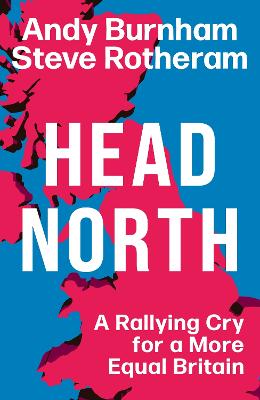
Burnham’s first task to establish that he is not simply a replacement for Starmer, is to set out his plan for Britain, and much of his thinking stems from Head North. Some of the key ideas are:
- A Written Constitution
- A Basic Law
- Reform of the Voting System
- Removal of the Whip
- A Senate of the Nations and Regions
- Full Devolution
- Two Equal Paths in Education
- A Grenfell Law
- A Hillsborough Law
- Net Zero to Reindustrialise the North
The platform emerges from the network called Mainstream, the Compass-founded campaign group that provided policy work for Burnham to start to build a leadership campaign. The Burnham movement sees itself as centre-left, and is motivated by a drive for progressive social policy, democratic reform and the need to provide a credible response to the rise of the far-right. The group were appalled by the regressive social policy of the Starmer government, the internal chaos and factionalism and the astonishing mismanagement of the Peter Mandelson appointment. They aim to overcome both the sense of internal chaos within Labour and the general feeling of Britain being moribund and in perpetual decline.
It remains to be seen if Burnham will implement any or all of his ideas, or be thwarted by the powers that be. But even as a nascent project it represents a political threat to the SNP as it aims to reform the UK both constitutionally and economically.
Let’s try and unpack some of their ideas.
At the centre of Burnham’s political project is a form of constitutional reform including creating a written constitution, reform of the voting system, creating a Senate of the Nations and Regions, and something called ‘Full Devolution’. These proposals could be transformative, but they do land in an uncomfortable way. What is the democratic forum in which these ideas have been developed? It feels like, and this is true of the Burham project as a whole, as ‘democracy from above’. And the whole constitutional reform project also sits uncomfortably with the deeper constitutional crisis that still haunts Britain.
Dr Ryan Swift, writing for the IPPR has noted (On Home Ground) : “Devolution must become the organising principle of a rewired, forward-looking UK – one that drives economic growth and reduces regional inequalities, renews democracy and rebuilds political trust from the bottom up, and becomes firmly established within the governance of the country.”
But while this feels radical it doesn’t really get to grips with the deeper national questions at play here. Instead, it tries to just bypass them.
Swift again: “The conversation on regional devolution shouldn’t stop at England’s borders. Greater regional devolution within Scotland and Wales for cities like Glasgow, Edinburgh and Cardiff could complement national devolution by strengthening cities and local economies while reducing the concentration of power within the devolved governments themselves. A genuinely multi-level UK should recognise that decentralisation is valuable at every level of government.”
The F Bomb, again
It feels like an agenda for breathing some democracy into English local government. But that’s not really the same as genuine constitutional reform. It’s noted, too, that the language has shifted from ‘abolish the House of Lords’ to ‘reform the upper chamber’.
Burnham’s revelation that Britain has power and wealth concentrated in London may be amazeballs to the political class but it’s not exactly news to Scots. Essentially, this is bits of Gordon Brown’s blueprint document. That’s certainly true of the Council of Nations and Regions shtick.
As John Denham wrote in 2024:
“Today Keir Starmer will chair the first meeting of the Council of Nations and Regions (CNR). It’s an innovation with an important message about Labour working to deliver across the UK. But how much difference will it make to the way the United Kingdom and its nations are run? The Council has its origins in Gordon Brown’s report on the future of the UK which recommended ‘a new and powerful institution to drive co-operation between all its governments – a Council of the Nations and Regions.’ I was critical of Brown for not being radical enough but I also warned that ‘Labour in government is usually less radical than in opposition’. That’s certainly the case with the new Council.”
He goes on:
“Brown wanted the Council of Nations and Regions based in statute, with an independent secretariat. It was to be part of a series of constitutional changes, including stronger legal protection for the devolved parliaments, the replacement of the Lords with a union-wide second chamber, a new Council of England to represent English mayors and local government, and a new body to bring together the First Ministers with the UK Prime Minister.”
“Today’s Council was reportedly set up without even informing the Scottish government and will, it seems, be run out of Whitehall’s Cabinet Office by the recently demoted Sue Gray. While Brown’s Lords reform did raise some serious difficulties, the King’s Speech contained no proposals to give the CNR legal status and the rest of Brown’s proposals have, for now at least, disappeared.”
I didn’t quite know what was meant by 4: ‘Removal of the whip’. The Guardian journalist Andrew Sparrow explained: “In the book they suggest getting rid of the whipping system altogether. But now Burnham is proposing whipping-lite – in particular, not suspending people who vote against govt whip.”
There’s a strong element of the zeitgeisty ‘consensus’ speak that is all the rage among wonks and the chattering class.
In 2024 Burnham made a speech advocating that a Grenfell Law should be introduced to enshrine the right for decent housing for every citizen in Britain. He said: “We need a new housing-first strategy, because you can’t have anything without a good home. It should be a human right for everyone to have a decent, secure home and that’s what we should be working towards.”
This is important and useful, especially in responding in real policy with the arguments of the far-right.
There is no doubt that Burham is an upgrade on Starmer. He is articulate and has a team with real ideas. This is potentially a real threat to the arguments for Scottish independence because it posits the idea, again, that Britain is reformable. But the constitutional reforms are so wracked with inconsistencies and contradictions
Ask Andy Anything
Burnham has made great play of Mamdani-like sessions in which you could Ask Andy Anything. He did this in Cardiff city-centre the other day. It’s a good look. One question would be: “If this is a voluntary Union, what is the democratic way to leave it?” But, if the answer is there isn’t one (dear readers – that is the answer) then all of the policy proposals about Mayors and constitutions seem an odd distraction.
But my notes on the inadequacy of Burnham’s constitutional programme are complemented by other observations about the absence of power analysis in Labour’s outlook. European Powell points out that: “Andy Burnham is days away from becoming Prime Minister. His incoming chief of staff is James Purnell, CEO of Flint Global, a corporate lobbying firm whose clients include Amazon, Uber, BP, Airbnb, Apple and Thames Water, the utility Burnham says should be nationalised. In December 2025, Flint was acquired by private equity firm Cinven for £190 million. The firm at the centre of a Burnham government is not merely connected to corporate capital. It is owned by it.”
“While at Flint, Purnell told corporate clients to expect deregulation, no tax rises, and spending cuts. That is the stated position of the man who will occupy the most powerful unelected role in the British government.”
This political/apolitical trope is played out in an interview Andy Burnham has with Gary Lineker in which he said he didn’t want to “create new divisions” when asked if he would set up a wealth tax:
“You can’t be the prime minister and be that anti-political.”
Andy Burnham said he didn’t want to “create new divisions” when asked by Gary Lineker if he would set up a wealth tax.
On Novara Live, @MichaelJSWalker says Burnham is a “classic people pleaser”.
“You’re not… pic.twitter.com/6wjMQxv90x
— Novara Media (@novaramedia) July 17, 2026
Burnham does not have Starmer’s fatal flaw, of an almost complete lack of any policy ambition whatsoever. However he is divorced from any political base and guilty, like his predecessor, of constant flip-flops.
As Grace Blakeley points out (The Labour Machine always wins):
“Burnham has managed to ingratiate himself with what remains of the Labour left over the last few years, thanks in part to some genuinely impressive achievements as Mayor of Greater Manchester. But a cursory look at Burnham’s public statements during his recent campaign reveals a politician just as slippery and opportunistic as Starmer.”
“As Harriet Williamson shows in this excellent video for Novara media, Burnham has made multiple, contradictory promises to different factions within the Labour Party. He says he’s going to invest in public services, while also sticking to Rachel Reeves’ nonsensical fiscal rules. He has previously articulated liberal attitudes towards migration, but recently supported Shabana Mahmood’s draconian immigration reforms. He’s criticised the Israeli government, but refused to call out Israel’s genocide.”
“This opportunism is, of course, what makes Burnham palatable to the Labour machine. To be sure, he is not their preferred candidate. They would prefer someone like Wes Streeting, who has clearly demonstrated his obedience by taking vast donations from private healthcare lobbyists only to advocate ceaselessly for greater private involvement in the NHS. Burnham hasn’t been quite so grasping. But he has flip-flopped enough times for the Labour machine’s apparatchiks to accept he is no threat to their project.”
Burnham’s project is over-sold because the British political class thinks it’s radical to point out that Britain has a concentration of wealth and power in London. Manchesterism is good but limited as explored by Mike Danson here On No 10 North and the Limits of Manchesterism – Bella Caledonia and by Laurie MacFarlane here: Scotland has already tried ‘Manchesterism’. It won’t solve Britain’s economic crisis alone,
The post-Starmer era is upon us, but Burnham is still wedded to centrist ideas of ameliorative change that remain within the range of acceptable political discourse but are woefully inadequate for the state we’re in.

We are supported only by our readers. We don't have corporate backers and we don't take advertising, so we rely entirely on your support.
Help to support independent Scottish journalism
Superb analysis. Sorry to sound like such a sweetheart all the time, but Bella is my most-favored site on the internet for integrity coupled with clarity of analysis–among other reasons.