
Thatcherism Today
Mark Perryman calls time on the forthcoming Thatcher Centenary.
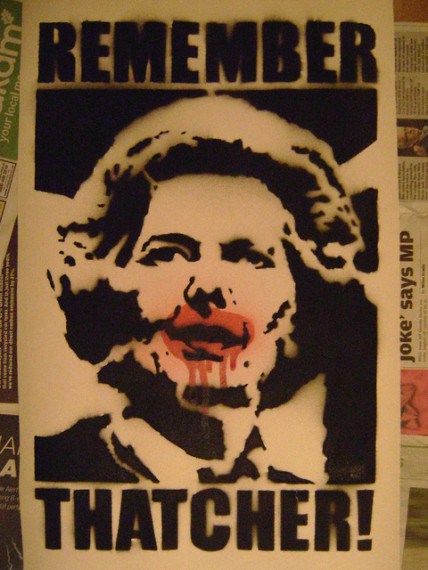
Margaret Thatcher’s 13 October 2025 centenary is a moment to reflect on how she, or more accurately ‘Thatcherism’, so decisively shaped the 1980s. And for ever more too, the post-war consensus she deconstructed and to date never to return.
The Labour historian Jim Fyrth describes what framed this consensus that had previously so decisively shaped British society and economy 1945-79.
“A mixture of Socialist, Labour, Keynesian, Fabian/Liberal and anti-Fascist ideas that was strongly anti-establishment and anti-capitalist, and was hostile to those who were held responsible for poverty and unemployment and for appeasement of the Fascist dictators.”
Wow! It was this combination that was the basis of Labour’s 1945 strength, what Fyrth admiringly dubs a ‘popular front of the mind’ the plurality of influences and ideas, the breadth of support. And it is this which produced an historically unique moment:
” It looked as though Conservative supremacy in society might be quite overthrown and a new hegemony of the Left be established.”
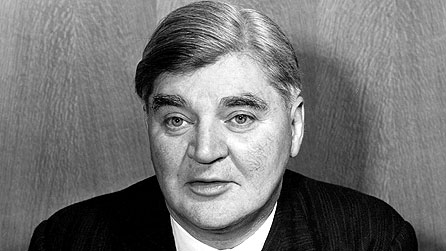
Aneurin Bevan
But despite the populist idealism of Aneurin Bevan ‘We have been the dreamers, we have been the sufferers, and now we are the builders’ any likelihood of a ‘ hegemony of the left’ was replaced by the early 1950s, and thereafter by a consensus between right-wing Labour and progressive conservatism. Popularly known as ‘Butskellism’, fusing Hugh Gaitskell, Labour leader 1955-63. with Tory Cabinet Minister Rab Butler 1951-64. Better than what followed when another ‘-ism’, Thatcherism, dismantled that consensus but by no means as good as it might have been.
Stuart Hall prefaced the entrenchment of Thatcherism that would commence with her leading the Tories’ rout of Labour in the May 1979 General Election with an essay for the January 1979 edition of the magazine Marxism Today. It was this essay ‘The Great Moving Right Show‘ that would spark a wide-ranging debate not only on Thatcherism but what Hall argued facilitated it, a deep-seated structural and ideological crisis of the left.
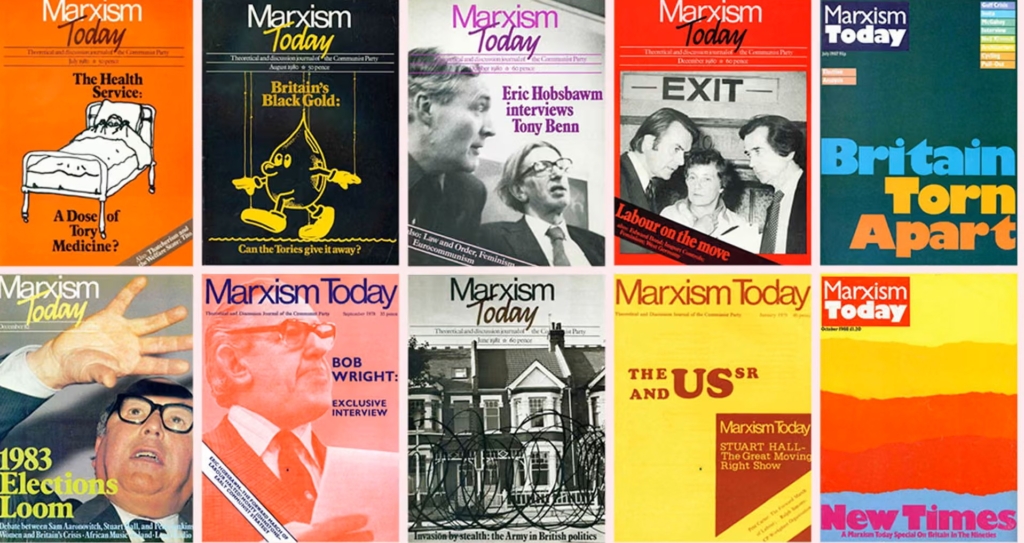
As Hall developed his description of the Thatcherite project it became more and more terrifying, but inspiring too. Terrifying in so far as what Thatcher was able to achieve, inflicting defeat after defeat on her opponents most spectacularly the miners’ strike of 1984-85. Inspiring, in so far as what Labour, and the wider left, could achieve with a hegemonic project on the scale of Thatcherism.
Hall listed those elements required for a hegemonic project to succeed:
“The attempt to put together a new ‘historical bloc’; new political configurations and ‘philosophies’: a profound restructuring of the state and the ideological discourses which construct the crisis and represent it as it is ‘lived’ as a practical reality; new programmes and policies, pointing to a new result, a new sort of ‘settlement’.”
Of course, none of this appeared in the Tories’ manifesto nor in Thatcher’s campaign speeches and broadcasts. And no I’m not suggesting that because they didn’t appear on Blair’s 1997 pledge cards nor in and amongst Starmer’s 2024 missions this is the damning evidence required that ‘The Great Moving Right Show’ has never been superseded by ‘The Great Moving Left Show’ But read through Hall’s list and ask yourself is this what Blair(ism) and Starmer(ism)’s politics amount to?
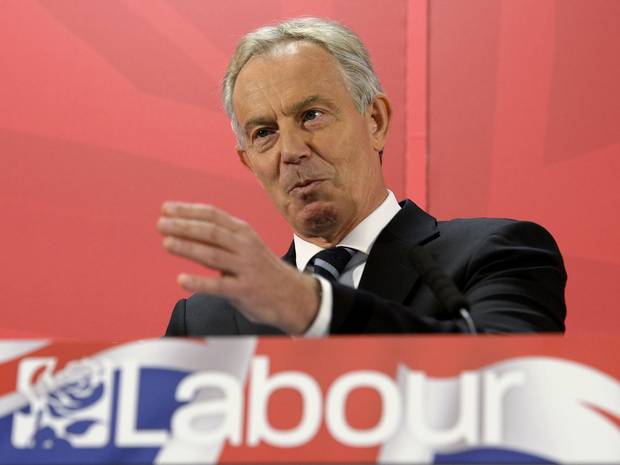
And if they don’t, is it enough when Labour achieves the kind of landslide victory Blair did in 1997 and Starmer in 2024? Hall’s argument was that Thatcherism had all the makings of success, her utter destruction of a post-war consensus that had lasted since 1945. In contrast, the complete failure of Blair, and Starmer, to replace Thatcherism/Neoliberalism. Helpfully, Hall detailed what elements would be required for such a break:
“These do not ’emerge’: they have to be constructed. Political and ideological work is required to disarticulate old formations, and to rework their elements into new configurations.”
Blair’s legacy, Starmer’s prospects, should be judged precisely in how far they fulfil this task. For all the good, and there was a lot, that Blair did, and all the good that Starmer will do, which I entirely expect there will be, this surely is the least we can expect of Labour governments. But to use a now favourite word in Labour’s lexicon ‘change’, without that construction, disarticulation and reworking, no new consensus will be established. What a waste.
Following the 1979 General Election, in his essay ‘Thatcherism: The Impasse Broken?’ the editor of Marxism Today, Martin Jacques, mapped out why the Thatcherite hegemony was as much a product of a crisis of what the 1945 Labour vision, ‘Now Win the Peace’, had turned into, as a victory of the right. In it, Jacques wrote:
“The precise character of Thatcherism is complex. Two clear elements, however, can be pinpointed. Firstly, there is a strong emphasis on a more traditional arguably petty-bourgeois ideology – the virtues of the market, competition, elitism, individual initiative, the iniquities of state intervention and bureaucracy… Secondly, Thatcherism has successfully attempted the organise the diverse forces of the ‘backlash’ – reacting against trade union militancy, national aspirations, permissiveness, women’s liberation – in favour of an essentially regressive and conservative solution embracing such themes as authority, law and order, patriotism, national unity, the family and individual freedom…
Thatcherism thus combines a right laissez-faire economic strategy with reactionary and authoritarian populism.”
Jacques described this shift as from a project of transformation to an ever-increasing emphasis on modernisation, sounds still familiar? The newly elected Labour leader, Harold Wilson had prefaced this change in his speech to the 1963 Labour conference:
“In all our plans for the future, we are re-defining and we are re-stating our socialism in terms of the scientific revolution. But that revolution cannot become a reality unless we are prepared to make far-reaching changes in economic and social attitudes which permeate our whole system of society. The Britain that is going to be forged in the white heat of this revolution will be no place for restrictive practices or for outdated methods on either side of industry.”
Jacques set out what this produced in turn:
” The strategy of modernisation it sought to carry through – aimed at a major transformation of the economy and society – proved not only completely inadequate relative to the nature and scope of the problem but, crucially, it also involved a new kind of attack on the position of the unions and, more widely, the working class, that is on its own social base.”
The effect wasn’t immediate; Labour’s 1945 election-winning vote share of 47.8% was still as high as 47.9% when Harold Wilson won in 1966, an impressive holding of the electoral ground. But after that the decline was non-stop, coming to a shuddering halt on 36.9% in 1979 (note Starmer’s ‘landslide’ was an even lower Labour share of the vote, 33.7%.) Likewise, Labour membership reached a post-war high of 908,000 in 1950 but after 1964 fell every year to 676,000 in 1978. The current 2025 figure is under half that, 333,235.
The reason for the decline and Labour’s defeat in 1979? Jacques argued:
“Labour has become identified with the increasing use of the state in an administrative, impersonal, bureaucratic and even authoritarian manner.”
He described the implications as ‘profound’:
“The Labour Party for many people, especially young people, is no longer seen as an effective oppositional, anti-establishment force; on the contrary, for many it has become an establishment party, partially incorporated into the state structures….
… Inevitably, this has undermined the position of the Labour Party as a party, rooted in society, enjoying a popular activist base, and committed to reforming society.”
The post-war consensus which Labour had founded in 1945, followed by Labour’s 1960s flirtation with a technocratic modernism, was ignominiously ended by the 1978-79 Winter of Discontent. An outpouring of angry strike action as layer after layer of low-paid workers resisted the poverty imposed on them by Labour’s state-sanctioned programme of wage restraint. Be careful what you wish for?
Sure, but own a crisis that was every bit Labour’s making as Thatcher’s windfall. Statism that was once the glorious shock of the 1945 new replaced by an alien, bureaucratic, inefficient state that was no match for the right to buy your own home, become a shareholder in an unfettered public utility, bring bright, shiny, new management practices to a failing NHS. This was modernisation, and then some. To which Labour had no effective answer because it had helped create the need for such drastic, if disastrous, action, in the first place. What a gift, the consequences we’ve been living with ever since. Time to wish Happy Birthday Maggie! Maggie! Maggie! With the inevitable Out! Out! Out!

Thatcher Centenary Steve Bell design is exclusive to Philosophy Football and available as a mug, tea towel, T-shirt and framed print from here.
Mark Perryman’s new book The Starmer Symptom published by Pluto Press.

We are supported only by our readers. We don't have corporate backers and we don't take advertising, so we rely entirely on your support.
Help to support independent Scottish journalism
An excellent read! Thank you.
The Labour Party has always flattered to deceive… it’s always been the great repositary of hope for change by people on the Left, but more following the imagination than the empirical facts…
The famous 1945 government under Atlee, which still accounts for most of its prestige, inherited industries which had been nationalized under the war effort and simply carried on running them as State enterprises as opposed to privatizing them again. There may be one of two which they subsequently privatized, but the bulk of them were certainly nationalised, as you would expect, because of the war.
What Labour wouldn’t do was appoint workers councils, or even semi-workers councils, to run those public industries, so that Lord so and so and the Early of whatever were chairmen of the board of British Coal, British Steel, etc etc. This would come back to haunt Labour under Thatcher when the miners strikes broke out… no worker control on the board… which is something absolutely normal in, say, Germany…
If you add to this that they never opposed the monarchy, never seriously contemplayed scrapping the House of Lords or First Past the Post, and that they have been every bit as racist and colonialist as the Tories throughout the 20th Century, not least in the island of Ireland, then questions comes back to you in a different formula: why on earth did anyone ever believe the Labour Party was going to change anything?
As for free health care and education, capitalism had developed enough for it to be essential… simples…
I think you need to widen the lense and see Labour as more or less as an outfit designed to dupe the working class..
And what is going to happen not long from now with the advent of AI?
The clerical class are no longer required, or much less so, and so why bother educating everyone?
You can’t dodge the fact, as the current Labour governmet does, that Socialism is a moral question.
You either believe that every single human being on Earth, no matter what, has the same intrinsic worth, or you don’t.
If you don’t believe that, like Boris Johnson or Tony Blair, then you can just kill them or starve them, or leave them to rot.
But if you do believe that all human beings are interconnected in some basic way on a moral plane, then, you have to insist we live under a system where their basic needs and wants are the priority…
It’s not really important people go on holiday every year, or have two cars and a holiday home, or stocks and shares and a big, fat pension,, whereas it is very important that every single child comes from a warm, well-fed home, and receives a good education…
And it’s equally true that people who take a wrong turn deserve a second chance in life, that includes our shocking and barbaric prisons and those poor people who took drugs when they were young maybe and are not supported nearly enough in their attempts to get out of that hell…
Our drugs and alcoholo death rate is a national shame and disgrace… as our prisons and our foreign policy…
The Labour Party has been integral to all of these disasters…
The problem seems to me to be that, in Scotland, government doesn’t seem able to actually realize the policy it formulates…
The drug deaths in Scotland is a national blight, and I don’t understand why they can’t fix it.
Spain must have had the highest drug deaths, along with Scotland, back in the eighties.
Musicians like Enrique Urjijo, Antonio Flores, film-makers like Eloy de la Iglesia and Ivan Zulueta, actors like “el Pirri” and Jose Luis Manzano, they all just dropped like flies.
The Left Bank in Bilbao saw a whole generation of kids who were from good, stable families, professional class, die from heroin… This is 82 or 83…
Eloy de la Iglesia, who was an amazing film-maker, shot “The Shot” and “The Shot II” which were huge box office successes back in the early 80s, and told the story of two teenagers, one the son of a Guardia Civil, the other the son of a politician, a leading member of the Left Wing Basque independence movement, who both ended up on heroin and how they end up killing a drug dealer…
In these films, the actors actually shoot up with real heroin… they were huge box offices successes!!!
Eloy de la Iglesia also ended on “caballo” or “horse”, as did Iván Zulueta.
Zulueta shot the legendary film about addiction to heroin and the cinema called ARREBATO or RAPTURE. But he was so addicted he lived out his days with his mother trying to stay straight… he never shot another film… presumably because he physically couldn’t.
Eloy de la Iglesia made a comeback after 15 years deranged and out of his mind on drugs, sleeping on park benches and living off the collaboration of the Communist Party of Spain (he was a Communist) before dying of something completely different in the early noughties (I actually met him once around then).
Flores was from a legendary family of musicians, but it didn’s save him. Urquijo in a doorway in Malasaña neighbourhood in Madrid. Antonio Vega, the legendary songwriter, lasted a bit longer, but died of just being a wreck…
It’s the same generation as Almodóvar, and Pedro obviously flirted with it – in PAIN AND GLORY, which is a wonderful film, they smoke a heroin joint I seem to recall. But he was lucky, he managed to avoid it…
Anyway, Spain now sees about 1000 people dying each year from drugs. That’s less than half the number of deaths in Scotland and, per capita, about a quarter of the deaths….
If the Spanish can turn it around, why can’t we in Scotland?
We need cross-party answers here, not cheap point scoring…
Eloy de la Iglesia is one of the great underrated Spanish film-makers…
He was an incredible force of nature, an astonishing human being…
In 1978, he shot a film called “El Diputado” or the MP, about a gay Spanish Communist MP who is eventually betrayed by the Spanish Communist Party because he was gay… he even invited La Pasionaria and Santiago Carrillo to the permiere!!!!
One of these artists who are simply decades ahead of their time…
1978… bizarrely enough, he was also massively successful at the box office…
The Hispanic Scholar, Paul Julian Smith (who derepcates the popular Spanish comedy in film, which is arguably one of its strong points unless you have an aversion to the popular) asked the question: what would have happened to Spanish cinema if Eloy de la Iglesia hadn’t become addcited to heroin?
Would Almodovár, with his stylish, but politically meek and tame version of Spain, maybe not have even existed?
In any case, if you ever get a chance to see an Eloy de la Iglesia film, don’t think twice… one of the great iconoclasts of 20th century Europe…
As for the legenadary Antonio Vega, he wrote one of the greatest ever pop balladas of our time, The Girl From Yesterday…
If I ever made a film, I would make sure The Girl From Yesterday was in it…. La Chica de Ayer… a song composed by A Vega, I think hos greatest hit, when he was in a band called Nacha Pop…
Un día cualquiera no sabes qué hora es
Te acuestas a mi lado sin saber por qué
Las calles mojadas te han visto crecer
Y tú en tu corazón estás llorando otra vez
Me asomo a la ventana, eres la chica de ayer
Demasiado tarde para comprender
Me asomo a la ventana, eres la chica de ayer
Demasiado tarde para comprender
Me asomo a la ventana, eres la chica de ayer…
¿Y Sabina? ¿Joaquin Sabina?
Una leyenda, un mito, un poeta… no hay palabras para Sabina…
Medio poeta, medio filosofo, medio musico…
Un genio…
De sobra sabes
Que eres la primera
Que no miento si juro que daría
Por ti la vida entera
Por ti la vida entera
Y sin embargo un rato cada día
Ya ves
Te engañaría con cualquiera
Te cambiaría por cualquiera
Ni tan arrepentido, ni encantado
De haberme conocido, lo confieso
Tú, que tanto has besado
Tú, que me has enseñado
Sabes mejor que yo
Que hasta los huesos
Sólo calan los besos que no has dado
Los labios del pecado
Porque una casa sin ti es una emboscada
El pasillo de un tren de madrugada
Un laberinto sin luz, ni vino tinto
Un velo de alquitrán en la mirada
Y me envenenan los besos que voy dando
Y, sin embargo, cuando duermo sin ti
Contigo sueño
Y, con todas, si duermes a mi lado
Y, si te vas me voy por los tejados
Como un gato sin dueño
Perdido en el pañuelo de amargura
Que empaña sin mancharla, tu hermosura
No debería contarlo, y sin embargo
Cuando pido la llave de un hotel
Y a media noche encargo
Un buen champán francés
Y cena con velitas para dos
Siempre es con otra, amor
Nunca contigo
Bien sabes lo que digo
Porque una casa sin ti es una oficina
Un teléfono ardiendo en la cabina
Una palmera en el museo de cera
Un éxodo de oscuras golondrinas
Y me envenenan los besos que voy dando
Y, sin embargo, cuando duermo sin ti
Contigo sueño
Y, con todas, si duermes a mi lado
Y, si te vas me voy por los tejados
Como un gato sin dueño
Perdido en el pañuelo de amargura
Que empaña, sin mancharla, tu hermosura
Y cuando vuelves hay fiesta en la cocina
Y baile sin orquesta y ramos de rosas con espinas
Pero dos no es igual que uno más uno
Y el lunes al café del desayuno
Vuelve la guerra fría
Y al cielo de tu boca, el purgatorio
Y al dormitorio, el pan de cada día
Y me envenenan los besos que voy dando…
A GENIUS…
Here is the trailer of THE SHOT or EL PICO which dates back to 82 0r 83 in Spain and was a huge commercial success.
It is impossible to imagine such a film being made in Spain or Britain these days or anything as true to life as EL PICO…
Eloy de la Iglesia didn’t give a shit about the niceties of film-making, he wanted to record reality and ultimately change it…
Jose Luis Manzano, his favoured actor and lover, ended up dead from a heroin OD in the early 90s, but Eloy found him among the Spanish underclass and made him a huge star… He’d send scouts out to the dodgy areas of Madrid to find his cast…
If we had a film industry, we’d have an Eloy out there in Drumchapell making films with the underclass; as it is, of the three Best Director nominations at the next Scottish BAFTAS one is German, the other Portuguese…
Both of those directors deserve credit for their very fine work, especially Carreira, the Portuguese lassie, but what it looks like is we in Scotland don’t have stories to tell on film…
..well, if you’re a plumby english person brought up on Jane Austen, that is quite possibly true…
Eloy de la Iglesia is an inspiration for what you can do with nay money…
The question is, would TRAINSPOTTING get made today?
I don’t think it would.
The BBC would never have made TRAINSPOTTING, not back then, much less now. It was Channel 4 who made it.
I once asked a BBC film exec pointblank if they would have made it, and the answer was a curt no. This was decades ago.
The BBC are into Jane Austen if you haven’t noticed. Stuffy costume dramas from the past which reinforce “our values” (our British values, ie, snobbishness and the class system; the lure of wealth; the importance of the countryside over the city; etc etc)
If it were made, the diversity regime would make Spud Black or Sick Boy oriental or something like that…
Anyway, the Scottish BAFTAS; two foreign directors from three up for the top awards , like we were this film production powerhouse with money to spare, when in fact we are the most chronically underrepresented nation in Europe on the big screen…
The people who run Scotland are chronically stupid and ignorant about film and tv… You just despair at their sheer ineptitude…
Anyway, Eloy de la Iglesia, tremendous. Take it from me as a connoiseur of Spanish culture of 30 years standing…
Between the fall of Francoism in 1977-78, to the first government of Felipe Gonzalez in 1982, there was a kind of legal vacuum in Spain, and all these films got made which would never get made these days…
Even pairing up the son of a Guardia Civil and the son of a Basque Independence seeking politician, as in EL PICO, was radical enough; as Eloy said at the time, the two boys are ultimately condemned by the oldest and most reactionary institution of them all: the family, becuase the two fathers, of starkly different ideologies, are every bit as reactionary in the end…
But he also made films like THE PRIEST, the story of a priest so overwhelmed by sexual desire that he self mutilates; and most astonishingly of all, THE CREATURE, the story of a woman (ANA BELEN, a true icon in Spain) who is married to a man so sexist and fascist that she prefers to have carnal relations with her dog…LOL
I’m not sure how easy it is to find Eloy’s films subtitled in English, but he’s worth it. He’s the Spanish Pasolini (also gay, also a Communist) or the Spanish Fassbinder (again, gay and Communist)…
All three made films about the “lumpen”, or underclass… all three died young (Fassbinder especially so) and of course the murder of Pasolini, who was bludegoned to death, has never been cleared up…
Members of the CP in Spain would leave some money at cafes and restaurants so Eloy could eat now and again, and essentially, they kind of saved his life…
Then he miraculously managed to come back from it all and shoot one last (very gay) film, THE BULGARIAN BOYFRIEND… in about 2003 maybe…
He’s never received the attention he deserved, and it’s easy to see why. He makes for uncomfortable viewing…
Anyway, I doubt these names mean much in Scottish culture: Fassbinder, Pasolini and Eloy de la Iglesia. But few have captured the reality of our time better than those three…
And, finally, you would think that would be the Mission of Screen Scotland: find us a Scottish Pasolini or a Scottish Eloy de la Iglesia or a Scottish Fassbinder…
But they’re not interested in that… they want to make these “international pictures” so they can showboat at Cannes…
I should say that Laura Carreira’s excellent debut, ON FALLING, would put her in pole position to tell stories about the Scottish underclass. One of the best debuts of recent years…
But she is Portuguese and probably will end up going back to Portugal where, surprise surprise, she will really be able to let loose her talents with stories about Portugal and Portuguese people…
It’s one thing to make a picture in a foreign country; it’s another thing to develop a whole career…
Anyway, she deserves Best Director at the Scottish BAFTAs I think…
I mean, this totally pernicious and wrong-headed idea which has taken root in Scotland under the SNP, that half of the money for the arts should go to foreigners, otherwise it’s not progressive… this is just total nonsense, the kind of total nonsense that people who know nothing at all about the arts come up with…
Why don’t the people who know nothing about European art and culture get out the way and leave a space open for people who do know how art works in Europe and could come up with a meaningful film policy for Scotland?
There is hardly a single European artist who can survive and flourish as an artist in a foreign country… It’s almost impossible… OK, there are maybe one or two who after decades abroad can integrate enough to write or shoot or perform in a foreign language, like Samuel Beckett in French, but the numbers are so tiny that to tailor a whole arts policy around that idea is insane…
European artists work from their home countries, from their experiences and lived reality…
Trocchi arguably wrote so little because he lived abroad so long…
Joyce went radical and was smart enough to keep moving between countries so as to avoid becoming French or Italian or Swiss… always keeping himself estranged, allowing him to write exclusively about Dublin…
Writers and film-makers make films and write novels which are addressed, in about 95% of cases, to the people from their own country… only a tiny fraction of books are ever translated into English, or other languages…
But we in Imperial Britain, with this totally pernicious culture policy and the crass snobishess inculcated by the private schools, think we are the centre of the world or something and so should offer largesse to the oh so poor Portuguese or Germans or Spanish or whatever…
It doesn’t happen anywhere else: there is no other country in Europe which will have 66% of their Best Director nominations falling to foreigners.
If half the money Screen Scotland is going to foreign directors – and that is half of a pathologically tiny pot of 8 million quid – how an earth can you grow a Scottish film industry?
How can you find a Scottish Fassbinder ot Pasolini or Eloy de la Iglesia with these people in charge and that obnoxious, aggressive and demeaning corporate culture that goes with them?
No artist would go near it…
It’s a disaster, a total disaster, for young Scottish film-makers, who can only follow the footsteps of David MacKenzie and Lynne Ramsay and move abroad…
I am absolutely 100% on the side of those young Scottish film-makers and totally 100% against the SNP’s culture policy, and I will go to any venue Angus Robertson wants to discuss it… not that he gives a FF..