
The Parallel Universe of Small Modular Reactors (SMRs)
The Parallel Universe of Small Modular Reactors (SMRs), Scotland’s Place in the Narrative
As a fiction writer, I’m faced with alternate narrative possibilities, and the different ways a story might end. But even in the strangest fantastical tales, for example, Lewis Carrol’s Alice in Wonderland, or Herman Hesse’s, The Glass Bead Game, there has to be a certain amount of believability.
The same might be said of theoretical physics. In 1983, Professors Stephen Hawking and James Hartle, published a seminal paper, ‘Wave Function of the Universe,’ implying that the Big Bang created not just one universe, but an infinite number of parallel universes, existing simultaneously: universes in which anything was possible.
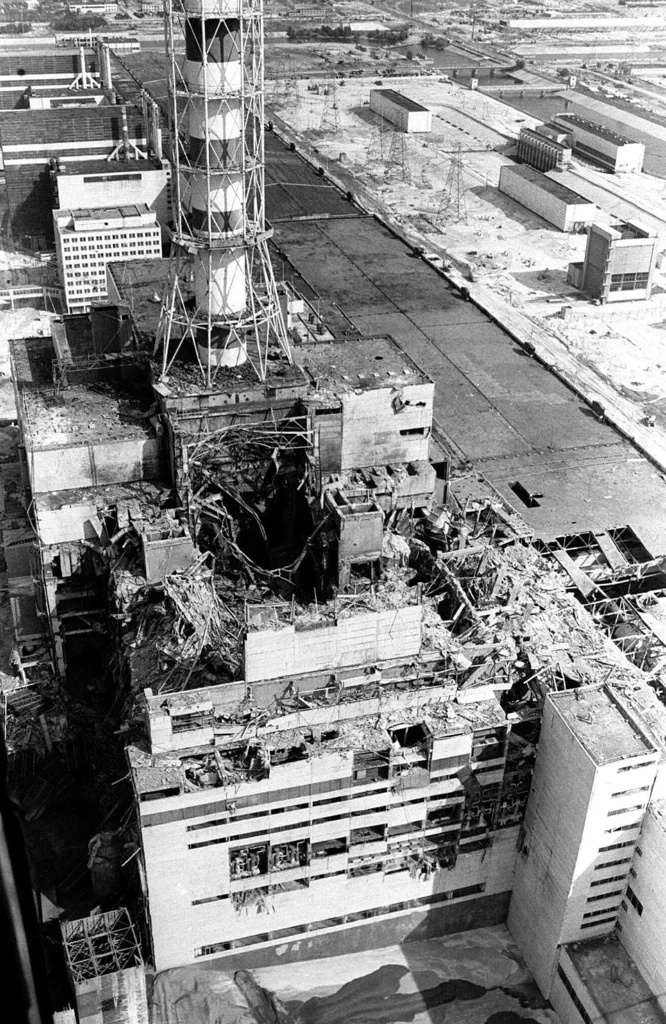
This photo was taken from a helicopter several months after the explosion. The destroyed Chernobyl reactor, one of four units operating at the site in Ukraine in 1986. No units operate today. (Chernobyl, Ukraine, 1986) Copyright: IAEA Imagebank Photo Credit: USFCRFC
Fast forward to May 1986. It’s a beautiful spring day, and I’m standing in the garden of my grannie’s council house, under a vast blue sky dotted with cotton wool clouds, unable to believe that, floating above me, is radioactive fallout. Chernobyl has just happened and, in the aftermath, heavy rain has caused widespread contamination in the UK and Europe, resulting in the FSA (Food Standards Agency) imposing restrictions on nearly ten thousand farms in Cumbria, Wales, Scotland and Northern Ireland due to the risk of Caesium-137 entering the food chain. In Scotland, those restrictions remained in place until 2010, and in Cumbria until 2012.
Like many of us who grew up during the Cold War, fear of nuclear annihilation is hard-wired into my DNA. In 1979, in the wake of media panic surrounding the NORAD (National Emergency Airborne Command Post) incident, when a computer error simulated a full-scale Soviet nuclear attack, resulting in retaliatory alerts across the US and Europe, I remember asking my father if I would wake up as a skeleton after the bomb was dropped.
This fear has lingered on in my fascination with the story of nuclear power, a technology so mythical in proportion, so ingenious, grotesque (some people call the mushroom cloud beautiful), it’s impossible to turn away. What happened at Three Mile Island, Chernobyl, and Fukushima is well known. As well as the atrocities of Nagasaki, Hiroshima, the Marshall Islands. Mistakes that could never be repeated. Right?
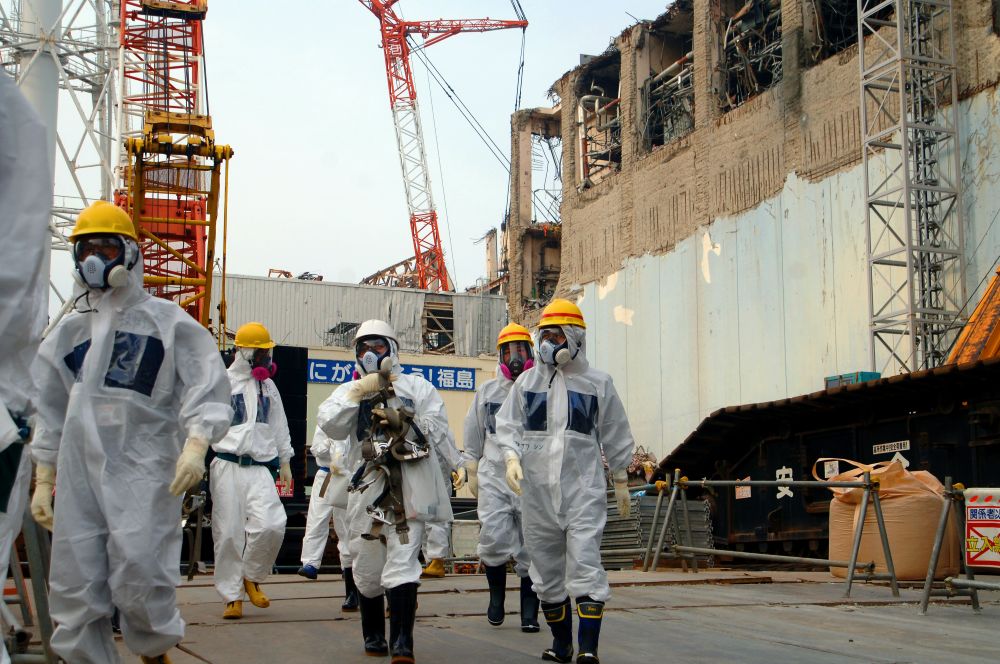
IAEA Experts at Fukushima Daiichi Nuclear Power Plant in 2013
In 2005, then Scottish First Minister, Jack McConnell, stated he was not in favour of new nuclear and, in 2007, the newly elected SNP government formalised the no new nuclear strategy; Scotland has maintained that stance ever since. As the Scottish government website clearly states: ‘We oppose the building of new nuclear stations using current technologies. We believe that nuclear power represents poor value for consumers.’ It goes on to argue against the cost of new nuclear developments such as Hinkley Point C which will see ‘consumers subsidising its operation until 2060.’ As for Scotland’s own nuclear stations, Hunterston, Dounreay and Chapelcross are in the process of being decommissioned, and Torness is set to close by 2030.
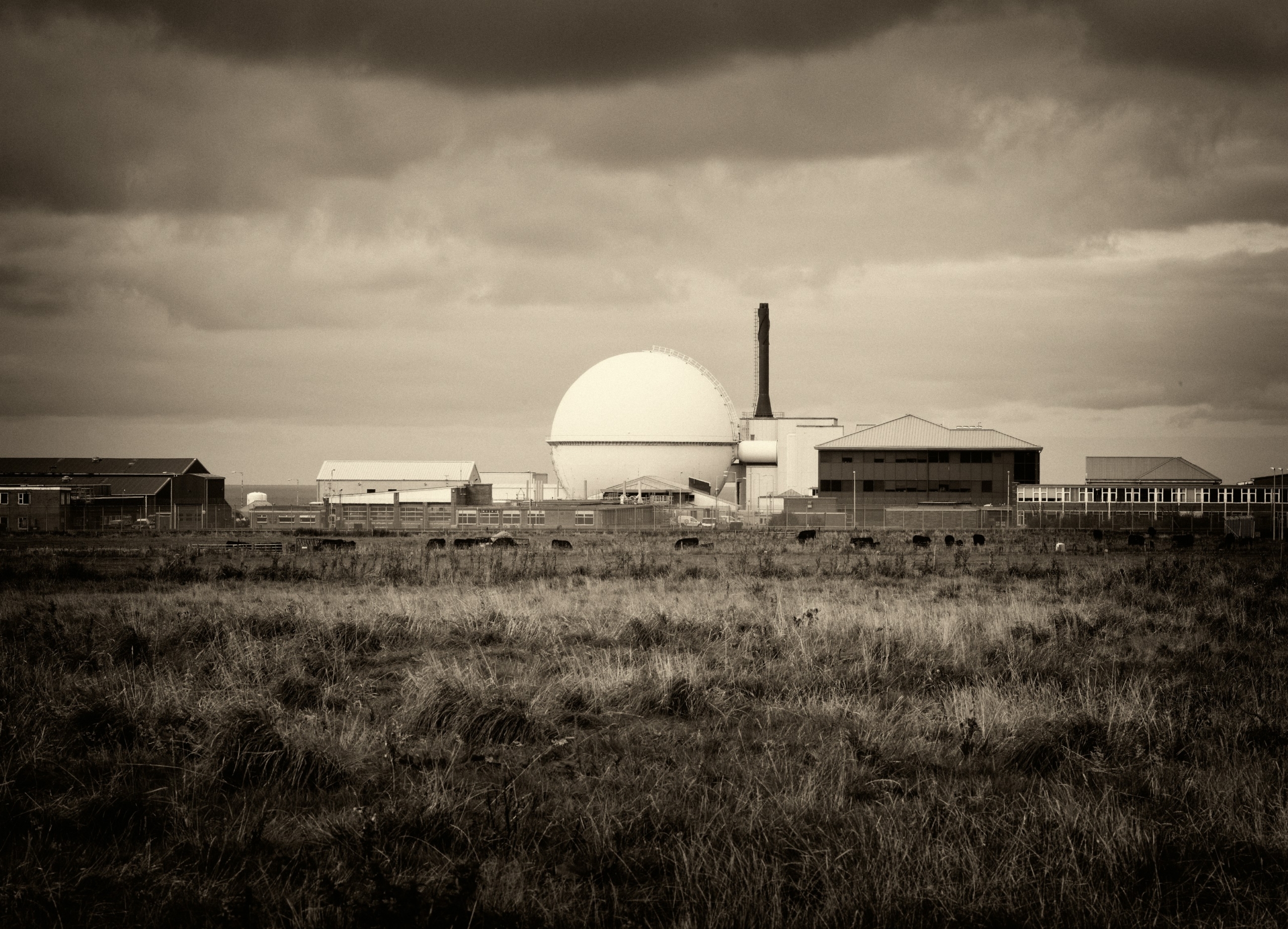
But with elections coming on 7 May 2026, almost forty years to the day since fallout from Chernobyl first reached our shores, Scotland’s nuclear future is up for debate. In October 2025, twenty years after McConnell instigated the no new nuclear policy, UK Energy Secretary, Ed Miliband, attacked the SNP claiming they are holding back Scotland’s nuclear future with their ‘anti-growth, anti-jobs ban.’ The piece, in New Civil Engineer, shows a marked change in policy, in which Scottish Labour now says, ‘yes to new nuclear in Scotland.’
What has changed? Contrary to Johnson’s slogan, ‘Go nuclear, go large,’ Miliband and Starmer have joined the bandwagon of billionaires who see the future of nuclear energy in small modular reactors (SMRs), sold to the public as a kind of ‘nuclear light,’ or watered down version of the big thing. The IAEA (International Atomic Energy Agency) classifies an SMR as a nuclear reactor with a power output of up to 300 Mwe, enough to supply 300,000 homes. Full-scale nuclear stations are 1GW or over, powering one million plus homes. The key word is, ‘modular,’ meaning SMR components (theoretically) will be built in factories and assembled on site along the lines of an IKEA flatpack. I say theoretically because the technology is vastly underdeveloped, with only one SMR currently in existence: China’s HTR-PM reactor in Shandong. US and European SMR companies such as NuScale, Terrapower (owned by Bill Gates), and Rolls Royce SMR, despite having received billions of government investment, have yet to come up with a successful and economically viable design. Go Nuclear, Go Nowhere.
Yet, on 13 November 2025, the UK government announced that Wylfa, on the coast of Ynys Môn (Anglesey) in North Wales, will host the country’s first SMR power plant.
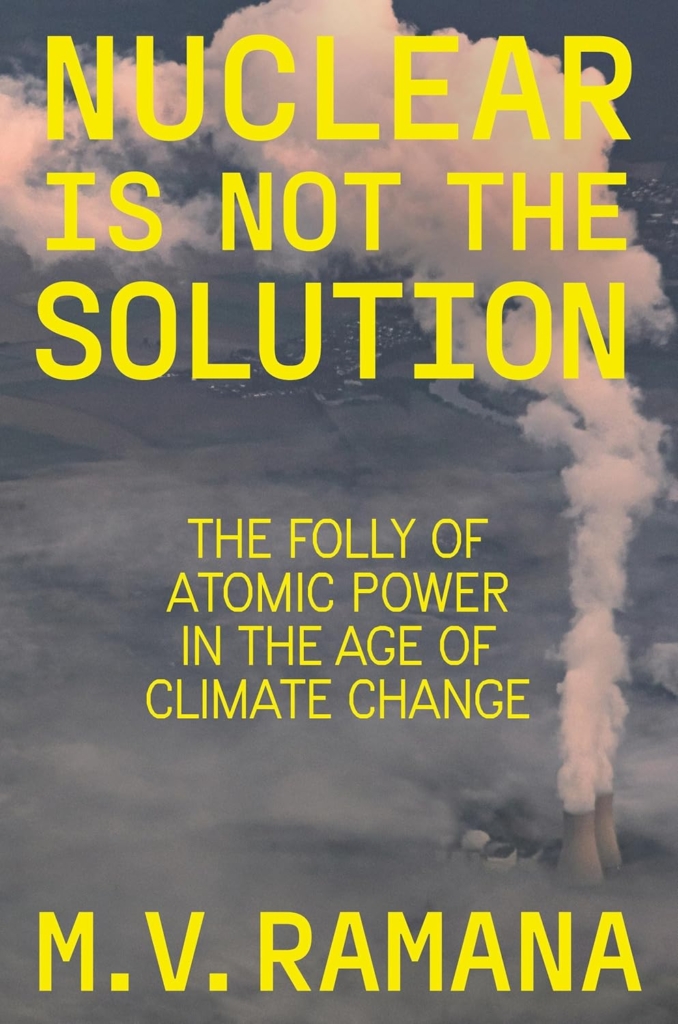
In his 2024 book, Nuclear is not the Solution, MV Ramana calls SMRs a ‘diseconomy of scale,’ claiming these projects have failed because the overwhelming financial costs of research, development and construction, and the time scales involved, are simply not viable in terms of the power they produce. A good example is NuScale whose SMR design, after being approved by the US Nuclear Regulatory Commission (NRC), and receiving billions in funding from private investors and the US Department of Energy, was cancelled because its estimated cost rose from $4.2 billion in 2018 for a 720-megawatt plant, to ‘an eye-popping $9.3 billion for just 462 megawatts of power capacity.
It would take five NuScale reactors to achieve the same projected output as Hinkley Point C at around the same price tag, yet the SMRs would power only 1.5 million homes, compared with Hinkley’s projected 6 million. That’s without considering decommissioning, an additional cost, not borne by the operators, but by the public. Assuming it all goes without a hitch.
Nevertheless, in Miliband’s new nuclear golden age, there will be ‘a network of small modular reactors across the UK’ providing us all with cheap, safe, clean electricity. It seems that Miliband is living in something akin to a parallel universe. At the very least, it’s an alternative narrative without any real believability.
So where does Scotland fit in? ‘Enlighten,’ Scotland’s ‘Independent Think Tank,’ whose board of trustees is chaired by none other than Jack McConnell, says this on the subject of nuclear power: ‘the current view of the SNP that nuclear is unsafe and too costly collapses under scrutiny,’ because nuclear is, ‘safer on a deaths-per-unit-of-power basis than wind’ and, furthermore, ‘Most of the fatalities associated with nuclear have come not from radiation, but from poorly managed evacuations, such as after Fukushima.’ Without nuclear, says ‘Enlighten,’ Scotland ‘will lose its last source of zero-carbon baseload power… the backup will not be more wind farms or batteries, it will be fossil fuels or imports from Norway.’
Have we been enlightened on the road to Damascus, or is it just radioactive glow? On the subject of evacuations, perhaps Ed and Jack can tell us how fast we should run from nuclear fallout? Oh, they’re gone.
After rummaging through the internet for statistics on deaths per unit of power (yes, someone has actually carried out that fool’s errand) I found: wind power is responsible for 0.04 deaths per TWh (Terawatt hour), nuclear for 0.03, and solar for 0.02. It’s not clear if this figure includes birds flying into turbines. According to Morgan Legal Group PLLC who, if not paragons of virtue, have at least done some research: ‘no central database tracks all accidents caused by wind turbines… of over 200 reported accidents at wind farms in the United States since 2009… most of these accidents result from malfunctioning equipment or human error rather than the wind turbines themselves.’ As for Scotland’s data, unless the Nuckelavee (that Orcadian skinless sea monster who sought revenge on communities for burning seaweed) has now turned its attention to wind farms, I’ll assume it’s not dissimilar.
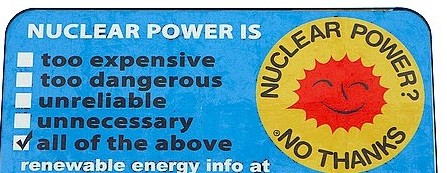
Of course, McConnell et al. are not the only ones running alternative rings around nuclear fission. The World Nuclear Organisation claims only 28 people died as a direct result of Chernobyl, going so far as to state that the accident records are ‘of little consequence in terms of human fatalities.’ Animal casualties are not included. To be fair, fatalities are difficult to measure due to the challenges of gathering long-term data, but a good indicator is that, in 2019, the Ukrainian government was paying survivors’ benefits to 35,000 families ‘owing to the loss of a breadwinner whose death was deemed to be possibly related to the Chernobyl accident.’ Ukrainian and Belarusian physicians treating large numbers of former liquidators suggested the IAEA had under estimated the toll of disaster-related deaths from long-latency health consequences, claiming the true figure to be around several thousand per year.
Perhaps the sacred cow of alternative realities around new nuclear power is that, without it, we will be unable to keep global warming below 1.5°C, the figure set by the Paris Agreement to achieve net zero emissions. There is no doubt that achieving this target is urgent. Current estimates show we are on course for a modest 2.2°C rise, with 2024 being the warmest year on record. In the UK, this trend continued into 2025.
So how would it work? According to New Civil Engineer, to bridge the shortfall left by large nuclear, forty to fifty SMRs would have to be built in the UK by 2050, an unprecedented annual build rate requiring highly efficient levels of factory-based manufacturing. The components of SMRs are complex and difficult to design and manufacture. Testing and evaluation alone for China’s HTR-PM took 26 months; the entire reactor took ten years to build. Starmer’s promise to use ‘all the tools in our armoury – cutting red tape, changing planning laws, and backing growth – to deliver the country’s first SMR in North Wales,’ cannot downplay the complexity, nor make it go faster.
The same goes for full scale nuclear power. Taishan 1, China’s EPR (European Pressurised Reactor), built on the same model as Hinkley C, took ten years to complete. If Hinkley is operational by 2030, it will have taken twelve years. Given that nuclear engineering is a process which even large centralised power systems cannot fast track, then what hope is there for capitalist systems, with their complicated financing through SPACs (special acquisition companies), mergers and endless requests for government funding, before a result has even been produced.
As a final aside, most SMRs currently in development (including that of Wylfa) are expected to run on a more highly enriched form of uranium 235 known as HALEU (High Assay Low Enriched Uranium). Currently, the only supplier of HALEU is Rosatom, Russia’s state-owned nuclear energy company. This small matter of energy security knocks the ‘imports from Norway’ argument out the park.
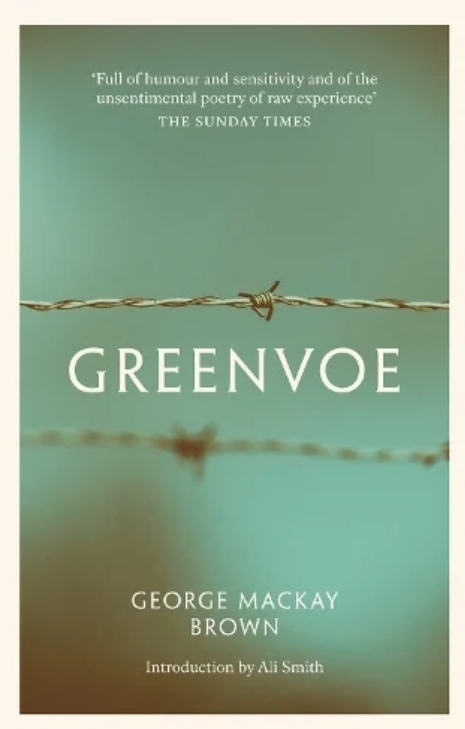
My favourite novel, Greenvoe, by Orcadian author and poet, George Mackay Brown, is, in effect, a parallel universe in which a mysterious development called Black Star arrives on Orkney in order to mine uranium, thus destroying millennia of life on the island. Where’s Nuckelavee when you need him?
But before we plunge ourselves into a dystopian future where Ed Miliband clones in trilby hats sell upcycled SMRs in second hand junkyards, it is worth considering how our energy needs are actually being met in present-day reality: 98% of Scotland’s energy comes from renewables. Published statistics show that, ‘in 2024, a record 38.4 TWh of renewable electricity was generated in Scotland… an 8.4% increase on the previous high of 35.5 TWh generated in 2022’ (https://www.gov.scot/publications/energy-statistics-for-scotland-q4-2024/pages/renewable-electricity-generation/). In 2022, renewables actually provided an excess of energy, the equivalent of 113% of Scotland’s electricity needs (https://www.gov.scot/news/record-renewable-energy-output/), with wind providing 78% of all renewable energy (https://www.scottishrenewables.com/our-industry/statistics). Although Scotland imports gas from Norway, oil and gas together account for only 11% of Scotland’s electricity production, with gas often forming only 2.2% (https://electricityproduction.uk/in/scotland/) of the overall mix, and gas consumption continuing to decline. Wind farms do require more land than a nuclear plant, but that land will remain uncontaminated and can still be used for other purposes like agriculture.
Long duration battery storage is frequently cited as a drawback for renewables, the claim being it will lead to power cuts. However, solutions such as compressed air energy storage (CAES), hydrogen storage, and flow batteries, are advancing considerably. In 2022, global grid-scale battery storage capacity saw an over 75% increase in installations, and ‘is expected to rise by 67 per cent to 617GWh this year and to grow tenfold by 2035, according to energy research firm BNEF’ (https://ig.ft.com/mega-batteries/). Large-scale grid modernization programs, such as the UK’s ‘The Great Grid Upgrade,’ to build new high-voltage lines and subsea cables, are underway.
Furthermore, the cost of renewables, including infrastructure and battery storage, has plummeted by around 90% over the past ten years and, according to Bloomberg, the fall is expected to continue. In terms of the levelized cost of energy (LCOE) nuclear is by far the most expensive option at £109 per MWh, four times more expensive than wind which costs only £38 MWh (https://www.gov.scot/publications/foi-202400420100/), making renewables the default lowest-cost option for new power generation worldwide.
While writing this article, the MWh price of electricity in the UK is £72.50 per MWh. The annual strike price for Hinkley Point C (referred to earlier) is £128.09 per MWh (at today’s inflation), and this price is guaranteed for 35 years, adding considerably to the MWh price of electricity for every household in the UK. The deal for Sizewell C is no better. It allows the developers to start charging us for electricity before the plant is even built. The fancy name is Regulated Asset Base (RAB), designed to avoid companies incurring interest on loans during the construction phase. The abandoned V C Summer project in South Carolina was financed on this model, leaving customers paying for electricity they never received to the tune of £1.4 billion. Years later, one of the parties involved, Westinghouse, was in the running to build the proposed SMRs at Wylfa in Wales.
In short, the UK government wants to commit the UK and Scotland to a programme of unproven nuclear technology, that is less safe and that will drastically increase the cost of living, while failing to reduce emissions, and leaving future generations with the problem of decommissioning and toxic waste. All this while cleaner and cheaper forms of renewable energy are readily available, that will not only reduce emissions but create jobs in what is now a rapidly developing, and lucrative, industry.
Which universe would you choose?
The nuclear industry and its political cheerleaders are barking so loudly over tried and tested reality, that I feel it’s important for people to have information with which to contradict them. It’s not a political issue, it’s common sense.
In his final paper, ‘A Smooth Exit from Eternal Inflation,’ Hawking claimed that parallel universes could be potentially detected in the cosmic microwave background of the Big Bang, making them subject to the laws of physics, rather than just theoretical possibilities. He knew believability was important. Unlike McConnell, Miliband, and their new nuclear golden age.
Imagine a pro-nuclear earth where everything that can go wrong has gone wrong: cyber terrorist attacks on power stations, infrastructure failure, catastrophic environmental disaster caused by the effects of global warming, radiation leaks, core meltdowns, large scale fallout, widespread contamination, mutual nuclear annihilation, an uninhabitable earth.
By the same token, a parallel universe also exists where this will never happen. An earth where people decide against a risky, costly, and unpredictable programme of nuclear technology. Where society puts aside those ideas on the basis that just because you could, doesn’t mean you definitely should. A world where people focus instead on expanding renewables. Where governments, whatever their systems, expend valuable public money on healthcare, education, equality, the restoration of biodiversity…
Does it have to be a parallel universe?
Notes & Sources:
Mackay Brown, George, Greenvoe, 1972
Ramana, MV, Nuclear is not the Solution, July 2024
Dizikes, Peter, Chernobyl: How bad was it?, March 2019
Alexievich, Svetlana, Chernobyl Prayer, 1997
https://www.bbc.co.uk/news/science-environment-43976977
https://www.world-nuclear-news.org/articles/uk-selects-wylfa-for-at-least-three-rolls-royce-smrs
https://www.bbc.co.uk/news/articles/ckgr82vqdvzo
https://www.bbc.co.uk/news/uk-england-cumbria-17472931
https://www.enlighten.scot/time-to-ditch-the-nuclear-ban/
https://ourworldindata.org/energy-mix
https://en.wikipedia.org/wiki/Deaths_due_to_the_Chernobyl_disaster#cite_note-Dizikes2019-34
https://injuredcase.com/accidents-caused-by-wind-turbines/
https://climateactiontracker.org/global/emissions-pathways/
https://www.scottishrenewables.com/
https://www.nytimes.com/interactive/2025/10/22/climate/china-us-nuclear-energy-race.html
https://consumer.scot/publications/public-information-note-on-nuclear-rab-and-sizewell-c-html/
https://electricityproduction.uk/in/scotland/
https://www.gov.scot/publications/foi-202400420100/
https://www.carbonbrief.org/un-five-reasons-why-switching-to-renewables-is-smart-economics/
https://www.irena.org/Publications/2024/Sep/Renewable-Power-Generation-Costs-in-2023

We are supported only by our readers. We don't have corporate backers and we don't take advertising, so we rely entirely on your support.
Help to support independent Scottish journalism
Thanks for that! It is also important to note an additional and key element in the UK government’s nuclear expansions plans. Disarmament campaigners have long been aware that the UK nuclear energy programme has always been inextricably linked with the production of weapons of mass destruction. In August last year the then Minister for Defence Procurement, James Cartlidge, publicly re-affirmed the link, acknowledging that the weapon sector relies on the civil sector for the maintenance of the relevant skills and expertise. As he introduced the idea of a Nuclear Skills Taskforce he said:
“Building on the work already undertaken with industry and across government by the Ministry of Defence and Department for Energy Security and Net Zero, the Taskforce will develop a skills strategy to support the significant growth expected across a range of roles in the defence and civil nuclear sectors in the coming years.”
Great piece, thank you. In addition to the issue of delays and costs, one thing that really bugs me about nuclear power is that spent nuclear fuel will need to be stored – safely – for centuries or even millenia. This is as true of SMRs as it is of conventional reactors. The costs and safety of this decommissioning and storage phase are not, to my knowledge, factored in to the equation (notably the overall safety estimates – the ‘deaths per unit power’), because there is no data. In other words, we don’t know. Any technology that mortgages the future to that extent seems to me to be fundamentally flawed, and irresponsible.
Thank you for this excellent review.
This article is very much in line with one written by Paul Brown the retiring Environmental Correspondent on 28th November. He basically reviews the history of periodic‘nuclear renaissances’ in UK over his time as an environmental reporter. His analysis is damning basically saying that Ed Milliband’s plans for SMNR’s were not justifiable on economic, energy production or climate change criteria.
I also recall after listening to Ed Millibands policy announcement earlier this year announcing spending commitments on nuclear power development several experts in climate strategy and energy costs explaining that the money would have been far better spent on insulating existing properties and that this would have been economically more advantageous to customers both now and in foreseeable future.
Ps – Paul Brown article was in Guardian on 28/11/2025.
Here: https://www.theguardian.com/environment/2025/nov/28/after-a-career-as-an-environment-writer-heres-what-i-have-learned
Thanks
Brilliant article, so well written and researched.
Secretive, lucrative and dilatory projects are especially problematic (see for example the MoD’s General Dynamics Ajax, an armoured fighting vehicle — in theory — which has only managed to harm dozens of British soldiers).
I was impressed by MV Ramana’s case in Nuclear is not the Solution: the folly of atomic power in the age of climate change (2024). There is always a military aspect to nuclear power (and I’m sure governments and billionaires are planning power sources for their underground/island bunkers when AI or human intelligence kicks off nuclear war).
Many countries are embroiled in scandals around non-nuclear toxic waste, so it’s hardly likely that nuclear waste, produced in unprecedented volumes in many new locations, will be magically impeccably dealt with.
The first SMR disaster will contaminate all the eggs in that particular basket. Or when societies start to crumble (as many are being actively destabilised or openly attacked), the nuclear safety regime is likely to be an early casualty as horizons narrow.
Capitalism is indeed the problem, ecocide the inevitable outcome, and our governments should serve the interests of the living planet before humans (at least, if you want humans to survive). Regardless of whether it is common sense, though, it is still a political issue (as Thomas Paine would agree).
#biocracynow
Good article. The real mystery is why Labour think this is a good idea? Are they stupid? Or corrupt?
Maybe a bit of both but part of the answer is ideological blindness. Because trendy lefties oppose nuclear then right thinking McSweeneyites must support it. It cleverly (they think) paints the greens/left as anti-jobs. This is so shallow and ignorant of real world economic consequences that it is laughable. But it does seem to be what drives them. The bungs help too.
I utterly fail to see what the problem is: SMRs of course are safe – they are used in nuclear subs – mariners mtrs away from them – do they glow in the dark? I applaud the UK govs decision to go ahead with them. Of course, since SMRs are 100% safe there is no reason why they could not be deployed where the energy is most needed – in large conurbations, such as London. There is one building in London that is grossly energy incontinent with little prospect of being anything other than incontinent. However, it is built on London clay – a wonderful material & the perfect location for an SMR buried at depth under said building. Ladies & gentlement I am please to announce that the mother of parliaments has agreed to be nuke powered – by an SMR buried 200mtrs under it. ……….what? is that unhappy murmurings I hear ?- surely lead by example? confidence in the tech? inherently safe? …………………………………….
Mike I am no expert on the subject of nuclear reactors but am sufficiently aware to know that there are significant differences between military nuclear reactors and the proposed use of smnr’s for commercial purposes. These include differences in fuel type, design and safety which means you cannot simply extrapolate between use on submarines and in commercial environment in the rather cavalier manner you appear to be doing.
I am sure the author or someone else with more expertise in this field could expand upon the differences between military and commercial smnr’s and the economic implications of their proposed development.
There are quite a few innaccuracies or lies in that whatever that’s called. Anyway, nice to see that Dave Spart lingers on from the previous century. Rant on!
I have reread Mike Parr’s comment and realise I missed the obvious sarcasm. My apologies to Mike but my defence is that are some bizarre comments from a few posters such as your Mouse droppings.
@John, the early clue was perhaps “SMRs are 100% safe”.
MV Ramana has some interesting views on nuclear power safety:
Nuclear reactors and uranium mining are never safe, and climate change exacerbates risks worldwide.
Safety rhetoric aimed at public shift from hazardous consequences to minimised risk (tiny percentages exposed as lies by empirical evidence).
There are unknown unknowns, and tight coupling in complex systems reduces safety barriers and margins.
More safety systems won’t reduce accidental risk.
In the 1966 Fermj fast breeder reactor failure the added safety system caused the accident. Redundant systems can commonly fail by either common cause (Fukushima’s tsunami took out external electricity and site diesel generator, electricity needed to cool reactor) or propagation (Fukushima’s cascading meltdown effects). External threats could multiply in a warzone like in Ukraine. Israel illegally bombed reactors in Iraq (1981) and Syria (2007). Reactors need permanent cooling to function even when shut down. Climate change alters water availability and temperature, used for cooling. More and greater floods, storms and hurricanes, wildfires. Shutdowns are costly, likely many reactors will be run at known risk.
Institutions supposedly devoted to safety often have much higher priorities such as promoting technology or supporting political objectives.
Regulators can be captured or attacked/intimidated by nuclear lobbyists.
p39 “Passive safety is no panacea either.” How natural cooling will operate at any given circumstance difficult to predict, and may be too slow, conditions too chaotic, extreme or events unpredictable.
Nuclear proponents play down deaths but although attribution is rarely possible, aggregate effects can be estimated (possibly around 1,800 fatal cancers in Japanese people from amount of radiation exposure from Fukushima).
Nuclear power is accident-prone and routinely contaminates the environment, even in the most technologically-advanced and highly regulated jurisdictions.
Safety cultures erode over time, corners are cut. Yet enormous resources must be continually dedicated to nuclear safety.
Even the smallest reactors can endanger the public.
Reactor materials slowly absorb and transform under radiation bombardment. p50 “Some of these radioactive materials produced in nuclear reactors will continue to emit radiation for millions of years.”
Notably dangerous isotopes with such half-lives include new-to-Earth iodine-129 and caesium-135. Advocates like Bill Gates “reject concerns about radioactive waste”. Geological repositories can’t be relied upon.
And that’s without consideration of intentional harms, militarism, other kinds of accidents etc, or much consideration of harms to the non-human living planet on a colossal timescale. Or the harms caused by dedicating resources to nuclear instead of other vital requirements. Or the way nuclear power warps polities and undermines democracy. Or the secrecy, corruption, deceit and incompetence that the industry encourages.
SD – thanks for information.
Upon rereading Mike Parr’s comment there were plenty of clues it was sarcasm.
Doh!
Whilst we have a free fusion reactor in the sky, free wind and free tidal energy (cheers gavity!) does it no seem a wee bit daft to build billion-dollar power plants that are capable of killing everyone and everything around them and poisoning the soil for thousands of years?
Why go to all that unecesssary hassle, risk and expense?
Having been born in the years immediately after the Second World War, I remember well the nuclear arms race and the associated ‘Atoms for Peace’ mendacity propagated by the Eisenhower administration in the US and imported into Europe. I remember the deployment of nuclear weapons in Scotland and the large demonstrations by CND.
We were told the nuclear technology would produce unlimited, cheap electricity, so cheap that ‘it could be given away’. This led to the construction of nuclear power stations in all parts of the UK, except Northern Ireland. And, of course, such unlimited cheap electricity is something we are still waiting for.
Mr Milliband’s egregious nonsense is simply a repackaging of the old fiction either a wrapper bearing the legend ‘New, Improved SMALL MODULAR REACTORS coming to a site near YOU!’
There is no need for such power stations in Scotland. Already around 150% of Scotlands needs are met by renewables and there is scope for much more generation supplying energy locally. It would be far better to invest the ‘nuclear money’ in a major programme of home insulation and support for public transport, including rail investment.
I did benefit from the nuclear war fears and associated issues like Sputnik the science curricula in the US and the west were radically redeveloped, with big investment in teaching materials and approaches. I and my contemporaries during the 1960/70s received an excellent science education. Which is why I consider Mr Milliband’s Great British Energy colonialist asset stripping and appeasement of the very wealthy.
Alasdair – I have read several reviews which identify the biggest supporters of nuclear reactors as being:
1) the military as they think this will benefit them with development of nuclear weapons and help spread their cost.
2) large energy companies as this will help consolidate their preeminent position in market
3) fossil fuel industries as the time delay in development and production of nuclear reactors (small modular or large), inevitably at expense of development of renewables, will give them longer to extract fossil fuels and consolidate the financial profits they accrue from them.