
Scottish Politics and the Twilight of the British State, Part 2
This is the second part of Gerry Hassan’s extended essay exploring the challenges Scotland faces in our economy, democracy and wider culture of public life. Read the first part here: Scottish Politics and the Twilight of the British State – Bella Caledonia
Part Two: The Missing Scotland, Need for New Stories and Embracing Post-Britain
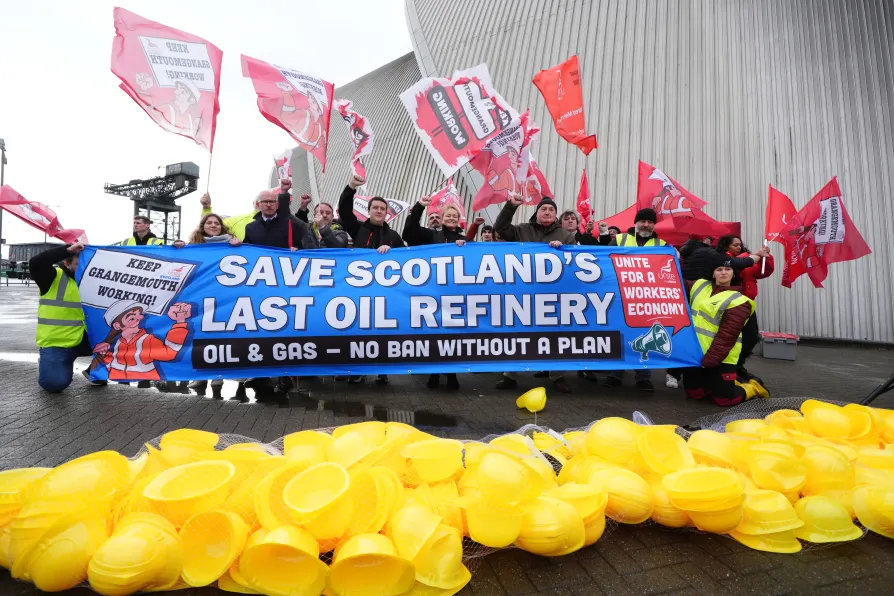
Scottish politics needs to address a wider tapestry and range of issues than it did in the 2026 campaign and beyond. First, the campaign was conducted with little reference to the economy and the flatlining of Scottish and UK living standards since 2008. Even Grangemouth was hardly mentioned, despite recent trade union and community campaigning over its closure. Add to this a degree of fiscal dishonesty and illiteracy across all the parties in the campaign; one example being the recent Fraser of Allander Institute report which identified a £5 billion per annum gap within four years in public spending with huge consequences for the NHS, education and public services. None of the parties addressed this, with the commonplace SNP response being to talk about their record of balancing the budget as if the cold facts could be just wished away.
Second, 27 years of devolution have seen an absence of democratising power and institutions. To many in the SNP independence is an event, not a process, an abstract, not a detailed prospectus. This can be seen in the missing politics and policy of empowering citizens over two decades of SNP government. Many people feel this reduces politics to an insider Holyrood class thinking that they know best and treating people as passive spectators. Self-government has to be an ongoing process, not just about waiting for the day of independence.
A small start to extending democratisation would be to reform Scotland’s political structures, a task for which the SNP and political classes have no appetite. It cannot be that pre-devolution Scotland regularly altered its local government architecture – most recently in 1975 and 1996 – while the Scottish Parliament was established in 1999, and then since devolution there has been no change. Local democracy needs a dramatic re-envisioning with smaller local units to give voice to communities, while there is clearly a case for strategic authorities in some areas, at least for Greater Glasgow.
As well as this the Holyrood electoral system needs reform. The current Additional Member System (AMS) with its FPTP and list votes emerged from needing to keep the former, to not scare away Labour support, while being broadly proportional. Now, 27 years later, many voters find the two-vote system and list incomprehensible. Moreover, the list vote presents a choice from closed party lists, promoting the tyranny of party, which hardly empowers voters. Add to this that the recent Scottish election was the most electorally distortive in the Parliament due to the SNP’s overwhelming dominance of FPTP (57 out of 73), according to Ailsa Henderson of Edinburgh University, and the case for reform is overwhelming. This would entail moving to a more proportional system which empowers and offers more, and clearer, voter choice.
Third, related to this the democratic explosion of the 2014 indyref has been left to wilt, untapped and unchampioned. This movement had the potential to remake and reshape the body politic and public life of Scotland in unimaginable ways; harnessing the energies, enthusiasm and engagement of Scots up and down the land. Yet, this was never really explored by the SNP or Scottish Government post-2014, and a politics of ‘business as usual’ returned. But that spirit – which is more than a spirit of 2014 – but is about people learning to take power into their own hands – is still out there and could be nurtured and built upon.
Fourth, there is a conspicuous gap in SNP thinking, policy and practice in relation to culture. This is the terrain of Scottish culture and self-determination. This would entail an ambitious programme of celebrating how Scotland projects itself domestically and internationally; champion artists and creatives; address cultural representation of Scotland, and thinks about arts and culture in a way which touches the fabric of the nation. This would involve a unique Scottish story that rejects ‘the creative class’ idea of culture which reduces arts to an instrumental extension of economic policy – the original premise behind Creative Scotland. Positive developments may emerge from the defeat of Angus Robertson, who was Culture minister, who had a pronounced Edinburgh-centric idea of the arts with damaging implications for the rest of Scotland.
Fifth, how Scotland is portrayed in media and public sphere has wider consequences. The SNP has not talked about these issues since the early days of Salmond’s period as First Minister and the Scottish Broadcasting Commission. Self-determination should be about more than politics and politicians, and address how the ecology of public life, media platforms and public agencies contribute to policy discussions. The absence of a properly funded and constituted pro-independence think-tank after two decades of SNP rule is a glaring failure, says much about how the party leadership sees public life and the potential of a diversity of policy ideas. Instead, evidence suggests that they have given priority to policy from within the system which ministers think they can control, but which has contributed to the system capture of the SNP with all the damaging consequences which flow from that.
Finally, language and respecting others matters. One independent supporter told me post-2014: ‘There are no such things as No voters. There are only people who voted No.’ This insight avoids the lazy labelling of people that sees politics as fixed camps of unionists versus nationalists which is limiting and not something that not all people fit into.
The corrosive effect of dehumanising language should not have to be restated considering the debased, bigoted rhetoric of Reform and other politicians on asylum, refugees and immigrants. Tragically, it has to be restated. Scotland had a bitter, divisive debate on trans rights and its consequences for women’s rights. The deep-seated wounds of that debate still fester and can erupt at any point. Thus, in the aftermath of last Thursday where two openly trans MSPs were elected to Holyrood amid the celebration there was also a backlash. An article in The Scotsman called pro-trans MSPs ‘women deniers’ while a Twitter debate saw the claim that there were no new lesbian MSPs disproven followed by what amounted to ‘a proper lesbian test’ (which meant not supporting trans rights). Such a reactionary politics has damaging consequences; Cas Mudde, international expert on populism, noted: ‘Transphobia everywhere across the world is a gateway to the populist right.’
The need for a different SNP
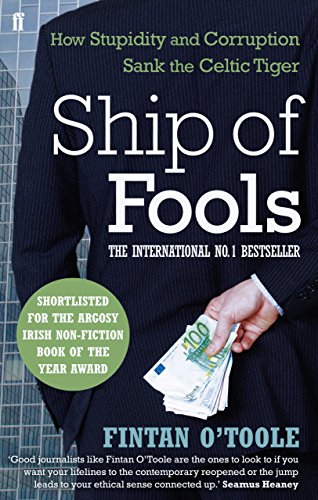
Alongside the above, how political parties do politics is increasingly part of the problem in Scotland and the Western world. In our politics there is a specific set of challenges for the SNP considering their length of period in office, cumulative effect of incumbency, and weakness of their opponents. Beyond independence the governing credo of the party is vague – centre-left but in an ill-defined way, embracing civic nationalism without intellectually battening it down. A truism the world over is that nationalism is never enough: a point underlined by Fintan O’Toole in his critique of the implosion of the ‘Irish economic miracle’: Ship of Fools: How Stupidity and Corruption Sank the Celtic Tiger; Scotland is no exception.
These dynamics have become more acute for the SNP after two decades in office. James Mitchell of Edinburgh University believes that electoral dominance has come at a cost:
Senior members of the SNP have been socialised in their politics in an era in which the SNP has been in in office and the independence referendum in particular. Politics for this generation is all about campaigning and government as the servant of campaigning. It has won a succession of elections with the same formula – make promises with little or no thought to delivery, seek to polarise opinion and pick fights with London.
He continues that: ‘Even the looming crisis in public finances are unlikely change anything other than intensify the claims that this is all the fault of the union. Scottish nationalism in its current form is not about self-government and taking responsibility but has become the debilitating politics of grievance.’
John Curtice expresses the future choices facing the Nationalists:
The SNP have to address the issue of what happens post-Swinney to the leadership. Is Stephen Flynn any good as a minister? Can he run a department: something he has had no experience at? Can Mairi McAllan who is unknown by the general public raise her profile? Flynn is good at rhetoric while McAllan is highly spoken of by people she works with. But can either be good at rhetoric while dealing with the challenges of government in a way which inspires confidence as Salmond and Sturgeon previously did.
Scotland has changed but we need a new political dispensation
Scotland has changed dramatically in recent decades. This is particularly true in relation to how large numbers of Scots think of the ideas, stories and potential of the country. They see that we can have a collective power to change Scotland, organise and run things differently, and not look to the old top-down methods so beloved of party politicians. However, this division between a self-organising, DIY Scotland and a formal institutional Scotland, evident in the 2014 indyref in different visions of independence, has only grown more acute in the years since.
This is one of the major challenges facing those wanting change in Scotland. We have together collectively changed the idea of modern Scotland – what it stands for, how it sees itself and what its future could be. We have not done this uniformly or completely, but a shift has occurred that sees Scotland as self-governing, as a political community, and does not see Westminster as the primary political body in our future – irrespective of whether this translates into support for independence. In Alex Niven’s words in the New Statesman there is in Scotland along with Wales and Ireland ‘frequent agreement … [of] … the broad outline of the nationalist imaginary’ and breaking with the post-imperial delusions which still haunt England.
Yet at the same time there a seismic gap between the shift in how Scotland is seen, and the policy prospectus and institutional evolution of the country post-2014. This is one of the terrains that those who champion self-government and independence have to creatively address and work on.
New Collective Stories of our Future and outlining Post-Britain
Related to this are the stories that modern Scotland tells itself about what it is and what it wants to be. This did shift in 2014 and subsequently but there has been a degree of retrenchment and what could be called radical nostalgia. Central to modern Scotland’s sense of itself is the experience of the 1980s, Thatcherism and the reign of Thatcher. This is still an open wound for many in Scotland: a mobilising story, a foundational account, and a generational perspective passed down through the years. It was revealing that post-election SNP high-flyer Mairi McAllan when pressed on the BBC for reasons for independence after Brexit and Boris Johnson failed to fly cited Thatcherism and the imposition of the poll tax.
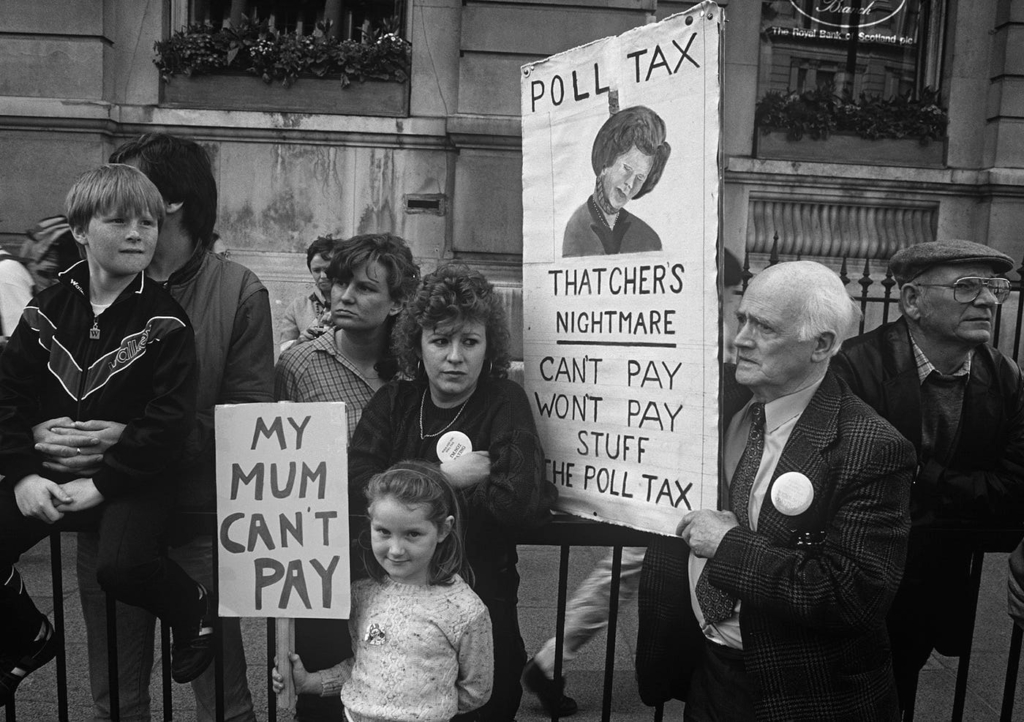
This is revealing because the poll tax is weaved into the folklore of a large part of Scotland: imposed, hated, treating us as ‘guinea pigs’. But to cite it as one of the main reasons for independence 37 years after it was first implemented in 1989 is to embrace a politics more backward looking than future facing; relevant here is also that McAllan was born in 1993 – four years after its imposition on Scotland.
‘The continual harking back to the 1980s and Thatcher’s butchering of Scotland in my mind uncomfortably mirrors Farage and Reform’s nostalgic view of 1950s monocultural England’ noted one observer of Scottish politics which many will find an uncomfortable comparison. What it reveals is that 27 years into devolution and 20 years into SNP rule, Scotland needs to nurture a new set of stories about who we are and what we aspire to be. The temptation to drink continually at the same well of anti-Thatcherism still has resonance but has become increasingly dried out and arid.
The SNP have become a victim of their own success here: buying into their own story of Scottish moral sentiment, centre-left communitarianism, and public virtue. They have in many respects become trapped by the power of their own story and need to find a way to step out of it to be part of the journey of a new set of stories. This is a predicament that many defining and potent collective stories can fall into: a point made powerfully in Seduced by Story: The Uses and Abuse of Narrative by Peter Brooks.
What would the future stories of Scotland be and who should tell them? The first is the easiest to explore. Such ideas should not be led by politicians or political parties, but instead come from artists, cultural practitioners, and creatives: the people who can make cultural self-determination real, and an array of people living and leading the self-organising, DIY Scotland beyond the official state.
The content of this future Scotland would be the sum of millions of interactions. But some of its contours are clear. It is not centred on Holyrood. It is not about ‘the normal powers of a normal Parliament’ as SNP politicians frame independence. Rather it would be centred on a Scotland where power, authority and legitimacy was dispersed across the country, where the bonds, connections and social contract which make us more than individuals but rather members of a civilised society would be central, acknowledging that we live together not just in a political, but ethical community.
This would be a vision of Scotland more about interdependence than independence: inter-independence both as a community and society, and about our place in the world. At the same time, it would celebrate the principle of self-determination not just as an abstract or one-off event about statehood but instead defining how we exercise power as individuals, communities and a nation.
Scotland needs to build on the shifting sense of itself, ‘the quiet revolution’ which made 2014 possible, and dare to tell new stories which create our future and a self-governing Scotland. This would be an empowering, open-ended project creating a Scotland of the imagination, linking it to everyday life and how we govern and see ourselves. As a first step we have to recognise that the big changes will not come from party politics on its own or via top-down processes. Rather they will only come from creating the spaces, institutions and stories which can nurture and encourage the revolution already underway – one centred on different ideas of power and authority which have autonomy and self-determination at their heart.
As we live in the shadow of the twilight of the British state and the insipid, undead Starmer government comes to its predictable end, Scottish self-determinists will need to mobilise a set of national stories which aid us planning our future road map. This would speak to the many Scotlands, embrace our diversity and multiculturalism, and work with others across RUK in Wales, Northern Ireland and England to fashion a modern, outward-looking post-British set of identities and institutions to break with the atavistic, anachronistic English nation-state at the core of the present UK.
We continue publishing as we crowdfund for the next twenty years.
Support us here: https://www.crowdfunder.co.uk/p/bella-caledonia-2020


We are supported only by our readers. We don't have corporate backers and we don't take advertising, so we rely entirely on your support.
Help to support independent Scottish journalism
This vision of a democratic Scotland built from the bottom up is very much the optimism of the activist. Most people have neither the time nor the will to get involved in an endless series of campaigns and decision making. Our mutual support cities have either become private companies or are shells of actual member organisations with co-operative societies and even major trades unions prime examples. Most people want the day to day work done by professional so long as they have the ultimate veto.
Big business organised nationally and internationally has obvious advantages when dealing with localised decision makers. Who thinks the French Commune meeting to allocate contracts to private suppliers is an ideal model?
Scotland hasn’t stood still on local democracy it has regressed. Police and Fire Services are centralised. Health is moving to a ministry and Quangos brought in house. Social care is an obvious next step once it is integrated with Health. Educational disparity me that leadit the same way media and public blame Holyrood for it’s failings.
We seem to be a country that lacks skills in self governance from local and national civil servants to politicians themselves. Notably few go from one side to the other as in other European countries. What level did most of our politicians reach in their previous employment?
I agree with almost all of this. We need a more inclusive and creative approach to self determination. My one minor quibble is the familiar dismissal of a too comfortable SNP. Of course there is some truth in it, but it is a tired trope. More importantly it perpetuates a mindset that we must wait on the SNP leadership to magic our new future.
To criticise the SNP for being too focussed on winning elections is like criticising a dog for barking. It’s what political parties are for (maybe unless you are Labour).
The challenge is to build a vibrant non party movement, or movements for change that will empower local communities and develop a culture of self determination. We need to stop waiting for someone to do it for us.
Andrew – I agree with your comments on the need for an active Yes movement encompassing as many sections of society. The SNP & Greens could then become the political wings of a much wider Yes movement. This would allow them to better concentrate on helping shape and implementing policies which actually improving life for people in Scotland. This in itself would help build case for independence.
I would go further and try and set up a Constitutional Convention which would look at how to get out of current constitutional rut. This should also engage with as many sections of society as possible regardless of support or opposition to independence.
Two things that could help break current stalemate would be switching to a more proportional voting system (as Gerry suggests) and getting all parties in Scotland to agree to what constitutes a mandate for another independence referendum. (I would suggest a majority under a truly PR system). This would remove the constant arguing over a referendum from the day to day political debate and would further encourage political parties to work together to improve day to day life of Scottish citizens.
Yes, I agree a constitutional convention, if it can be made broad enough – unions might be key – could be a big part of this.
What do you mean by ‘living standards’? Something like this?
https://post.parliament.uk/living-standards/
It all sounds very Tony Blair Institute.
Some ideologies are essentially oppositional, not only Them-and-Us but Them-versus-Us. Political systems have to take these into account. But to achieve the kinds of goals spelt out here will require a near-consensus on a good-life philosophy (as in living well, doing good, not in having or coveting goods). This is the vacancy at the heart of much political commentary. What is the basis of this ‘ethical community’?
And how are you going to disperse political legitimacy across Scotland by a 50%+1 Independence vote? Where, say, the entire border region might remain pro-Union?
And how can you dismiss a ‘creative class’ one minute, then in the next reinvoke “artists, cultural practitioners, and creatives” as having an exclusive role?
The SNP are more centre-right than centre-left, I think. More attuned to markets than people.
The Cannes Film Festival kicked off this week. It’s still the biggest event by far in the film calendar.
Films by directors from all over the world – 3 from Spain this year – will screen over the course of 10 days for the much coveted Palm d’Or…
It is a truly exciting event, because usually the best film-makers in the world end up here…
You’ll be lucky to find any mention of it at all in the Scottish press…
We are busy with our usual obsessions – a penalty kick in the last seconds of a football match; the grind of machine politics; another panic attack over trans folk; and above all, spectating, looking on from afar at the slow motion collapse of the British State…
To build a new country, you need new horizons.
I don’t see much sign of them I’m afraid…
Film is one of the ways such horizons can be created or just manifest themselves…
But you need the basic infrastructure. 20 years of SNP rule and still.no sign of that…
And then the violence in Scotland…
Every day I read the Scottish news on the BBC webpage….
And every week at least, or more frequently even, there is a gruesome story of some totally random act of violence in the headlines…
Do these things happen in other countries so.much?
I don’t know. But it points to a sickness in Scottish society that so.much random, apparently unmotivated, violence takes place…
Though maybe I am a wee bit more susceptible to such stories having been assaulted by a lunatic with an iron bar in Glasgow in my first year at Glasgow Uni for no reason…
I was lucky he didn’t kill me…
It seems to happen every week or so in Scotland…
Any explanations?
These acts of extreme violence elicit no response in wider Scottish society it seems to me. Yet what do they say about us?
Not so long ago, in a case which recently went through the courts, a man threw himself out of the window of a high rise in Glasgow having been kidnapped and tortured for two days…
It’s.like something out of a Coen Brothers movie… The guy crashing through the glass, still tied to a chair…
The judge ruled against admitting evidence that the designers of the window were in some way culpable… A sensible decision…!!!
Is it not just more evidence of a highly stratified, class divided society? These things don’t tend to happen in the leafy suburbs (though you never can be too careful)
If you put it all together, the drug and alcohol deaths, the.life expectancy rate, the over investment in something as competitive as the fitba, – and whatever happens this coming weekend, there will be mayhem – the neglect of culture, the acts of random violence, you come to the conclusion we need to call in the experts maybe…. Soft spoken people from the shires and dales…
It’s maybe not politicians Scotland needs as much as psychiatrists, and in any event, it might be an idea to make badminton the national sport for a few years…
I think there is a real danger of basing your view on the reports of the media who will always highlight such bad cases. The violent crime trend is in fact downwards except in the case of sexual assault (and knife possession has gone up). How the rates compare to other European countries is hard to say as the stats tend to be for the UK, but with the latter the UK is generally on a par with other European countries and often with lower murder rates.
This is a summary of recorded data 2017-24 for Scotland
Murder
The number of murders in Scotland has remained relatively stable over the period, with a small downward trend.
https://datamap-scotland.co.uk/scotland-reported-crime-data/
Attempted Murder
Attempted murder cases have also shown a decline.
Sexual Assault Including Rape
Sexual assaults including rape have increased over the period.
Serious Assault
Serious assaults, namely, those resulting in severe injuries such as fractures or lacerations requiring hospitalization, have also seen a downward trend.
Possession of Knives or Blades
The number of crimes recorded involving possession of a knife or a blade has increased,
No doubt you’re right, not trying to say there is an “epidemic” or anything like that…
No, it’s not the amount of violence, it’s the kind of violence…
Just random. No reason.
They don’t hold you up with a knife and ask for your wallet, which can happen anywhere.
Just a bam or a radge with a sadistic streak…
The total random act of violence is something you don’t find so much in (sorry, it’s the country I know best) Spain…
I’ve always felt totally safe at night in the streets of Spain…
Not so much in Glasgow… and other Scottish cities..
Anybody brought up in Scotland knows what I’m talking about…
Anyway, the point, our culture is still far too macho, don’t you think?
We’re going to see it tomorrow, for sure… again…
@Douglas, Scotland does have an unenviable reputation as a bam-factory. There is also FASD:
https://www.nhs.uk/conditions/fetal-alcohol-spectrum-disorder/
And sadly we did see it Douglas, all too predictable.
I dunno, is Scotland any worse than England with regards motiveless violence? And Wales – I lived there for a while and small town Wales was rife with after pub violence.
Drink (and drugs) is a massive factor.
@Douglas, Scotland is a heavily-polluted place. There may be some connection with human violence.
https://en.wikipedia.org/wiki/Lead%E2%80%93crime_hypothesis
This critique only refers to the shortcomings of the SNP.
What about the media? The press is relentless in monstering Scotland and its government, in a manner which reeks of colonial intent. The BBC has become notorious for bias, yet is publicly funded.
What of the other Scottish political entities? Are they excused responsibility for Scotlands condition?
Does their undoubted adherence to London hegemony “entitle” them to silence, when discussions over British State support for industry goes overwhelmingly, south of the border?
I wouldn’t exonerate the Media but it is the Media people choose. Nothing stops the public buying the National (or the Socialist Worker) rather than the Daily Express. The Scotsman has wavered quite a bit as Independence seems more or less likely. Even the Sun ran very different versions in England and Scotland for a while.
The earlier history of a leftwing Press showed much the same problem. The Mail always out sold the Mirror, the Telegraph was way ahead of the Guardian. We saw the Record change direction and go gutter wards when the Sun arrived in Scotland.
At heart the public is much more reactionary than we would like to believe, even those parts of it that vote for more progressive parties.
Not always true. During the mid-1960s, daily sales of The Mirror exceeded 5 million copies, a feat never repeated by it or any other daily British newspaper since.
Ian – newspaper circulation has fallen off a cliff in last 20 years. This must show in part that many people, especially the young, reject the propaganda they are being spoonfed?
In my experience from talking to people personal experience is the most significant thing that affects their views on issues. In addition if you take the time to sit down, listen and discuss issues most people are far more nuanced in what they think than the media and the loudest voices would lead you to believe.
Yes I’m well aware of what has happened to newspapers, including the internationalising of major UK ones. Constantly have to check which country a news item refers to. I was responding to the idea that it was the Media helps frame opinions. Of course the readers don’t always agree with the editorial line but chosing one over another regularly has to mean something. As so often the pennies of the masses never add up to to pounds if the few when it comes to supporting an independent media.
I wonder whether many of the alternative online offerings are not news so much as opinion with facts or a version of them simply bolstering the argument.
Ian – how much of the mainstream newspaper media these days is opinion rather than fact?
The msm newspapers still influences in that it often drives the tv media narrative for the day which is both ridiculous and incestuous.
Even tv news reporting is more and more driven by opinion rather than fact as demonstrated by GB News and abetted by a toothless Offcom.
I think all the media are increasingly failing to make a distinction. There was a time when the main articles across the newspapers differed more by style and audience than the salient facts. The Morning Star was a glaring exception. Sometimes resulting in the editorial seeming at odds with the reporting. Increasingly it is the facts that are disputed in long form articles that claim to be news but are driven by opinion. Is George Monbiot a journalist or an environmental campaigner?
No point in complaining about the MSM, we know who owns and controls it. and the scope for subverting it from within is reducing. Only by offering an alternative that attracts an audience can you challenge them. The tools are there as never before, enormously so compared to the Sixties, but critical mass audiences are lacking.
“No point in complaining about the MSM, we know who owns and controls it. and the scope for subverting it from within is reducing. Only by offering an alternative can you challenge them.”
Er, yeah, donate here: https://www.crowdfunder.co.uk/p/bella-caledonia-2020
Ian – ‘no point complaining about the mainstream media’ – what an utterly defeatist outlook. I remember when The News of the World was the most popular Sunday ‘newspaper’. It no longer exists because of public outcry against phone hacking.
And what did you get in its place? Did the Murdoch media suddenly become sympathetic to progressive causes? Murdoch cut his losses and moved on.
I’m sure Murdoch, Desmond etc would appoint more liberal editors if it sold more newspapers, profits come first. The Scotsman is now owned by an Irish advertising company with no obvious interest in our politics but I doubt if public demand will sway it’s line more than a couple of degrees to recapture readers lost to the Herald. The National has a circulation of a little over 10K despite having the “right” ideology.
Bella Caledonia is interesting and informative but hardly independent journalism.
Bella Caledonia isn’t an online newspaper. Some of Bella is opinion on news reported in the MSM, but Bella doesn’t report the news, and is in no way impartial. Don’t make the comparison.
We don’t claim to be impartial Billy. Neither do newspapers.
Ian – the reason Murdoch was allowed to crawl back out from under his shell was because politicians bottled it by not following through with Levenson 2 enquiry which had great public support at the time. It was scuppered by press threatening Cameron who weakly pulled enquiry under pressure. Please don’t blame public for the fact that the political and media (billionaire) establishment have a grip on this country or because they don’t buy the Morning Star.
Much of the public is very unhappy with the political and media establishment but it is that establishment that is turning the public anger away from themselves towards immigrants and other minorities. It is the fact that many people have been normalised (indoctrinated) from a young age to read newspapers with reading age of a 9 year old that has led to this situation. The public gets what the public is told they want.
@John, I bought and read through a copy of the Morning Star in the aftermath of one of the recent Peter Mandelson events, and I found the writing a little weak and the points a little obvious-shallow, without the institutional, ideological or systematic critiques I would have expected/hoped for. I’d read better insights in BTL comments that week. What is the usual standard, and do they break much news these days? I had the impression they used to be a bit sharper.
I found this with other publications I was nodding along to but nodding off at the same time. If they say much the same thing every time, will readers keep reading them? Whereas the Guardian used to have very wide gap between some of their correspondents covering the same story, like when Maggie O’Kane was covering the Bosnian War alongside a much more right-wing journalist (I think it might be have been Martin Woollacott).
The public chooses what it wants to read and mostly it chooses newspapers that reflect it’s prejudices. There are plenty of papers to choose from each with their own bias. The most common single source of news remains the BBC with Sky and ITV News having more users than any newspaper.
Murdoch showed how little he cared for any result from the inquiry by closing the News of the World and kicking the editor upstairs. It didn’t close because the public boycotted it. The prolonged inquiries took momentum out of the whole issue.
All newspapers are experiencing decline in their print versions, some are more successfully transitioning to digital versions than others but those also seem to be moving to an international version with local editions, with the Guardian particularly successful. Foreign media have English language versions from France24 and DeutschWelt to Al Jazeera.or CNN all free. Online media YouTube etc is less trusted but often wider in coverage. The public has choices, people can even browse online copies of print newspapers for free on Press reader through their local library.
The relationship between the commercial media and the public is two way. Editors not only shape opinion they also respond to it. During the Independence Referendum some were clearly hedging their bets with two very different versions of the Sun in England and Scotland.
Immigration is an international issue and where ever there is large scale, society changing migration there is conflict, particularly where cultures differ. It is as true in South Africa or Bangladesh as in Europe or North America. Where culture and religion create parallel communities the divisions can persist for centuries along with periodic violence. It is the phenomenon of large-scale migration changing the character of a place, often at least local displacement of the existing population that breeds resentment not the person of the individual migrant. Europe is running at around 10% migrants with a cumulative effect of locally born children. 40% of our school children in the UK are of non-native ancestry. You have to go back to the Anglo-Saxons for anything similar. The issue is not a creation of the media it is a lived experience. Compared to the present the past really was foreign country. There is a certain irony in hearing people complaining about incomers breaking up their migrant enclaves as though they hadn’t done the same when they arrived. How newspapers spin the story varies but we’ve come a long way since Powell. Anti-immigrant rhetoric now comes from speakers with Black or Brown faces.
“The public chooses what it wants to read and mostly it chooses newspapers that reflect it’s prejudices.”
This is simply not true. This is factually incorrect. In constitutional terms there is only one single newspaper in favour of independence despite polling showing over 50% in favour for the past year.
In Left-Right terms the print media is dominated overwhelmingly by right and far-right press, mostly owned by billionaires.
This is just a statement of fact.
If Independence was the sole issue on which people chose their newspaper then 50% of Scotland would be buying the National. Although other newspapers are Unionist in their editorial line several give Nationalists opportunities to contribute opinion pieces. Journalists may not follow the editorial line too closely. As the governing Party the SNP also has plenty of occasions to put it’s case across through the normal channels.
Clearly the Public in Scotland is just as good at filtering out the parts they don’t agree with over the Independence issue as they have been over Labour versus Tories otherwise we would not have reached the current impasse, which is where my disagreement with John began. However I don’t believe someone buys or subscribes to the same newspaper regularly without something about it agreeing with him although it might not be the politics. (Certainly not why I have a Scotsman subscription but truer about my Guardian one).
Ian
When I was younger many of my mates bought the Sun for Page 3 & racing. I used to buy the Daily Record for the football. I suppose the political message infiltrated us but it was almost in a subconscious way. None of us bought these newspapers for the politics.
Like many people I no longer buy newspapers but read them online. I suspect many people continue to buy the paper they have always bought out of habit- possibly the newspaper their parents bought and were used to buying.
Your argument about people buying newspapers and support for independence is spurious. I can equally argue that if people agreed with newspapers political content then >90% of Scottish public would be opposed to independence.
Overall these days a much smaller percentage of public buy a newspaper let alone on a regular basis – just look at dire circulation figures for newspaper sales (which include handing out Sun free) in recent years.
Maybe you’re right, I dunno…
But it’s not just one thing…
Anyway, putting so many people in jail is obviously a bad idea, you know? We know that doesn’t help…
Yet we have the highest, (or thereabouts) prison population per capita in Europe…
https://www.bbc.com/news/articles/czd24z7563no
We have some of the worst housing in Europe…
We have the drug deaths and the booze figures…
You really need a national plan of action, multi-faceted.
The SNP and the wider powers-that-be need to tackle it for once…
Culture is important in that sense…
Whole swathes of the population are more or less written off by government…
So you don’t even get one out of every two eligible voters turning out to vote the other day…
When you point the finger – the other three point back at you……
This continuation of decades of destructive criticism (as opposed to support and constructive criticism) has demonised our vehicle of delivery for Independence
Are you so blind you cannot see?….
SNP = Scotland’s National Party – it exists to deliver Independence for Scotland .
As a result of the lack of support and constant criticism , along with the weight of responsibility of devolved government it has not , yet, generated sufficient support amongst the population to choose Independence.
In the meantime it has
delivered tens of thousands of pounds of support, uniquely, for every Scottish citizen to meet the challenges of modern life.
Try lifting a finger!
Our ball ( of resources, choices, identity) was taken into the Unionist garden long ,long ago.
The SNP have since taken possesion of it and are pushing it up the hill to roll it down the other side back onto our own field of dreams ….it really needs everyone to lend support , to lift a finger,rather than carp from the side lines if we are to complete the effort …..other wise the impending shit show at f*@k factory could bust the ba completely!
That’s true as well, the SNP have defended the Welfare State better than Labour, which is why, precisely why, Labour are now an irrelevance in Scotland…
But then you read that Britain’s 157 billionaires have wealth equivalent to 22% of UK GDP and you come to the conclusion we live in a very nasty, brutal, and viscious society… most of the people at the top are nasty people, callous people…
https://www.theguardian.com/inequality/2026/may/15/wealth-britain-billionaires-gdp-rich-list-inequality
We have 100% of the media obsessing about GDP, when the GDP figures ALWAYS reflect the growth of wealth of the super rich, never the standard of living of those at the bottom… it’s a false figure…
The whole system is rigged and we are crying out for a robust party of the Left who can challenge these media narratives which tells us “Britain is growing”. It’s just a lie…
It’s such a depressing country at the moment…
Billionaires qualify for quite a lot of the State welfare introduced by the SNP.
Very interesting article and much to agree with in it.
One issue not mentioned which is a problem for an SNP led government at Holyrood is the increasing tendency of Westminster to intervene in and undermine any mildly radical policies proposed by Holyrood. eg bottle deposit scheme, safe drug consumption rooms. If SNP were to advance more radical policies how much opposition and interference would they encounter aided and abetted by a mainstream media increasingly hostile to virtually anything the SNP proposes?
The Council Tax is vastly more relevant to people than a tax protest in the last century or coal-mining.