

Learning from Ireland’s Cultural Revival
Where is Scotland’s Manchán Magan?
For those not aware Magan is the author of Thirty-Two Words for Field, Lost Words from the Irish Landscape, a surprise publishing hit. The small publisher Gill Books ordered just 5,000 copies for the first print run of Thirty-Two Words for Field but within a few months it had sold 24,500. Sales have now passed 62,000.
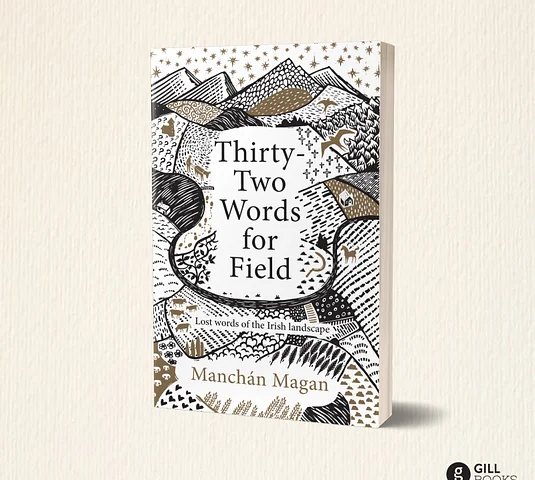
Magan died of cancer last week aged 55, and the aftermath of his passing has produced eulogies not just to his life but to his legacy in rekindling a commitment to Irish language and culture. President Michael D Higgins lauded him for “opening up our collective heritage to more people than could ever have been imagined”.
Magan’s surprise success comes on top of a raft of literary successes, with Anna Burns winning the Booker Prize for Milkman in 2018 and Paul Lynch winning with Prophet Song, in 2023. Sally Rooney and Sebastian Barry among others compete to make up an enviable generation of writers.
But Magan’s celebration is not a superficial nationalistic venture but one that taps into Ireland’s rich lore and unearths hidden treasure of knowledge. He said: “There’s an ancient language alive in Ireland that people have spoken for thousands of years. It is a portal to many realms and it is waiting for us.” He saw Thirty-Two Words not as a wake but “a hurlamaboc (‘rambunctious celebration’)”, adding: “I am not despairing about the gradual fading of the richness of the language because Irish is as much a story as a language, and most stories never really die.”
So, where is Scotland’s Manchán Magan?
As the National Mòd in Lochaber draws to a close we can celebrate the historic Bard of An Comunn Gàidhealach, an honorary title bestowed on individuals for their outstanding contribution to the Gaelic literary canon. This year it is given to Stornoway-born poet Anne C. Frater, who takes over the mantle from Meg Bateman, published poet and lecturer, to become the Mòd’s 61st Bard since the honour was first introduced over 100 years ago.
Deserved as such honours are, they do not represent the sort of populism that Magan’s work represents.
The key might not be just around Magan’s infectious enthusiasm and common touch, but around Ireland’s cultural self-confidence and approach to the arts. In a couple of weeks we’ll see Ireland’s oldest Irish language and arts gathering (Oireachtas na Samhna.) returning to Belfast, after almost 30 years since the last meeting in the northern capital. The city is hosting up to 10,000 people from October 29 to November 2, with Gaeilgeoirí (Irish speakers) travelling from across the island of Ireland for five days of events across arts, music, sean-nós singing and the spoken word. Meanwhile, several years after launching a trial, Ireland is set to make its basic income for artists program permanent starting in 2026.
According to Harrison Jacobs for Art News [‘Three Years After Trial Launch, Ireland Is Making Basic Income for Artists Program Permanent‘]: “The announcement follows the release of an external report by UK-based consultants Alma Economics, which found that the pilot cost €72 million to date but generated nearly €80 million in total benefits to the Irish economy. The report also found that recipients’ arts-related income increased by more than €500 per month on average, income from non-arts work decreased by around €280, and reliance on other social programs declined, with participants receiving €100 less per month on average.”
“The economic return on this investment in Ireland’s artists and creative arts workers is having an immediate positive impact on the sector and the economy overall,” Patrick O’Donovan, minister for culture, communications, and sport, said in a statement.
Such forward-thinking programmes are almost unthinkable in Scotland, where cultural cringe persists alongside shaky and precarious arts funding. So the question: where is Scotland’s Manchán Magan? lands on a cultural landscape of hostility and neglect of our own culture and a complete lack of vision or ambition for the arts.
If we consider Irish writers’ success at the Booker Prize, we can remember too when James Kelman won the award in 1994. It’s worth quoting his acceptance speech at length:
“A couple of weeks ago a feature writer for a Quality Newspaper suggested that the term “culture” was inappropriate to my work, that the characters peopling my pages were “pre-culture” — or was it “primeval”? I can’t quite recall. This was explicit, generally it isn’t. But — as Tom Leonard pointed out more than 20 years ago — the gist of the argument amounts to the following, that vernaculars, patois, slangs, dialects, gutter-languages etc. etc. might well have a place in the realms of comedy (and the frequent references to Billy Connolly or Rab C. Nesbitt substantiate this) but they are inferior linguistic forms and have no place in literature. And a priori any writer who engages in the use of such so-called language is not really engaged in literature at all. It’s common to find well-meaning critics suffering from the same burden, while they strive to be kind they still cannot bring themselves to operate within a literary perspective; not only do they approach the work as though it were an oral text, they somehow assume it to be a literal transcription of recorded speech.”
“This sort of prejudice, in one guise or another, has been around for a very long time and for the sake of clarity we are better employing the contemporary label, which is racism. A fine line can exist between elitism and racism and on matters concerning language the distinction can sometimes cease to exist altogether.”
… There is a literary tradition to which I hope my own work belongs, I see it as part of a much wider process — or movement — toward decolonization and self-determination: it is a tradition that assumes two things: 1) The validity of indigenous culture; and 2) The right to defend in the face of attack. It is a tradition premised on a rejection of the cultural values of imperial or colonial authority, offering a defence against cultural assimilation, in particular imposed assimilation.
Unfortunately, when people assert their right to cultural or linguistic freedom they are accused of being ungracious, parochial, insular, xenophobic, racist etc.
“As I see it, it’s an argument based solely on behalf of validity, that my culture and my language have the right to exist, and no one has the authority to dismiss that right, they may have power to dismiss that right, but the authority lies in the power and I demand the right to resist it.”
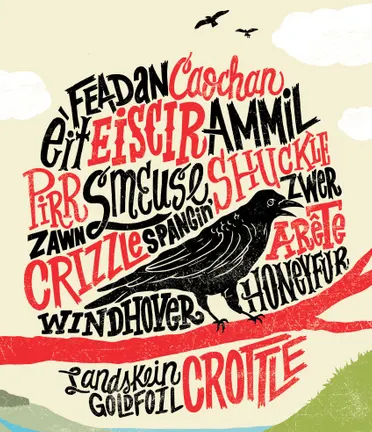
So we can measure champions of gaelic culture such as Sorley McLean or Ronald Black (editor of An Tuil, anthology of Scottish Gaelic Verse), or Anne Campbell, author of the Peat Glossary (a “counter-desecration phrasebook”), or historically figures such as Alexander Carmichael (editor of Carmina Gadelica) – or more widely Martyn Bennett – but the ability to celebrate our indigenous language and culture is dependent on a wider political commitment. Without that, we will be eternally looking across the Irish Sea in envy.
Good question.
Closest I’ve encountered would be the late Torcuil MacRath from Na Lochan in Lewis. Alastair MacIntosh himself comes close though isn’t fluent in the language AFAIK.
It is a good question, but I’m not sure it’s that useful to conflate Manchán’s work, which was totally focussed on Irish language, culture and indigenous knowledge, with contemporary Irish Anglophone novelists like Anna Burns and Sally Rooney (however great they may be). They’re doing very different things, they just happen to all be from the same country. Similarly, James Kelman in Scotland comes from a very different cultural and linguistic tradition than Scottish Gaelic writers and thinkers. I get that the article is trying to make a wider point about the way the two countries nurture their artists and their own cultural output, but maybe the fact that it muddles Gaelic and non-Gaelic culture together partially answers the question as to why Scotland doesn’t have its own Manchán Magan – we haven’t quite worked out how we view Gaelic culture. Do we claim it as representative of the country as a whole? Do we other it as something outdated and irrelevant? Do we view it as a distinct indigenous culture within our nation and keep a respectful distance? None of this is really settled. But yeah, the questions about a Scottish Manchán Magan are very different to the ones James Kelman (however justified) is asking.
Hi Anna, thanks for the comment. I suppose the point was that attitudes to our own culture – whether gaelic language or literature – is expressed by Kelman. This is a cultural problem – but the other problems and issues are political and economic. For eg its not conceivable that we would have a basic income for artists here in Scotland.
The wider problem of Scottish cultural strategy (or lack of it) has been explored elsewhere:
https://bellacaledonia.org.uk/2025/08/03/scottish-cultural-strategy-far-from-home/
https://bellacaledonia.org.uk/2025/07/24/edinburgh-international-film-festival-made-in-london/
https://bellacaledonia.org.uk/2025/07/07/edinburgh-film-festival-created-in-london/
https://bellacaledonia.org.uk/2025/01/25/in-quest-of-a-film-culture/
https://bellacaledonia.org.uk/2025/01/10/the-traitors-another-ofcom-and-bbc-failure-for-scotland/
It may be that our gaelic-speaking Makar may play a role in hosting these conversations but the point I was trying to make – is that we dont have a joined-up and properly funded cultural strategy.
Great piece Mike, thanks. I’m curious as to why you think a basic income for artists is not conceivable here? Has anyone ever suggested it? (Genuine questions…)
The media in Ireland, except for some in the north, is comfortable with being Irish and is unapologetic about presenting Irish culture.
In the north the political dominance of the unionists is in decline and this decline will continue. The unionists themselves, at the DUP conference, recently, lamented and warned against the growth of English nationalism. The DUP and the other unionist parties in the north understand the concept of United Kingdom and its history. This is not the case for a large majority of the population of England which are unaware of or only incompletely aware of the fact that the United Kingdom is not identical with England.
The unionists in the north, despite a majority of them having voted from Brexit, had done pretty well (at least financially for its leadership) out of being members of the EU and, since tye north is still part of the single market, they continue to benefit economically. So, there is a growing awareness that their future is an Irish one rather than a British one. They are beginning to show a growing interest in Irish culture and their own Scots-Irish culture as an aspect of it. They are recognising that gaelic was the language of many of their ancestors and that it and Ulster Scots can coexist.
The fact that it is likely that in the forthcoming Senedd elections in Wales Labour is not only likely to lose control, but be reduced to the third party and is faced with having to choose between PC and Reform. Labour in Wales, unlike Labour in Scotland, has, since devolution, emphasised its Welshness. It embraces Welsh history and Welsh culture. So, it most likely will support PC in some way.
Contrast that with the attitude of Labour in Scotland. Its members still loathe the idea of being Scottish and it is contemptuous of Scottish culture. Its principal aim is sustaining the Labour Party in Scotland and the power and income they gained from it personally during the long period of Labour hegemony in Scotland. Last year’s general election results in Scotland simply buttressed their sense of entitlement – Scottish voters, Labour deluded itself, had ‘come to their senses’ and ‘knew their place’.
The Labour Party, as a whole, is becoming more English nationalist and jingoistic. In his few utterances on the subject, Starmer has demonstrated that he does not understand the Good Friday Agreement and its ramifications. Despite his vacuous statements about the importance of Scotland, Starmer’s Cabinet members on their few fleeting visits to Scotland make several jibes of contempt and go back.
The Scottish media is largely contemptuous of Scotland, its culture, its history, its languages, its people. Scottish Television trumpets, “Watch all of England’s World Cup qualifiers on STV.” It produces few programmes which present Scotland’s culture. Despite it being a UK propaganda organisation in its News and Current Affairs, BBC Scotland, especially, on radio and in its local stations, and on TV via Alba, has done a great deal to project and sustain Scottish culture and its languages. The newspapers are dire, with the exception of The National, although we have to be wary of its Herald influence.
Fortunately, IT has enabled the development of sites such as this, and podcasts through which a nuanced development of a concept of Scotland can evolve.
As the UK crumbles under the vision-less Starmer, we need these conversations to help us create an independent Scotland.
Labour in Wales does not embrace Welsh History. Whatever gave you that idea ? The Labour party has always been the party of industrial revolution Wales, with all its destructive monoglot immigration (Yes, immigration can be bad, no question). The Welsh government consistently refutes the idea of embedding Welsh history in our curriculum.
‘A large majority of the population of England which are unaware of or only incompletely aware of the fact that the United Kingdom is not identical with England.’
This is a myth, they know the difference perfectly well. They may not recognise the difference in the way some want, but that is a quite different thing.
I’ve read more Irish mythology and folklore than Scottish, possibly because more survived than in Scotland. Cultural survival is subject to (and dependent upon) selection, and selection is often a critical choice.
So it doesn’t make sense to celebrate culture uncritically.
It makes more sense to explore reasons for selection, suppression, promotion and censorship, which are typically conditions under which culture is produced. I am rather against the idea of awards, which are modern marketing tools amongst other things, and serve the Cult of the Artist.
The Guardian published this case study of a ‘forgotten’ novel series which raises some relevant questions.
https://www.theguardian.com/commentisfree/2025/oct/18/crooked-cross-hitler-1933-novel-sally-carson
And during WW2 critical writers like Vera Brittain had works suppressed by selective paper rationing.
If we cease to criticise a culture, surely in some important way it dies? Becomes harmless and effectless mythology? Falls ever behind ‘improvements’ to live cultures? Is stuffed and mounted?
I posted a critical view (not entirely my own) of historical Scottish Gaelic poetry recently but the comment was swallowed whole by this site. The point was largely about spin and lacunae. What tolerance to criticism does a site dedicated to cultural celebration have?
The issue of criticality is a good one – see for eg Scott Hames On Snottery Weans Forever: Against Dreichism.
I’d argue for a culture to be both promoted, celebrated and intensely critiqued. It’s a function of our cultural poverty that we have to just celebrate everything always, which is, in itself useless.
If it is about Irish culture I guess it is about the Catholic church.
What hope is there for a country with a government which has never even had interest enough to design a culture policy? The SNP never had a culture policy, they just inherited New Labour’s…
They could have called Sandy Moffat and Irvine Welsh and Alan Riach and Kelman himself, but they didn’t do that, they got into power and just did nothing but the most effortless thing which was to follow the path set out by New Labour…
It goes very deep this anti-culture thing in Scotland. It’s a country which is kinda square, old fashioned, a country where people still cut about in Highland tweed… No widespread knowledge of the cinema, nothing like that…
Hello, people, the cinema is modernity!!!
A country where one of the two main newspapers runs a headline about interviewing the Grand Master of the Orange Lodge, a medieval institution as good as…
Protestants and Kafflicks and the fitba, and a wee space in the weekend section about nuvels, almost always social realist novels or thereabouts, nothing payful and post-modern…
It’s gone from being a country on the cutting edge of modernity to being a country dominated by grim, humourless academics who invariably come across as busybody know-it-alls, a country with no generalist cultural magazine, not even on a quarterly basis… despite all that stuff about the demorcatic intellect…
I also admire Kelman, but I also admire Irvine, a lot more than I used to do. I think I underestimated him because he tries to come across as just an ordinary guy, and he is that too, but a lot more… Total respect for Irvine Welsh.
And what about Tom Leonard? I don’t see how you can mention Kelman without mentioning Tom Leonard in the same breath…
He was an incredibly astute and perceptive man… a real Scottish working class intellectual of the highest order…. his whole reading of texts was totally different to a middle class reading of texts… a brilliant reader, a genius reader even…
A totally underrated figure for me, Tom Leonard and I can’t wait the next time I can to buy his biography of James Thomson…
As for the powers that be, I have no hope, not a shred….
Hardly a searing analysis, but Front Row tonight did touch on some key issues in this discussion about Creative Arts Scotland. Go to 31 minutes:
https://www.bbc.co.uk/sounds/play/m002l3f3
@Niemand, hard to argue against the view that for people like Rebecca Atkinson-Lord:
“for so long we’ve all been completely dependent upon going cap-in-hand to a patriarchal public subsidy body”
the ideas of curation and a broken system (well, broken for the majority). What the discussion omitted, I feel, is the accumulation factor. The Matthew Effect. Not just that the rich get richer, but for the (initially or hereditary) successful their voices are magnified, their interests grow to predominate, their reputations carry undue weight, and so forth. The Cult of the Artist serves a political agenda through patronage and desired (mutual or transactional) outcomes.
I was reading lately about publishers and the undue promotion of celebrity writers (undue to discernible talent, says the accusers) crowding out more worthy professions/entrants. I suppose Budgie the Little Helicopter was trendsetter in this case. The same criticisms have emerged in theatre:
https://www.theguardian.com/stage/2025/oct/24/west-end-casting-directors-raise-concerns-trend-big-stars
and perhaps the kinds of occasional sociopathic behaviour noted amongst the self-entitled crowds attending these live events suggest a kind of personality disorder at play (parasocial relationships, narcissism, ego-dominance politics, whatever). The star system in commercial football is also a warping factor (especially considering views that the weakest player-performance is more significant for results than the strongest).
Perhaps music is more of a meritocracy? In parts? I don’t know. Anyway, you don’t have to go far to see the toxic nature of the Star system which leaks perpetually from the BBC and other homegrown institutions. Nepo babies are hardly surprising in a culture where Nepotism is enshrined as the Great British Value (in hereditary monarchy). Dynastic politics, something that Bella has covered before, lie behind strands of Art as much as Politics, perhaps. Political theatre, the twin Greek roots of democracy-drama and all that.
This article has been updated to point out that Anne Campbell was the author of The Peat Glossary, not Finlay Macleod.